Prep once, cook twice by planning meals ahead, organizing ingredients, and batching cooking. Wash, chop, and portion vegetables, proteins, and grains for quick assembly later. Store leftovers in airtight containers with labels and dates to maintain freshness and prevent waste. Using proper temperature controls and sustainable storage methods helps keep food safe and extends shelf life. If you keep exploring, you’ll discover more tips to simplify your meal routines and save time in real-life kitchen moments.
Key Takeaways
- Plan meals ahead to streamline shopping, prep, and cooking for multiple dishes throughout the week.
- Batch cook large quantities of proteins, grains, and vegetables for versatile meal assembly.
- Use clear, labeled containers for storing prepped ingredients and leftovers to maintain freshness and organization.
- Portion cooked meals into manageable sizes for quick reheating and reduce waste.
- Incorporate proper storage techniques to preserve food quality and extend shelf life for multiple uses.
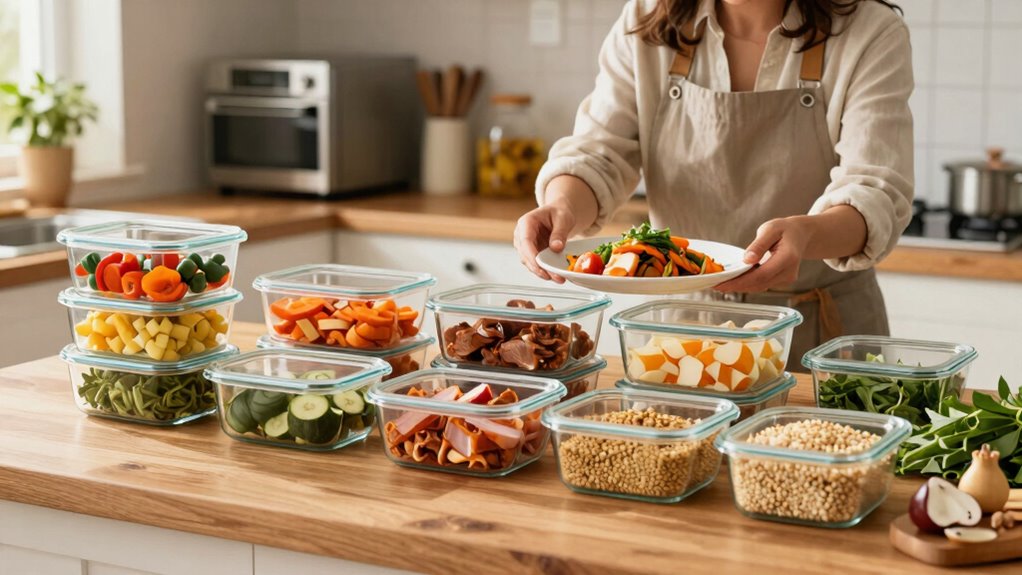
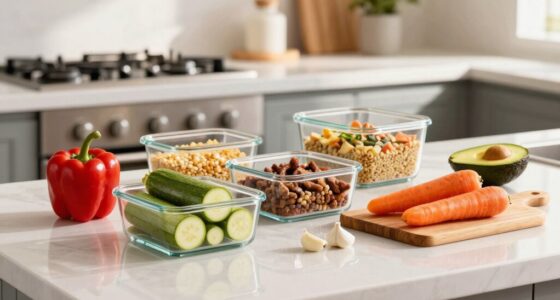
Many busy individuals find that prepping their meals once and cooking twice is the smartest way to save time and reduce stress during the week. When you master the art of meal planning, you set yourself up for success. Think about your week ahead—what meals will you need, what ingredients are necessary, and how can you streamline the process? Meal planning isn’t just about choosing recipes; it’s about organizing your ingredients efficiently so that you can make the most of your prep day. Once you’ve mapped out your meals, you’ll want to contemplate ingredient storage. Proper storage isn’t just about keeping food fresh; it’s about making sure you can access what you need easily and keep everything safe from spoilage. Use clear containers for visibility, and label everything with dates so you know exactly how long your ingredients will last. This helps prevent waste and ensures your meals stay delicious.
Prepping your ingredients in advance is key. Wash, chop, and portion out vegetables, proteins, and grains so they’re ready to cook. When you’re ready to prepare your meals, it’s just a matter of quick assembly or reheating. This saves you from scrambling for ingredients or doing multiple trips to the fridge or pantry. As you cook, focus on making enough for multiple meals. For example, roasting a batch of chicken or cooking a large pot of rice can serve as the base for several different dishes. This way, you’re not cooking from scratch every time you want a meal; instead, you’re simply building on your prepped ingredients. Additionally, incorporating sustainable storage methods can help reduce waste and conserve resources. Proper storage techniques also include considering appropriate temperature controls, which are essential for maintaining food safety and freshness over time. Using consistent portioning can further streamline your meal assembly process and help with calorie control.
Efficient ingredient storage also means you think about how to keep your cooked meals fresh. Use airtight containers and divide your leftovers into manageable portions. This makes grabbing a quick lunch or dinner easier, especially when you’re in a hurry. When you’re storing cooked meals, label them with the date and contents to avoid confusion later. Reheat your meals properly to maintain flavor and texture, and consider freezing portions for longer shelf life. The goal is to make your prep work last, so you’re not constantly cooking from scratch during busy weekdays. Incorporating proper temperature controls into your storage plan can significantly extend the freshness of your prepared meals and prevent foodborne illnesses. Additionally, using airtight containers helps preserve moisture and flavor while preventing contamination.
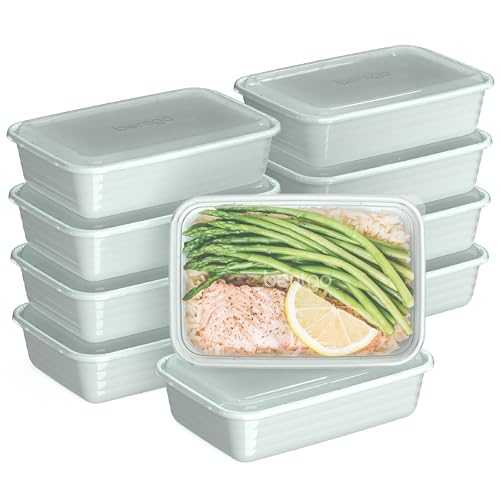
Bentgo Prep – 20-Piece 1-Compartment Reusable Meal Prep Containers with Lids, PFAS & BPA Free Materials, Durable, Microwave, Freezer, & Dishwasher Safe To Go Food Storage (Mint)
#1 Brand Pick for Meal Prep Containers: Bentgo is the top pick for meal prep containers!* This lightweight,…
As an affiliate, we earn on qualifying purchases.
As an affiliate, we earn on qualifying purchases.
Frequently Asked Questions
How Do I Store Prepped Ingredients Safely?
To store prepped ingredients safely, you should keep them in airtight containers and refrigerate promptly, ideally within two hours of preparation. This helps maintain food safety and preserve ingredient freshness. Label containers with dates to track storage time, and use the oldest ingredients first. For longer storage, consider freezing, ensuring proper packaging to prevent freezer burn. Proper storage minimizes bacteria growth and keeps your ingredients fresh and safe to eat.
What Are the Best Tools for Efficient Meal Prep?
You should invest in quality meal prep containers to keep ingredients fresh and organized. Look for stackable, leak-proof options in various sizes for flexibility. Kitchen gadgets like food choppers, peelers, and measuring tools save time and make prep easier. These tools streamline your process, helping you chop, measure, and portion efficiently. Combining the right containers and gadgets guarantees your meal prep is quick, organized, and stress-free, making mealtime smoother.
How Long Can I Keep Prepped Meals in the Fridge?
You can typically keep prepped meals in the fridge for 3 to 4 days, ensuring meal freshness and food safety. Imagine someone preparing a week’s worth of lunches on Sunday; by Wednesday or Thursday, the meals might lose their ideal freshness or risk bacteria growth. Always store meals in airtight containers, and if in doubt, check for off smells or textures. When in doubt, it’s safer to discard and reheat fresh meals.
Can I Adapt Recipes for Dietary Restrictions During Prep?
Yes, you can adapt recipes during prep by making recipe modifications and using dietary substitutions. When planning, identify ingredients that need swapping for allergies or preferences, like dairy-free milk or gluten-free grains. Prepare components separately if needed, and combine just before serving. This approach guarantees your meals meet your dietary needs without sacrificing flavor or convenience, making your meal prep more flexible and inclusive.
What’s the Ideal Portion Size for Leftovers?
Around 3/4 cup to 1 cup per serving is ideal for leftovers, helping you practice portion control and avoid waste. This size keeps your meals satisfying without overloading your fridge. Use creative serving suggestions like layering in salads or turning leftovers into wraps, so your portions stay controlled and appealing. Think of each dish as a balanced, manageable portion that fuels your day without feeling overwhelming.

Airtight Food Storage Containers with Lids, Vtopmart 24 pcs Plastic Kitchen and Pantry Organization Canisters for Cereal, Dry Food, Flour and Sugar, BPA Free, Includes 24 Labels,Black
Help Organize Your Kitchen and Pantry— Imagine every time walking to your kitchen or pantry, found everything is…
As an affiliate, we earn on qualifying purchases.
As an affiliate, we earn on qualifying purchases.
Conclusion
By mastering the art of prepping once and cooking twice, you’re planting seeds in your busy life’s garden, watching delicious meals bloom effortlessly. Think of your kitchen as a well-oiled machine, each prep session fueling a whirlwind of flavorful possibilities. With a little planning, you’re weaving a safety net of tasty, time-saving tricks — turning chaos into calm and your busy days into a symphony of satisfying bites. Your culinary journey just got a whole lot easier.

Kuocodall 288 Pantry Labels for Food Containers, Preprinted Minimalist Waterproof Stickers for Organizing Storage Bins, Jars and Kitchen
288 Pantry Labels: Includes 183 preprinted common pantry items (e.g., Pasta, Cereal, Flour, Sugar, Beans, Cookies), 9 blank…
As an affiliate, we earn on qualifying purchases.
As an affiliate, we earn on qualifying purchases.

Glad GladWare Deep Dish Food Storage Containers with Lids, Large Rectangle BPA Free Plastic for Soups Salads and Meal Prep, Lock Tight Seal, Microwave Dishwasher Safe, 64 Oz, 3 Count
LARGE 64 OZ DEEP DISH CAPACITY: Each large rectangle container holds up to 64 ounces or 8 cups,…
As an affiliate, we earn on qualifying purchases.
As an affiliate, we earn on qualifying purchases.