
TL;DR
Prime for Young Adults — start your free trial
Fast free delivery, streaming and member deals for eligible 18–24 year olds.
Try it freeAs an affiliate, we earn on qualifying purchases.
Scientists at the Indian Institute of Science (IISc) have discovered an enzyme derived from cows that appears effective against bacteria resistant to existing antibiotics. This development could open new avenues in combating antibiotic resistance, a growing global health threat.
Scientists at the Indian Institute of Science (IISc) in Bangalore have announced the discovery of a cow enzyme that shows activity against bacteria resistant to multiple antibiotics. This breakthrough, confirmed by IISc officials, could represent a significant advancement in the fight against antimicrobial resistance, which poses a serious global health challenge.
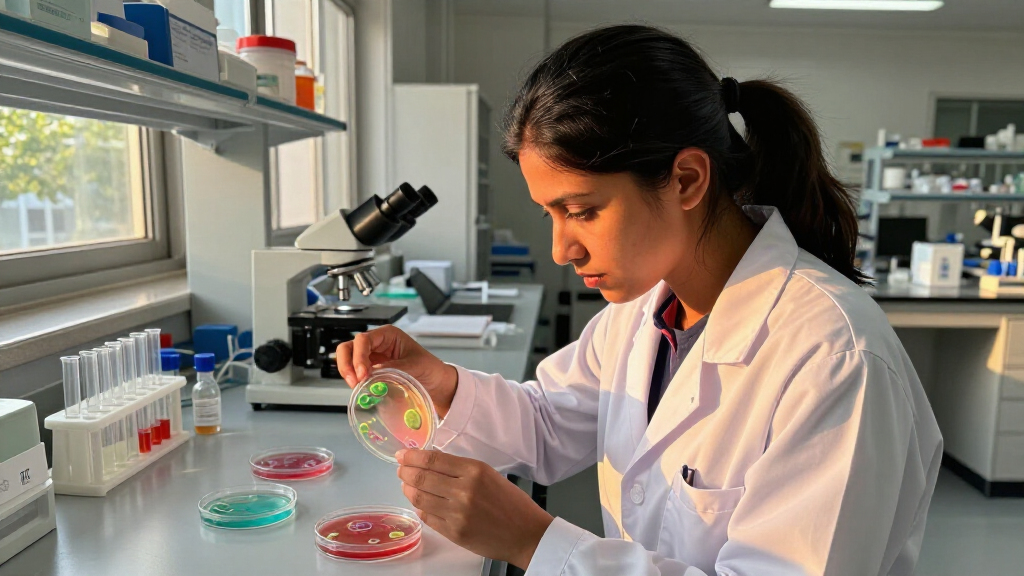
The research team at IISc identified a specific enzyme produced naturally in cows that demonstrates antimicrobial properties, particularly against bacteria that have developed resistance to conventional antibiotics. The enzyme was isolated from cow tissue samples and tested in laboratory settings, where it showed promising results in inhibiting the growth of several drug-resistant bacterial strains, including some strains of methicillin-resistant Staphylococcus aureus (MRSA) and carbapenem-resistant Enterobacteriaceae (CRE).
While the enzyme’s exact mechanism is still under investigation, initial studies suggest it may disrupt bacterial cell walls or interfere with essential bacterial processes, rendering resistant bacteria vulnerable. Researchers emphasized that these findings are preliminary but suggest a potential new class of antimicrobial agents derived from animal enzymes. The discovery was announced in a statement from IISc, with further research and development phases planned to evaluate its efficacy, safety, and possible applications.
Potential Breakthrough in Antibiotic Resistance Fight
This discovery could be a game-changer in addressing the escalating crisis of antibiotic resistance worldwide. As bacteria evolve mechanisms to evade existing drugs, new antimicrobial agents are urgently needed. The identification of a naturally occurring cow enzyme that can combat resistant bacteria offers a promising alternative or supplement to traditional antibiotics. If further research confirms its safety and effectiveness in humans, it could lead to the development of novel treatments, reducing the burden of resistant infections and saving lives. Experts note that such biological solutions are critical in diversifying the arsenal against resistant pathogens and could help curb the spread of untreatable infections.
As an affiliate, we earn on qualifying purchases.
Rising Global Threat of Antibiotic-Resistant Bacteria
Antimicrobial resistance (AMR) is recognized as one of the biggest threats to global health, with the World Health Organization (WHO) warning that drug-resistant infections could cause 10 million deaths annually by 2050 if unchecked. The crisis is driven by overuse and misuse of antibiotics in humans and animals, leading bacteria to evolve resistance mechanisms. Researchers and health authorities have been searching for new antimicrobial compounds, including those derived from natural sources like animals, plants, and microorganisms.
In recent years, several studies have explored animal-derived enzymes for their potential antimicrobial properties, but practical applications remain limited. The IISc discovery adds to this growing body of research, highlighting the potential of animal enzymes in developing next-generation antimicrobials. The specific enzyme from cows, a species with a long history of domestication and immune defense, could represent a new biological resource in this fight.
natural antibacterial agents for resistant bacteria
As an affiliate, we earn on qualifying purchases.
As an affiliate, we earn on qualifying purchases.
Unconfirmed Aspects of the Cow Enzyme’s Potential
While the initial laboratory results are promising, it is not yet clear whether the enzyme can be safely and effectively used in humans or animals outside controlled settings. Researchers have not yet conducted clinical trials, and the enzyme’s stability, delivery methods, and possible side effects remain unknown. Additionally, it is unclear whether bacteria will develop resistance to this enzyme over time, as with traditional antibiotics. The timeline for potential development into usable treatments is still uncertain, and regulatory approval processes will be required.
As an affiliate, we earn on qualifying purchases.
Next Steps in Research and Development
The IISc team plans to conduct further laboratory experiments to understand the enzyme’s mechanism of action, optimize its activity, and evaluate safety profiles. Collaborative efforts with pharmaceutical partners are likely to follow, aiming to develop formulations suitable for clinical testing. Researchers emphasize that extensive preclinical studies and eventual clinical trials are necessary before any potential therapeutic application. The discovery has also prompted interest from the broader scientific community, with calls for additional research into animal-derived enzymes as antimicrobial agents.
novel antibiotics from animal enzymes
As an affiliate, we earn on qualifying purchases.
As an affiliate, we earn on qualifying purchases.
Key Questions
Could this cow enzyme replace existing antibiotics?
It is too early to say. The enzyme shows promise in laboratory tests, but further research is needed to determine if it can be developed into a safe and effective treatment for humans or animals.
What makes this enzyme different from current antibiotics?
This enzyme is derived from cows and appears to target resistant bacteria through mechanisms that may differ from traditional antibiotics, potentially reducing the risk of resistance development.
Are there any safety concerns with using animal enzymes in humans?
Safety assessments, including toxicity and immune response studies, are necessary before considering clinical applications. Such evaluations are part of the upcoming research phases.
When might this enzyme be available as a treatment?
It is uncertain. The research is at an early stage, and developing a new drug typically takes several years of testing and regulatory approval.
Could this discovery impact global efforts to combat antibiotic resistance?
Yes, if further research confirms its efficacy and safety, this enzyme could become part of the new arsenal against resistant bacteria, addressing a critical global health challenge.
Source: local
Fall Picks
fall essentials
As an affiliate, we earn on qualifying purchases.