TL;DR

Get health and wellness essentials delivered free — and shop member deals
- Fast, free delivery on millions of items
- Access to Prime Big Deal Days deals on October 6–7
- Prime Video, Amazon Music and more included
A Sixty and Me guide describes five low-equipment functional exercises intended to help women over 60 practice movements used in daily life. It cites research on functional training and older adults, while advising readers with health concerns to consult a health professional before starting.
Sixty and Me has published a beginner’s guide to functional fitness for women over 60, presenting five low-equipment exercises that practise movements such as standing from a chair, pushing and stepping sideways. The guide connects this type of training with everyday mobility and cites research involving adults aged 60 and older, while recommending gradual increases and professional advice for people with health concerns.
According to the Sixty and Me guide, functional fitness means building strength and ability for everyday activities, including reaching for items, moving objects and picking things up from the floor. The guide says exercises can be done at home with little or no equipment. This is a practical overview, not an individualized exercise prescription, and the article does not report new clinical research of its own.
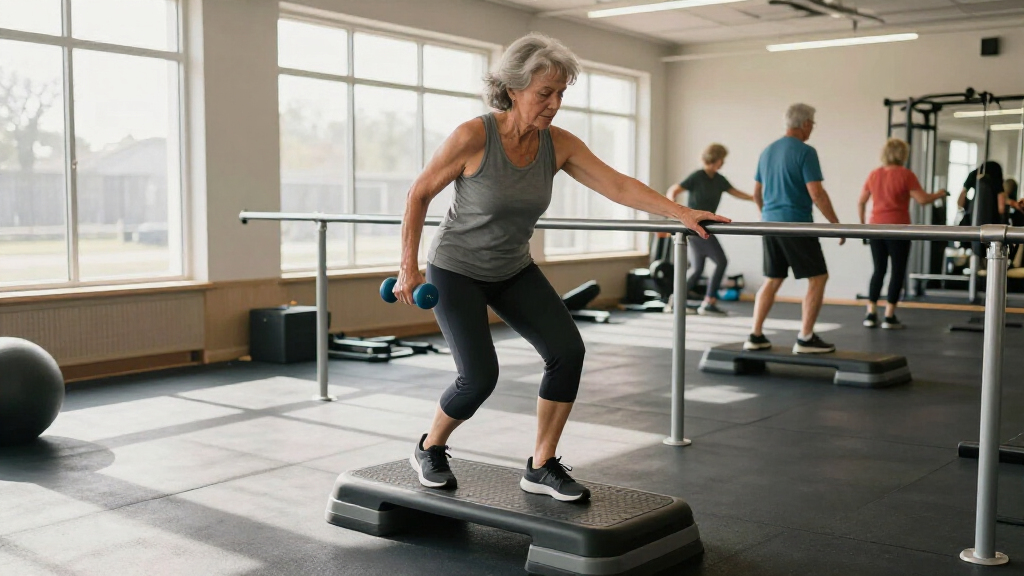
The guide’s five examples are sit-to-stands, wall push-ups, supported heel raises, supported side steps and supported balance practice. It suggests five to 12 repetitions for the first three exercises. For balance work and side steps, it recommends staying near a counter or chair for support when needed. The guide describes sit-to-stands as a way to practise rising from a chair and wall push-ups as an upper-body exercise.
For a starting routine, the guide suggests adding 10 to 15 minutes on two or three days in a week, then increasing time or repetitions as the exercises become easier. It also says a resistance band can be added later. The article advises stopping if an activity feels wrong and speaking with a health care professional if pain, dizziness, a health condition or other limitations raise concerns.
Training for Everyday Movements
The Sixty and Me guide focuses on practising movements people use outside a workout, rather than on exercise for its own sake. For readers who find tasks such as getting up from a chair or carrying groceries more difficult, this framing may make strength and balance exercises easier to connect with daily routines. The guide presents maintaining independence and quality of life as the aim; it does not establish that the listed exercises will prevent disability or guarantee continued independence.
The article also brings together strength, mobility and balance, rather than treating fitness as one ability. That matters because the activity recommendations and research it cites concern several aspects of physical activity in later life. However, readers’ abilities and health needs differ, and a general guide cannot determine which movements or progression are appropriate for a particular person.
As an affiliate, we earn on qualifying purchases.
Research and Activity Guidance Cited
Sixty and Me cites a 2025 meta-analysis that the guide says found functional task training helped improve balance, mobility and walking ability among adults aged 60 and older. The supplied source material does not identify the meta-analysis by title, authors or journal, or provide participant numbers or effect sizes, so those details cannot be independently assessed here. This is research context cited by the guide, not a result of the guide itself.
The guide also refers to activity guidance from the CDC and World Health Organization. It says the CDC recommends that adults aged 65 and older do muscle-strengthening activity at least twice weekly, alongside activity supporting cardiovascular and pulmonary fitness and balance. It says WHO guidance calls for muscle-strengthening activity on two days a week and suggests balance and fall-prevention activity on three or more days weekly for adults with mobility difficulties. The guide’s five exercises are examples, not a complete account of those organizations’ recommendations.
low-impact balance exercise equipment
As an affiliate, we earn on qualifying purchases.
As an affiliate, we earn on qualifying purchases.
Limits of the Available Evidence
The supplied material does not include a publication date for the Sixty and Me guide or enough bibliographic detail to verify the 2025 meta-analysis it cites. It also gives no information about how large the reported improvements were, which specific training programs were assessed or whether the results apply equally to women over 60. The guide describes findings among adults aged 60 and older, a broader group than its intended readership.
The guide does not provide individualized adjustments for injuries, chronic conditions, balance limitations or different fitness levels. Its repetition suggestions are general, and it does not report testing the exercises in a clinical study. Readers should not interpret the article as proof that a particular routine is safe or effective for everyone.
As an affiliate, we earn on qualifying purchases.
Starting Gradually and Safely
The Sixty and Me guide suggests beginning with a realistic schedule: 10 to 15 minutes, two or three days this week, adjusting gradually if the exercises feel manageable. It recommends having a sturdy surface available for support during balance practice and using familiar daily activities, such as walking, as part of an active routine.
For people with pain, dizziness, mobility limits or health conditions, the article advises consulting a health care professional before proceeding. It also says to stop an activity if something feels wrong. The supplied source provides no further research update or formal follow-up schedule; any decision to add resistance, repetitions or new balance tasks depends on an individual’s circumstances.
As an affiliate, we earn on qualifying purchases.
Key Questions
What does functional fitness mean in this guide?
According to the Sixty and Me guide, it means practising strength and movement used in everyday activities, such as standing from a chair, reaching, pushing and stepping sideways.
Which exercises does the article suggest?
The Sixty and Me guide lists sit-to-stands, wall push-ups, supported heel raises, supported side steps and supported balance practice. It describes them as home exercises that require little or no equipment.
How often does the guide suggest starting?
The guide proposes adding 10 to 15 minutes on two or three days in a week, then increasing time or repetitions gradually as the movements become easier.
Should someone seek advice before trying the exercises?
The article recommends speaking with a health care professional if a person has a health condition, pain, dizziness, mobility limitations or other concerns. It also advises stopping an activity if something feels wrong.
Does the guide show that these exercises prevent falls?
No. The guide cites reviews and a meta-analysis as research context, but the supplied material does not provide enough study details to assess the findings or establish that these five exercises prevent falls for every reader.
Source: rss
Halloween Picks
halloween
As an affiliate, we earn on qualifying purchases.