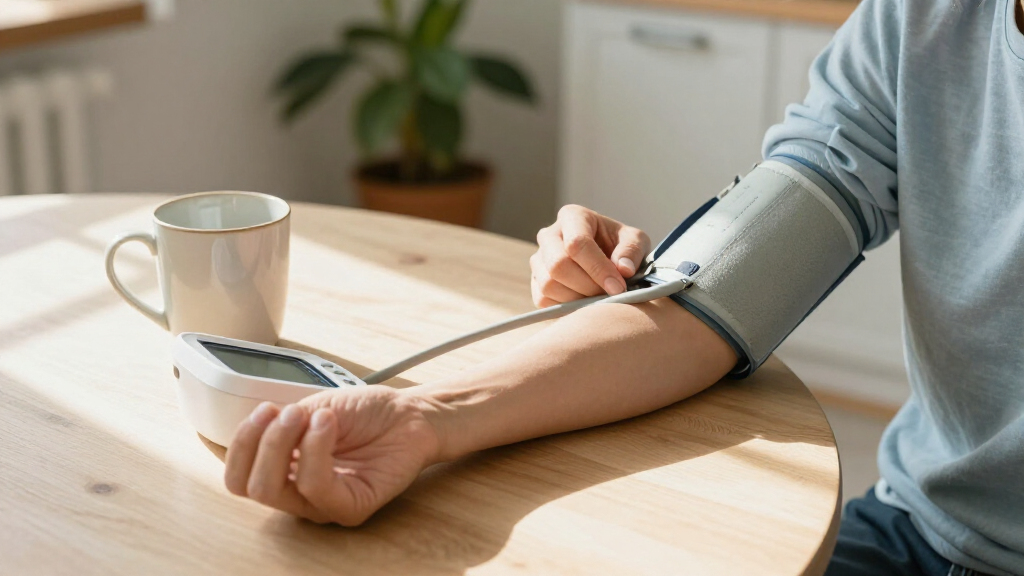

Blood pressure monitors for home use range from straightforward arm cuffs to connected models with expanded health tracking, and the right choice depends on fit, ease of use, and the records you want to keep. My best overall pick is the OMRON Platinum, which pairs upper-arm measurement with AFib detection. The OMRON Bronze is a simpler option for buyers who want fewer extras, while the Withings BPM Vision stands out for Wi-Fi and Bluetooth connectivity. The main tradeoffs are convenience versus cuff positioning, and connected features versus a simpler routine. Read on for the full breakdown of all 15 monitors and guidance on choosing one for your needs.

Get health and wellness essentials delivered free with Prime
- Fast, free delivery on millions of items
- Prime Video, Amazon Music and more included
- Member-only deals all year
Key Takeaways
- The OMRON Platinum leads for feature depth: AFib detection sets it apart from the simpler OMRON Bronze, Silver, and Iron models.
- Connected models serve different record-keeping habits: Withings adds Wi-Fi and Bluetooth, while iHealth Track and Meraw focus on Bluetooth-linked use.
- Cuff fit is a major point of separation: OWNQOBE includes two cuffs, and iHealth Track advertises a wide-range cuff; check your arm measurement before choosing.
- Several models prioritize a simpler home routine: OMRON Bronze, Oklar Upper Arm, AILE, and Alcedo avoid making phone connectivity the main draw.
- The wrist option trades arm-cuff placement for portability: Oklar Rechargeable Wrist may suit buyers who need a compact device, but wrist position needs careful attention during readings.
| Sinocare Upper Arm Blood Pressure Monitor with Adjustable Cuff |  | Best for Simple Two-User Tracking | Measurement type: Upper arm blood pressure | Cuff size: 8.6–16.5 inches | Display: 3.6-inch screen | VIEW LATEST PRICE | See Our Full Breakdown |
| OWNQOBE Upper Arm Blood Pressure Monitor with Two Cuffs and Color LED Display |  | Best for Multiple Users and Varied Arm Sizes | Measurement type: Automatic upper arm blood pressure | Cuff sizes: 9–17 inches and 13–21 inches | Measurement time: About 35 seconds | VIEW LATEST PRICE | See Our Full Breakdown |
| OMRON Platinum Upper Arm Blood Pressure Monitor with AFib Detection |  | Best for AFib Screening and App-Based Trends | Measurement type: Upper arm blood pressure | AFib detection: Screens with each measurement | Users: 2 | VIEW LATEST PRICE | See Our Full Breakdown |
| OMRON Bronze Upper Arm Blood Pressure Monitor |  | Best for Basic OMRON App Tracking | Measurement type: Upper arm blood pressure | Reading storage: Up to 14 readings on the monitor; unlimited in the OMRON Connect app | Connectivity: Bluetooth | VIEW LATEST PRICE | See Our Full Breakdown |
| iHealth Track Smart Upper Arm Blood Pressure Monitor with Wide-Range Cuff |  | Best for Color-Coded Readings Without a Complex Interface | Measurement type: Upper-arm blood pressure | On-device memory: Up to 99 readings | Display: Large color-coded backlit display | VIEW LATEST PRICE | See Our Full Breakdown |
| Automatic Upper Arm Blood Pressure Monitor for 3 Users |  | Best for Multi-User Households | Measurement time: About 35 seconds | Cuff sizes: 9–17 inches and 13–21 inches | Display: 4.8-inch backlit LCD | VIEW LATEST PRICE | See Our Full Breakdown |
| Oklar Upper Arm Blood Pressure Monitor for Home Use |  | Best for Simple Two-Person Tracking | Measurement type: Upper arm | Users supported: 2 | Reading storage: Up to 120 readings per user; 240 total | VIEW LATEST PRICE | See Our Full Breakdown |
| Meraw Bluetooth Upper Arm Blood Pressure Monitor |  | Best for App-Based Sharing | Measurement type: Automatic upper arm blood pressure | Cuff fit: 8.7–16.5 inches (22–42 cm) | Connectivity: Bluetooth | VIEW LATEST PRICE | See Our Full Breakdown |
| Withings BPM Vision Blood Pressure Monitor with Wi-Fi and Bluetooth |  | Best Guided Connected Monitor | Measurements: Systolic and diastolic blood pressure, heart rate | Display: 2.8-inch LCD | Connectivity: Wi-Fi and Bluetooth | VIEW LATEST PRICE | See Our Full Breakdown |
| AILE Automatic Upper Arm Blood Pressure Monitor |  | Best for Straightforward Two-User Readings | Measurement type: Automatic upper arm | Cuff size: 8.7–16.5 inches (22–42 cm) | Memory: 99 readings per user; 2 users | VIEW LATEST PRICE | See Our Full Breakdown |
| Oklar Rechargeable Wrist Blood Pressure Monitor |  | Best Wrist Monitor for Two Users | Monitor type: Automatic wrist blood pressure monitor | Measurement time: About 35 seconds | Reading storage: Up to 240 readings for two users | VIEW LATEST PRICE | See Our Full Breakdown |
| Alcedo Upper Arm Blood Pressure Monitor for Home Use |  | Best for Guided, Repeat Measurements | Monitor type: Upper arm | Display: LCD | Voice guidance: Adjustable volume | VIEW LATEST PRICE | See Our Full Breakdown |
| OMRON Silver Upper Arm Blood Pressure Monitor |  | Best for App-Based Tracking | Measurement method: Upper arm | On-monitor memory: Up to 30 readings | App memory: Unlimited readings in OMRON Connect | VIEW LATEST PRICE | See Our Full Breakdown |
| Automatic Upper Arm Blood Pressure Monitor with Adjustable Cuff |  | Best for At-a-Glance Readings | Measurement type: Blood pressure and heart rate | Cuff type: Adjustable upper-arm cuff | Users: 2 | VIEW LATEST PRICE | See Our Full Breakdown |
| OMRON Iron Upper Arm Blood Pressure Monitor |  | Best for Simple One-Touch Use | Monitor type: Upper-arm blood pressure monitor | Cuff fit: Arms 9–17 inches | Operation: One-touch | VIEW LATEST PRICE | See Our Full Breakdown |
| blood pressure monitor | Power | Measurement type | Display |
|---|---|---|---|
| Sinocare Upper Arm Blood Press | 4 AAA batteries or Type-C port | Upper arm blood pressure | 3.6-inch screen |
| OWNQOBE Upper Arm Blood Pressu | 4 AAA batteries or included Type-C cable; not rechargeable | Automatic upper arm blood pressure | Large multicolor backlit LED |
| OMRON Platinum Upper Arm Blood | AC adapter or 4 AA batteries | Upper arm blood pressure | — |
| OMRON Bronze Upper Arm Blood P | Four AA batteries | Upper arm blood pressure | — |
| iHealth Track Smart Upper Arm | 4 AAA batteries | Upper-arm blood pressure | Large color-coded backlit display |
| Automatic Upper Arm Blood Pres | 4 AAA batteries or USB-C input | — | 4.8-inch backlit LCD |
| Oklar Upper Arm Blood Pressure | 3 AA batteries or Type-C cable | Upper arm | Backlit LED |
| Meraw Bluetooth Upper Arm Bloo | 4 AAA alkaline batteries | Automatic upper arm blood pressure | — |
| Withings BPM Vision Blood Pres | — | — | 2.8-inch LCD |
| AILE Automatic Upper Arm Blood | 4 AAA batteries or external power | Automatic upper arm | — |
| Oklar Rechargeable Wrist Blood | Built-in rechargeable battery | — | Large backlit LED |
| Alcedo Upper Arm Blood Pressur | — | — | LCD |
| OMRON Silver Upper Arm Blood P | — | — | — |
| Automatic Upper Arm Blood Pres | USB-C cable or 4 AAA batteries | Blood pressure and heart rate | Backlit color display with six pressure-level indicators |
| OMRON Iron Upper Arm Blood Pre | — | — | — |
More Details on Our Top Picks
Sinocare Upper Arm Blood Pressure Monitor with Adjustable Cuff
The one-button operation makes the Sinocare a straightforward choice for households that want to take readings without navigating menus. Its two separate profiles each hold up to 99 readings, giving both users a useful record on the monitor itself. Compared with the OMRON Bronze, which stores only 14 readings on the device, Sinocare offers more local history without relying on an app. Posture detection and irregular-heartbeat alerts add helpful prompts, though they are not a substitute for clinical assessment. The 8.6–16.5-inch cuff covers many common arm sizes, but it is less flexible for larger arms than the OWNQOBE, which includes a second, larger cuff. Power can come from AAA batteries or Type-C, but the cable is not included.
Pros:- One-button operation keeps routine readings simple
- Two profiles each store up to 99 readings
- Posture detection and irregular-heartbeat alerts provide useful prompts
- Can run on AAA batteries or Type-C power
Cons:- Type-C cable is not included
- Cuff range is narrower than the two-cuff OWNQOBE set for larger arms
Best for: Two-person households that want simple controls and separate on-device reading histories without depending on a smartphone.
Not ideal for: People with arms outside the 8.6–16.5-inch cuff range, or buyers who need a Type-C cable included in the box.
- Measurement type:Upper arm blood pressure
- Cuff size:8.6–16.5 inches
- Display:3.6-inch screen
- Operation:One-button
- User profiles:2
- Memory:Up to 99 readings per user
- Cuff pressure accuracy:±3 mmHg (±0.4 kPa)
- Power:4 AAA batteries or Type-C port
Our verdict“Choose Sinocare for uncomplicated, two-person tracking on the device, but pick OWNQOBE if you need a larger cuff option.”
OWNQOBE Upper Arm Blood Pressure Monitor with Two Cuffs and Color LED Display
The OWNQOBE earns its place for households where cuff fit and shared use matter more than compact simplicity. It includes two cuffs—9–17 inches and 13–21 inches—so it accommodates a broader range of arms than the Sinocare, whose single cuff tops out at 16.5 inches. Three user profiles with 199 readings each also provide more built-in history than the two-user Sinocare or either OMRON option listed here. Its large multicolor display makes the results easier to distinguish at a glance, and a reading takes about 35 seconds. The tradeoff is power: it uses batteries or the supplied Type-C cable, but it is not rechargeable. The feature set is appealing, though the supplied information offers no customer review content to help gauge real-world performance.
Pros:- Two cuffs cover arm sizes from 9 to 21 inches
- Three profiles store up to 199 readings each
- Large multicolor display separates reading ranges visually
- Includes Type-C cable, AAA batteries, and a carry bag
Cons:- Not rechargeable despite offering Type-C power
- Larger cuff begins at 13 inches, so users still need to select the correct included cuff
- No customer review content was provided to help evaluate real-world performance
Best for: Families or caregivers sharing one monitor across as many as three users, especially when users need different cuff sizes.
Not ideal for: Buyers who want a rechargeable monitor or prefer a product with established real-world performance feedback.
- Measurement type:Automatic upper arm blood pressure
- Cuff sizes:9–17 inches and 13–21 inches
- Measurement time:About 35 seconds
- User profiles:3
- Memory:199 readings per user
- Display:Large multicolor backlit LED
- Power:4 AAA batteries or included Type-C cable; not rechargeable
- Included accessories:Two cuffs, user manual, Type-C cable, 4 AAA batteries, carry bag
Our verdict“Pick OWNQOBE for a shared household that needs multiple profiles and broader cuff coverage, but skip it if rechargeable power is a priority.”
OMRON Platinum Upper Arm Blood Pressure Monitor with AFib Detection
The OMRON Platinum is the clearest fit here for buyers who want AFib screening with every measurement alongside a connected record of their readings. Bluetooth transfers data to OMRON Connect, where users can track trends beyond the monitor’s limit of 100 readings per person. That gives it a stronger health-tracking focus than the OMRON Bronze, which detects irregular heartbeats but does not list AFib screening with each reading. Platinum also supports two separate users and includes an AC adapter, batteries, and a storage case, so it is ready for flexible home use. Its main constraint is the 9–17-inch cuff, which is less accommodating than OWNQOBE’s two-cuff range. App-based tracking also depends on having a smartphone and being willing to use it.
Pros:- Screens for atrial fibrillation with each measurement
- Two users get separate storage of up to 100 readings each
- Bluetooth app can retain unlimited readings and track trends
- Includes an AC adapter, batteries, and storage case
Cons:- Cuff only fits arms measuring 9–17 inches
- Bluetooth trend tracking requires the OMRON Connect app and a smartphone
Best for: People who want AFib screening during readings and plan to keep a longer-term blood pressure record in a smartphone app.
Not ideal for: Buyers with arms outside 9–17 inches, or anyone who wants detailed tracking without using a smartphone.
- Measurement type:Upper arm blood pressure
- AFib detection:Screens with each measurement
- Users:2
- On-device memory:Up to 100 readings per user
- App connectivity:Bluetooth; OMRON Connect
- Cuff size:9–17 inches
- Power:AC adapter or 4 AA batteries
- Included accessories:Storage case, instruction manual, quick start guide, cuff, AC adapter, 4 AA batteries
Our verdict“Choose Platinum if AFib screening and app-based history are priorities; OWNQOBE is a better fit when wider cuff coverage matters more.”
OMRON Bronze Upper Arm Blood Pressure Monitor
The OMRON Bronze suits buyers who want clear elevated-reading and irregular-heartbeat alerts without paying for the Platinum’s AFib-screening feature set. It connects to OMRON Connect for trend tracking and report sharing, but the monitor itself holds only 14 readings. That makes it a better match for people who regularly sync their data than for anyone who wants a large offline history; Sinocare stores up to 99 readings per user directly on the device. Bronze includes a D-ring cuff, case, and batteries, while its app can also connect with Apple Health and Google Fit. The 9–17-inch cuff is a common range but less versatile than OWNQOBE’s pair of cuffs. Bluetooth is useful, yet the small local memory makes app use central to the experience.
Pros:- Flags elevated readings and detected irregular heartbeats
- Bluetooth app tracks trends and supports sharing reports
- Compatible with Apple Health and Google Fit
- Includes a D-ring cuff, storage case, and four AA batteries
Cons:- Monitor stores only 14 readings without syncing
- App-based history and report sharing require a compatible smartphone
- Cuff fit is limited to arms measuring 9–17 inches
Best for: People who want straightforward OMRON alerts and plan to sync readings to an app or share reports with a doctor.
Not ideal for: Users who want substantial on-device history, do not use smartphone apps, or need a cuff outside 9–17 inches.
- Measurement type:Upper arm blood pressure
- Reading storage:Up to 14 readings on the monitor; unlimited in the OMRON Connect app
- Connectivity:Bluetooth
- Irregular heartbeat detection:Yes
- Hypertension indicator:Yes
- Cuff fit:Arms 9–17 inches
- Power:Four AA batteries
- App compatibility:Apple Health and Google Fit
Our verdict“Pick Bronze for OMRON alerts and app-led tracking, but choose Sinocare if you want a much larger reading history stored on the monitor.”
iHealth Track Smart Upper Arm Blood Pressure Monitor with Wide-Range Cuff
The iHealth Track balances a clear, color-coded display with a simple two-button layout, making it a practical option for people who want more visual guidance than Sinocare’s single-button screen without a more involved multi-user setup. It stores up to 99 readings on the device and can sync with iOS or Android for additional tracking. A wide-range cuff fits arms from 8.7 to 16.5 inches, close to Sinocare’s range, while the OWNQOBE reaches larger arms with its second cuff. iHealth also alerts users to detected heart rhythm disturbances, but its listed features do not include the per-reading AFib screening found on OMRON Platinum. Bluetooth syncing requires a compatible device, and careful setup matters for accurate readings, so it is not the best choice for someone seeking a fully hands-off process.
Pros:- Large backlit display uses color coding to distinguish readings
- Stores up to 99 readings on the device
- Wide-range cuff fits upper arms from 8.7 to 16.5 inches
- Alerts users to detected heart rhythm disturbances
Cons:- App syncing requires a compatible iOS or Android device and Bluetooth 4.0 or later
- Setup instructions call for care to support accurate measurements
- Cuff range is narrower than OWNQOBE’s larger included cuff
Best for: Individual users who want color-coded reading guidance, a useful on-device record, and optional smartphone tracking.
Not ideal for: People who need a cuff for arms over 16.5 inches, AFib screening with each reading, or app syncing with an older phone.
- Measurement type:Upper-arm blood pressure
- On-device memory:Up to 99 readings
- Display:Large color-coded backlit display
- App compatibility:iOS 12.0 or later; Android 9.0 or later
- Connectivity:Bluetooth 4.0 or later
- Cuff fit:Upper arms 8.7–16.5 inches (22–42 cm)
- Power:4 AAA batteries
- Warranty:12 months
- Performance standard:ESH 2010
Our verdict“Choose iHealth Track for color-guided readings and local history, but select OMRON Platinum if per-reading AFib screening is your priority.”
Automatic Upper Arm Blood Pressure Monitor for 3 Users
For a household that needs one monitor to serve several people, this model stands out with three user profiles and space for 199 readings per person. Its two included cuffs cover 9–17-inch and 13–21-inch arms, a broader fit range than the single 8.7–15.7-inch cuff on the Oklar Upper Arm Blood Pressure Monitor for Home Use. The 4.8-inch backlit display is also easier to read than a compact screen, while averaging the latest three measurements can help users follow a steadier picture rather than fixating on one result. The tradeoff is speed: measurements take about 35 seconds, but that is not necessarily faster than simpler choices. USB-C is a power input, not a charging port, so the monitor still needs an outlet or four AAA batteries.
Pros:- Three separate user profiles with 199 stored readings each
- Two cuffs cover a wider range of arm sizes
- Large backlit 4.8-inch display
- Averages the latest three measurements
Cons:- USB-C supplies power but does not recharge the monitor
- Requires four AAA batteries when not connected to USB-C power
Best for: Households with up to three people who want separate reading histories and need two cuff-size options.
Not ideal for: People seeking a rechargeable, travel-focused monitor or a compact device with a single shared cuff.
- Measurement time:About 35 seconds
- Cuff sizes:9–17 inches and 13–21 inches
- Display:4.8-inch backlit LCD
- Users:3
- Memory:199 readings per user
- Power:4 AAA batteries or USB-C input
- Rechargeable:No
- Additional feature:Averages the latest 3 measurements
Our verdict“Choose this monitor for a multi-person home that values separate, long-term records and flexible cuff sizing over rechargeable convenience.”
Oklar Upper Arm Blood Pressure Monitor for Home Use
The Oklar is a straightforward pick for two people who want one-button operation and separate stored histories without app setup. It keeps up to 120 readings per user, giving each person a useful record while staying simpler than the Bluetooth-linked Meraw Upper Arm Blood Pressure Monitor. Its backlit LED display supports at-a-glance reading, though the roughly one-minute measurement is slower than the 35-second process listed for the Automatic Upper Arm Blood Pressure Monitor for 3 Users. The cuff fits arms from 8.7 to 15.7 inches, so it may not suit everyone in a household; the three-user model includes a larger cuff option. Power is flexible between three AA batteries and a Type-C cable, but the cable does not charge the device. That limits the benefit of carrying it without batteries.
Pros:- One-button operation keeps routine readings simple
- Stores up to 120 readings for each of two users
- Backlit LED display is readable in dim rooms
- Can run on three AA batteries or a Type-C cable
Cons:- Measurement takes about one minute
- Type-C power does not recharge the monitor
- Cuff range is narrower than the two-cuff three-user model
Best for: Two-person households that want a simple upper-arm monitor with individual memory and no required app.
Not ideal for: Users with arms outside the 8.7–15.7-inch cuff range or buyers who want faster readings or rechargeable power.
- Measurement type:Upper arm
- Users supported:2
- Reading storage:Up to 120 readings per user; 240 total
- Display:Backlit LED
- Measurement time:About 1 minute
- Power:3 AA batteries or Type-C cable
- Rechargeable:No
- Arm cuff range:8.7–15.7 inches (22–40 cm)
Our verdict“Pick the Oklar for uncomplicated two-person tracking if its cuff range fits and you do not need app connectivity.”
Meraw Bluetooth Upper Arm Blood Pressure Monitor
For people who routinely share readings with a clinician or family member, the Meraw makes Bluetooth app tracking its main advantage. The Meraw Health app can organize readings and share reports, unlike the non-connected AILE Automatic Upper Arm Blood Pressure Monitor, which keeps dated measurements on the device. Its cuff-fit and movement alerts offer practical prompts to correct two common sources of measurement trouble, and the 8.7–16.5-inch cuff range suits many upper arms. The tradeoff is reliance on a smartphone for digital records and sharing; buyers who want on-device history without app use may prefer a monitor with stated built-in memory. The supplied product information says it meets ESH performance standards for home use, but gives no independent accuracy results, so I would not treat the app features as proof of superior measurement performance.
Pros:- Bluetooth connects readings to the Meraw Health app
- App supports reviewing trends and sharing reports
- Cuff-fit and movement alerts can prompt a better measurement setup
- Cuff fits arms from 8.7 to 16.5 inches
Cons:- Digital tracking and sharing depend on a smartphone app
- Runs on four AAA alkaline batteries
- Product information does not provide independent accuracy results
Best for: People who want to build a phone-based blood pressure log and share reports with family or a health professional.
Not ideal for: Buyers who avoid smartphone apps, need extensive on-device storage, or want independent accuracy data in the product information.
- Measurement type:Automatic upper arm blood pressure
- Cuff fit:8.7–16.5 inches (22–42 cm)
- Connectivity:Bluetooth
- App:Meraw Health
- Maximum inflation pressure:400 mmHg
- Power:4 AAA alkaline batteries
- Warranty:12 months
- Standards:Meets ESH performance standards for home use
Our verdict“Choose the Meraw if app-based logs and sharing matter more to you than stand-alone memory or phone-free operation.”
Withings BPM Vision Blood Pressure Monitor with Wi-Fi and Bluetooth
The Withings BPM Vision is the most guided option in this group: on-screen tutorials and color-coded results can help people who want more direction during each reading. Unlike the Meraw Bluetooth Upper Arm Blood Pressure Monitor, it syncs through both Wi-Fi and Bluetooth, and the Withings app stores unlimited measurements. Its protective case doubles as a stand, while battery life is listed at up to a year. These conveniences come with limits: the 2.8-inch screen is smaller than the 4.8-inch display on the Automatic Upper Arm Blood Pressure Monitor for 3 Users, and the app requires iOS 18 or Android 12. The supplied information also says two household users cannot share one phone and lists pacemaker incompatibility. Buyers should check those restrictions before choosing this connected system.
Pros:- On-screen tutorials guide measurement technique
- Color-coded results make readings easier to interpret
- Wi-Fi and Bluetooth sync measurements to the Withings app
- Protective case doubles as a stand
Cons:- Two household users cannot share one phone, according to the supplied product information
- Listed as incompatible with pacemakers
- Requires iOS 18 or Android 12 for app compatibility
Best for: App-oriented users who want guided measurements, color-coded results, and automatic Wi-Fi or Bluetooth syncing.
Not ideal for: People with pacemakers, households where two users need to share one phone, or buyers with older smartphones.
- Measurements:Systolic and diastolic blood pressure, heart rate
- Display:2.8-inch LCD
- Connectivity:Wi-Fi and Bluetooth
- Cuff size:8.7–16.5 inches (22–42 cm)
- Battery life:Up to 1 year
- App compatibility:iOS 18+ and Android 12+
- Data storage:Unlimited measurements in the Withings app
- Regulatory status:FDA-cleared
Our verdict“Choose the Withings BPM Vision for guided readings and automatic app syncing, provided its phone and pacemaker restrictions do not affect you.”
AILE Automatic Upper Arm Blood Pressure Monitor
The AILE is a practical choice for buyers who want one-touch upper-arm measurements and a record kept on the device rather than in an app. It stores 99 dated readings for each of two users, enough for routine tracking while offering less capacity than the Oklar Upper Arm Blood Pressure Monitor for Home Use, which holds 120 per user. Its large digital screen shows systolic pressure, diastolic pressure, and pulse together, and the 8.7–16.5-inch cuff covers a broad range of arm sizes. Unlike the Withings BPM Vision, it does not offer app syncing, guided tutorials, or color-coded results; its appeal is a simpler setup. Users must select the right profile before measuring, and the product title’s FDA-cleared claim should be checked against the device documentation before purchase.
Pros:- One-touch automatic measurement
- Displays systolic pressure, diastolic pressure, and pulse
- Stores 99 dated readings for each of two users
- Adjustable cuff fits arms from 8.7 to 16.5 inches
Cons:- Users must select the correct profile before measuring
- Memory capacity is lower than the Oklar’s 120 readings per user
- Cuff fit should be checked by measuring the upper arm before ordering
Best for: Two-person households that prefer on-device dated records and want a basic automatic upper-arm monitor.
Not ideal for: People who need app-based trend sharing, guided measurement prompts, or more than 99 stored readings per user.
- Measurement type:Automatic upper arm
- Cuff size:8.7–16.5 inches (22–42 cm)
- Memory:99 readings per user; 2 users
- Power:4 AAA batteries or external power
- Weight:13.4 oz
- Dimensions:5.5 × 3.8 × 2.7 inches
- FDA status:FDA cleared, as stated in the title
Our verdict“Choose the AILE for simple two-user tracking stored on the monitor, but look elsewhere if you want app tools or a larger memory.”
Oklar Rechargeable Wrist Blood Pressure Monitor
The Oklar Rechargeable is the wrist-based choice in this group, making it easier to pack or use when an upper-arm cuff is inconvenient. It stores 240 readings across two users, twice the per-user capacity of the Alcedo, and its voice announcements and backlit display can make readings easier to follow. A measurement takes about 35 seconds, and USB-C charging avoids routine battery replacement. The tradeoff is that wrist monitors require careful positioning at heart level, so buyers who prefer an upper-arm design may find the Alcedo or OMRON Iron more suitable. The stated cuff range also excludes wrists outside 4.92–8.46 inches, and the charging adapter is not included. I’d choose it for portability and shared tracking, not if an upper-arm cuff is a firm preference.
Pros:- Stores up to 240 readings for two users
- Voice announcements have adjustable volume and can be turned off
- Backlit LED display supports reading in dim rooms
- Rechargeable battery with USB-C cable
Cons:- Charging adapter is not included
- Wrist cuff only fits the stated 4.92–8.46-inch range
- Wrist readings require careful positioning at heart level
Best for: Two people who want a portable wrist monitor with voice guidance and ample shared reading storage
Not ideal for: People whose wrists fall outside 4.92–8.46 inches or who prefer the upper-arm format and its positioning routine
- Monitor type:Automatic wrist blood pressure monitor
- Measurement time:About 35 seconds
- Reading storage:Up to 240 readings for two users
- Cuff size:4.92–8.46 inches
- Display:Large backlit LED
- Power:Built-in rechargeable battery
- Charging:Type-C cable; adapter not included
- Voice broadcast:Adjustable volume or off
Our verdict“Choose the Oklar if two users want a portable, rechargeable wrist monitor; pick an upper-arm model such as the Alcedo if that format better suits your routine.”
Alcedo Upper Arm Blood Pressure Monitor for Home Use
The Alcedo is a practical fit for people who want measurement prompts and a less reactive view of their numbers. It averages three readings automatically, while cuff-position and movement detection can flag common setup problems. That makes it more guidance-focused than the OMRON Iron, whose listed strengths are one-touch operation and movement detection rather than three-reading averaging. The Alcedo also provides 120 stored readings per user for two users and adjustable voice guidance, giving household members room to track separate histories. Its 8.7–16.5-inch arm range is broad, though not as wide as the OMRON models’ stated 9–17-inch fit at the upper end. Buyers who want app-based reports should look instead at the OMRON Silver; the Alcedo’s appeal is straightforward home tracking without a stated phone connection.
Pros:- Automatically averages three readings
- Detects cuff positioning and movement issues
- Stores 120 readings for each of two users
- Adjustable voice guidance and one-button operation
Cons:- No app or Bluetooth connectivity is listed
- Arm fit is limited to 8.7–16.5 inches
Best for: Households of two who want voice prompts, measurement guidance, and three-reading averages without relying on an app
Not ideal for: Buyers who need Bluetooth trend reports or whose arm circumference is outside 8.7–16.5 inches
- Monitor type:Upper arm
- Display:LCD
- Voice guidance:Adjustable volume
- Reading averaging:Automatically averages 3 readings
- Measurement aids:Cuff positioning and movement detection
- User modes:2
- Memory:120 readings per user
- Cuff fit:Arms 8.7–16.5 inches
- Eligibility:FSA/HSA eligible
Our verdict“Pick the Alcedo for guided, averaged readings and separate household histories, but choose the OMRON Silver if phone-based tracking matters more.”
OMRON Silver Upper Arm Blood Pressure Monitor
The OMRON Silver suits buyers who want their readings to become a shareable record rather than remain on the monitor. Bluetooth sends measurements to the OMRON Connect app, which stores unlimited readings and supports trend tracking and reports for a doctor; the monitor itself holds only 30. Compared with the Alcedo, the Silver gives up substantial onboard memory per user but adds a connected history and elevated-reading and irregular-heartbeat alerts. It also supports Apple Health and Google Fit, useful for people already keeping health data in those apps. The 9–17-inch cuff range is a defined fit limit, and the app connection may be unnecessary overhead for someone who just wants a quick display. I’d favor it over the OMRON Iron when sharing and reviewing readings over time is the priority.
Pros:- Bluetooth app stores unlimited readings and tracks trends
- Supports sharing reports with a doctor
- Alerts for elevated readings and irregular heartbeats
- Works with Apple Health and Google Fit
Cons:- Monitor stores only 30 readings without the app
- Cuff fits arms only from 9–17 inches
Best for: People who routinely log blood pressure, want phone-based trends, or share reports with a clinician
Not ideal for: Buyers who want a simple offline monitor, or whose arms fall outside the 9–17-inch cuff range
- Measurement method:Upper arm
- On-monitor memory:Up to 30 readings
- App memory:Unlimited readings in OMRON Connect
- Connectivity:Bluetooth
- Cuff fit:Arms 9–17 inches
- Alerts:Irregular heartbeat detection and hypertension indicator
- App compatibility:Apple Health and Google Fit
- Included:ComFit cuff, storage case, instruction manual, quick start guide, and four AA batteries
Our verdict“Choose the OMRON Silver if connected history and report sharing are useful to you; the Alcedo is a better fit for larger onboard memory without an app.”
Automatic Upper Arm Blood Pressure Monitor with Adjustable Cuff
This automatic upper-arm monitor makes its main distinction visual: a backlit color display uses six pressure-level indicators, so users can read the screen and see its category cues without relying on a phone. It also averages the last three measurements and keeps 120 readings per user for two people, a more generous stated household memory than the OMRON Silver’s 30 readings stored on the device. The USB-C or AAA power options offer flexibility around the home, though the USB-C cable does not come with an AC adapter. Its roughly 50-second measurement time is slower than the Oklar wrist monitor’s stated 35 seconds, and the listing gives no specific accuracy figures or cuff-size range. That missing fit detail makes it harder to judge suitability than the Alcedo’s published arm range.
Pros:- Stores 120 readings for each of two users
- Backlit color display with six pressure-level indicators
- Averages the last three measurements
- Runs on USB-C power or four AAA batteries
Cons:- AC adapter is not included
- No specific accuracy figures are provided
- Cuff-size range is not stated
Best for: Two-person households that want color-coded feedback, three-reading averages, and a choice of USB-C or battery power
Not ideal for: Buyers who need a clearly stated cuff-size range, published accuracy details, or a faster measurement
- Measurement type:Blood pressure and heart rate
- Cuff type:Adjustable upper-arm cuff
- Users:2
- Memory:120 readings per user
- Reading time:About 50 seconds
- Display:Backlit color display with six pressure-level indicators
- Power:USB-C cable or 4 AAA batteries
- Additional features:Irregular heartbeat alert and average of last 3 measurements
- Included:Storage bag
Our verdict“Choose this monitor for its readable color display and shared memory, but favor the Alcedo if a published cuff range and measurement guidance are priorities.”
OMRON Iron Upper Arm Blood Pressure Monitor
The OMRON Iron is the straightforward choice here: one-touch operation keeps the routine simple, while body-movement detection can alert users when motion may affect a measurement. It also detects irregular heartbeats and includes a D-ring cuff for arms measuring 9–17 inches. Compared with the OMRON Silver, the Iron is less suited to people who want Bluetooth logs, app trends, and report sharing; the supplied details list no connected features. It also lacks the Alcedo’s stated three-reading average and two-user memory, so buyers tracking a household’s readings may prefer that model. In exchange, the Iron focuses on a basic upper-arm measurement process rather than extra digital functions. Its listed information does not specify memory capacity or power source, which may matter to shoppers comparing routine logging options.
Pros:- One-touch operation keeps setup simple
- Detects irregular heartbeats
- Body-movement alerts can flag a potentially affected reading
- Includes a wide-range D-ring cuff and setup guides
Cons:- No app or smartwatch connectivity is listed
- Memory capacity and power source are not specified
- Cuff fit is limited to arms 9–17 inches
Best for: People who want a simple upper-arm monitor with one-touch operation, movement alerts, and an included cuff
Not ideal for: Users who need app connectivity, a stated multi-user memory system, or a specified three-reading average
- Monitor type:Upper-arm blood pressure monitor
- Cuff fit:Arms 9–17 inches
- Operation:One-touch
- Irregular heartbeat detection:Yes
- Body movement detection:Yes
- Included:Monitor, wide-range D-ring cuff, instruction manual, and quick start guide
Our verdict“Choose the OMRON Iron for uncomplicated one-touch checks, but pick the OMRON Silver for connected tracking or the Alcedo for stated household memory and averaging.”
How We Picked
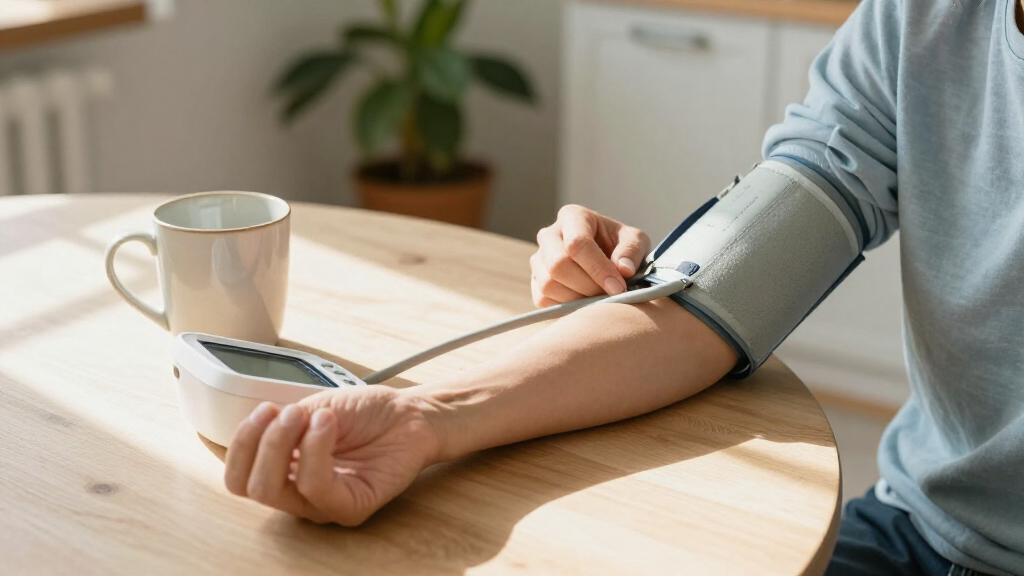
I ranked these blood pressure monitors around the choices that affect day-to-day home use: upper-arm versus wrist design, cuff sizing, display clarity, user setup, memory or app connectivity, and features that add a specific health or tracking function. I gave more weight to a clear fit proposition and a practical measurement routine than to feature count alone. A monitor’s stated capabilities do not replace checking its instructions or confirming that its cuff fits your arm.
The OMRON Platinum ranks first for combining an upper-arm design with AFib detection, while the Bronze is a more pared-back choice for people who do not need that feature. Connected options such as Withings, iHealth, and Meraw suit buyers who value digital records, while models with two cuffs or a wide-range cuff address fit concerns more directly. The wrist monitor ranks as a specialized portability choice rather than a default for everyone. Since the product list does not provide comparable validation, accuracy, or cuff-range details for every model, I avoid claiming that one has proven superior measurement accuracy; buyers should check model-specific documentation and clinician guidance.
| blood pressure monitor | Measurement type |
|---|---|
| Sinocare Upper Arm Blood Press | Upper arm blood pressure |
| OWNQOBE Upper Arm Blood Pressu | Automatic upper arm blood pressure |
| OMRON Platinum Upper Arm Blood | Upper arm blood pressure |
| OMRON Bronze Upper Arm Blood P | Upper arm blood pressure |
| iHealth Track Smart Upper Arm | Upper-arm blood pressure |
| Automatic Upper Arm Blood Pres | — |
| Oklar Upper Arm Blood Pressure | Upper arm |
| Meraw Bluetooth Upper Arm Bloo | Automatic upper arm blood pressure |
| Withings BPM Vision Blood Pres | — |
| AILE Automatic Upper Arm Blood | Automatic upper arm |
| Oklar Rechargeable Wrist Blood | — |
| Alcedo Upper Arm Blood Pressur | — |
| OMRON Silver Upper Arm Blood P | — |
| Automatic Upper Arm Blood Pres | Blood pressure and heart rate |
| OMRON Iron Upper Arm Blood Pre | — |
Factors to Consider When Choosing Blood Pressure Monitors
Before choosing among these monitors, I would start with the basics that can affect whether a home reading is useful: cuff fit, measurement routine, and how you plan to share or store results. Extra connectivity or detection features matter only if they match your needs and are clearly explained in the product documentation.
Choose the Cuff Style You Can Position Reliably
Upper-arm monitors are the main format in this roundup, while the Oklar Rechargeable Wrist is the compact alternative. A wrist device can be easier to pack or use when an upper-arm cuff is difficult to manage, but keeping the wrist at the right height during a reading takes care. With any style, follow the maker’s positioning instructions rather than assuming that a convenient fit means a reliable setup. A common mistake is buying around portability alone and then using the device in a position that differs from its instructions. If you are unsure which format suits you, ask a healthcare professional to show you how to take a reading with the type you plan to use.
Measure Your Arm Before Comparing Cuffs
Do not rely on labels such as adjustable or wide-range without checking the actual cuff range in the product documentation. Measure your upper arm as instructed by the manufacturer and compare that result with the stated range. The OWNQOBE’s two-cuff setup and the iHealth Track’s wide-range cuff make fit a visible part of their pitch, but neither label replaces checking the sizes. A cuff that is too small or too large can make home readings less dependable. If more than one person will use the device, confirm that the included cuff arrangement suits each person, not just the first buyer.
Decide Whether Phone Connectivity Will Help You
Bluetooth and Wi-Fi can make it easier to keep a history or share readings, but they also add setup and app dependence. The Withings BPM Vision lists both Wi-Fi and Bluetooth, while iHealth Track and Meraw are Bluetooth options; these distinctions matter if your preference is automatic syncing or a phone-linked routine. Before buying, check which phones and apps are supported and whether you can still take and view readings without a connection. A common misstep is paying attention to the word smart without checking what data the app stores or how easily you can export or share it. If you prefer a low-maintenance routine, a clear on-device display may matter more than connectivity.
Match Extra Detection Features to a Real Need
The OMRON Platinum’s AFib detection is a distinguishing feature in this lineup, but a detection function is not a diagnosis. Buyers should read the manufacturer’s explanation of what the feature can and cannot tell them, and ask a clinician whether it fits their care plan. A simpler monitor may be a better match if your priority is recording routine readings rather than exploring added alerts. Avoid choosing a model solely because its feature list is longer. Any unusual or concerning result should be discussed with a healthcare professional instead of interpreted from a device label alone.
Think Through Shared Use and Reading Records
If several people will use one monitor, check how it separates user histories and whether the display makes the selected user clear. One product is specifically described for three users, which may suit a household, but confirm its memory behavior and setup steps before relying on it. For a single user, a multi-person feature may add menus without solving a real problem. Also decide whether you need to keep readings on the device, in an app, or in a format you can show at appointments. A consistent, easy-to-follow record is often more useful than extra storage features that are hard to access.
Prioritize Routine and Support Over a Long Feature List
A monitor is most useful when its instructions, cuff, and display make it practical to take readings consistently. Compare power options, replacement cuff availability, warranty terms, and customer support details in the manufacturer’s documentation before deciding. Rechargeable power can reduce battery changes, while standard battery or adapter arrangements may better fit a particular home setup; check the exact model details rather than assuming. Look for clear guidance on rest, posture, timing, and repeat readings, since the device alone cannot correct an inconsistent routine. Paying more makes sense when a specific feature solves a genuine need, not simply because a model offers more functions.
Frequently Asked Questions
Should I choose the OMRON Platinum or a simpler OMRON model?
I would choose the Platinum if its AFib detection feature is relevant to a discussion with your healthcare professional and you want that added function in an upper-arm monitor. The Bronze, Silver, and Iron models are better candidates if you want a more straightforward device and do not need that feature. Compare each model’s cuff range, display, memory, and instructions rather than assuming the brand name makes their use identical. AFib detection is not a diagnosis, so it should not replace medical advice. Check the full model documentation before choosing among them.
Is a Bluetooth or Wi-Fi blood pressure monitor worth choosing?
Connectivity can be worthwhile if you regularly review readings on a phone or share records with a clinician. In this lineup, Withings lists both Wi-Fi and Bluetooth, while iHealth Track and Meraw list Bluetooth, so the syncing setup differs. Confirm app compatibility, data access, and whether the monitor can still display readings when your phone or internet connection is unavailable. If you are comfortable writing readings down, a non-connected monitor may be simpler. The best choice is the one that makes you more likely to keep a consistent record.
How do I know whether a cuff will fit my arm?
Measure your upper arm following the manufacturer’s instructions, then compare the measurement with the specific cuff range listed for the monitor. Do not assume that “adjustable,” “wide-range,” or a two-cuff package covers every arm size. The OWNQOBE and iHealth Track call attention to cuff flexibility, but their published ranges still need to match your measurement. If the range is unclear, contact the manufacturer before buying. A correct cuff fit is more useful than extra app or display features.
When does a wrist blood pressure monitor make more sense than an upper-arm model?
A wrist model may suit someone who needs a smaller device for travel or has difficulty putting on an upper-arm cuff. Its convenience comes with a positioning tradeoff: the wrist must be held as directed during measurement. The Oklar Rechargeable Wrist is the wrist option in this roundup, while the other listed choices use upper-arm cuffs. Ask a healthcare professional whether a wrist monitor is suitable for your situation, especially if you have been advised to use an upper-arm device. Follow the model’s instructions closely each time.
What should I check before buying a monitor for more than one person?
Check whether the monitor keeps separate records for each user, how users are selected, and whether the memory is easy to read without mixing histories. The Automatic Upper Arm Blood Pressure Monitor for 3 Users specifically signals multi-user support, while other models may not offer the same arrangement. Confirm that the cuff fits every intended user and that each person can follow the setup instructions. App-based records may help some households, but only if users can keep their data separate. If readings will inform care, ask a clinician how to record and share each person’s results.
Conclusion
For the broadest feature set in this comparison, I recommend the OMRON Platinum as best overall, especially for buyers interested in its AFib detection feature after discussing it with a healthcare professional. The best value-style choice is the OMRON Bronze for someone who wants a simpler upper-arm monitor without making connectivity or added detection the priority. For a best premium, connected pick, consider the Withings BPM Vision if Wi-Fi and Bluetooth suit your record-keeping habits; for a best beginner-friendly direction, look first at a straightforward upper-arm option such as the OMRON Bronze or Oklar Upper Arm. For specific needs, the OWNQOBE’s two cuffs and iHealth Track’s wide-range cuff merit a fit check, while the Oklar Rechargeable Wrist is the compact option for buyers who can follow wrist-position instructions. My final choice would depend on cuff fit and routine first, then on which extra feature I would genuinely use.