Organizing your fridge helps you access healthy foods easily, encourages better choices, and reduces waste. Store produce in clear, labeled containers and group similar items together for quick selection. Keep dairy and leftovers on the middle shelves, and use airtight containers to extend freshness. Maintain the right temperature zones and clean regularly to guarantee food safety. If you follow these tips, you’ll find it simpler to enjoy nutritious meals every day — and there’s plenty more to discover.
Key Takeaways
- Organize foods by categories and use clear labels to promote quick access to healthy options.
- Store dairy and leftovers on middle or upper shelves for consistent, safe temperatures.
- Keep raw meats on the bottom shelf to prevent cross-contamination and foodborne illness.
- Use airtight containers to preserve freshness and prevent odors from affecting other foods.
- Regularly check and discard expired or spoiled items to maintain food safety and reduce waste.
airtight food storage containers
As an affiliate, we earn on qualifying purchases.
As an affiliate, we earn on qualifying purchases.
Why Fridge Organization Supports Healthy Eating
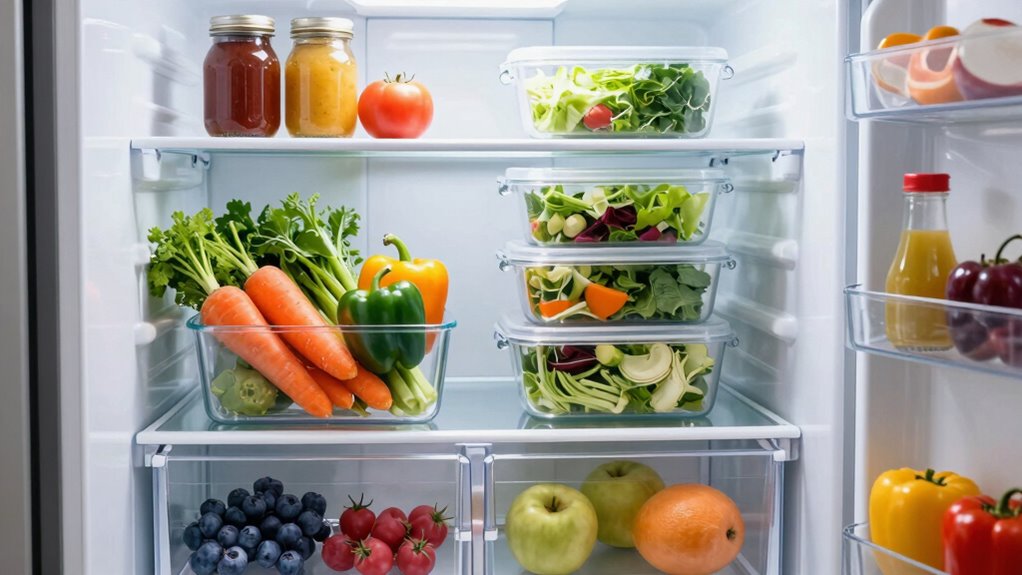
Organizing your fridge makes healthy eating easier because it helps you see and access nutritious foods quickly. When your fridge is well-structured, you’re less likely to indulge in unhealthy snacking habits since you can easily grab fresh fruits or veggies instead of processed snacks. Proper organization also supports meal prep by keeping ingredients visible and ready to use, saving you time and reducing the temptation to skip preparing balanced meals. When healthy options are front and center, you’re more likely to choose them, fostering better eating habits. Plus, a tidy fridge reduces food waste, ensuring your nutritious foods stay fresh longer. Incorporating sustainable living practices into your kitchen routines can further enhance food preservation and reduce environmental impact. Additionally, understanding animal welfare principles encourages the use of eco-friendly and ethically sourced food products, contributing to a more sustainable and compassionate lifestyle. Being mindful of food storage guidelines can help maintain food quality and extend shelf life, supporting both health and sustainability. Implementing proper food safety practices also helps prevent foodborne illnesses, making your healthy eating efforts safer and more effective. Overall, a well-organized fridge becomes a powerful tool for maintaining consistent, healthy eating routines.
As an affiliate, we earn on qualifying purchases.
How to Categorize Fresh Produce for Easy Access

To make healthy eating even easier, it’s helpful to categorize your fresh produce in a way that allows for quick and easy access. Start by grouping fruits that ripen at similar rates, so you can monitor their ripening and use them promptly, reducing waste. Keep fruits that ripen quickly, like berries and bananas, in one section, and those with longer shelf lives, like apples and oranges, in another. For vegetables, practice vegetable stacking—placing sturdier, less delicate items at the bottom and more delicate ones on top. This prevents crushing and helps you identify what’s ready to eat or cook. Clear, labeled containers or bins further streamline your fridge layout, ensuring you always know where your produce is and can grab what you need efficiently. Additionally, understanding cross-cultural relationships can motivate healthier food choices by sharing new recipes and habits from diverse backgrounds. Recognizing food preservation techniques can also extend the freshness of your produce, making your categorization even more effective. Incorporating proper storage methods can further enhance the longevity of your fruits and vegetables, reducing waste and maintaining quality. Being aware of nutritional benefits can help you choose the best produce for your dietary needs, making your organization even more purposeful. Furthermore, implementing meal planning strategies based on your categorized produce can help minimize waste and optimize your grocery shopping.
clear labeled produce containers
As an affiliate, we earn on qualifying purchases.
As an affiliate, we earn on qualifying purchases.
Setting the Right Temperature Zones to Keep Food Fresh
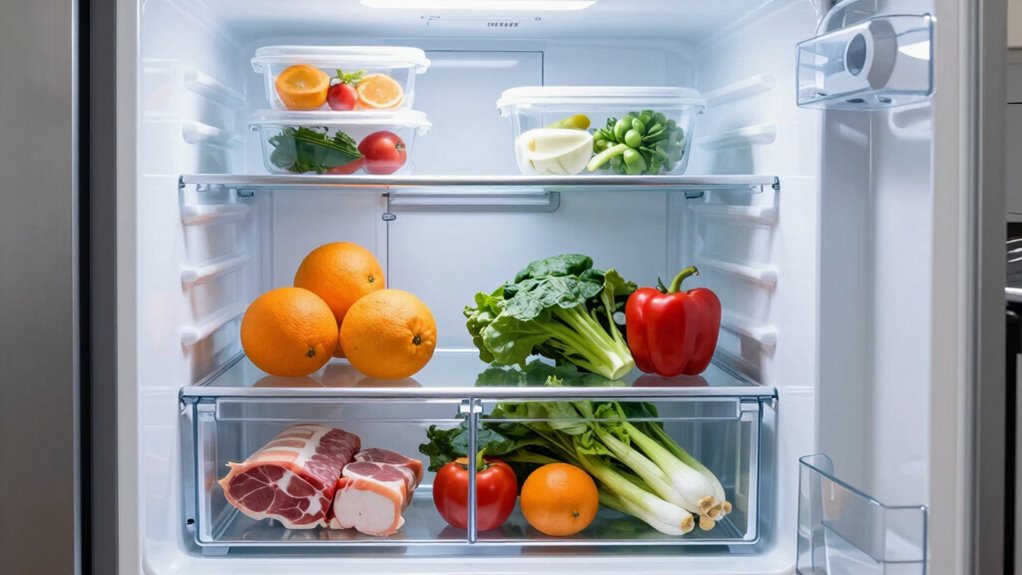
Maintaining the right temperature zones in your fridge is essential for keeping your food fresh and safe. Set the main compartment between 35°F and 38°F to inhibit bacteria growth. Use the crisper drawers for fruits and vegetables, which prefer slightly higher humidity. The door, with its insulation, tends to fluctuate in temperature, so avoid storing perishables there. Proper fridge lighting helps you quickly identify items without opening doors excessively, maintaining consistent temperatures. Regularly monitoring the temperature zones ensures optimal food preservation.
As an affiliate, we earn on qualifying purchases.
Best Storage Solutions for Dairy and Leftovers

Wondering how to keep dairy and leftovers fresh for longer? Proper storage is key to maintaining dairy freshness and ensuring leftover preservation. Use airtight containers to prevent moisture and odor transfer, keeping your items tasting their best. Store dairy on the middle or upper shelves, where temperatures stay more consistent, to maximize freshness. Wrap leftovers tightly with plastic wrap or foil to lock in moisture and flavors, reducing waste. Additionally, label containers with dates so you consume items before they spoil. These simple choices help you enjoy your food longer and reduce waste. Proper storage is also essential for preventing spoilage and maintaining food safety.
- Keep dairy in the coldest part of the fridge for ideal dairy freshness.
- Use clear, stackable containers for easy organization and quick access.
- Always seal leftovers tightly to preserve their flavors and prevent spoilage.
- Ensuring good indoor air quality can help maintain a fresh environment for storing food and reduce odors that may affect the overall freshness of your refrigerator.
- Maintaining good air circulation within your refrigerator can further help prevent moisture buildup and spoilage.
- Regularly cleaning your refrigerator helps eliminate bacteria and odors that can compromise food freshness, supporting overall food safety.
- Proper ventilation within the refrigerator can also help regulate temperature and humidity levels, further extending the freshness of stored items.
Smart Container Tips to Reduce Food Waste

Using properly sealed containers keeps your food fresh longer and prevents spills. Clear labels help you quickly identify contents and track expiration dates. By practicing these simple tips, you can considerably cut down on food waste. Incorporating modern storage solutions can also optimize your refrigerator space and improve organization. Additionally, choosing airtight seals can further enhance freshness and prevent contamination. Implementing efficient organization techniques can make retrieving items faster and help maintain a tidy fridge. Utilizing innovative storage options ensures that your space remains functional and clutter-free. Incorporating proper storage methods can also extend the shelf life of perishable items and reduce spoilage.
Proper Container Sealing
Properly sealing your containers is one of the simplest yet most effective ways to keep food fresh longer and cut down on waste. Good sealing techniques prevent air from entering, which can cause spoilage, and promote better container hygiene. When you guarantee a tight seal, you reduce the risk of leaks and contamination, maintaining food quality and safety. To maximize freshness, always check that lids fit securely and are free of debris before sealing. Incorporating proper sealing techniques can also enhance your overall food safety practices. Additionally, using sterilized containers ensures that bacteria and mold do not compromise your stored food. Maintaining consistent sealing habits is essential for food preservation, which helps preserve flavor and texture, saving you money and reducing waste. Using airtight containers can further prevent odors from spreading and contaminating other stored items. Regularly inspecting and replacing worn seals can also help ensure your containers continue to maintain their seal integrity, making your storage methods more effective.
Clear Labeling Practices
Clear labeling is essential for preventing food from being forgotten and wasted in your fridge. When you use food labeling, you quickly identify what’s inside containers, reducing the chance of leftovers spoiling unnoticed. Make it a habit to include expiration dates on all stored items, so you know when to consume or discard them. Use waterproof markers or label makers for clear, legible labels. Organize your fridge with designated spots for different food groups, and label each section if needed. This helps you see at a glance what needs to be eaten soon. Proper food labeling encourages mindful eating and reduces waste by reminding you of food’s freshness. Staying organized with clear labels ultimately saves money and promotes healthier, more sustainable habits.
How to Plan Grocery Storage to Minimize Spoilage
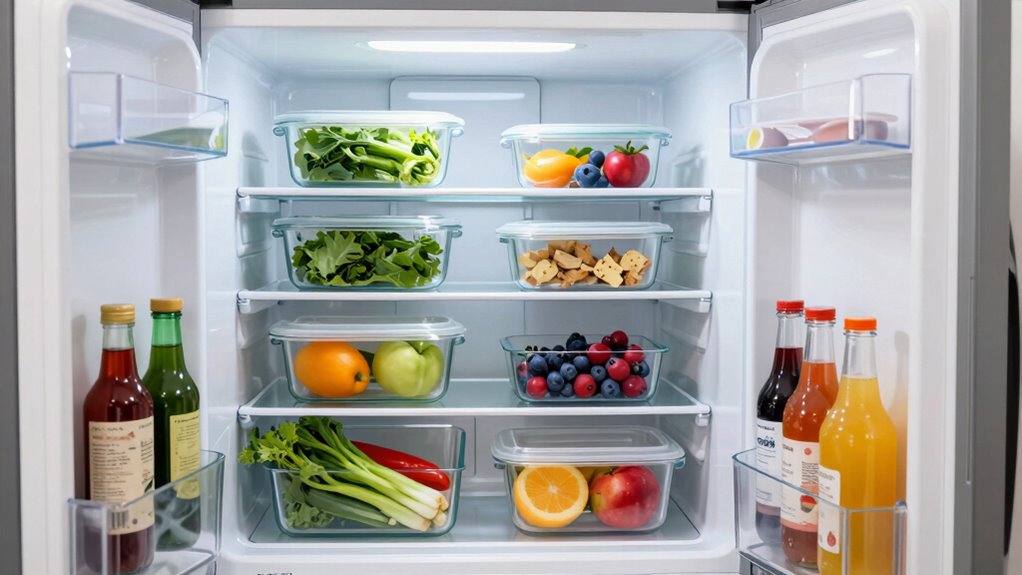
To minimize food spoilage, start by choosing proper containers that keep your items fresh and organized. Arrange your groceries by food type so you can easily see what needs to be used first. Remember to follow the first-in, first-out rule to guarantee older items get used before newer ones.
Proper Container Selection
Choosing the right containers can substantially extend the freshness of your groceries and reduce waste. Opt for containers with high container durability to prevent cracks and leaks, ensuring your food stays secure. Prioritize BPA free options to keep harmful chemicals out of your meals and promote healthier eating habits. Well-chosen containers protect your produce and leftovers from spoilage, saving you money and reducing clutter.
- Feel confident knowing your food stays fresh longer with sturdy, reliable containers.
- Experience peace of mind choosing BPA free options for safer storage.
- Enjoy less waste and more organized fridge space, making healthy eating easier.
Selecting quality, safe containers is a simple step that makes a big difference in your daily routine.
Organize by Food Type
Organizing your fridge by food type helps you keep track of what you have and prevents spoilage. By grouping similar items—vegetables, fruits, dairy, and proteins—you can easily spot what needs to be used soon. This organization streamlines meal prep and guarantees you don’t forget about leftovers or perishables. When you keep energy-boosting snacks like yogurt or fresh fruit visible, you’re more likely to incorporate them into your meals. Properly sorted sections also reduce cross-contamination and spoilage risk. Plus, it makes it easier to plan grocery runs, avoiding duplicates and waste. Clear zones encourage you to use ingredients efficiently, keeping everything fresh longer. Overall, organizing by food type helps you maintain a healthier fridge and supports your daily healthy eating habits.
Use First-In, First-Out
Ever wonder how you can keep your groceries fresh longer? The key is using the First-In, First-Out (FIFO) method. This simple system helps prevent waste by ensuring you consume older items before newer ones. Always check expiration dates, and place new groceries behind older ones to encourage proper food rotation.
- Feel confident knowing you’re reducing food waste and saving money.
- Experience the satisfaction of always having fresh, safe ingredients ready to use.
- Avoid the frustration of discovering spoiled produce or leftovers.
Using Labels and Clear Bins for Better Fridge Organization

Using labels and clear bins can transform your fridge into a more efficient and accessible space. A good labeling system helps you identify items quickly, reducing the time spent searching or guessing. Use markers or printable labels to mark bins with contents and expiration dates. Clear bins are essential—they allow you to see what’s inside at a glance, preventing forgotten items and spoilage. Group similar items together, such as dairy, vegetables, or leftovers, and place them in designated bins. This organization minimizes clutter and makes it easier to maintain. By combining container clarity with a consistent labeling system, you create a fridge that’s not only tidier but also promotes healthier eating habits by encouraging you to use what you have before buying more.
How to Store Snacks and Convenience Foods Healthily
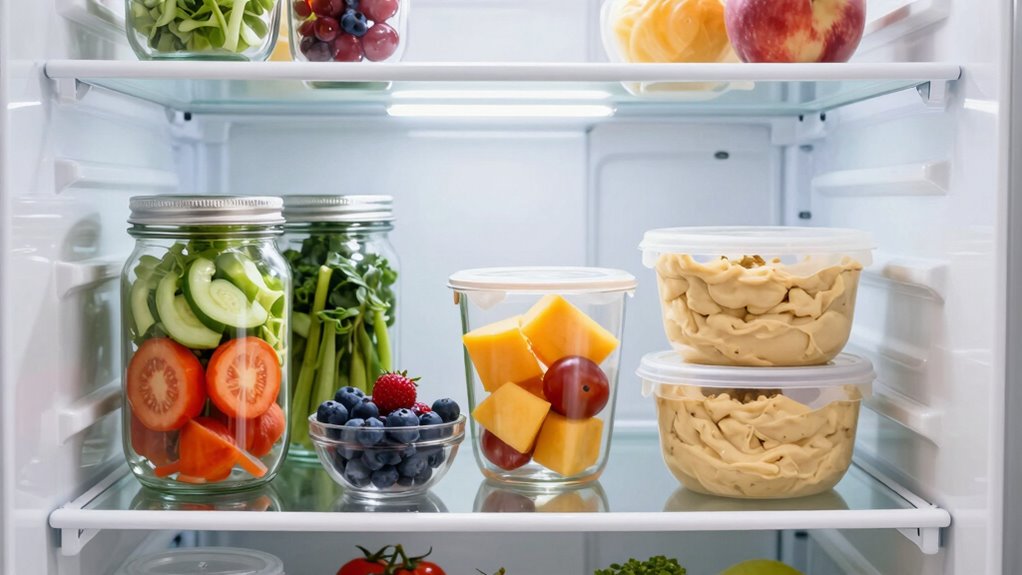
Once you’ve sorted your fridge with labels and clear bins, managing snacks and convenience foods becomes much easier. To keep them healthy, focus on snack portioning—pre-portion snacks into small containers or bags to prevent overeating and make healthy choices quick. Use convenience food hacks like placing healthier options at eye level or near the front for easy access, encouraging better choices. Keep sugary, processed snacks in less prominent areas to reduce temptation. Incorporate more nutritious options like cut-up veggies, fruit, and yogurt into your snack routine. Regularly check your supplies to avoid spoilage and waste. By organizing with purpose and using smart storage techniques, you’ll enjoy tasty snacks that support your health goals without the guilt.
Cleaning and Maintaining Your Fridge for Food Safety

Keeping your fridge clean and well-maintained is essential for food safety. You should stick to a regular cleaning schedule, use proper storage techniques, and monitor the temperature to prevent spoilage. These simple steps help guarantee your food stays fresh and safe to eat.
Regular Cleaning Schedule
Maintaining a regular cleaning schedule for your fridge is essential to guarantee food safety and prevent contamination. It also helps optimize fridge lighting, making it easier to see what’s inside, and reduces power consumption by keeping the compressor from overworking. To stay on top of cleaning, set a weekly reminder to wipe down shelves and discard expired items. Regularly defrost and clean the drainage drain to prevent mold buildup. Keeping your fridge clean boosts your confidence in the safety of your food and saves energy.
- Feel the satisfaction of a spotless, organized fridge that invites healthy choices
- Experience peace of mind knowing your food is safe and fresh
- Enjoy a more efficient fridge that consumes less power and lasts longer
Proper Storage Techniques
Proper storage techniques are essential for guaranteeing your food stays fresh and safe to eat. Managing fridge humidity helps prevent spoilage and mold, so use crisper drawers with adjustable vents to control moisture levels. Keep raw meats on the bottom shelf to avoid cross-contamination, and store leftovers in airtight containers. For the freezer, organized stacking and labeled packaging make it easier to find items and prevent freezer burn. Regularly check for expired foods and discard them promptly. Clean spills immediately to maintain hygiene and avoid odors. When cleaning, wipe down shelves with a mild solution to prevent bacteria buildup. Proper freezer organization ensures you use space efficiently and prevents items from getting lost, ultimately extending the lifespan of your frozen foods.
Temperature Monitoring Tips
To guarantee your fridge operates at the right temperature and keeps food safe, you need to regularly monitor and adjust the settings. Proper temperature control prevents spoilage and bacteria growth. Use a reliable thermometer to check the fridge’s interior, and ensure sensor calibration is accurate for precise readings. Adjust the thermostat if temperatures drift above 40°F (4°C) or below 0°F (-18°C). Regularly clean your fridge to maintain consistent performance and prevent dust from affecting sensors.
- Feel confident knowing your food stays fresh and safe
- Avoid costly spoilage or foodborne illnesses
- Trust your fridge to keep your healthy habits on track
Quick Hacks to Make Healthy Meal Prep Faster and Easier

When you’re short on time but still want to prepare healthy meals, adopting a few quick hacks can make all the difference. Focus on meal prep shortcuts like batch cooking grains and chopping vegetables in advance. Use airtight containers to store pre-cut ingredients, so they’re ready to grab and go. Organize your fridge with designated zones for proteins, produce, and leftovers to boost kitchen efficiency. Keep a rotation system to use older items first, reducing waste. Invest in tools like slow cookers or instant pots to speed up cooking. Simplify your routine by planning simple, versatile recipes that share ingredients. These strategies help you save time, streamline your process, and guarantee healthy options are always within reach.
Frequently Asked Questions
How Often Should I Clean My Fridge for Optimal Freshness?
You should clean your fridge every three to four months to keep it fresh. During cleaning, focus on fridge deodorizing to eliminate odors and check that temperature regulation is consistent, ideally between 37-40°F. Regular cleaning prevents mold and bacteria buildup, ensuring your food stays fresh longer. Also, wipe down shelves and drawers, and dispose of expired items. This routine keeps your fridge hygienic and optimizes freshness for healthy eating.
What Are the Best Ways to Prevent Cross-Contamination?
To prevent cross-contamination, you should store raw meats separately, keep ready-to-eat foods on higher shelves, and always use sealed containers. Practice good food safety by washing hands and utensils thoroughly, and organize your fridge with shelf organization in mind—placing items strategically to avoid drips and spills. These steps help maintain a clean environment, reduce bacteria spread, and guarantee your food stays fresh and safe to eat.
How Can I Maximize Fridge Space in a Small Kitchen?
To maximize fridge space in a small kitchen, focus on shelf organization and temperature zones. Arrange items by frequency of use, placing essentials at eye level and in easy-to-reach zones. Use clear bins or stackable containers to save space. Keep raw meats on the bottom shelf to prevent cross-contamination, and adjust temperature zones for different food types. This approach keeps your fridge efficient and organized, making it easier to access everything.
Are There Specific Storage Tips for Organic Versus Non-Organic Produce?
For organic produce, store it in the crisper drawer’s high humidity zone to keep it fresh longer, avoiding plastics that can trap moisture. Non-organic produce often lasts longer and can be stored in the lower humidity section. Always wash organic produce before storing and keep non-organic items dry to prevent spoilage. Use breathable bags for organic and airtight containers for non-organic to optimize preservation and reduce spoilage.
How Do I Handle and Store Leftovers Safely for Longer Shelf Life?
You should promptly transfer leftovers into airtight storage containers to keep them fresh longer and prevent spoilage. Prioritize food safety by labeling containers with dates, so you know when to enjoy or discard. Store leftovers at the back of the fridge, where it’s coolest, and aim to consume them within 3-4 days. Proper handling and storage containers help extend shelf life and keep your meals safe and delicious.
Conclusion
By mastering your fridge’s layout, you turn it into a vibrant hub of fresh, healthy foods—like a well-tended garden bursting with colors and flavors. When you organize with clear bins, label everything, and keep temperatures just right, you’ll find your meals come together faster and taste better. Your fridge becomes a sanctuary of nourishment, inviting you to reach in and grab a wholesome snack or a quick ingredient, making healthy eating effortless and enjoyable every day.