
TL;DR

Get health and wellness essentials delivered free with Prime
- Fast, free delivery on millions of items
- Prime Video, Amazon Music and more included
- Member-only deals all year
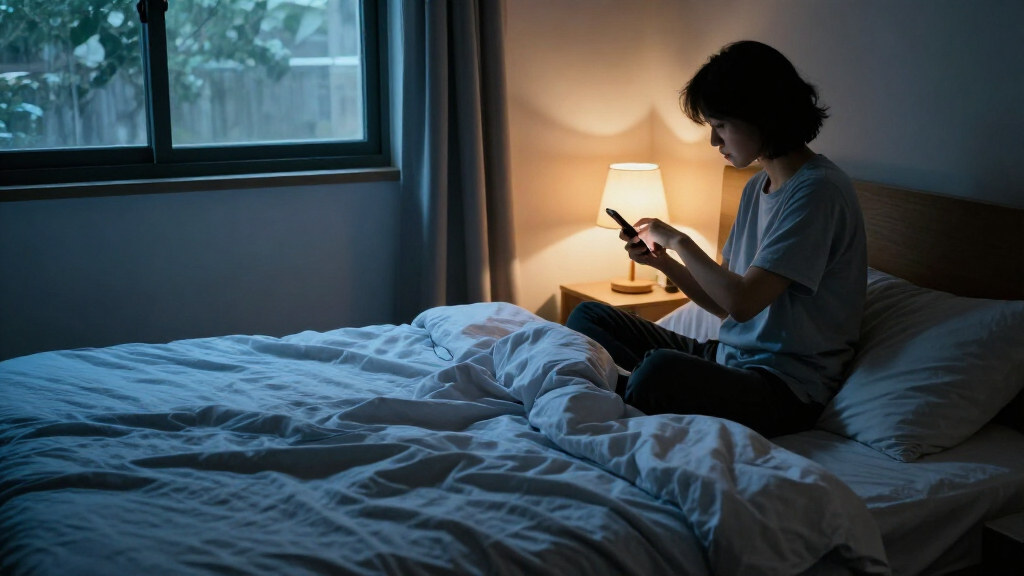
A perspective published in Frontiers in Psychiatry on Dec. 10, 2025, reviews evidence that delayed circadian timing is common among people with ADHD, though it does not affect everyone. It argues for screening and behavioral clock-setting measures as additions to ADHD care, while calling for better trials to establish who benefits and how much symptoms improve.
A perspective article published Dec. 10, 2025, in Frontiers in Psychiatry argues that delayed circadian rhythms are a clinically relevant feature for a substantial subgroup of people with ADHD, and proposes screening and behavioral clock-adjustment measures as additions to care. The authors say existing studies show that circadian timing can be shifted in people with ADHD, but they call for stronger trials before its effects on core symptoms or the best treatment approach can be established.
The authors summarize reported rates of sleep and timing problems, including insomnia or other sleep disturbances in up to 80% of adults and up to 82% of children with ADHD. They cite estimates that delayed sleep-wake timing affects up to 78%. These are upper estimates drawn from prior research, not a finding that every person with ADHD has a circadian disorder.
Biological markers also point to later timing in some groups. The perspective reports that dim-light melatonin onset, a marker of circadian phase, is delayed by about 45 minutes in children and 90 minutes in adults with ADHD in cited studies. It also discusses research on altered cortisol rhythms, smaller pineal gland volume, and weaker rhythms in peripheral clock genes such as BMAL1 and PER2. These findings describe associations; the article does not establish that circadian changes cause ADHD.
Intervention studies reviewed by the authors suggest that melatonin and bright light can advance circadian phase in children and adults with ADHD. Some studies associate phase advancement with symptom improvement, while sleep programs have reported benefits for sleep, functioning, and ADHD symptoms in children. The perspective proposes a behavioral-first pathway: assess sleep and chronotype, use sleep tracking and dim-light melatonin onset testing when feasible, and consider fixed wake times, morning light, reduced evening light, and regular daily schedules. It discusses low-dose melatonin selectively for likely or confirmed delays.
Adding Clock Timing to ADHD Care
The proposal could broaden how clinicians assess sleep problems that accompany ADHD. If a patient’s sleep schedule is consistently delayed, addressing timing may help with sleep and daily functioning alongside established ADHD care. The authors present circadian interventions as adjuncts, not replacements for existing treatment.
The practical appeal is that some suggested measures—consistent wake times and adjusting light exposure—are behavioral. But their presence in a proposed pathway is not proof that they improve core ADHD symptoms for all patients. The authors call for trials that measure symptom outcomes, identify which patients respond, and compare protocols.
As an affiliate, we earn on qualifying purchases.
Evidence Behind the Circadian Link
The article is a Perspective, published in the journal’s Sleep Disorders section, rather than a new clinical trial. It brings together earlier findings on sleep, chronotype, biological rhythms, and interventions, then argues that circadian assessment deserves more attention in ADHD care.
Its central qualification is that circadian disruption describes a subgroup, not everyone with ADHD. Sleep difficulties can have multiple causes, and the article notes that ADHD and circadian symptoms may interact in both directions. It cites studies in which sleep problems remained associated with ADHD after accounting for anxiety and depression, but that does not resolve the causes of an individual’s sleep difficulty.
“Circadian rhythm disruption represents a highly prevalent and clinically important phenotype that interacts with ADHD symptoms in complex, bidirectional ways in a substantial proportion (though not all) of individuals.”
— The perspective article’s authors
light therapy lamps for circadian rhythm
As an affiliate, we earn on qualifying purchases.
As an affiliate, we earn on qualifying purchases.
Who Benefits and How Much
The perspective does not establish that delayed circadian timing causes ADHD, nor that treating a delay reliably reduces core ADHD symptoms. The reported prevalence figures and biological differences come from earlier studies with varying methods and populations; the article’s summary does not provide a single pooled estimate that resolves those differences.
It also remains unclear which people with ADHD are most likely to benefit, whether changes in circadian phase account for symptom changes, and what timing or dose of interventions is appropriate. Dim-light melatonin onset testing may help characterize phase, but it is not described as necessary or widely available in routine care. The authors call for stratified, well-designed clinical trials to address these gaps.
As an affiliate, we earn on qualifying purchases.
Trials to Test Circadian Care
The next step identified by the authors is further clinical research comparing circadian-focused protocols and measuring both sleep and core ADHD outcomes. Trials will need to identify participant groups by circadian profile, assess whether improvements persist, and determine which combinations of light, scheduling, and other measures are useful.
Until that evidence is available, the article presents screening and behavioral approaches as a proposed adjunctive pathway, not a settled standard of care. Decisions about melatonin or other treatment should be discussed with a qualified clinician.
As an affiliate, we earn on qualifying purchases.
Key Questions
Does the article say ADHD is a circadian rhythm disorder?
No. The authors argue that circadian disruption is a clinically relevant feature for a substantial subgroup of people with ADHD, not a universal explanation or replacement diagnosis.
What circadian differences does the perspective report?
It summarizes studies reporting later dim-light melatonin onset—about 45 minutes in children and 90 minutes in adults with ADHD—as well as altered cortisol and other rhythm markers. These are findings from cited research, not results of a new trial in this article.
Can chronotherapy improve ADHD symptoms?
The perspective describes studies in which melatonin or bright light advanced circadian timing and some research associating phase advancement with symptom improvement. It does not establish a reliable effect for all patients, and the authors call for more rigorous trials.
What measures do the authors propose?
The proposed pathway includes screening for sleep and circadian problems, considering chronotype and sleep tracking, setting fixed wake times, using morning light, limiting evening light, and regularizing daily schedules. The authors reserve low-dose melatonin for selected cases with likely or confirmed timing delay; treatment choices should be discussed with a qualified clinician.
Source: hn
Halloween Picks
halloween
As an affiliate, we earn on qualifying purchases.