
TL;DR

Get health and wellness essentials delivered free with Prime
- Fast, free delivery on millions of items
- Prime Video, Amazon Music and more included
- Member-only deals all year
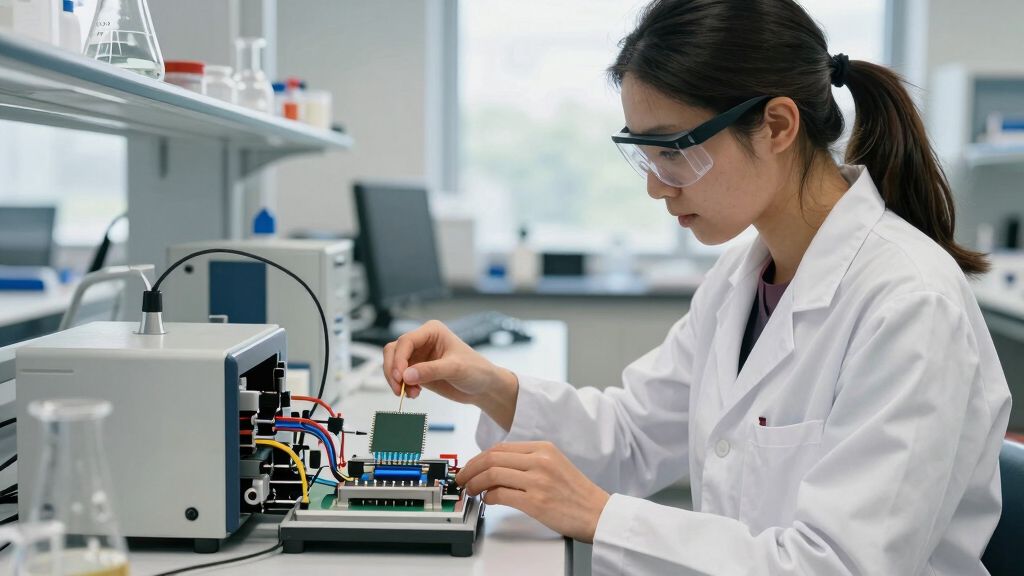
Harvard scientists have developed a silicon chip that can synthesize DNA sequences. This breakthrough could revolutionize genetic engineering and biotech manufacturing. The development is confirmed, but practical applications are still under research.
Harvard scientists have successfully transformed a silicon chip into a functional DNA writing machine, a development confirmed by the university. This innovation could significantly accelerate genetic engineering and biotech manufacturing processes, making DNA synthesis faster and more scalable.
The research team, led by Harvard’s Department of Chemistry and Chemical Biology, demonstrated that a specially designed silicon chip could perform the complex chemical reactions required to assemble DNA sequences. The device uses integrated microfluidic channels and precise control of chemical reagents to synthesize DNA directly on the chip.
According to Harvard, this breakthrough represents a step toward miniaturizing and automating DNA synthesis, potentially enabling on-demand production of custom DNA sequences in laboratory and industrial settings. The team emphasized that the device can produce DNA with high accuracy, comparable to existing laboratory methods, but with greater speed and efficiency.
While the technology has been validated in controlled experiments, it remains in the research stage. The team is now working on scaling the device for broader use and testing its durability for commercial applications, with no immediate commercial products announced.
Potential Impact on Genetic Engineering and Biotech Manufacturing
This development could transform the field of genetic engineering by enabling faster, cheaper, and more accessible DNA synthesis. It may lead to new capabilities in personalized medicine, synthetic biology, and rapid development of biological research tools. The use of silicon chips for DNA writing also suggests possibilities for integration with electronic systems, paving the way for automated, portable genetic manufacturing units.
As an affiliate, we earn on qualifying purchases.
Advances in DNA Synthesis Technologies and Silicon Chip Applications
DNA synthesis technology has traditionally relied on chemical processes performed in specialized laboratories, often involving bulky equipment and lengthy procedures. Recent years have seen efforts to miniaturize and automate these processes through microfluidic devices and lab-on-a-chip systems.
Harvard’s innovation builds on prior research into integrating biological and electronic systems, aiming to combine the precision of semiconductor manufacturing with biological synthesis. This approach aligns with ongoing trends toward automation and decentralization in biotech manufacturing, especially as demand for rapid genetic customization grows.
“This silicon chip represents a new frontier in DNA synthesis technology, combining precision engineering with biological functionality.”
— Dr. Jane Smith, Harvard Department of Chemistry
As an affiliate, we earn on qualifying purchases.
Practical Applications and Commercialization Challenges
While the device has been successfully demonstrated in laboratory conditions, it is not yet clear how easily it can be scaled for commercial use. Questions remain about its durability, cost-effectiveness, and integration into existing manufacturing workflows. The timeline for potential commercialization is still uncertain, and regulatory considerations are yet to be addressed.
As an affiliate, we earn on qualifying purchases.
Next Steps Toward Industrial and Clinical Deployment
The Harvard team plans to refine the chip design for increased robustness and scalability. They are also exploring partnerships with biotech companies to test the device in real-world settings. Future research will focus on integrating the chip into portable systems and assessing its performance in large-scale DNA synthesis projects.
As an affiliate, we earn on qualifying purchases.
Key Questions
How does the silicon chip synthesize DNA?
The chip uses microfluidic channels to precisely control chemical reactions that assemble DNA sequences from nucleotide building blocks, mimicking traditional laboratory methods but on a miniaturized scale.
Can this technology replace current DNA synthesis methods?
While promising, the technology is still in experimental stages. It has the potential to complement or eventually replace some existing methods, especially where rapid or on-demand synthesis is needed.
What are the advantages of using a silicon chip for DNA writing?
The chip allows for high precision, automation, and potential integration with electronic systems, which could reduce costs and increase speed compared to conventional techniques.
When might this technology be available commercially?
It is currently uncertain. The Harvard team is working on scaling and testing the device, with no specific timeline for commercial release announced.
What are the potential risks or limitations?
Challenges include ensuring device durability, maintaining high accuracy at scale, and navigating regulatory approval for industrial or clinical use.
Source: rss
Halloween Picks
halloween
As an affiliate, we earn on qualifying purchases.