

This guide helps adults compare natural sleep aid supplements, check for safety concerns, and plan a measured trial rather than taking several products at once. It is for beginners who want to discuss an option with a healthcare professional and track whether it helps. Allow 30-60 minutes to review your medicines and product information, plus 2-4 weeks for a cautious trial if a clinician approves one. Supplements do not treat every cause of sleep problems, and “natural” does not mean risk-free.

Get health and wellness essentials delivered free with Prime
- Fast, free delivery on millions of items
- Prime Video, Amazon Music and more included
- Member-only deals all year

MEDCHOICE 12-in-1 Melatonin 5mg Sleep Capsules with Magnesium, 90 count
- ✔ Melatonin: 5mg per capsule
- ✔ Quantity: 90 capsules
- ✔ Key ingredients: Magnesium glycinate, ashwagandha, GABA, chamomile, valerian root

Relaxium Sleep Aid for Adults, 5mg Melatonin, Magnesium Glycinate, 30 Capsules
- ✔ Melatonin: 5mg
- ✔ Quantity: 30 capsules
- ✔ Mineral: Magnesium glycinate
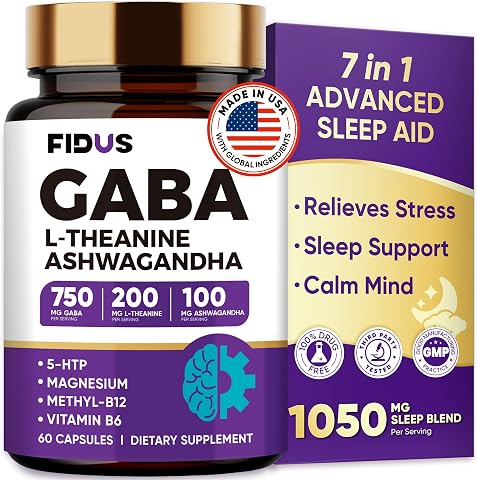
GABA Supplements 1050mg Blend, Advanced Sleep Aid & Calm, L-Theanine, 5-HTP
- ✔ GABA: 750mg per serving
- ✔ Headline blend: 1050mg blend
- ✔ Melatonin: None; melatonin-free
Difficulty: Beginner | Time: 30-60 minutes to review options and safety; 2-4 weeks to track a trial
What You’ll Need
Tools & Materials:
- A current list or photos of prescription medicines, over-the-counter medicines, and supplements
- A sleep diary or notes app
- Product label and, if available, third-party testing information
- Access to a doctor or pharmacist for an interaction and safety check
Knowledge:
- Basic awareness of your usual sleep schedule and main sleep complaint
- Ability to read a Supplement Facts panel and follow label directions
Do not start a supplement before checking with a healthcare professional if you are pregnant or breastfeeding, under 18, have a chronic condition, take regular medicines, or have had a serious reaction to a supplement. Seek medical advice for persistent or severe sleep problems, loud snoring or gasping, or dangerous daytime sleepiness. Supplements are not a substitute for diagnosing the cause of insomnia.
MEDCHOICE 12-in-1 Melatonin 5mg Sleep Capsules with Magnesium, 90 count
MEDCHOICE earns the lead because it pairs the same stated 5mg melatonin amount as Relaxium with a 90-capsule count, the largest supply specified here. Its formula also names magnesium glycinate, ashwagandha, GABA, chamomile, and valerian root, giving buyers a clear outline of the ingredient categories without requiring them to choose a melatonin-free approach. The description calls it vegan and suitable for nightly use, although those claims should be checked against the complete package label.The tradeoff is complexity. A multi-ingredient capsule may appeal to shoppers looking for several kinds of support, but it can be harder to identify which ingredient is—or is not—a good fit, especially for people with sensitivities. Compared with Relaxium, MEDCHOICE offers more capsules but likewise uses a 5mg melatonin amount and several overlapping ingredients. Compared with the GABA blend, it is the more direct choice for someone who wants melatonin included; it is not the better option for anyone specifically avoiding it. We rank it first for its combination of stated supply and broad formula, not because a 12-in-1 label establishes stronger results.
Pros:
- 90 capsules, the largest stated quantity among these three options
- Lists 5mg melatonin per capsule
- Names several key ingredients, including magnesium glycinate and chamomile
- Described as vegan
Cons:
- The many-ingredient formula may be difficult to assess for sensitivities
- May cause drowsiness, according to the supplied product details
- The product description does not establish how much of each botanical is included
Best for: Adults who want a melatonin-based, multi-ingredient formula and prefer the lineup’s largest stated capsule count.
Not ideal for: People who want a short, minimal ingredient list, need to avoid melatonin, or are sensitive to botanicals such as valerian or chamomile.
Bottom line: MEDCHOICE is our most versatile melatonin-based pick for buyers who value a larger stated supply, provided they are comfortable reviewing a complex ingredient blend.
“MEDCHOICE is our most versatile melatonin-based pick for buyers who value a larger stated supply, provided they are comfortable reviewing a complex ingredient blend.”
Relaxium Sleep Aid for Adults, 5mg Melatonin, Magnesium Glycinate, 30 Capsules
Relaxium is the most straightforward fit for shoppers who have already decided they want melatonin alongside supporting ingredients. It states a 5mg melatonin amount and identifies magnesium glycinate, passionflower, GABA, ashwagandha, and chamomile, while its 30-capsule count makes the stated supply shorter than MEDCHOICE’s. The formula also includes proprietary Valerest, which is a meaningful distinction: shoppers who prioritize knowing exactly what is in a blend may want more detail before choosing it.Compared with MEDCHOICE, Relaxium does not offer the same stated capsule quantity, and both products list 5mg melatonin with several botanicals. Its role here is therefore not “more complete,” but a melatonin-led alternative for buyers drawn to its named ingredient profile. The GABA blend is a better match for people avoiding melatonin, while Relaxium may suit those who specifically want it included. The description calls the product non-habit forming, but that marketing language is not a substitute for individual medical advice or evidence of a particular outcome. Its listed cautions for pregnant or nursing women are also important; anyone in those groups should seek professional guidance rather than relying on a product description.
Pros:
- Clearly states 5mg melatonin
- Includes magnesium glycinate and several named herbs
- 30-capsule format is a compact stated quantity
- The description identifies it as non-habit forming
Cons:
- Proprietary Valerest makes part of the formula less transparent
- Smaller stated capsule quantity than MEDCHOICE
- The supplied description cautions that it may not suit pregnant or nursing women
Best for: Adults seeking a melatonin-centered supplement with magnesium and named botanical ingredients, and who are willing to review the proprietary component on the full label.
Not ideal for: People who want a larger capsule supply, a fully transparent ingredient breakdown, or a supplement without melatonin.
Bottom line: Relaxium makes the most sense for buyers who want a melatonin-led blend and accept less ingredient transparency and a smaller stated supply than MEDCHOICE.
“Relaxium makes the most sense for buyers who want a melatonin-led blend and accept less ingredient transparency and a smaller stated supply than MEDCHOICE.”
GABA Supplements 1050mg Blend, Advanced Sleep Aid & Calm, L-Theanine, 5-HTP
This is the lineup’s melatonin-free alternative, built around a stated 750mg of GABA per serving and a wider blend that includes L-theanine, magnesium glycinate, ashwagandha, 5-HTP, and vitamins B6 and B12. That makes it the most relevant pick for buyers who want a different ingredient strategy from the 5mg melatonin formulas in Relaxium and MEDCHOICE. Its positioning around calm may also appeal to shoppers who prefer to focus on relaxation rather than adding melatonin.Its key limitation is the gap between the headline blend size and the available detail: while the product states 750mg of GABA, it does not give specific amounts for each other component. That makes it harder to compare the formula ingredient by ingredient with the named components in the other two products. The product description also says it may not work for everyone, and multiple ingredients can raise sensitivity concerns. We rank it third overall not because melatonin-free formulas are inherently less suitable, but because the disclosed serving information is less complete. For people who specifically want to avoid melatonin, however, that difference in approach may matter more than the overall ranking.
Pros:
- Melatonin-free, unlike Relaxium and MEDCHOICE
- States 750mg of GABA per serving
- Includes L-theanine and magnesium glycinate in the listed blend
- The description positions it for calm as well as sleep support
Cons:
- Does not specify the amount of each blend component
- Multiple ingredients may not suit people with sensitivities
- The product description acknowledges it may not meet every buyer’s needs
Best for: Adults looking for a melatonin-free supplement and interested in a GABA-centered blend with L-theanine and other ingredients.
Not ideal for: Shoppers who want disclosed amounts for every active ingredient, prefer a simpler formula, or are seeking a product with melatonin.
Bottom line: Choose the GABA blend when avoiding melatonin is the priority, but look closely at the full label if ingredient-by-ingredient dosing transparency matters.
“Choose the GABA blend when avoiding melatonin is the priority, but look closely at the full label if ingredient-by-ingredient dosing transparency matters.”
As an Amazon Associate we earn from qualifying purchases.
Before You Start
Decide what you want to improve: falling asleep, waking during the night, or a shifted sleep schedule. These are different problems and may call for different approaches. Do not combine sleep supplements, alcohol, cannabis, or sedating medicines unless a clinician says the combination is safe. Do not drive or operate machinery if you feel drowsy after taking anything. Keep prescribed medicines unchanged unless the prescriber directs otherwise.
Step-by-Step Instructions
Step 1: Describe the sleep problem
Record your sleep pattern for at least several nights. Each morning, note your bedtime, estimated time to fall asleep, nighttime awakenings, wake time, naps, caffeine, alcohol, and daytime alertness. Mark whether your main issue is falling asleep, staying asleep, or keeping a regular schedule. Bring these notes to a clinician as a baseline for evaluating any trial.
Tip:Use estimates rather than checking the clock repeatedly overnight; clock-watching can add stress and make sleep harder.
Check: Your notes show a repeated pattern and identify one main outcome you want to improve.
Step 2: Review health conditions and medicines
Compile a complete list of medicines and supplements, including doses and how often you take them. Add relevant conditions, allergies, pregnancy or breastfeeding status, and any past reactions. Show the list to a doctor or pharmacist and ask them to check whether a sleep supplement could interact with your medicines or worsen a health condition. Include nonprescription products such as allergy medicines and pain relievers, since some can cause drowsiness.
Tip:Do not rely on a product website or sales representative to rule out interactions. A pharmacist can review the full list.
Check: You have received a clear safety recommendation for your situation, or you have postponed supplement use until you can get one.
Step 3: Choose one option to discuss
Ask your clinician or pharmacist which, if any, option fits your sleep pattern and health history. Explain whether you have trouble falling asleep, staying asleep, or keeping a regular schedule. Melatonin is commonly used for sleep timing problems, such as jet lag or a shifted schedule; it is not a general solution for every form of insomnia. Review other products, including valerian, magnesium, and herbal blends, with a professional because evidence varies and they may carry interaction or side-effect risks. Do not assume that a supplement is effective because it is popular or labeled natural.
Tip:Ask what benefit is realistic, how long to try the product, when to stop, and what side effects require a call for help.
Check: You have selected no more than one product to consider, with professional advice about whether it is appropriate.
Step 4: Check the product label and quality
Inspect the full Supplement Facts panel, active ingredients, amount per serving, directions, warnings, and expiration date. Avoid products with undisclosed “proprietary blends” when they do not reveal ingredient amounts, and skip claims to cure insomnia or replace medical treatment. Look for independent quality testing, such as a recognized third-party certification, while understanding that testing does not prove the product works or is safe for you.
Tip:Supplement regulation and quality controls differ from medicine approval. A certification can speak to product identity or manufacturing checks, not clinical benefit.
Check: You can identify each active ingredient and its amount, and the package has no warning that conflicts with your clinician’s advice.
Step 5: Set a cautious trial plan
Write down the clinician’s recommendation and check that it agrees with the product label; do not exceed the stated amount or take an extra dose after waking at night. Use only the approved product, at the agreed time, and do not add other sleep aids during the trial. Set a start date, review date, and stop conditions. Avoid alcohol and other sedatives unless a healthcare professional has specifically checked the combination.
Tip:Timing matters, particularly for melatonin. Ask a clinician or pharmacist when to take it for your specific schedule rather than guessing or increasing the dose.
Check: Your plan states the single product, agreed use, trial duration, and circumstances for stopping or seeking advice.
Step 6: Track effects and side effects
Each morning, record the same sleep details you tracked before the trial, plus the product and time taken, morning alertness, and any unwanted effects. Keep bedtime and wake time reasonably consistent and note major changes such as travel, illness, or late caffeine. Compare the pattern with your baseline at the planned review date instead of judging the product from one night.
Tip:Stop taking the product and contact a healthcare professional if you develop a concerning reaction. Get urgent help for signs of a severe allergic reaction, such as trouble breathing or swelling of the face or throat.
Check: Your diary has enough entries to see whether the chosen sleep measure changed and whether side effects occurred.
Step 7: Review the result and decide what to do
Compare sleep onset, awakenings, schedule, and daytime function with your baseline at the review date. Share the diary with your clinician or pharmacist, especially if the benefit is unclear or side effects occurred. Stop if the agreed trial has not helped, if a problem develops, or when the professional advises stopping. Do not keep raising the amount or extend use indefinitely without medical advice.
Tip:If sleep problems continue, ask about evaluation and evidence-based treatment, including cognitive behavioral therapy for insomnia (CBT-I), rather than cycling through multiple supplements.
Check: You have made a documented decision to stop, continue only as advised, or seek assessment for persistent sleep problems.
Common Mistakes to Avoid
- Starting multiple supplements or changing several sleep habits at the same time. — Discuss one product at a time and keep other routines steady enough to tell what may have affected sleep.
- Assuming a natural product cannot interact with medicines or cause side effects. — Have a pharmacist or clinician review the exact label and your complete medicine list before use.
- Taking a larger dose or repeating a dose because the first night did not help. — Follow the label and professional instructions; never take an extra dose without explicit guidance.
- Using a supplement to cover up persistent symptoms or dangerous daytime sleepiness. — Seek medical assessment for ongoing sleep trouble, breathing symptoms during sleep, or impaired alertness.
Troubleshooting
Problem: You cannot tell whether the supplement changed your sleep.
Solution: Check whether you recorded a baseline and used one product consistently as directed. If the trial was disrupted by travel, illness, or schedule changes, discuss whether to stop or repeat it with a healthcare professional rather than extending it on your own.
Problem: You feel groggy, dizzy, or less alert the next morning.
Solution: Do not drive or do hazardous work while impaired. Stop the supplement and contact a clinician or pharmacist for advice, especially if you use other medicines that cause drowsiness.
Problem: The label uses a blend name but does not list amounts for individual ingredients.
Solution: Choose not to use that product until a pharmacist or clinician can assess it. Prefer a clearly labeled product with identifiable ingredients and amounts.
Problem: Your sleep problem persists or worsens despite the trial.
Solution: Stop escalating or combining supplements. Arrange a medical review and bring your sleep diary and product label so the cause and next treatment can be assessed.
What Success Looks Like
You have described your sleep pattern, had your medicines and health history checked, and selected at most one product only if a qualified professional considers it suitable. The product label is clear, the trial follows agreed directions, and your diary records both sleep changes and side effects. You can state whether the trial helped, whether you stopped, and what follow-up is needed. A successful process does not require that a supplement improve sleep; it means you made a safe, informed decision and sought care when needed.
Next Steps
Keep the sleep diary and product label available for future appointments. Store supplements as directed and out of children’s reach; discard expired products according to local guidance. If the supplement helps, ask the clinician how long to use it and whether ongoing use is appropriate. If it does not help or causes unwanted effects, stop as advised and seek another plan. Maintain regular sleep and wake times, limit late-day caffeine, and ask about CBT-I or evaluation for other sleep disorders when symptoms continue.
Frequently Asked Questions
Are natural sleep supplements safe for everyone?
No. Ingredients can cause side effects and interact with medicines or health conditions. Safety depends on the person, product, dose, and timing. Ask a clinician or pharmacist before use, particularly during pregnancy or breastfeeding or when taking regular medicines.
Can I take melatonin with my usual medicines?
Do not assume the combination is safe. Show a pharmacist or clinician your full medicine and supplement list, including nonprescription products. Follow their advice about whether to use it and when to take it.
How long should I try a sleep supplement?
There is no single trial length that fits every ingredient or sleep problem. Agree on a review date and stopping rules with a healthcare professional. Do not continue indefinitely or increase the amount without their advice.
What if I wake up in the middle of the night?
Do not take an extra dose unless a clinician has specifically instructed you to do so. Some products can impair alertness the next day, and taking them late may leave too little time for sleep. Ask a professional about the cause of repeated awakenings and a suitable plan.
When should I seek medical help instead of trying a supplement?
Seek care for persistent or worsening sleep problems, loud snoring or gasping, severe daytime sleepiness, or sleepiness that makes driving unsafe. Get urgent help for a severe reaction such as breathing difficulty or swelling of the face or throat.
Columbus Day / Indigenous Peoples' Day Picks
long weekend sales
As an affiliate, we earn on qualifying purchases.