
TL;DR

Get health and wellness essentials delivered free with Prime
- Fast, free delivery on millions of items
- Prime Video, Amazon Music and more included
- Member-only deals all year
The International Hearing Society is using October’s National Protect Your Hearing Month to promote noise protection and routine hearing evaluations. The group recommends establishing a hearing baseline with a qualified provider; the source does not identify an official screening guideline or new program.
The International Hearing Society (IHS) is using October’s National Protect Your Hearing Month to encourage hearing protection and annual hearing evaluations, with particular attention to noise-induced hearing loss. The group’s message comes as the World Health Organization projects that nearly 2.5 billion people will have some degree of hearing loss by 2050.
IHS president Michael Andreozzi, identified by the organization as BS, BC-HIS, recommends that people have their hearing evaluated once a year. In a statement cited by The Hearing Review, he compared routine attention to hearing with care for eyesight. The recommendation is presented as IHS’s advice; the source does not say it is a formal public-health requirement or a universal clinical guideline.
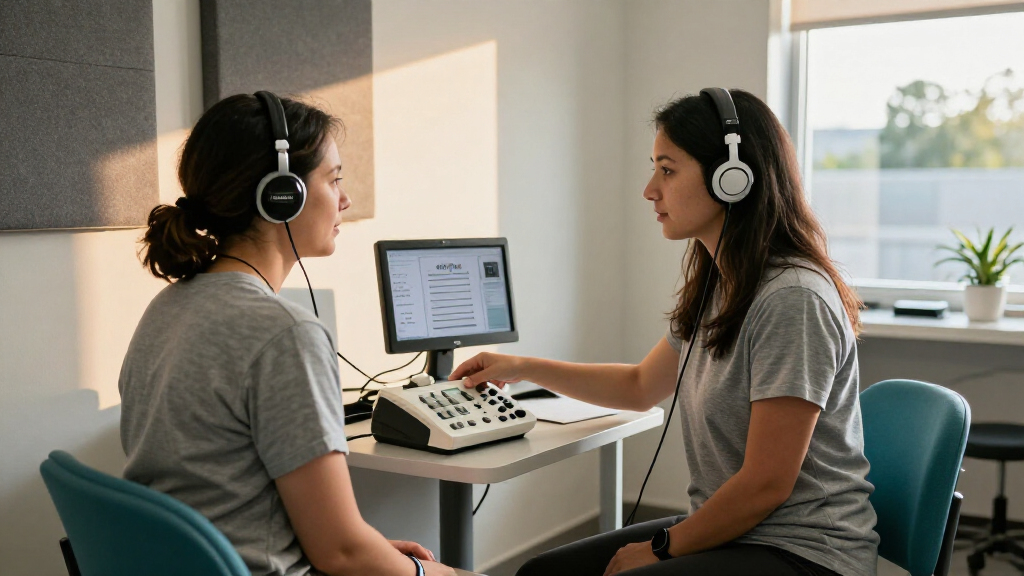
IHS says people can establish a hearing baseline with a qualified hearing healthcare provider. Comparing later assessments with that starting point may help providers identify changes and discuss appropriate next steps. The society also directs consumers to its provider locator at ihsinfo.org to find hearing aid specialists and other hearing healthcare professionals.
The campaign focuses on noise-induced hearing loss (NIHL), which IHS describes as largely preventable, and on strategies to protect hearing. The source does not detail specific exposure limits, protective products or clinical testing methods, so the campaign’s central advice remains broad: pay attention to hearing health and seek professional evaluation.
Why Routine Hearing Checks Matter
The campaign connects an individual health action—getting hearing evaluated—with a projected rise in hearing loss worldwide. WHO estimates cited in the report put the current number of people living with some level of hearing loss at 1.5 billion. By 2050, the organization projects that figure will reach nearly 2.5 billion, with more than 700 million people needing rehabilitation.
Those figures describe the global burden, not the expected outcome for any one person. IHS’s focus on prevention reflects its view that noise-related damage can often be avoided and that assessments can help track hearing over time. For readers, the practical relevance is an invitation to discuss hearing health with a qualified provider, particularly if they are concerned about changes or regular noise exposure.
As an affiliate, we earn on qualifying purchases.
IHS and the October Awareness Campaign
National Protect Your Hearing Month provides the occasion for IHS’s public education effort. The society says it works alongside the World Health Organization on awareness of noise-induced hearing loss and hearing-protection strategies. The supplied report describes an awareness push rather than a newly launched service, policy or research finding.
Founded in 1951, IHS is a membership association representing hearing healthcare professionals worldwide. According to the report, its members include hearing aid specialists involved in hearing assessments, selecting and fitting hearing instruments, patient counseling and aftercare. That professional focus helps explain why the society is directing consumers toward provider evaluations and its online locator.
The WHO projections offer the wider public-health backdrop, while IHS’s annual-evaluation recommendation is the organization’s own guidance. The report does not provide the projection’s underlying methods or spell out how often different people should be assessed based on age, symptoms or exposure.
“Hearing is one of those senses that everybody needs to pay close attention to — no different than your eyes and vision. We suggest that people have their hearing evaluated once a year.”
— Michael Andreozzi, IHS president
As an affiliate, we earn on qualifying purchases.
Limits of the Annual Checkup Advice
The report does not say whether IHS’s annual evaluation recommendation is based on a specific clinical guideline, nor does it describe exceptions for people with different health histories or levels of noise exposure. It also does not name a particular test or explain whether an evaluation means a screening, a full diagnostic assessment or another service.
The source gives WHO estimates and projections but does not provide their publication date, methodology or uncertainty range. It also does not identify a specific year for the October campaign. Readers should treat the figures as the estimates attributed to WHO in the report and the annual schedule as IHS’s recommendation, not as individualized medical advice.
noise-canceling ear muffs for hearing protection
As an affiliate, we earn on qualifying purchases.
As an affiliate, we earn on qualifying purchases.
Finding a Hearing Care Provider
IHS is encouraging consumers to use its provider locator at ihsinfo.org to connect with hearing aid specialists and other hearing healthcare professionals. The society’s October message is to discuss hearing protection and consider establishing a baseline assessment; the report does not announce additional campaign dates, events or planned policy changes.
Anyone considering an evaluation can ask a qualified provider what assessment is appropriate for their circumstances and how often follow-up may be useful. Further details about the campaign or any new IHS guidance were not included in the source report.
As an affiliate, we earn on qualifying purchases.
Key Questions
What is IHS asking people to do?
IHS is encouraging people to protect their hearing, be aware of noise-induced hearing loss and consider an evaluation once a year, as recommended by its president.
Is an annual hearing evaluation a formal requirement?
The source presents annual evaluations as IHS’s recommendation. It does not describe the advice as a formal requirement or establish it as a universal clinical guideline.
What is a hearing baseline?
A baseline is an initial assessment that can serve as a point of comparison for later evaluations. IHS says a qualified hearing healthcare provider can help establish one.
Where can consumers find a provider?
IHS directs consumers to its provider locator at ihsinfo.org to find hearing aid specialists and other hearing healthcare professionals.
What does WHO project about hearing loss?
Figures cited in the report say 1.5 billion people currently live with some level of hearing loss. WHO projects nearly 2.5 billion will have some degree of hearing loss by 2050, with more than 700 million needing rehabilitation.
Source: rss
Cold & flu season Picks
humidifiers
As an affiliate, we earn on qualifying purchases.