
TL;DR

Get health and wellness essentials delivered free with Prime
- Fast, free delivery on millions of items
- Prime Video, Amazon Music and more included
- Member-only deals all year
The Oberkotter Foundation is accepting proposals from eligible U.S. nonprofits for projects that expand children’s access to hearing screening and diagnostic services. Applications are due Nov. 30, 2026, and the foundation expects to notify successful applicants in March 2027.
The Oberkotter Foundation has opened applications for grants supporting U.S. nonprofit projects that bring pediatric hearing screening and diagnostic services closer to children and families facing barriers to care. Applications are accepted from Oct. 1 through Nov. 30, 2026, with successful applicants expected to be notified in March 2027.
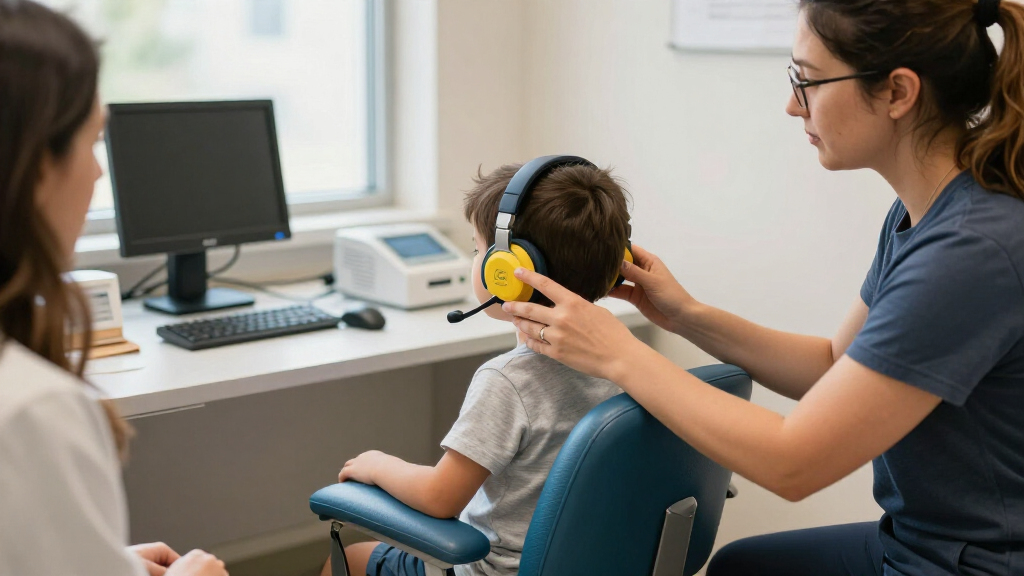
The funding opportunity is intended for projects that establish or expand service delivery models to make hearing screening and/or diagnostic testing more accessible. The foundation says it is particularly interested in approaches that help families overcome obstacles to care and support timely identification of a child’s hearing status.
Eligible applicants are nonprofit and tax-exempt organizations located and operating in the United States. Applicants should have experience in early childhood hearing loss and in addressing social drivers that affect access to health services, according to the announcement. The foundation’s full request for proposals is available through its website.
The opportunity addresses a gap following newborn screening. The source report cites CDC data indicating that about 40% of children who do not pass a newborn hearing screening complete recommended diagnostic testing by 3 months of age. Geographic and socioeconomic barriers, factors affecting infants and families, and health-system constraints can contribute to delays, the report says.
Bringing Hearing Care Closer to Families
The grants could support efforts to reduce the distance, logistical hurdles, or other barriers between an initial screening and follow-up diagnostic care. That matters because a newborn screening result that indicates a possible concern is not itself a diagnosis; further testing is needed to establish a child’s hearing status.
The foundation is encouraging models that deliver services in or nearer to communities rather than relying only on traditional clinical settings. Its vice president of programs, Andrea Dunn, said the foundation sees community-based testing as a way to improve service use and help reduce loss to follow-up. Those are stated aims of the initiative, not outcomes established for projects that have yet to be selected.
For families, more accessible services may make it easier to complete recommended testing on time. For organizations working in pediatric hearing health, the announcement offers a funding opportunity to test or expand ways of reaching children whose access to care is limited.
As an affiliate, we earn on qualifying purchases.
The Foundation’s Pediatric Hearing Focus
The initiative is part of the Oberkotter Foundation’s broader commitment to pediatric hearing healthcare, Listening and Spoken Language services, and family support. According to the source report, the foundation has provided more than $500 million in funding since 1985 to improve listening, spoken-language, and literacy outcomes for children with hearing loss and their families.
The new call for proposals focuses specifically on improving access to screening and diagnostic services. It does not announce a particular award amount, a number of grants, or a set of selected projects. Instead, eligible organizations are being asked to propose work that brings services within reach of families who encounter barriers.
“Now, one of the biggest challenges that remains is how to help families access this care as early as possible.”
— Teresa H. Caraway, CEO of the Oberkotter Foundation
infant hearing diagnostic testing equipment
As an affiliate, we earn on qualifying purchases.
As an affiliate, we earn on qualifying purchases.
Grant Awards and Project Details
The announcement does not specify the total funding available, the size or number of grants, or the criteria that will determine award amounts. It also does not identify organizations that have applied or projects that will receive support. Those details are not yet available in the source report.
The cited CDC figure describes the share of children who do not pass newborn screening and complete diagnostic testing by 3 months; it does not provide a breakdown of how much each listed barrier contributes. The eventual effect of funded projects on testing rates or follow-up will depend on the proposals selected and their results.
As an affiliate, we earn on qualifying purchases.
Application and Award Timeline
Interested eligible organizations can review the full request for proposals on the Oberkotter Foundation website and submit applications during the stated window, from Oct. 1 to Nov. 30, 2026. Organizations should use the foundation’s RFP for application instructions and any requirements beyond those summarized in the announcement.
The foundation says successful applicants will be notified in March 2027. After awards are announced, further details about selected service models, funding levels, and planned communities may clarify how the grants will address barriers to pediatric hearing screening and diagnostic care.
community-based hearing screening devices
As an affiliate, we earn on qualifying purchases.
As an affiliate, we earn on qualifying purchases.
Key Questions
Who can apply for the Oberkotter Foundation grants?
Nonprofit and tax-exempt organizations located and operating in the United States may apply. The announcement says applicants should have experience in early childhood hearing loss and social drivers that affect access to care.
What types of projects is the foundation seeking?
The foundation is seeking proposals to establish or expand service delivery models that make pediatric hearing screening and/or diagnostic services more accessible, particularly for families facing barriers to care.
When are applications due?
Applications are being accepted from Oct. 1 through Nov. 30, 2026. The full request for proposals on the foundation’s website contains the application instructions.
When will grant recipients be notified?
The foundation expects to notify successful applicants in March 2027. The announcement does not state how many grants will be awarded or their individual amounts.
Why is the funding opportunity focused on follow-up testing?
The source report cites CDC data showing that about 40% of children who do not pass a newborn hearing screening complete recommended diagnostic testing by 3 months of age. The grant program aims to support approaches that make screening and follow-up services easier for families to reach.
Source: rss
Halloween Picks
halloween
As an affiliate, we earn on qualifying purchases.