
TL;DR

Get health and wellness essentials delivered free with Prime
- Fast, free delivery on millions of items
- Prime Video, Amazon Music and more included
- Member-only deals all year
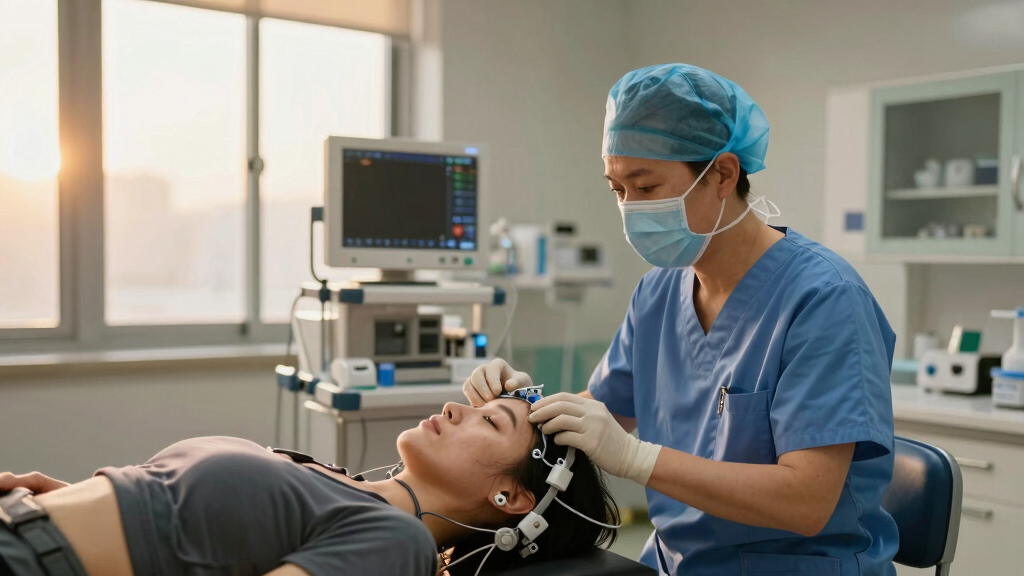
A hospital in Shanghai has successfully completed the world’s first commercial brain-computer interface implant surgery using a domestically developed device. This breakthrough could advance neurotechnology applications and reshape treatment options for neurological conditions.
A Shanghai hospital has successfully performed the world’s first commercial brain-computer interface (BCI) implant surgery using a device developed domestically, according to Yicai Global. This marks a significant milestone in neurotechnology, potentially opening new pathways for treating neurological disorders and enhancing brain-machine interactions.
The procedure was carried out at a hospital in Shanghai, involving the implantation of a homegrown BCI device designed to decode neural signals and facilitate direct communication between the brain and external devices. The surgery represents the first commercial application of such a device, moving beyond experimental or research-only stages.
Officials from the hospital and the device’s developers confirmed that the operation was successful and that the patient is currently undergoing post-operative monitoring. The device, which had been in development for several years, was approved for commercial use after rigorous testing and regulatory review in China.
According to the hospital’s chief neurologist, Dr. Li Wei, the implant aims to assist patients with severe neurological impairments, such as paralysis or speech loss, by translating neural activity into commands for external devices, including prosthetics or communication tools.
Implications for Neurotechnology and Medical Innovation
This development signifies a breakthrough in neurotechnology, demonstrating that a domestically produced BCI device can be safely and effectively used in a commercial medical setting. It could accelerate the global adoption of brain-computer interfaces and reduce reliance on foreign technology. For patients, this may mean more accessible and tailored treatment options for neurological conditions, potentially improving quality of life and independence.
Moreover, the success of this surgery highlights China’s growing capabilities in high-tech medical devices, positioning the country as a potential leader in neurotech innovation. It may also stimulate further research and development in related fields, including neural rehabilitation and cognitive enhancement.
brain-computer interface BCI device
As an affiliate, we earn on qualifying purchases.
As an affiliate, we earn on qualifying purchases.
Background on BCI Technology and China’s Neurotech Development
Brain-computer interfaces have been under development worldwide for decades, primarily in research institutions and specialized labs. Prior to this achievement, most BCI applications remained experimental, with limited commercial availability. Notable advancements include devices used in clinical trials for restoring movement or communication in paralysis patients.
China has been investing heavily in neurotechnology, with government policies supporting innovation in medical devices and brain science. The Shanghai hospital’s achievement follows years of research and regulatory preparations, culminating in the first commercial deployment of a Chinese-developed BCI device.
Details about the device’s technical specifications, regulatory approval process, and the patient’s condition remain limited at this stage.
“This surgery demonstrates that domestically developed BCI technology can meet clinical standards and has the potential to transform treatment for neurological patients.”
— Dr. Li Wei, Chief Neurologist at Shanghai Hospital
neurotechnology implant for neurological disorders
As an affiliate, we earn on qualifying purchases.
As an affiliate, we earn on qualifying purchases.
Unanswered Questions About Device Performance and Regulations
It is still unclear how long-term the device’s performance will be, and whether additional clinical trials will be required before broader deployment. Details about the patient’s health outcomes post-surgery have not been disclosed, and regulatory approval processes for wider use are ongoing.
Further information is needed on the device’s safety, durability, and scalability for different patient groups.
As an affiliate, we earn on qualifying purchases.
Next Steps for Broader Adoption and Regulatory Approval
The hospital and developers plan to monitor the patient’s recovery and gather data on the device’s effectiveness over time. Additional clinical trials are expected to follow, aiming for regulatory approval for wider use across China and potentially internationally.
Industry analysts anticipate that if the device proves successful, it could pave the way for more Chinese-developed neurotechnology products entering the global market.
As an affiliate, we earn on qualifying purchases.
Key Questions
What is a brain-computer interface (BCI)?
A BCI is a device that interprets neural signals from the brain to control external devices, enabling communication or movement for people with neurological impairments.
How significant is this surgery for global neurotech development?
This is the first known instance of a commercial, domestically developed BCI being used in a surgical setting, marking a major milestone for China and potentially influencing global neurotechnology markets.
What are the potential benefits for patients?
Patients with severe neurological conditions could gain improved communication, mobility, and independence through BCI technology, depending on future device performance and regulatory approval.
Are there risks associated with BCI implants?
As with any surgical procedure, BCI implantation carries risks such as infection or device failure. Long-term safety and efficacy are still being evaluated through ongoing monitoring and research.
When might this technology become widely available?
Wider availability depends on further clinical trials, regulatory approvals, and technological refinements. It is not yet clear when the device will be broadly accessible outside the initial clinical setting.
Source: local
Evergreen bestsellers Picks
bestsellers
As an affiliate, we earn on qualifying purchases.