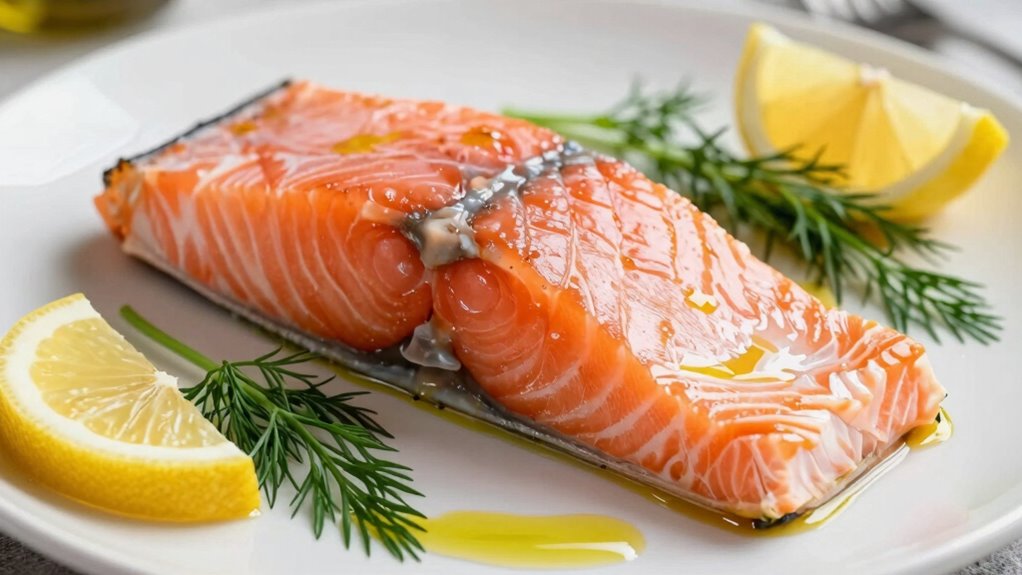

To bake salmon without drying it out, keep things simple: season the fish lightly with salt, pepper, and herbs, then pat it dry before cooking. Preheat your oven to 375°F and wrap the salmon in foil, or place it on citrus or vegetables to lock in moisture. Cook for about 12-15 minutes until it flakes easily and is opaque. Let it rest briefly before serving—more tips await if you keep exploring.
Key Takeaways
- Keep the oven at 375°F and preheat thoroughly to ensure even, gentle cooking.
- Season salmon simply and pat dry to help retain moisture during baking.
- Wrap salmon in foil or use citrus slices and vegetables to lock in juices.
- Bake for 12-15 minutes and check for doneness by flaking; avoid overcooking.
- Rest the salmon for a few minutes after baking to allow juices to redistribute.
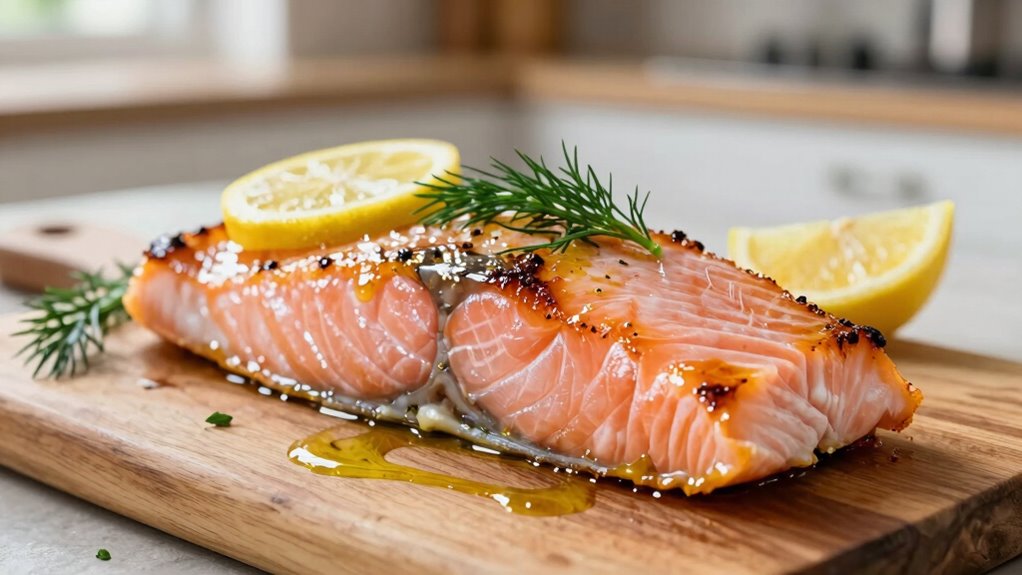
Baking salmon can be tricky if you want it to stay moist and tender, but with the right techniques, you can achieve perfectly juicy results every time. One of the most important factors is selecting the right fish seasoning that enhances the natural flavor without overpowering it. Keep your seasoning simple—salt, pepper, lemon zest, and a touch of herbs like dill or parsley work beautifully. These not only add flavor but also help retain moisture. Before baking, make sure to pat your salmon dry; this helps the seasoning stick and promotes even cooking. Using digital tools such as timers or temperature alarms can also help you monitor the cooking process more accurately.
Keep seasoning simple with salt, pepper, lemon zest, and herbs to enhance flavor and retain moisture.
Next, pay close attention to your oven temperature. Too high, and the fish can dry out quickly; too low, and it might not cook evenly. The ideal oven temperature for baking salmon is around 375°F (190°C). This moderate heat allows the salmon to cook gently and stay moist. Preheat your oven thoroughly so that the fish begins cooking immediately upon entering, reducing the risk of overcooking. Understanding cooking times based on the thickness of your fillet can further improve your results. Being aware of food safety guidelines ensures your salmon is cooked thoroughly while remaining moist.
When baking, consider wrapping your salmon in foil or placing it on a bed of vegetables or citrus slices. This creates a natural barrier that locks in moisture and infuses flavor. If you’re using foil, fold the edges tightly to form a packet. This technique traps steam inside, helping your fish stay juicy. Alternatively, use a baking dish with a cover or a silicone baking mat. The goal is to prevent the heat from directly drying out the surface.
Timing is equally crucial. Salmon cooks quickly—usually about 12-15 minutes for fillets depending on thickness. Keep an eye on it, and check for doneness by gently flaking the thickest part with a fork. It should be opaque and flaky but still moist. Overcooking is the enemy of juicy salmon, so remove it from the oven as soon as it hits that perfect point.
Finally, allow your salmon to rest for a few minutes after baking. Resting lets the juices redistribute throughout the fish, ensuring each bite is tender and moist. Remember, the key is balancing your fish seasoning, oven temperature, and timing. With these simple steps, you’ll be able to bake salmon that stays moist, flavorful, and perfectly cooked every time—no stress required.

18" x 500' Heavy Duty Commercial Grade Food Safe Aluminum Foil Roll – Durable and Tear Resistant for Cooking, Grilling, and Roasting – Ideal for Restaurants, Catering, and Professional Kitchens
18 x 500 HEAVY-DUTY WIDE FOIL: Our heavy duty aluminum foil roll is 18 inches wide, and 500…
As an affiliate, we earn on qualifying purchases.
As an affiliate, we earn on qualifying purchases.
Frequently Asked Questions
Can I Use Frozen Salmon for Baking?
Yes, you can use frozen salmon for baking. Just make sure you properly thaw it first by transferring it to the fridge overnight or using cold water, which is great for meal prep. Storage tips include keeping it tightly wrapped to prevent freezer burn. When baking, pat the salmon dry, season well, and bake at the right temperature. This approach helps avoid dryness and keeps your fish flavorful and moist.
What Herbs Complement Baked Salmon Best?
Imagine you’re baking salmon and want it perfectly flavorful; fresh dill is a top choice. Herb flavor combinations like dill with lemon or parsley with garlic elevate the fish. Fresh herbs generally provide a vibrant, delicate flavor, while dried herbs offer a more concentrated taste. For a bright, fresh profile, opt for fresh herbs; dried work well in marinades or when fresh isn’t available.
How Do I Tell When Salmon Is Perfectly Cooked?
You’ll know your salmon is perfectly cooked when it flakes easily with a fork and reaches an internal temperature of 125-130°F. Check the cooking times based on thickness—about 4-6 minutes per half-inch at 400°F. Use a meat thermometer for accuracy, and avoid overcooking to keep it moist. When the edges turn opaque and the center is just slightly translucent, you’re all set.
Is It Better to Cover or Uncover Salmon While Baking?
Covering salmon while baking traps moisture, making it juicier, but uncovering allows the top to crisp up and develop flavor. For beginners, using a kitchen tool like aluminum foil to loosely cover the fish helps maintain moisture and prevents drying out. If you prefer a tender, moist texture, cover the salmon during baking. Conversely, uncover it if you want a slightly crispy top, adjusting based on your preferred cooking technique.
Can I Bake Salmon at a Higher Temperature for Faster Results?
Yes, you can bake salmon at a higher temperature for faster results, but be cautious. Higher temperatures reduce cooking time, but they can also increase the risk of drying out the fish if you don’t adjust cooking times accordingly. To prevent this, keep a close eye on the salmon, and use a thermometer to monitor internal temperature. Adjust cooking times based on the increased temperature to guarantee moist, tender results.

Alpha Grillers Meat Thermometer Digital – Kitchen Oven Thermometer for Cooking Food, Grilling, BBQ Smoker – 7 Preset Temperature Alerts, Timer, Alarm, & Stainless Steel Temperature Probe
Highly Accurate – The Alpha Grillers meat thermometer provides highly accurate instant read temperature monitoring within +/- 1.8°F….
As an affiliate, we earn on qualifying purchases.
As an affiliate, we earn on qualifying purchases.
Conclusion
By following these simple steps, you’ll enjoy perfectly baked salmon every time—moist, tender, and full of flavor. Remember, over 90% of home cooks say that with the right technique, seafood can be just as easy to prepare as other dishes. So, don’t be discouraged if it’s your first try; practice makes perfect. Soon, you’ll be confidently serving salmon that looks and tastes restaurant-quality, impressing everyone at your table.

Chef Paul Prudhomme's Magic Salmon Seasoning – 7 oz
Substitute for normal use of salt, pepper and other herbs and spices called for in a recipe
As an affiliate, we earn on qualifying purchases.
As an affiliate, we earn on qualifying purchases.

AK ART KITCHENWARE 5 cavities Fish Bone Design Fondant Silicone Icing Mats for Cakes Moldes De Silicona Baking Mold Cake Pastry Tools Cake Decorating Lace Mats
♥ MATERIAL: Made of food grade silicone, the lace mat passed LFGB certification, high temperature resistance from -40…
As an affiliate, we earn on qualifying purchases.
As an affiliate, we earn on qualifying purchases.