
To balance sweet, salty, sour, and bitter flavors, focus on creating harmony by taste-testing regularly and adjusting ingredients gradually. Use acidity or salt to brighten or mellow dishes, and add sweetness to counteract bitterness. Remember, a little salt enhances flavors, while vinegar or citrus can lift the overall profile. Managing these elements is flexible and intuitive—trust your palate. Keep experimenting and fine-tuning, and you’ll master how to craft truly well-rounded dishes.
Key Takeaways
- Prioritize tasting and adjusting gradually to achieve harmony among flavors.
- Use acidity or salt to brighten and balance sweetness and richness.
- Counteract bitterness with sweetness or acidity to create a more pleasant flavor profile.
- Employ ingredient substitution to fine-tune and refine flavor balances.
- Focus on overall harmony and intuition rather than strict ratios for optimal results.
Balancing flavors is vital for creating dishes that are both harmonious and satisfying. When you get the balance right, each taste enhances the others, making every bite memorable. To achieve this, you need to understand flavor pairing—how different ingredients complement or contrast with each other. For instance, a hint of acidity can brighten a rich, fatty dish, while a touch of sweetness can mellow out bitterness. If an ingredient doesn’t quite work, ingredient substitution can help you tweak the flavor profile without starting from scratch. By swapping out one component for another, you can fine-tune the balance and bring out the best in your dish.
Balancing flavors enhances each ingredient, creating dishes that are harmonious, memorable, and perfectly tuned through thoughtful pairing and substitution.
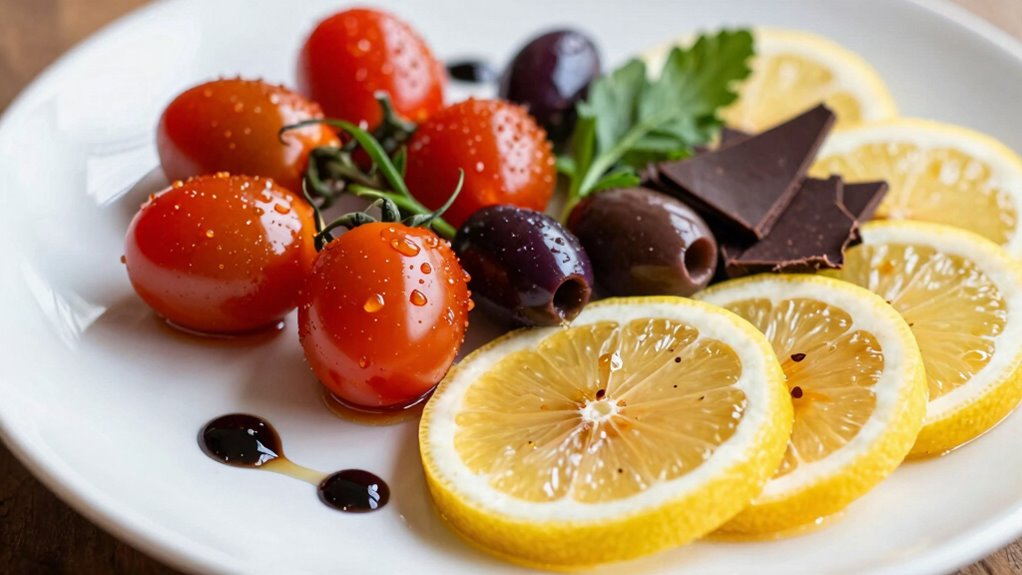
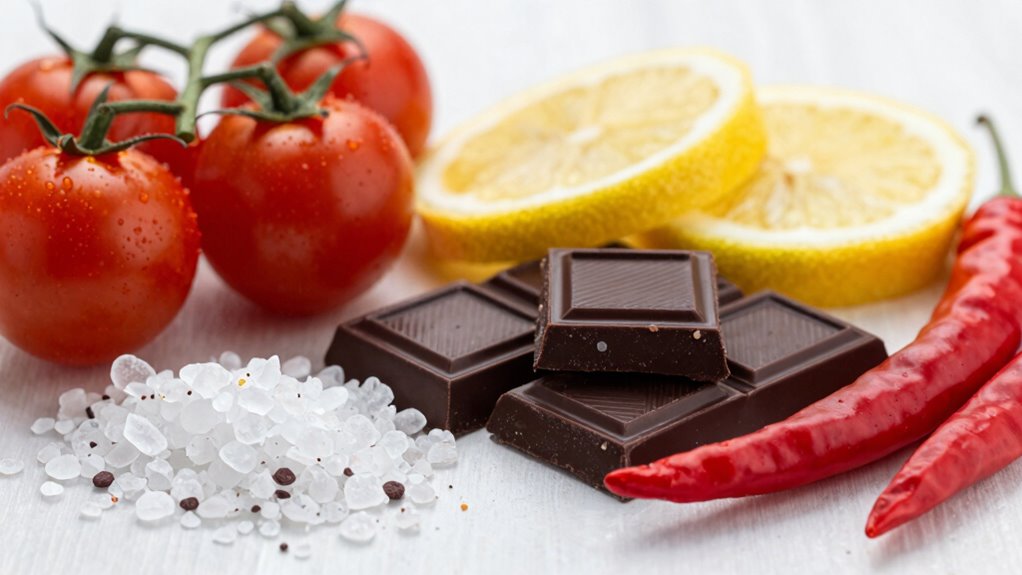
When tackling the complex interplay of sweet, salty, sour, and bitter, it’s vital to focus on what matters most: harmony. Sweetness can be balanced with acidity or saltiness to prevent it from becoming overwhelming. For example, if a dessert feels too sweet, a splash of lemon juice or a pinch of salt can cut through the sugar, creating a more rounded flavor. Salty elements, like soy sauce or sea salt, act as flavor enhancers, making other tastes pop. Sour flavors—think vinegar or citrus—add brightness and can counteract dullness or heaviness. Bitter notes, often found in greens or dark chocolate, need careful balancing; a touch of sweetness or acidity can make these flavors more palatable and well-rounded. Recognizing how flavor pairing techniques can help you experiment with ingredient substitution makes it easier to achieve harmony. Incorporating flavor balance principles into your cooking process can also help refine your palate and improve your ability to create well-rounded dishes.
You can also use flavor pairing techniques to experiment with ingredient substitution. If a particular ingredient feels out of place or too dominant, swapping it for a more subtle or complementary one can re-align your dish’s flavor profile. For instance, if a tomato-based sauce is too tangy, you might replace some of the vinegar with a sweeter fruit puree or add a pinch of sugar. Similarly, if bitter herbs overpower a dish, replacing or reducing them can make the dish more inviting. Remember, the goal isn’t to eliminate flavors but to balance them so that no single taste dominates the entire experience. Incorporating flavor pairing principles can guide you in choosing ingredients that naturally complement each other, making your adjustments more intuitive.
Ultimately, what truly counts is your palate and understanding how these elements interact. Keep tasting as you cook, adjusting with small, deliberate ingredient substitutions until you hit that perfect harmony. Recognize that balancing flavors isn’t a strict formula but a dynamic process, where your intuition and taste buds guide you. By mastering flavor pairing and ingredient substitution, you guarantee each dish resonates with a well-rounded, satisfying flavor profile that delights every time.

Meat Tenderizer 1 pcs Aluminium Mallet Dual-Sided – Tenderizer Tool Kitchen Pounder – Home Hammer for Tenderizing Ice Steak Stainless Veal & Chicken Safe Beater 1309479
- Ergonomic Design: Comfortable handle with textured grip
- Dual-Sided Surfaces: Two surfaces for versatile tenderizing
- High-Quality Material: Made from durable, rust-resistant aluminum
As an affiliate, we earn on qualifying purchases.
As an affiliate, we earn on qualifying purchases.
Frequently Asked Questions
Can You Combine All Five Tastes in One Dish Effectively?
Yes, you can combine all five tastes in one dish effectively by focusing on flavor harmony. Use ingredient versatility to balance each taste without overpowering others. For example, sweeteners can mellow sourness, while salty elements enhance sweetness. Sour notes brighten flavors, and bitter ingredients add depth. Experiment with small amounts, taste as you go, and aim for a well-rounded, harmonious dish where no single taste dominates, creating a delicious, balanced experience.
How Do Personal Preferences Influence Flavor Balancing?
Imagine tasting a dish that sparks memories or excitement—that’s personal preferences shaping flavor balancing. You’re influenced by cultural backgrounds and emotional responses, which guide your taste choices and how you perceive sweetness, saltiness, sourness, or bitterness. These preferences can make certain flavors more dominant or subtle. Embracing your unique palate helps you craft dishes that resonate deeply, turning a simple meal into a personalized culinary experience.
Are There Specific Ingredients That Enhance All Five Tastes?
You’ll find that ingredients like soy sauce, citrus, honey, and fermented foods act as universal ingredients, enhancing all five tastes. These items promote flavor harmony by balancing sweet, salty, sour, bitter, and umami notes simultaneously. Incorporating them thoughtfully in your dishes helps create a well-rounded, complex flavor profile, making your cooking more satisfying and harmonious. Focus on these versatile ingredients to elevate your flavor balancing skills effortlessly.
How Does Temperature Affect Flavor Perception and Balance?
Think of flavor perception like adjusting a painting’s brightness; temperature effects can dramatically change how flavors come across. When you serve a hot dish, the heat intensifies bitter and salty notes, while cooling dulls sweetness and sourness. You might notice a warm lemon drink tastes sharper, but chilled, it feels milder. Temperature acts as a dial, helping you balance flavors by enhancing or softening specific tastes.
Can Balancing Flavors Improve Health Benefits of a Dish?
Balancing flavors can indeed improve health benefits by enhancing flavor harmony, making dishes more satisfying without excess salt or sugar. When you create a well-balanced dish, you’re more likely to enjoy it fully, which can lead to healthier eating habits. Thoughtful flavor balancing also allows you to optimize nutrients and reduce unnecessary additives, ultimately supporting your overall health and well-being through more mindful, flavorful meals.

Mercer Culinary – M33920 Mercer Culinary Tasting spoon/fork, 6-5/8", Silver
- Dishwasher Safe: Easy to clean and maintain
- Compact Size: Fits into chef jacket pockets
- Micro-Serrations: Provides a secure grip
As an affiliate, we earn on qualifying purchases.
As an affiliate, we earn on qualifying purchases.
Conclusion
Remember, balancing sweet, salty, sour, and bitter flavors isn’t about perfection but harmony. Trust your palate and tweak as you go—sometimes a little more salt or a splash of acid can make all the difference. Think of it like tuning an instrument; with patience, each note falls into place. When you find that sweet spot, your dish will sing with flavor, proving that a little effort truly can turn a good meal into a great one.

Boulder Salt – Low Sodium – Potassium Magnesium Salt – Electrolyte Salts – Unflavored – 8oz – Tastes Good on Food or in Water. 113 Servings.
- Balanced Electrolytes: Supports hydration and health
- Versatile Cooking Salt: Replace traditional salt in recipes
- Rich in Magnesium: Excellent magnesium source
As an affiliate, we earn on qualifying purchases.
As an affiliate, we earn on qualifying purchases.

PREMIUM Molecular Gastronomy "Made Easy" Starter Kit ⊘ Non-GMO Gluten-Free OU Kosher Certified Ingredients
- Includes Ingredients, Recipes, and Tools: Wide variety of applications
- 250-Page Recipe Book: Detailed techniques and usage
- Suitable for All Skill Levels: Great for beginners and experts
As an affiliate, we earn on qualifying purchases.
As an affiliate, we earn on qualifying purchases.