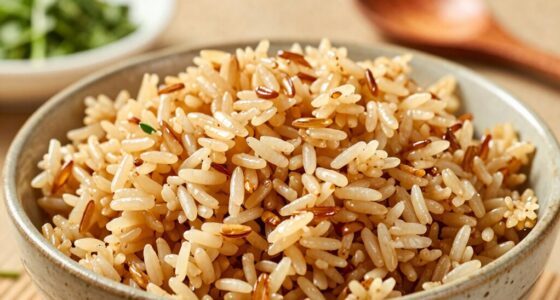

To thicken soup naturally, blend some of the hot soup until smooth and stir it back in, or add pureed beans for extra creaminess and nutrition. You can also simmer oats or oat flour to absorb liquid, or stir in Greek yogurt or coconut milk for a rich, healthy texture. These simple tricks avoid artificial thickeners and boost flavor. Keep exploring, and you’ll discover even more easy, healthy ways to achieve the perfect consistency.

Get health and wellness essentials delivered free — and shop member deals
- Fast, free delivery on millions of items
- Access to Prime Big Deal Days deals on October 6–7
- Prime Video, Amazon Music and more included
Key Takeaways
- Puree a portion of hot soup with an immersion or regular blender for a smooth, velvety texture.
- Incorporate cooked, mashed beans like chickpeas or cannellini to naturally thicken and add nutrients.
- Add oats or oat flour during cooking to thicken broth subtly and boost fiber content.
- Stir in Greek yogurt or coconut milk to enhance creaminess and nutritional value without artificial thickeners.
- Use natural ingredients like pureed vegetables or plant-based proteins to achieve richness and thickness healthily.
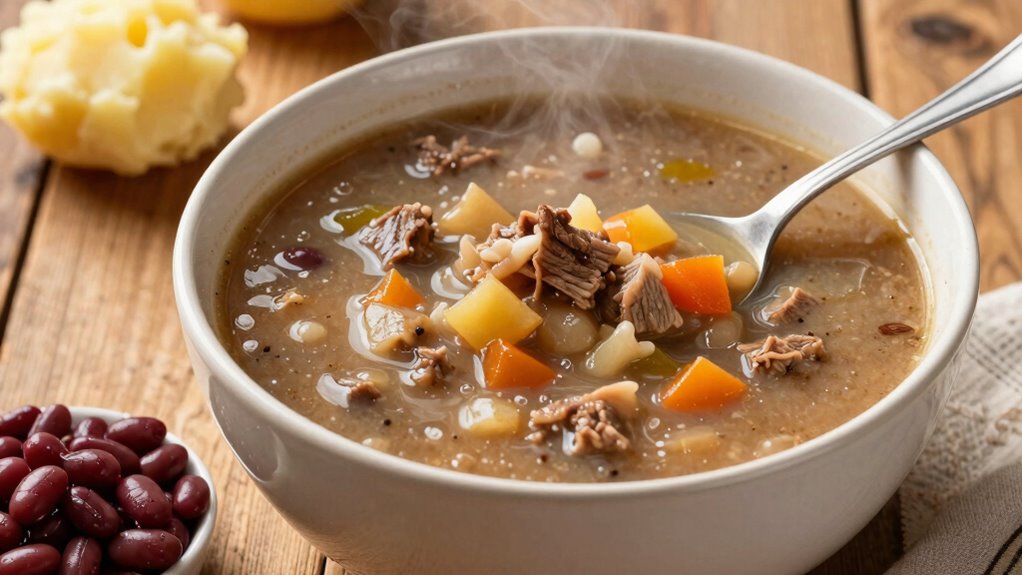
Thickening soup naturally is a simple way to enhance its texture without relying on artificial thickeners. When you want a creamy consistency that feels indulgent yet stays healthy, there are plenty of options that suit your needs. Using natural ingredients not only improves the soup’s richness but also ensures you’re choosing healthy alternatives that add nutritional value rather than empty calories.
One of the easiest ways to achieve that smooth, creamy texture is by blending a portion of the soup itself. After cooking, take a ladle or two of the hot soup and blend it until smooth using an immersion blender or a regular blender. Then, stir this pureed portion back into the pot. This method thickens the soup naturally, creating a velvety consistency without any added thickeners. It’s perfect for vegetable-based soups like tomato or butternut squash, where the pureed vegetables contribute to both flavor and texture.
Blend a portion of hot soup to naturally achieve a smooth, velvety texture without added thickeners.
Another effective technique is to incorporate pureed beans, such as cannellini or chickpeas. Not only do they thicken the soup, but they also boost its protein and fiber content. Simply cook the beans until tender, then mash or blend them before adding to the soup. This approach offers a creamy consistency and is a fantastic healthy alternative to processed thickeners. Plus, the mild flavor of beans complements a wide range of soups, from hearty stews to lighter vegetable blends. Incorporating plant-based ingredients can also support sustainable eating habits, which aligns with principles of biodiversity and conservation.
You can also use oats or oats flour as natural thickeners. Adding a small amount of oats during the cooking process helps thicken the broth and adds a subtle, nutty flavor. Oats are a great healthy alternative because they are rich in fiber and keep the soup low in fat. Just toss in a few tablespoons of oats and let them simmer until they break down and thicken the liquid. This method works particularly well in creamy potato or vegetable soups where a smooth, hearty texture is desired. Additionally, choosing whole grains like oats can contribute to a more balanced and nutritious meal.
Lastly, don’t underestimate the power of a good stir-in of nutrient-rich ingredients like Greek yogurt or coconut milk. These not only thicken the soup naturally but also introduce a layer of flavor and creaminess that elevates the dish. Greek yogurt adds tang and protein, making the soup more filling, while coconut milk lends a rich, tropical note. Both are excellent healthy alternatives to heavy creams and artificial thickeners, giving your soup a luscious, satisfying consistency with fewer calories and more nutritional benefits. Natural thickeners like these are versatile and can be tailored to suit different flavor profiles and dietary needs.
As an affiliate, we earn on qualifying purchases.
Frequently Asked Questions
Can I Use Gluten-Free Thickeners for Soup?
Yes, you can use gluten-free thickeners for soup. Gluten-free alternatives like cornstarch, potato starch, or arrowroot work well as natural thickening methods. Simply mix these with cold water before adding to your soup to avoid clumping. These options are effective, safe for gluten sensitivities, and keep your soup hearty. So, go ahead and thicken your soup naturally with these easy, gluten-free ingredients.
How Long Does Natural Thickening Take?
Natural thickening usually takes about 10-15 minutes, depending on the method you choose. As you simmer and stir, you’ll notice the texture modification happening gradually, resulting in a creamier, more velvety soup. This process not only enhances the texture but also impacts flavor, making it richer and more satisfying. Remember, patience is key—stirring consistently helps achieve that perfect consistency without altering the soup’s natural taste.
Are There Any Soups That Shouldn’t Be Thickened Naturally?
There are some soups you should avoid thickening naturally, especially those where vegetable purity and flavor preservation matter most. Clear broths like consommé or delicate seafood soups can lose their subtlety if thickened, so it’s best to keep them light. Thickening can alter the texture and mask flavors, so use natural methods sparingly or opt for other techniques that maintain their clarity and freshness.
Can Thickening Alter the Flavor of My Soup?
Ironically, thickening your soup can sometimes surprise you by altering its flavor. While you aim for flavor enhancement, some thickening methods—like adding cream or butter—can make flavors richer or subtly different. However, if you choose natural thickeners like pureed vegetables or oats, you’ll preserve the texture and keep flavor intact. Just be mindful; a little can go a long way in maintaining that perfect balance.
Is It Necessary to Strain the Soup After Thickening?
You don’t need to strain the soup after thickening, as it can remove the benefits of your thickening method. Straining benefits include smooth, uniform texture and removing any lumps or unwanted bits. However, if you prefer a chunkier or more rustic consistency, skipping the straining preserves the texture and keeps all the ingredients intact. Ultimately, it depends on your desired soup texture and presentation.
As an affiliate, we earn on qualifying purchases.
Conclusion
Now that you know how to thicken soup naturally, you’ve revealed a simple secret to perfect, hearty bowls every time. Imagine each spoonful as a warm embrace, rich and satisfying, without the need for store-bought thickeners. The magic is in your hands—just a few easy ingredients and a little patience. So, why settle for less when you can craft your own velvety masterpiece? The power to elevate your soups is right at your fingertips—dive in and enjoy!
As an affiliate, we earn on qualifying purchases.
As an affiliate, we earn on qualifying purchases.
Fall Picks
fall essentials
As an affiliate, we earn on qualifying purchases.