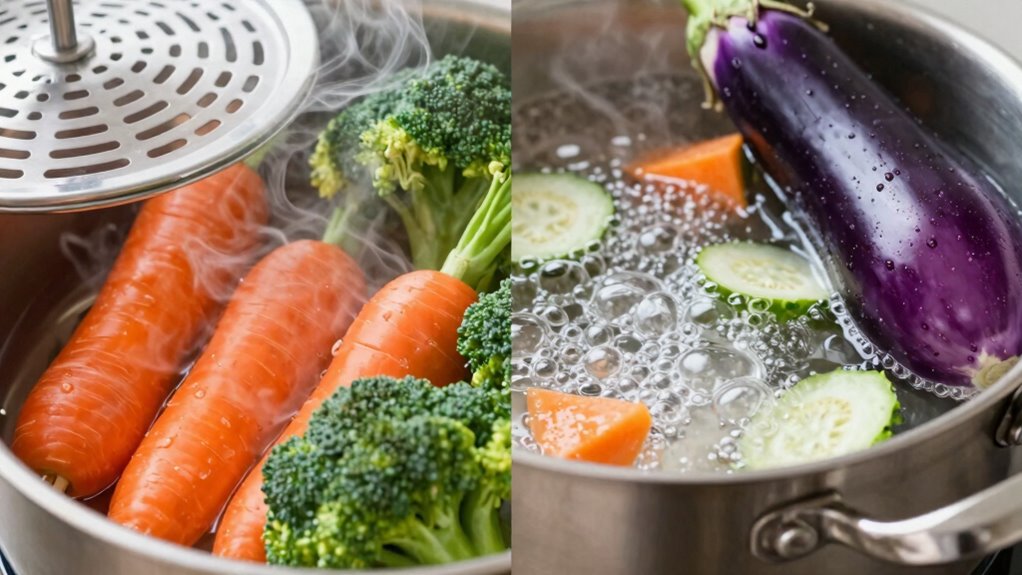

If you want to preserve more nutrients, flavor, and texture, steaming makes the most sense for everyday cooking. It uses less energy, takes less time, and keeps vegetables crisp and vibrant. Boiling can cause nutrient loss and make foods softer and milder in taste. Overall, steaming is more efficient and healthier, especially if you’re after better flavor and nutrition. Keep exploring to discover how to get the most out of your vegetables with the best technique.

Get health and wellness essentials delivered free — and shop member deals
- Fast, free delivery on millions of items
- Access to Prime Big Deal Days deals on October 6–7
- Prime Video, Amazon Music and more included
Key Takeaways
- Steaming preserves more nutrients and flavor, making it healthier and tastier for everyday consumption.
- Boiling can cause significant nutrient loss and dilute flavors, often making it less ideal for maintaining vegetable quality.
- Steaming is quicker, uses less water and energy, and requires less cleanup, offering practical advantages for busy lifestyles.
- For optimal taste and texture, steaming keeps vegetables firmer and more vibrant compared to the softer results of boiling.
- Choosing steaming over boiling aligns better with health, efficiency, and flavor preservation for regular cooking.
As an affiliate, we earn on qualifying purchases.
Does Steaming or Boiling Better Preserve Vegetable Nutrients?

When it comes to preserving the nutrients in vegetables, steaming generally outperforms boiling. Steaming helps retain more vitamins and minerals because it minimizes contact with water, which can leach out nutrients. This method also enhances flavor, as the gentle heat preserves the vegetable’s natural taste better than boiling. Plus, steaming offers greater culinary versatility; you can steam a wide variety of vegetables without overcooking them. Boiling, on the other hand, often results in nutrient loss and can dilute flavors. If your goal is to maximize health benefits while maintaining vibrant taste and texture, steaming is the smarter choice. It ensures your vegetables stay nutrient-rich, flavorful, and versatile enough for a variety of dishes. Additionally, nutrient retention during steaming can be especially beneficial for seniors seeking to preserve the maximum nutritional value in their meals. Understanding cooking methods helps you make better choices to support a sustainable lifestyle by reducing food waste and optimizing nutrient intake. Recognizing the importance of food preparation techniques can lead to healthier eating habits and better overall well-being. In fact, choosing the right cooking technique can significantly impact the overall nutritional quality of your meals.
As an affiliate, we earn on qualifying purchases.
How Do Taste and Texture Change When You Steam or Boil Vegetables?

Steaming and boiling vegetables produce noticeable differences in taste and texture that can considerably impact your dish. Steaming often preserves a firmer texture and more vibrant color, enhancing flavor and aroma retention. Boiling, however, tends to soften vegetables more, sometimes leading to a milder taste and loss of aroma. The table below highlights these differences:
| Aspect | Steaming | Boiling |
|---|---|---|
| Flavor enhancement | Keeps natural flavors intact | Dilutes flavors with water |
| Aroma retention | Better preserves aroma | Aroma often diminishes |
| Texture | Firmer and crisper | Softer and more tender |
Understanding the cooking methods can help you select the best approach for different vegetables and dishes. Additionally, the nutritional value of vegetables can be affected by these methods, influencing the overall health benefits of your meal. Being aware of how nutritional content changes through these techniques can help you make healthier choices. For instance, vitamin preservation is often better maintained through steaming, which is important for maximizing health benefits.
As an affiliate, we earn on qualifying purchases.
Which Method Is Faster and More Convenient for Everyday Cooking?
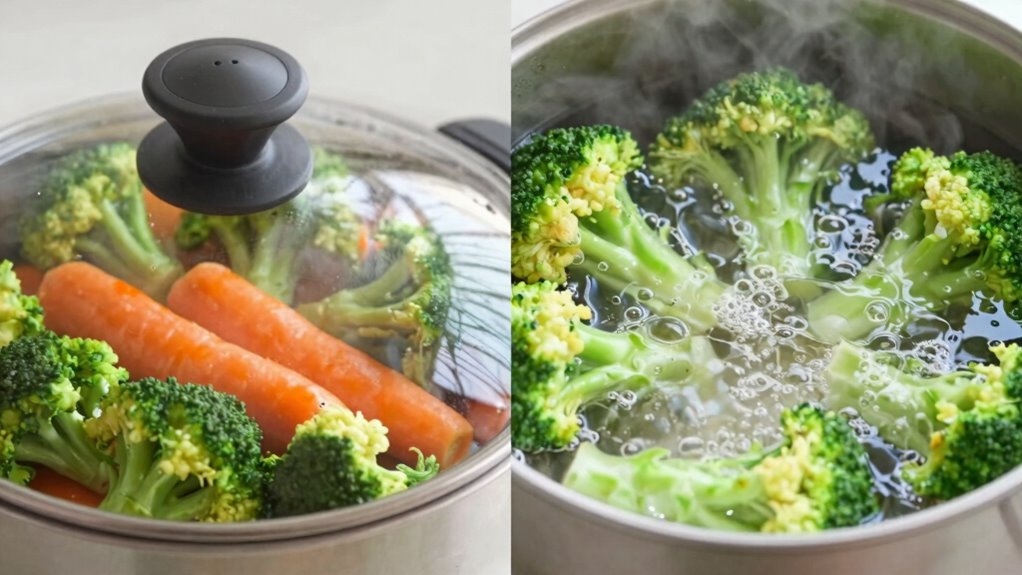
For everyday cooking, many people find that steaming is generally quicker and more straightforward than boiling. It requires less water, so you spend less time waiting for a pot to boil and less cleanup afterward. Steaming also preserves flavor enhancement better, keeping vegetables tasting fresh and vibrant without losing their natural sweetness. Additionally, steaming aligns with various cultural preferences for gentle cooking methods that highlight vegetable purity. Boiling, while simple, can sometimes overcook vegetables or cause nutrient loss, making it less convenient if you want quick, nutritious results. Overall, steaming often takes less active effort and offers a more efficient process, making it the better choice for fast, hassle-free meals that still deliver on flavor. Moreover, because steaming minimizes nutrient loss, it is often considered a healthier cooking option for preserving essential vitamins. This method also supports sustainable living practices by reducing water and energy consumption during cooking. Implementing energy-efficient cooking techniques like steaming can further enhance your efforts to reduce environmental impact.
vegetable boiling and steaming set
As an affiliate, we earn on qualifying purchases.
As an affiliate, we earn on qualifying purchases.
What Are the Health Benefits and Risks of Steaming Versus Boiling?

Both steaming and boiling can impact the nutritional value of vegetables, but steaming generally preserves more vitamins and minerals because it involves less contact with water. This means you’re more likely to retain nutrients like vitamin C and antioxidants, which can be lost in boiling. Steaming also offers flavor enhancement, helping vegetables taste fresher and more vibrant without added fats. However, boiling can sometimes lead to nutrient leaching, reducing health benefits. Culturally, boiling is common in many cuisines, but steaming is often preferred for preserving health benefits. The risks are minimal if you avoid overcooking, but oversteaming or boiling can degrade certain nutrients. Your choice depends on balancing nutritional preservation with flavor and cultural preferences. Additionally, understanding the cooking methods can help optimize nutrient retention and overall meal quality, especially when considering nutrient loss during different techniques.
How Do Time and Energy Use Compare When Cooking Vegetables?

When cooking vegetables, steaming generally uses less energy and takes slightly longer than boiling. You’ll find that boiling heats the water directly, often saving time but using more energy. These differences can also affect how well nutrients are preserved during the cooking process. Additionally, choosing the appropriate method can help optimize energy efficiency and nutrient retention. Moreover, understanding the metabolic heat transfer involved can help you select the most effective cooking technique for your needs. Recognizing the role of thermal conduction can further enhance your ability to make informed decisions about cooking methods.
Energy Consumption Differences
Have you ever wondered which method, steaming or boiling, consumes more energy when cooking vegetables? Typically, steaming uses less energy because it heats only the water vapor, which transfers heat efficiently. In contrast, boiling requires more energy to bring a larger volume of water to a rolling boil. Consider these points:
- Energy efficiency: Steaming generally needs less energy due to shorter cook times and less water heating.
- Flavor enhancement: Steaming preserves nutrients and flavor better, reducing the need for extra seasoning, which can save energy in flavoring adjustments.
- Kitchen safety: Using less energy often means less heat exposure, making steaming safer and more energy-conscious overall.
Choosing steaming can help you save energy while maintaining flavor and safety in your kitchen.
Cooking Time Variations
Cooking time varies considerably between steaming and boiling, affecting both energy use and convenience. Typically, steaming takes slightly longer because heat penetrates more gently, which can enhance flavor without overcooking. Boiling, on the other hand, is faster but may cause vegetables to lose some flavor and nutrients. Longer cooking times can increase energy consumption, especially if you’re boiling for an extended period. Additionally, steaming often requires less water and reduces splashing, contributing to better kitchen safety. The choice of method depends on how much time you have and whether flavor is a priority. If you’re pressed for time, boiling might be more practical, but for flavor enhancement and safer handling, steaming offers distinct advantages.
Nutrient Preservation Impact
Since the way you cook vegetables influences how well their nutrients are retained, understanding the impact of time and energy use is essential. Longer cooking times and higher energy inputs generally lead to greater nutrient loss, especially of heat-sensitive vitamins like vitamin C. However, methods like steaming preserve more nutrients compared to boiling, which causes leaching into water. Using cooking methods that minimize nutrient degradation can help retain the maximum nutritional value of vegetables. Additionally, employing gentle cooking techniques can further reduce nutrient loss, making your meals more nutritious. Consider these points:
- Shorter cooking times help retain more nutrients, maintaining flavor enhancement and nutritional quality.
- Steaming uses less energy and preserves more antioxidants, boosting culinary versatility.
- Boiling can diminish nutrients but may enhance flavor extraction for certain dishes.
Choosing the right method depends on your priorities for flavor, nutrition, and energy efficiency.
What Are the Best Cooking Methods for Different Types of Vegetables?

Different vegetables require specific preparation methods to bring out their best flavors and textures. Leafy greens, root vegetables, and cruciferous varieties each need tailored techniques to cook properly. Understanding these differences helps you choose the right method for tasty, nutritious results. Incorporating water-based activities into your outdoor routine can also make cooking vegetables more enjoyable and refreshing. Recognizing the importance of cooking techniques can further enhance your culinary skills and ensure optimal nutrient retention. Using appropriate cooking methods based on vegetable type can significantly impact both flavor and nutritional value. Additionally, being mindful of food safety practices during preparation ensures that your vegetables remain healthy and safe to eat. Proper temperature control is also crucial to preserve nutrients and prevent overcooking, making your vegetable dishes both safe and delicious.
Leafy Greens Preparation Techniques
When preparing leafy greens, choosing the right method can make a significant difference in texture and flavor. Proper preparation techniques enhance taste and retain nutrients. Here are three top methods:
- Steaming: Preserves color, nutrients, and a tender yet slightly crisp texture, perfect for kale and spinach.
- Sautéing: Quickly cooks greens with a bit of oil, intensifying flavor and adding a slight caramelization, ideal for collard greens.
- Blanching: Briefly boiling greens then shocking in ice water locks in color and nutrients, great for preparing greens for salads or freezing. Understanding the nutrient retention benefits of each method can help you choose the best technique for your health goals.
Root Vegetables Cooking Tips
Root vegetables bring a hearty, earthy flavor to the table, and choosing the right cooking method can highlight their best qualities. For tender, sweet results, boiling works well—just peel the root using smooth peeling techniques to remove tough skins, then cut evenly for uniform cooking. Steaming preserves more of the root vegetable flavor and nutrients; peel lightly to avoid excess loss of flavor compounds. Roasting enhances natural sweetness and texture, so peel only when necessary, and cut into uniform pieces for even heat distribution. For root vegetables like carrots, parsnips, or turnips, adjusting cooking time based on size is key. Proper peeling techniques and selecting the best method for each vegetable help guarantee a delicious, flavorful outcome that maintains their natural qualities.
Cruciferous Vegetables Handling
Cruciferous vegetables, such as broccoli, cauliflower, Brussels sprouts, and cabbage, each respond best to specific cooking methods that enhance their flavor and texture. To maximize flavor enhancement and color retention, you should consider their unique characteristics.
- Steaming preserves vibrant color and nutrients while softening the texture gently.
- Blanching quickly in boiling water locks in flavor and brightens the appearance.
- Roasting caramelizes natural sugars, boosting flavor and adding a smoky depth.
Choosing the right method depends on your desired outcome. Steaming is ideal for delicate florets, while roasting brings out richer flavors. Proper handling ensures you get the best flavor enhancement and color retention from your cruciferous vegetables, making your dishes more appealing and nutritious.
Tips for Perfectly Cooking Vegetables: Steaming or Boiling?
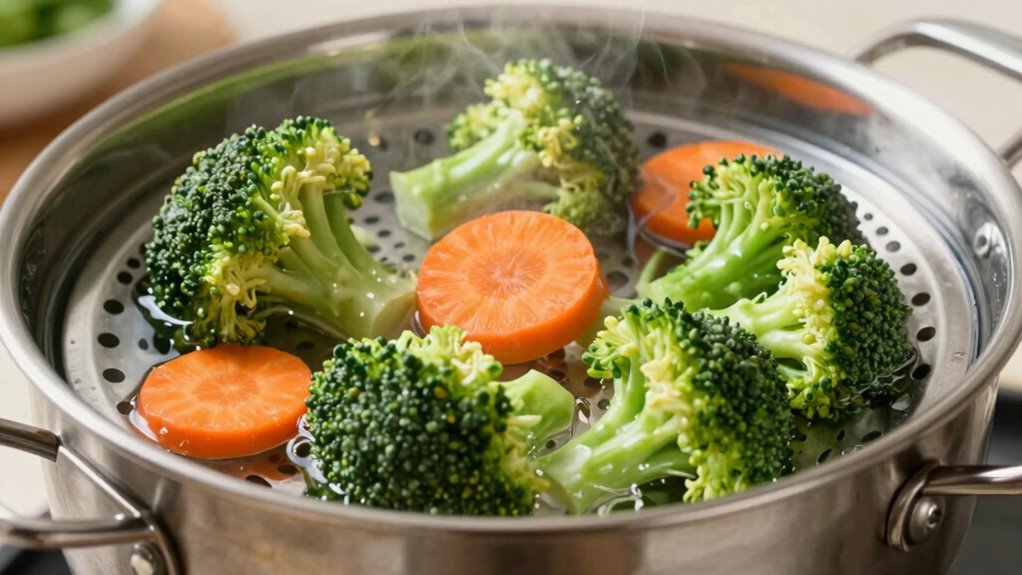
Achieving perfectly cooked vegetables depends on choosing the right method, and both steaming and boiling have their advantages. To maximize flavor enhancement and presentation improvements, focus on timing and technique. Steam vegetables until they’re tender but still vibrant, preserving nutrients and color. Boil them just long enough to soften without losing texture or flavor. Use a thermometer to monitor water temperature for consistency. For added flavor, consider infusing the cooking water with herbs or spices. Present vegetables attractively by arranging them neatly and serving immediately.
| Technique | Tips for Success |
|---|---|
| Steaming | Keep water below boiling point, use a steamer basket, and avoid overcooking. |
| Boiling | Salt water generously, cook until just tender, then drain quickly. |
| Flavor | Add herbs or spices to enhance taste. |
| Presentation | Serve immediately for vibrant appearance. |
| Nutrition | Steaming retains more nutrients compared to boiling. |
Frequently Asked Questions
Can Steaming or Boiling Vegetables Help Retain Their Antioxidants Better?
Steaming vegetables helps retain antioxidants better than boiling because it causes less nutrient loss. When you steam, the vegetables don’t sit in water, so nutrients stay intact. Boiling, on the other hand, can lead to more nutrient loss due to water-soluble antioxidants leaching out. For better cooking efficiency and nutrient preservation, steaming is your best choice, especially if you want to maximize antioxidant retention in your vegetables.
Which Method Is More Suitable for Preserving Vegetable Color and Appearance?
You’ll find steaming more suitable for preserving vegetable color and appearance because it involves shorter cooking times and less nutrient loss. Steaming gently cooks vegetables, maintaining vibrant colors and crisp texture, while boiling can cause more color fading and nutrient leaching into the water. By choosing steaming, you minimize cooking time and nutrient loss, keeping your vegetables appealing and nutritious for longer.
How Do Steaming and Boiling Impact the Fiber Content of Vegetables?
When you steam or boil vegetables, their fiber content mostly stays intact, like a sturdy rope holding everything together. Steaming gently preserves the fiber’s structure better, reducing nutrient loss and maintaining that satisfying texture. Boiling, on the other hand, can cause some fiber to break down and wash away into the water, softening the bite and diluting nutrients. So, if you want fiber and texture, steaming’s your best bet.
Are There Specific Vegetables That Should Never Be Boiled or Steamed?
Some vegetables, like potatoes and carrots, shouldn’t be boiled or steamed for too long, as their texture can become overly soft and lose flavor. Vegetables with delicate textures, such as spinach or lettuce, should be cooked briefly or eaten raw to preserve their crunch. Overcooking can also diminish nutrients. For best results, consider cooking times carefully, and choose steaming for softer vegetables and boiling for sturdier ones.
What Are the Best Practices for Seasoning Vegetables During Steaming or Boiling?
Imagine your vegetables as blank canvases waiting for vibrant flavor—seasoning techniques become your brushstrokes. During steaming or boiling, add herbs, garlic, or broth to the water for subtle flavor infusion. For more intense taste, toss vegetables with spices before cooking or season after. Remember, taste as you go, and avoid over-salting, so your veggies retain their natural goodness while bursting with delicious, well-balanced flavor.
Conclusion
Think of steaming and boiling as two paths through a lush garden. One offers gentle, careful tending that preserves delicate blooms, while the other rushes through, risking some loss but getting you to the destination faster. Choosing between them depends on what you value most—nutrients, texture, or convenience. Remember, no matter which path you take, your journey to healthy eating is about savoring the vibrant, nourishing harvest of your kitchen garden.
Evergreen bestsellers Picks
bestsellers
As an affiliate, we earn on qualifying purchases.