
If you’re stuck choosing between a juicer and a blender, think about your goals: if you want smooth, nutrient-packed drinks with most fiber removed, a juicer is the way to go. But if you prefer a fiber-rich, whole-food experience with more texture, a blender suits you better. Consider cleaning and maintenance too—blenders are quicker and easier to clean. Want to understand which option fits your lifestyle better? Keep exploring to find out more!

Get health and wellness essentials delivered free with Prime
- Fast, free delivery on millions of items
- Prime Video, Amazon Music and more included
- Member-only deals all year
Key Takeaways
- Choose a juicer for smooth, pulp-free juice focused on concentrated vitamins; opt for a blender to include fiber and whole produce.
- Blenders are easier and quicker to clean, making them more convenient for daily use.
- Juicers often have more parts and require more maintenance, but they produce clearer juice.
- Blenders process entire fruits and vegetables, providing a more complete nutritional profile.
- Consider your budget, cleaning preferences, and desired texture when selecting between a juicer and a blender.
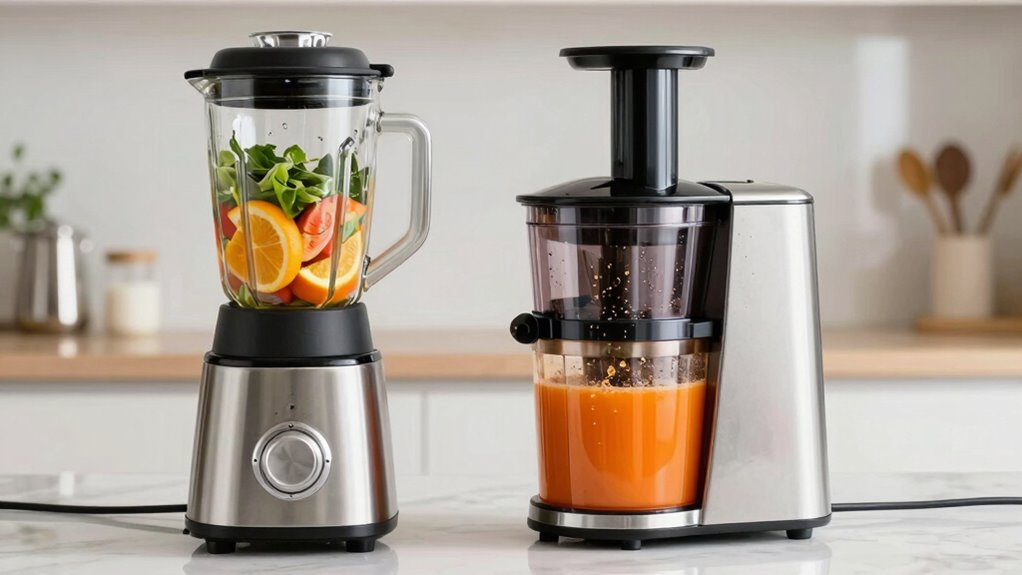
Are you trying to decide between a juicer and a blender for your kitchen? It’s a common dilemma, and the choice largely depends on what you want to achieve with your appliances. Both tools serve different purposes, and understanding their strengths can help you make an informed decision. If your goal is to maximize nutrient retention, a juicer might be the better fit. Juicers extract liquid from fruits and vegetables, removing pulp and fiber, which means you get a concentrated dose of vitamins and minerals with each glass. This process preserves most nutrients because you’re consuming the pure juice directly, without the fiber that can sometimes inhibit nutrient absorption. On the other hand, if you prefer whole foods and a more filling, fiber-rich drink, a blender is ideal. Blenders process entire fruits and vegetables, including fiber, which adds bulk and aids digestion while still maintaining most of the nutrients. Plus, blending retains the natural complexity of whole produce, giving you a more complete nutritional profile. Additionally, cleaning and maintenance are important considerations, as juicers often have more parts—like strainers, screens, and pulp containers—that need regular cleaning to keep them functioning properly. This can make cleaning a bit time-consuming, especially if you’re juicing frequently. However, some models now come with dishwasher-safe parts, which help streamline the process. Blenders typically have fewer components, usually just the jar, blades, and lid, making them quicker and easier to clean by hand or in the dishwasher. If you’re someone who values quick cleanup, a blender might be more convenient. Moreover, the cost of each appliance can vary widely, so considering your budget is also crucial in making the right choice. To ensure longevity, proper maintenance practices like regular cleaning and checking for wear and tear can extend the lifespan of your appliance. Proper storage is also essential to prevent mold or bacterial growth, especially for juicers with multiple removable parts. Additionally, choosing an appliance with durable parts can help ensure it withstands daily use over time. That said, both appliances require some effort to ensure they stay in good working condition, especially if you’re using them daily.
best juicer for nutrient-rich juice
As an affiliate, we earn on qualifying purchases.
As an affiliate, we earn on qualifying purchases.
Frequently Asked Questions
Which Appliance Is Better for Making Nut Butters?
A blender is better for making nut butters because it offers more appliance versatility and can create a smoother, creamier nut butter consistency. Blenders handle tougher nuts and larger batches more efficiently than juicers. While juicers excel at extracting juice, they aren’t designed for the thick, creamy texture you want in nut butters. So, if you’re aiming for a smooth, versatile result, go with a good-quality blender.
Can a Blender Make Juice Like a Juicer?
A blender can make juice, but it doesn’t handle fruit extraction and pulp separation as efficiently as a juicer. When you blend fruits, you get a thick mixture with all the pulp, which you then need to strain if you want clear juice. Juicers, on the other hand, extract juice more effectively by separating pulp from liquid, giving you smoother, pulp-free juice with less effort.
Are Juicers Easier to Clean Than Blenders?
You’ll find juicers generally easier to clean than blenders, especially when it comes to fruit extraction and pulp separation. Juicers are designed with fewer parts, making rinsing quicker and less messy. Blenders, however, often require more thorough cleaning due to their multiple blades and container, which can trap pulp and residue. So, if quick cleanup is your priority, a juicer might be the more convenient choice.
Do Blenders Retain More Fiber Than Juicers?
Blenders retain more fiber than juicers because they blend the entire fruit or vegetable, preserving fiber retention and nutritional preservation. Juicers extract the juice, leaving behind pulp that contains fiber. If you want a smoothie with all the fiber benefits, go for a blender. It keeps most of the nutrients and fiber intact, making it a better choice for those seeking maximum nutritional value and digestive health.
Which Appliance Is More Energy-Efficient?
Think of your appliance as a loyal companion—your blender is like a steady friend, often more energy-efficient, using less power to blend your favorite ingredients. Juicers, on the other hand, can be more demanding, consuming more energy with their faster motors and separate components. When it comes to power efficiency, blenders generally have lower energy consumption, making them a smarter choice for saving electricity and reducing your environmental footprint.
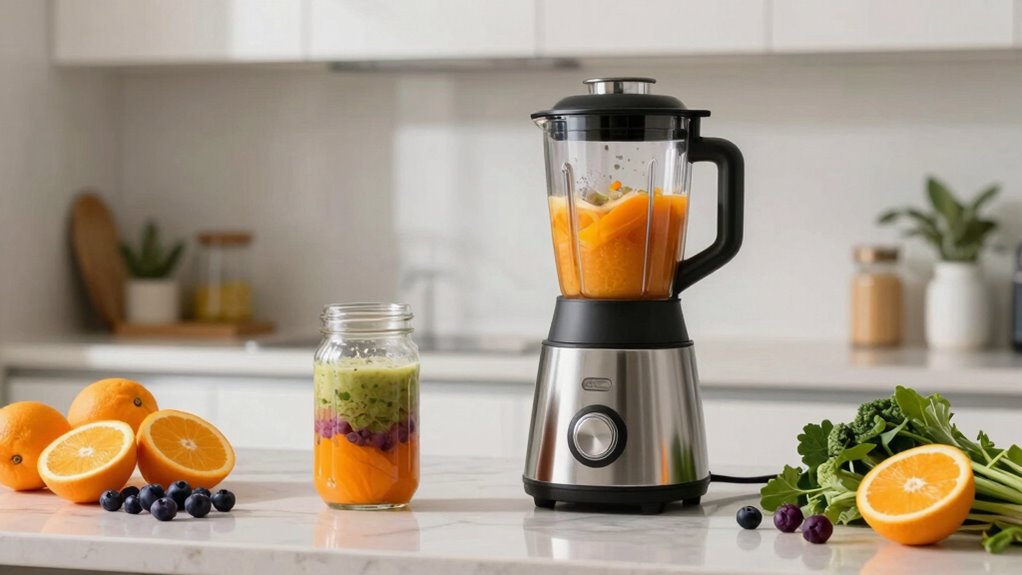
easy-to-clean blender for smoothies
As an affiliate, we earn on qualifying purchases.
As an affiliate, we earn on qualifying purchases.
Conclusion
Choosing between a juicer and a blender is like picking the right paintbrush for your masterpiece. If you want smooth, nutrient-packed juices, a juicer is your go-to. But if you prefer hearty, fiber-rich blends, then a blender is your canvas. Both tools have their place, so think about what kind of “art” you want to create in your kitchen. Whichever you pick, you’re crafting a healthier, more vibrant you—one sip or sipful at a time.
As an affiliate, we earn on qualifying purchases.
high capacity blender for whole fruits
As an affiliate, we earn on qualifying purchases.
As an affiliate, we earn on qualifying purchases.
Halloween Picks
halloween
As an affiliate, we earn on qualifying purchases.