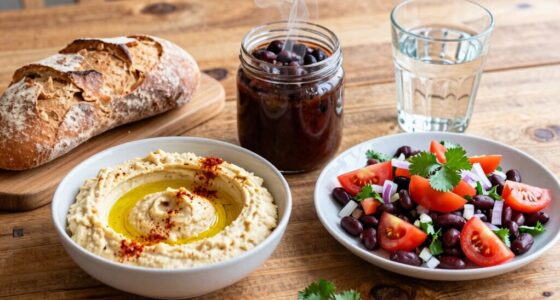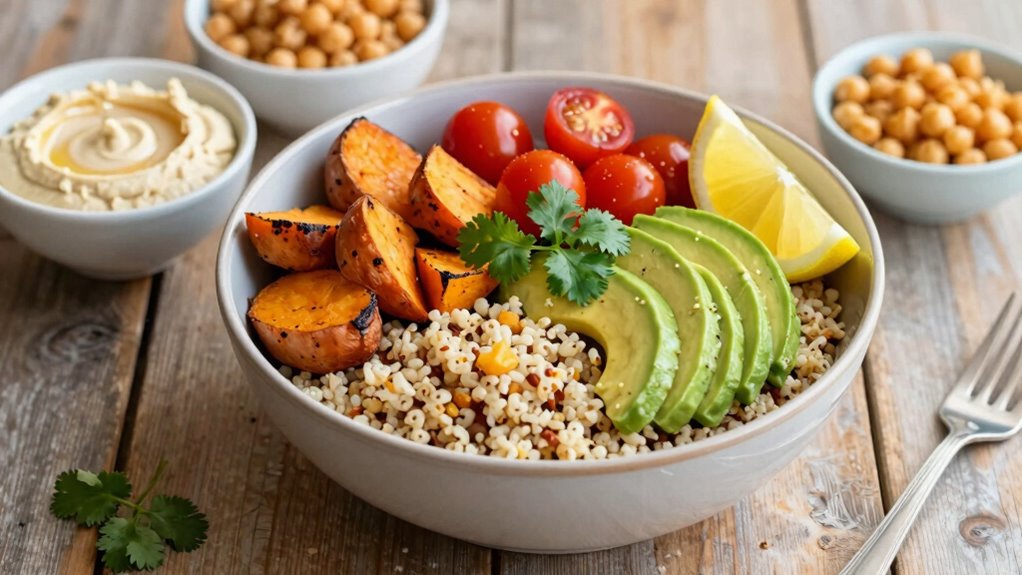
A grain bowl is a customizable, nutrient-packed meal that combines grains, proteins, vegetables, and flavorful toppings to suit your preferences and dietary needs. To create a balanced bowl, choose your favorite grains, add protein like beans or chicken, and load up with colorful veggies and tasty toppings such as nuts, herbs, and dressings. Paying attention to flavors, textures, and nutrition makes each bowl satisfying. Curious about mastering the perfect grain bowl? Keep going to discover all the essential tips and ideas.
Key Takeaways
- Grain bowls have cultural roots and promote sustainable, eco-friendly eating practices by utilizing local ingredients.
- A balanced grain bowl includes diverse proteins, colorful vegetables, and nutrient-dense toppings for optimal nourishment.
- Incorporate herbs, spices, and dressings to enhance flavor, texture, and nutritional profile of the bowl.
- Select grains and toppings based on dietary needs, preferences, and storage considerations, ensuring versatility and customization.
- Use regional ingredients and kitchen tools to elevate preparation, and adapt ingredients for vegan, gluten-free, or other dietary requirements.
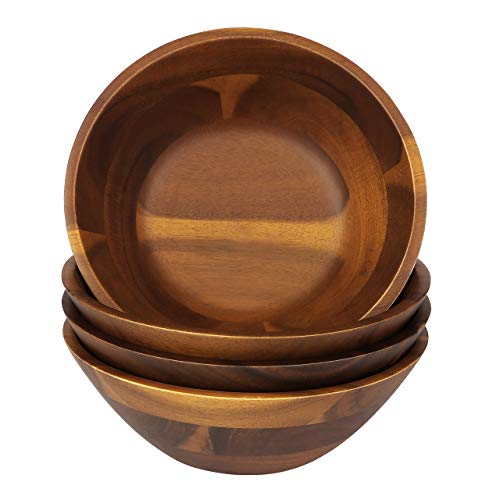
AIDEA Acacia Wooden Serving Bowls, 7 Inch Set of 4 for Salad, Soup, Noodle and More
- Set Includes Four Bowls: Each 7-inch diameter, 2.4-inch height
- Made of Natural Acacia Wood: Unique color and grain patterns
- Ideal for Salad Serving: Serves four people at once
As an affiliate, we earn on qualifying purchases.
As an affiliate, we earn on qualifying purchases.
What Is a Grain Bowl and Why Are They So Popular?
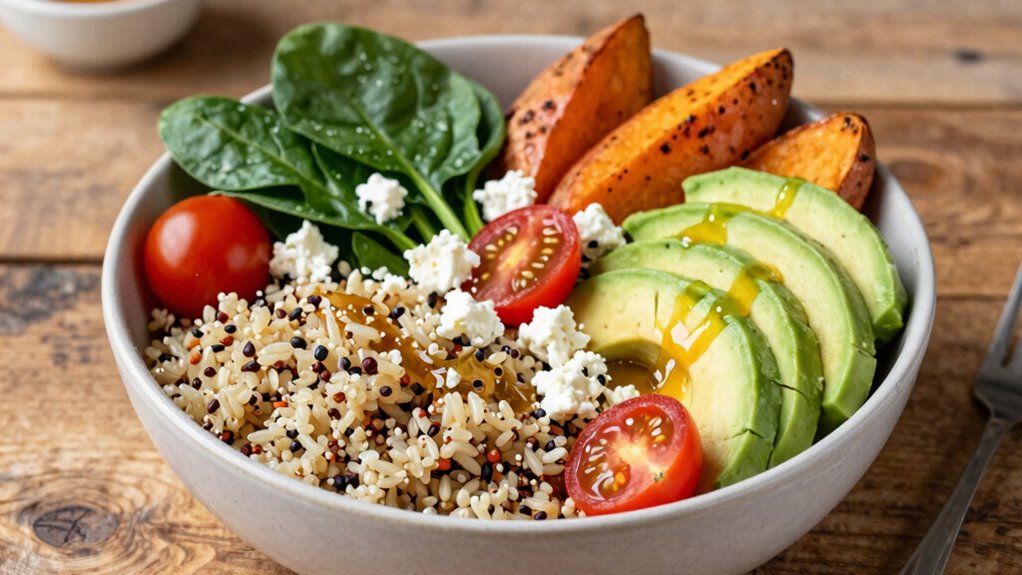
Ever wondered what makes grain bowls such a hit? Their popularity stems from a rich historical context and diverse cultural influences. Traditionally, grains have been a staple in diets worldwide, with ancient civilizations like the Romans, Chinese, and Middle Eastern cultures relying on rice, wheat, and barley. These foods became central to meals, shaping culinary traditions. Over time, these influences blended into modern grain bowls, offering a versatile, nourishing dish. Today, their appeal lies in their ability to combine healthy ingredients from various cultures into a customizable, balanced meal. Whether inspired by Asian rice bowls or Mediterranean grain salads, their cultural roots help explain why grain bowls resonate globally. They’re a contemporary reflection of centuries-old dietary practices, making them both familiar and innovative. Additionally, the emphasis on sustainable food systems encourages the use of locally sourced and eco-friendly ingredients in modern grain bowls. Recognizing the cultural significance of grains further enriches the understanding of their enduring popularity.
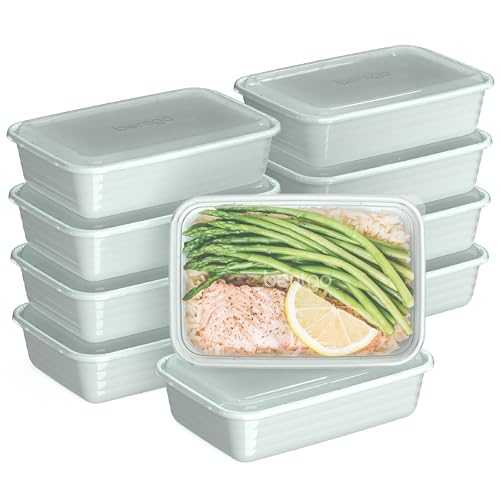
Bentgo Prep Meal Prep Containers with Lids, 20 Piece, PFAS & BPA-Free
- Top Brand for Meal Prep: Lightweight, portable 20-piece set
- Easy Portion Control: 4-cup capacity with embossed measurements
- Keeps Food Fresh: Stackable lids for organization
As an affiliate, we earn on qualifying purchases.
As an affiliate, we earn on qualifying purchases.
What Are the Key Components of a Good Grain Bowl?
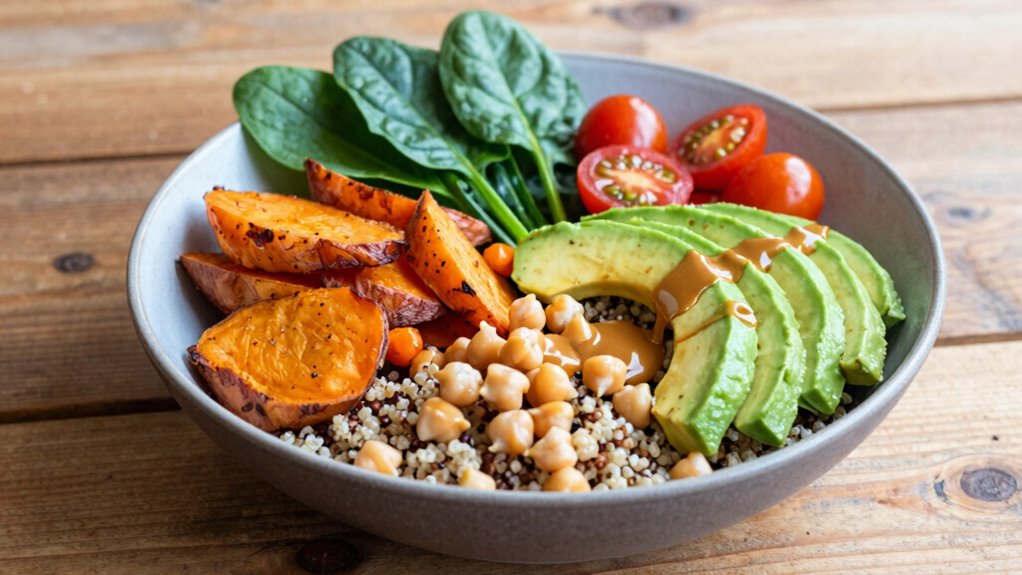
A good grain bowl balances protein sources like beans, chicken, or tofu to keep you satisfied. It features fresh, colorful vegetables to add crunch and nutrients, making every bite exciting. Don’t forget flavorful dressings and spices to tie everything together and elevate the overall taste. Incorporating a variety of nutrient-dense ingredients ensures your meal is both delicious and nourishing. Paying attention to balanced macronutrients can help you customize your bowl for sustained energy throughout the day. Additionally, understanding the importance of traditional food preparation techniques can enhance the flavor and cultural significance of your meal. Exploring culinary techniques can also help you prepare ingredients that maximize flavor and texture, especially by utilizing cooking methods that preserve nutritional value.
Protein Sources Balance
Including a good source of protein is essential for creating a balanced and satisfying grain bowl. Protein pairing helps guarantee your meal provides the nutritional balance needed to keep you full and energized. Aim for a mix of plant-based options like beans, lentils, tofu, or tempeh, and lean animal proteins such as chicken, eggs, or fish. Combining different protein sources can enhance flavor and maximize nutrient intake. Prioritize variety to cover essential amino acids and support overall health. Remember, a well-rounded grain bowl includes enough protein to complement the carbs, fats, and other nutrients, making it more filling and nourishing. Endeavor for balance by selecting protein sources that suit your dietary preferences and contribute to your meal’s overall nutritional profile. Incorporating different protein sources can also help ensure you receive a broader spectrum of essential nutrients.
Fresh, Colorful Vegetables
Adding fresh, colorful vegetables to your grain bowl not only boosts its visual appeal but also enhances its nutritional value. Incorporate a variety of vegetables like cherry tomatoes, bell peppers, and shredded carrots for vibrant color and crunch. Fermented vegetables, such as sauerkraut or kimchi, add probiotics and a tangy flavor that complements the bowl’s freshness. Herbs and herbal infusions, like basil, cilantro, or parsley, brighten the dish and add depth. These vegetables provide essential vitamins, minerals, and fiber, supporting overall health. Incorporating fermented vegetables promotes gut health and digestion. Including a diverse range of nutrient-dense ingredients can further elevate the nutritional profile of your grain bowl. To maximize health benefits, consider selecting vegetables that offer antioxidant properties to help protect your cells from oxidative stress. For added flavor and health benefits, you can also include phytonutrients, which are naturally occurring compounds found in many colorful vegetables. Aim for a mix of textures and colors to make your bowl inviting and satisfying. By thoughtfully selecting these components, you create a balanced, flavorful base that elevates the entire grain bowl experience.
Flavorful Dressings and Spices
What makes a grain bowl truly stand out? It’s the flavorful dressings and spices that tie everything together. Good dressing techniques involve balancing acidity, sweetness, and richness to complement the grains and vegetables. When it comes to spice blending, use fresh herbs, bold spices, and creative combinations to elevate your bowl. A well-crafted dressing can transform simple ingredients into a vibrant meal.
- Use lemon juice or vinegar for brightness
- Incorporate herbs like cilantro, parsley, or basil
- Mix spices such as cumin, paprika, or turmeric
- Add a touch of honey or maple for sweetness
- Embrace creamy elements like tahini or yogurt
Mastering dressing techniques and spice blending unlocks endless flavor possibilities for your grain bowls.

Norpro 809 Salad Maker, One Size, Shown
- Product Dimensions: 8.25 x 2.75 x 2.75 inches
- Capacity: 11 oz / 330 ml
- Healthy Salad Dressings: Make fat-free, chemical-free dressings
As an affiliate, we earn on qualifying purchases.
As an affiliate, we earn on qualifying purchases.
How Do You Choose the Best Grains for Your Bowl?
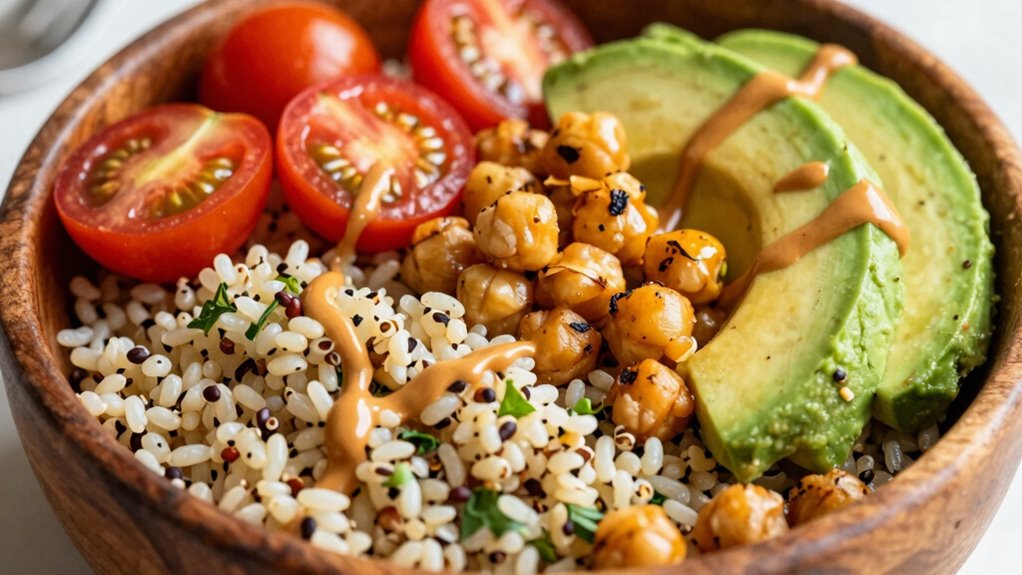
Choosing the right grains for your bowl starts with considering your nutritional goals and flavor preferences. Think about how you’ll store your grains—proper grain storage keeps them fresh and prevents spoilage, ensuring they’re ready when you need them. Next, consider cooking methods; some grains like quinoa cook quickly and absorb flavors well, while others like brown rice need more time but offer a hearty texture. If you want a lighter option, opt for grains that don’t require much cooking or can be eaten cold, like bulgur or couscous. For richer flavor, try roasting or toasting grains before cooking. Matching your grains to your taste and how you plan to prepare them helps create a balanced, satisfying bowl. Paying attention to cooking science can also help you achieve the perfect texture and flavor in your grains.

Premium Vegetable Peeler with Wooden Handle and Bottle Opener, Multifunctional 3-in-1 Stainless Steel Kitchen Tool for Fruit Apple Potato Pumpkin Papaya(Wood grain)
- 3-in-1 Design: Vegetable peeler with bottle opener
- Stainless Steel Blade: Rust-resistant and durable for long-lasting use
- Ergonomic Wooden Handle: Comfortable grip reduces hand fatigue
As an affiliate, we earn on qualifying purchases.
As an affiliate, we earn on qualifying purchases.
What Are Some Delicious Topping Ideas?
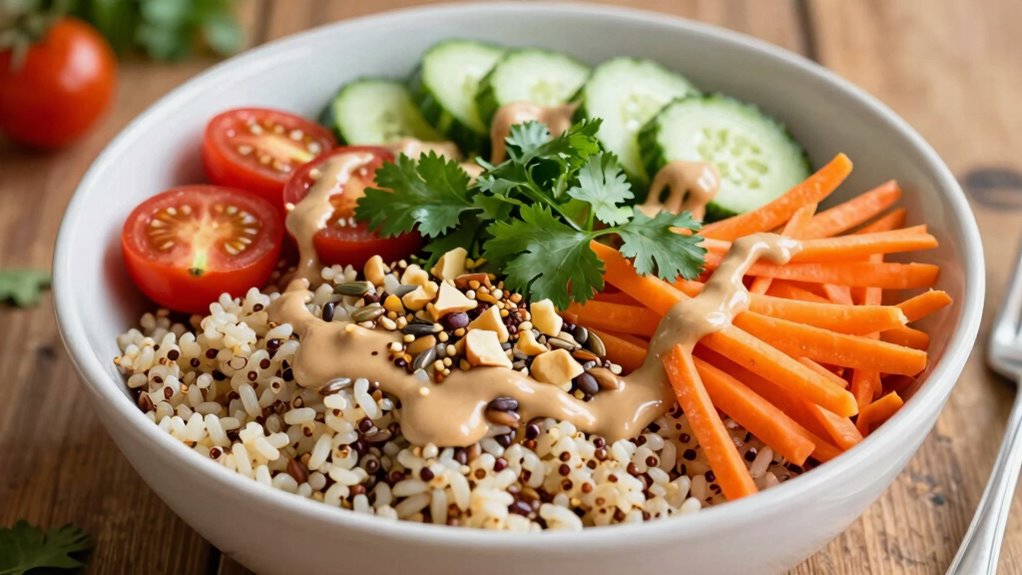
Adding fresh fruit like berries or sliced apples can brighten your bowl with natural sweetness. Crunchy nuts such as almonds or walnuts bring texture and richness, while savory proteins like grilled chicken or tofu make your meal more filling. Experiment with these toppings to create a balanced, flavorful grain bowl. Incorporating gadget-inspired kitchen tools can also help you prepare your toppings more efficiently and creatively. Utilizing meal prep techniques can further streamline your process and ensure you enjoy nutritious, well-balanced bowls throughout the week. Exploring regional ingredients can also add unique local flavors to your bowls, making each meal more special. Understanding halal dietary guidelines can help you choose appropriate ingredients to keep your meals compliant and respectful of cultural practices. Incorporating modern bathroom fixtures might seem unrelated but can inspire innovative ways to organize your kitchen space for easier meal prep.
Fresh Fruit Options
- Berries (strawberries, blueberries, raspberries)
- Mango or pineapple chunks
- Sliced apples or pears
- Citrus segments (orange, grapefruit)
- Pomegranate seeds
- Incorporating nutritional variety into your pet’s diet can promote overall health and well-being. Including a range of fresh produce options can enhance the flavor and nutrient profile of your grain bowls. Exploring seasonal produce can also add variety and freshness to your toppings. Adding food diversity to your meals ensures a well-rounded intake of essential nutrients.
Crunchy Nut Toppings
A handful of crunchy nut toppings can elevate your grain bowl with satisfying texture and rich flavor. Nut roasting enhances their natural aroma and crunch, making them a perfect snack pairing for your bowl. Consider almonds, walnuts, or pecans—lightly toasted to bring out their best qualities. These nuts add a delightful contrast to softer ingredients and bring a toasty warmth. For extra flavor, sprinkle a pinch of sea salt or a dusting of cinnamon before roasting. Their crispy, savory bite makes each spoonful more enjoyable. Plus, nuts provide healthy fats and protein, boosting the nutritional profile of your bowl. Whether you prefer a simple topping or a more seasoned variety, crunchy nuts are versatile, delicious, and easy to incorporate into your grain bowl routine.
Savory Protein Additions
To make your grain bowl more satisfying and protein-packed, consider incorporating savory toppings like cooked meats, eggs, or plant-based proteins. These additions boost flavor and keep you full longer. For plant-based options, try tofu, tempeh, or edamame for a hearty, nutritious boost. Dairy-based additions like shredded cheese, Greek yogurt, or cottage cheese add creaminess and extra protein. You can also top your bowl with sliced hard-boiled eggs or grilled chicken for a classic protein hit. These toppings not only enhance taste but also provide essential nutrients. Experiment with different combinations to find what satisfies your palate. Combining plant-based proteins with dairy-based additions creates a balanced, delicious grain bowl that keeps you energized throughout the day.
How Can You Customize Your Grain Bowl for Your Diet?
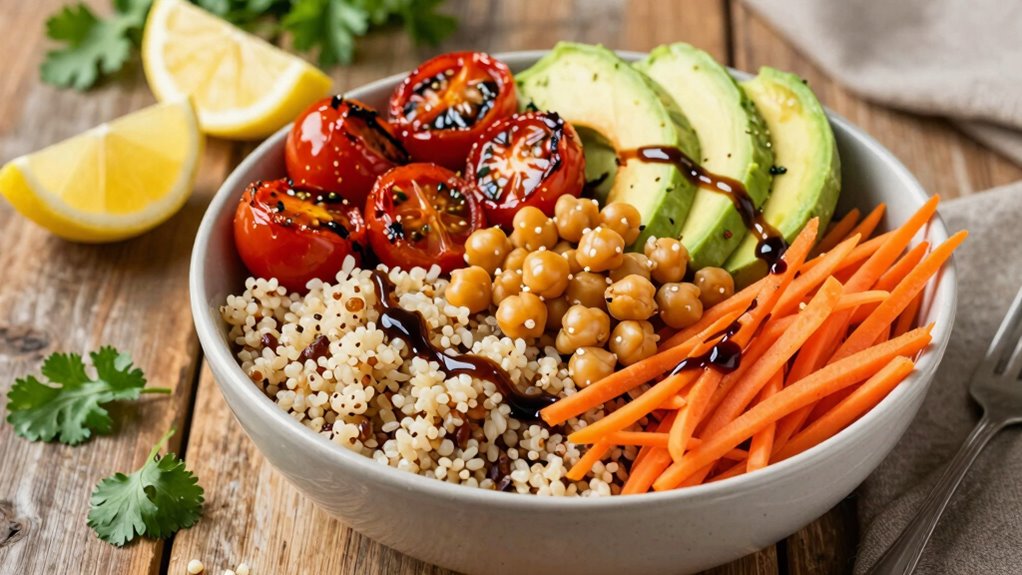
Wondering how to tailor your grain bowl to fit your dietary needs? It’s easier than you think. For gluten-free options, choose grains like quinoa, rice, or millet instead of wheat-based grains. These options keep your bowl safe and satisfying without gluten. If you follow a vegan diet, swap out animal proteins with plant-based alternatives such as tofu, tempeh, or chickpeas. You can also add plenty of colorful vegetables, nuts, and seeds for extra flavor and nutrients. Adjust your toppings and dressings to align with your dietary preferences—use tahini or avocado for creaminess, and opt for oil and vinegar instead of dairy-based dressings. Incorporating holistic health principles into your meal planning can help you create a balanced and nourishing bowl tailored to your lifestyle. Being mindful of nutritional balance ensures your bowl supports your overall health and wellness.
Common Mistakes to Avoid When Making Grain Bowls

While customizing your grain bowl is straightforward, it’s easy to fall into certain pitfalls that can impact taste and nutrition. One common mistake is overcomplicating flavors, which can overwhelm your palate and obscure the bowl’s balance. Another is neglecting portion sizes, leading to either under-filling or overeating. To avoid these issues, keep your ingredients simple and well-balanced. Don’t overload the bowl with too many toppings or sauces, as this can muddy the flavors. Be mindful of the proportion of grains, proteins, and vegetables to maintain nutritional harmony. Finally, rushing the process may result in uneven textures or missing key ingredients. Staying focused on simplicity and proper portions ensures your grain bowl remains delicious, nutritious, and enjoyable.
Frequently Asked Questions
Can Grain Bowls Be Made Vegan or Vegetarian?
Yes, you can easily make grain bowls vegan or vegetarian. Simply swap animal proteins with plant-based options like tofu, tempeh, or beans. Use dairy alternatives such as coconut yogurt or almond cheese for added flavor. You can also add a variety of vegetables and grains to boost nutrition. These substitutions make your grain bowl delicious, satisfying, and perfectly suited to a vegan or vegetarian diet.
How Long Can Prepared Grain Bowls Be Stored?
You can store prepared grain bowls in the fridge for up to 3-4 days, but don’t push your luck—timing is everything. For safety considerations, keep them in airtight containers and make sure they’re cooled promptly before refrigeration. After this period, the risk of spoilage rises, and eating them could pose health concerns. It’s best to enjoy your grain bowls sooner rather than later to keep flavors fresh and safety intact.
What Are the Best Dressings for Grain Bowls?
You should choose dressings that enhance your grain bowl’s flavor combinations. Popular dressing pairings include tahini, lemon vinaigrette, or a tangy balsamic glaze, which complement ingredients like roasted vegetables and fresh herbs. Consider balancing acidity and creaminess for a delightful taste. Feel free to experiment with flavors like spicy sriracha or honey mustard, ensuring your dressing boosts your bowl’s overall flavor profile and makes each bite satisfying.
Are Grain Bowls Suitable for Meal Prep?
A grain bowl is like a blank canvas, perfect for meal prep. You can prepare various grain bowl variations in advance, making healthy eating easier and more convenient. Simply store ingredients separately and assemble when ready. Use meal prep tips like batch cooking grains and proteins, then topping with fresh veggies and dressings. This way, you get delicious, nutritious meals ready to go, saving you time during busy days.
How Do You Balance Flavors in a Grain Bowl?
To balance flavors in a grain bowl, start with seasoning techniques like salt, pepper, and citrus to enhance natural tastes. Use ingredient pairing wisely—combine creamy, crunchy, sweet, and savory elements for harmony. Add herbs and spices last to adjust the flavor profile. Tasting as you go helps you find the right balance, ensuring each bite delivers a well-rounded, satisfying experience without overpowering any single ingredient.
Conclusion
Now that you know the secrets to crafting the perfect grain bowl, it’s time to get creative. Imagine customizing yours with quinoa, roasted veggies, and a tangy dressing—like Sarah did for her week of healthy lunches. She found that experimenting with different grains and toppings kept her meals exciting and nutritious. So go ahead, mix and match your favorite ingredients—you’ll enjoy a delicious, nourishing bowl every time. Happy building!