Many people mistake tempeh and tofu as being interchangeable, but they have key differences. Tempeh is fermented, offering probiotics that support your gut health, and it provides more protein and nutrients, making it more filling and nourishing. Tofu, on the other hand, is softer, absorbs flavors easily, and is a versatile substitute. If you keep exploring, you’ll discover how these differences can help you make healthier choices and improve your meals.

Get health and wellness essentials delivered free — and shop member deals
- Fast, free delivery on millions of items
- Access to Prime Big Deal Days deals on October 6–7
- Prime Video, Amazon Music and more included
Key Takeaways
- Many people assume tempeh and tofu are interchangeable without considering tempeh’s fermentation benefits and higher nutrient density.
- Overlooking tempeh’s probiotic properties leads to missing out on gut health and digestive advantages.
- Relying solely on taste or convenience ignores the significant nutritional differences, such as protein content and bioavailability.
- Ignoring fermentation’s role means missing the flavor complexity and enhanced nutrient absorption tempeh offers.
- Choosing based only on texture or versatility without understanding health benefits results in less informed dietary choices.
Have you ever wondered how tempeh and tofu compare? Many people assume they’re interchangeable, but they actually have distinct differences that can impact your nutritional intake and health benefits. One common mistake is overlooking the fermentation benefits of tempeh, which set it apart from tofu. Fermentation helps break down complex compounds in tempeh, making it easier for your body to digest and absorb nutrients. This process also increases the bioavailability of vitamins and minerals, such as B vitamins and magnesium, which may not be as readily available in plain tofu. So, if you’re aiming for foods that support gut health and enhance nutrient absorption, tempeh offers a notable advantage due to its fermentation process.
Tempeh’s fermentation process enhances digestion and nutrient absorption, offering a gut-friendly, nutrient-dense choice over tofu.
Understanding the fermentation process can also help you appreciate how nutrient bioavailability is improved in tempeh, making it a smarter choice for overall health. When it comes to protein content, many people assume tofu and tempeh are similar because both are plant-based protein sources. However, tempeh actually provides a higher amount of protein per serving compared to tofu. Typically, a standard serving of tempeh contains around 15 to 20 grams of protein, whereas tofu offers roughly 8 to 12 grams. This makes tempeh a more filling and satisfying choice if you’re trying to boost your protein intake, particularly for vegetarians and vegans who rely heavily on these foods. The higher protein content in tempeh also means it can better support muscle maintenance and recovery, especially when paired with an active lifestyle.
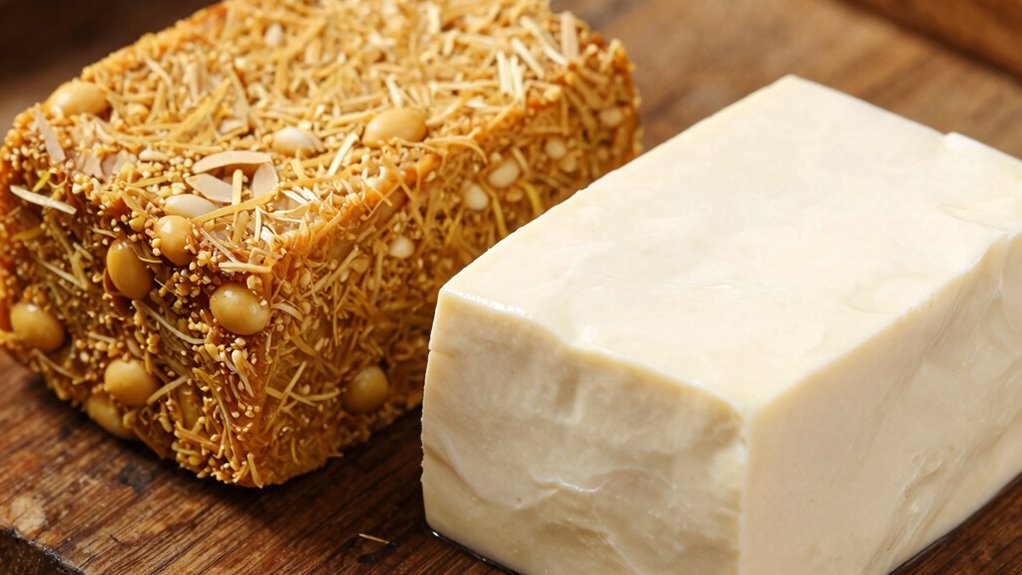
Another aspect to consider is their texture and how they’re prepared. Tempeh has a firmer, denser texture because it’s made from whole soybeans that have been fermented and then pressed into a cake. Tofu, on the other hand, is softer and more versatile, often used as a substitute for dairy or eggs in recipes. While tofu absorbs flavors well, tempeh’s nutty, earthy taste comes naturally from the fermentation. This makes tempeh not only a nutrient-dense choice but also a more flavorful addition to many dishes. Additionally, the fermentation process can enhance the flavor profile, making tempeh more appealing to those seeking a richer taste. Moreover, the fermentation process can also contribute to probiotic benefits, supporting a healthy gut microbiome. Incorporating fermented foods like tempeh can also promote digestive health, which is a key aspect of overall wellness.
Most people make the mistake of thinking they’re the same or choosing based solely on taste or convenience. But understanding these differences—namely the fermentation benefits and protein content—can help you make more informed decisions about which to incorporate into your diet. If you’re looking to improve digestion, boost your nutrients, or simply add more variety to your meals, recognizing the unique qualities of tempeh and tofu makes all the difference.
As an affiliate, we earn on qualifying purchases.
Frequently Asked Questions
Can Tempeh and Tofu Be Used Interchangeably in Recipes?
Yes, you can often swap tempeh and tofu in recipes, but keep in mind their flavor pairing and culinary versatility differ. Tempeh has a nutty, earthy taste and a firmer texture, making it great for hearty dishes. Tofu is milder and softer, perfect for delicate flavors and sauces. Adjust cooking times accordingly, and consider marinating to enhance flavor. Experimenting helps you discover which works best for your dish.
Which Is Healthier: Tempeh or Tofu?
They say “you are what you eat,” so choosing the healthier option matters. Between tempeh and tofu, tempeh is generally healthier because of its higher protein, fiber, and nutrient content, plus fermentation benefits that improve digestion and nutrient absorption. A thorough nutritional comparison reveals tempeh’s richer profile, making it a smarter choice for gut health and sustained energy. If health’s your goal, tempeh takes the lead.
Do Tempeh and Tofu Have Different Cooking Times?
Yes, tempeh and tofu have different cooking times due to their textures. Tempeh, being denser and firmer, generally takes longer to cook and benefits from methods like steaming or baking to enhance flavor absorption. Tofu cooks faster, especially when pan-fried or stir-fried, allowing it to absorb flavors quickly. Adjust your cooking times accordingly to guarantee each ingredient reaches your desired texture and flavor.
Are There Any Allergens Specific to Tempeh or Tofu?
If you have soy allergies, both tempeh and tofu could trigger reactions since they’re soy-based. Tempeh, made through fermentation, often has reduced allergenic proteins, but this doesn’t guarantee safety for everyone. Tofu is unfermented, so its allergen levels stay the same. Always check ingredient labels and consult with a healthcare provider if you’re unsure. Remember, individual sensitivities vary, so proceed cautiously with soy products.
How Do Taste and Texture Differ Between Tempeh and Tofu?
Imagine a symphony of flavors—tempeh offers a robust, nutty taste with a firmer, chewy texture, making it perfect for hearty dishes. Tofu, on the other hand, has a mild, subtle flavor that readily absorbs surrounding seasonings, with a soft, silky texture. Their flavor profiles and culinary versatility differ greatly, so your choice depends on whether you crave the boldness of tempeh or the gentle adaptability of tofu.
As an affiliate, we earn on qualifying purchases.
Conclusion
So, next time you’re deciding between tempeh and tofu, remember they’re both heroes in your kitchen, each with its own superpower. Don’t fall into the trap of thinking they’re interchangeable like a Swiss Army knife — each brings unique flavor and texture to your dish. Think of it like choosing between a trusty knight and a wise wizard; both can save the day, but knowing when to call on each makes your meal legendary.
As an affiliate, we earn on qualifying purchases.
As an affiliate, we earn on qualifying purchases.
Fall Picks
fall essentials
As an affiliate, we earn on qualifying purchases.