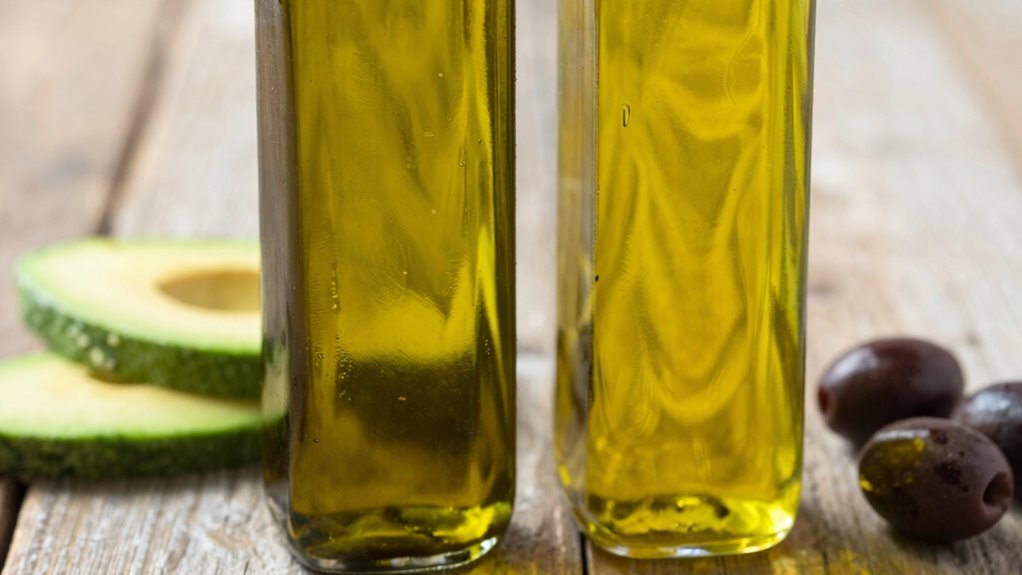

You’ll notice that avocado oil has a high smoke point and a mild, buttery flavor, making it perfect for high-heat cooking like frying and searing. Olive oil, especially extra virgin, offers a fruity flavor ideal for salads and light sautés but has a lower smoke point, limiting its use in high-temperature dishes. Choosing the right oil depends on your cooking style and health goals; exploring further reveals even more key differences that matter.

Get health and wellness essentials delivered free — and shop member deals
- Fast, free delivery on millions of items
- Access to Prime Big Deal Days deals on October 6–7
- Prime Video, Amazon Music and more included
Key Takeaways
- Avocado oil has a higher smoke point (~520°F) suitable for high-heat cooking, unlike olive oil’s lower smoke point.
- Avocado oil offers a mild, buttery flavor, while extra virgin olive oil provides a fruity taste ideal for dressings and low-heat use.
- Both oils are rich in monounsaturated fats, but avocado oil contains more per serving, supporting heart health.
- Olive oil’s polyphenols and antioxidants provide anti-inflammatory benefits, especially when used at lower temperatures.
- Use avocado oil for versatile, high-temperature cooking; reserve olive oil for flavor-sensitive, low-heat applications.

When choosing between avocado oil and olive oil, understanding their unique properties can help you make a healthier choice for your cooking and dietary needs. Both oils are popular for their flavors and health benefits, but they differ markedly in culinary versatility and nutritional profile. Knowing these differences allows you to select the best option for your specific dishes and health goals.
Avocado oil excels in its culinary versatility. Its mild, buttery flavor complements a wide range of dishes—from salads and dips to sautéed vegetables and grilled meats. It has a high smoke point, typically around 520°F (271°C), making it ideal for high-heat cooking methods like frying or searing. This means you can cook at higher temperatures without worrying about the oil breaking down or producing harmful compounds. Olive oil, especially extra virgin varieties, offers a more distinct, fruity flavor that enhances salads, drizzles, and light sautés. However, its smoke point is lower, about 375-410°F (191-210°C), limiting its use in high-heat cooking. While you can still cook with it, you’ll want to reserve extra virgin olive oil for lower-temperature applications to preserve its delicate flavors and nutritional qualities.
Nutritional benefits are another key differentiator. Both oils are rich in healthy monounsaturated fats, which support heart health and can help reduce inflammation. Avocado oil contains a higher concentration of monounsaturated fats per serving, along with noteworthy amounts of vitamins E and K, which are essential for skin health and blood clotting. It also provides phytosterols, compounds that may help lower cholesterol levels. Olive oil, particularly extra virgin, is packed with antioxidants like polyphenols and oleocanthal, which have anti-inflammatory and anticancer properties. It’s also associated with improved cardiovascular health and may support brain function. While both oils contribute to a healthy diet, avocado oil’s higher smoke point and nutrient density make it a versatile choice for various cooking styles, especially when you want to maximize nutrient intake.
As an affiliate, we earn on qualifying purchases.
Frequently Asked Questions
Which Oil Has a Higher Smoke Point for Cooking at High Temperatures?
Avocado oil has a higher smoke point than olive oil, making it better for high-temperature cooking. You’ll notice that avocado oil’s neutral flavor profile allows for versatile use without overpowering dishes, while olive oil offers a distinct taste that shines in salads and low-heat recipes. So, if you’re aiming for cooking versatility at higher temps, avocado oil’s the way to go, especially for frying or searing.
Are There Any Notable Differences in Health Benefits Between the Two Oils?
You’ll find that avocado and olive oils both offer health benefits, but they differ slightly in nutritional content and antioxidant properties. Avocado oil provides more monounsaturated fats and vitamin E, supporting skin and heart health. Olive oil contains antioxidants like polyphenols that reduce inflammation. While both oils boost your overall health, choosing between them depends on your specific nutritional needs and flavor preferences.
How Do Their Flavors Compare in Culinary Applications?
Your taste buds will thank you for exploring their flavor profiles, as avocado oil offers a buttery, mild richness that enhances dishes without overpowering them. Olive oil, especially extra virgin, bursts with fruity, peppery notes, adding depth and complexity. When it comes to culinary versatility, olive oil shines in dressings and drizzles, while avocado oil’s subtle flavor makes it ideal for high-heat cooking. Their distinct flavors elevate every meal, transforming ordinary into extraordinary.
Which Oil Is More Environmentally Sustainable to Produce?
You’ll find that olive oil is generally more eco-friendly to produce than avocado oil. Olive trees thrive on eco-friendly farming practices, requiring less water compared to avocados. Additionally, olive oil’s water usage is considerably lower, making it a more sustainable option if you’re concerned about environmental impact. Choosing olive oil supports better resource management and reduces water consumption, making it the more sustainable choice for environmentally conscious consumers.
Can Avocado and Olive Oils Be Used Interchangeably in Recipes?
Like two different brushes painting a canvas, avocado and olive oils each bring unique flavor profiles and culinary versatility. You can swap them in recipes, but note that avocado oil’s mild, buttery taste differs from olive oil’s fruity, robust flavor. Use avocado oil for delicate dishes and high-heat cooking, while olive oil excels in salads and finishing dishes. Understanding their nuances helps you craft dishes with balanced, intentional flavors.
extra virgin olive oil for salads
As an affiliate, we earn on qualifying purchases.
As an affiliate, we earn on qualifying purchases.
Conclusion
So, whether you choose the buttery richness of avocado oil or the timeless charm of olive oil, remember—each is a brushstroke on your culinary canvas. Think of avocado as a bold splash of color, vibrant and daring, while olive oil whispers tradition with every drop. Both dance on your palate, adding depth and character. In this flavorful duel, it’s not just about which wins, but how you let each oil weave its magic into your kitchen story.
As an affiliate, we earn on qualifying purchases.
As an affiliate, we earn on qualifying purchases.
Fall Picks
fall essentials
As an affiliate, we earn on qualifying purchases.