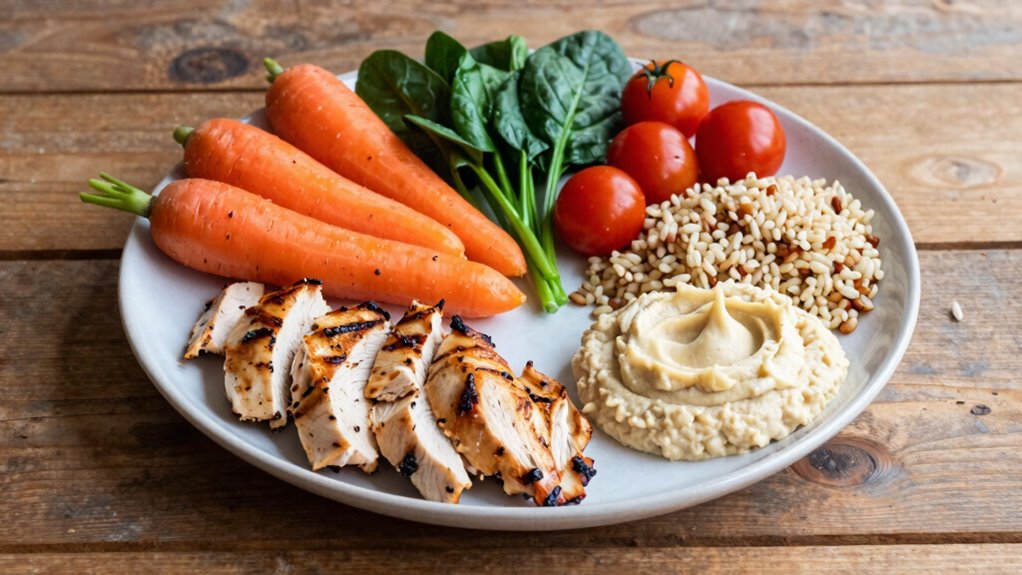

The Balanced Plate Method is a simple, visual way to guarantee your meals are nutritious and balanced. It guides you to fill half your plate with vegetables, a quarter with lean protein, and the rest with whole grains, making healthy choices easy and instinctive. By using visual cues and portioning tips, you can develop habits that stick without feeling overwhelmed. Keep exploring to discover how this method can transform your approach to everyday eating.

Get health and wellness essentials delivered free — and shop member deals
- Fast, free delivery on millions of items
- Access to Prime Big Deal Days deals on October 6–7
- Prime Video, Amazon Music and more included
Key Takeaways
- The Balanced Plate Method visually divides your plate into specific sections: 50% vegetables, 25% lean protein, and 25% whole grains for balanced nutrition.
- Using visual cues like plate sectioning and portion sizes simplifies healthy eating and supports consistent portion control.
- Meal prepping and planning help make the balanced plate a daily, sustainable habit, reducing decision fatigue.
- The method can be adapted for special diets by incorporating plant-based proteins, gluten-free grains, and colorful vegetables.
- It promotes mindful eating, easy meal planning, and long-term adherence to healthy eating habits through clear visual guidelines.
balanced plate meal prep containers
As an affiliate, we earn on qualifying purchases.
As an affiliate, we earn on qualifying purchases.
What Is the Balanced Plate Method and Why Is It Effective?
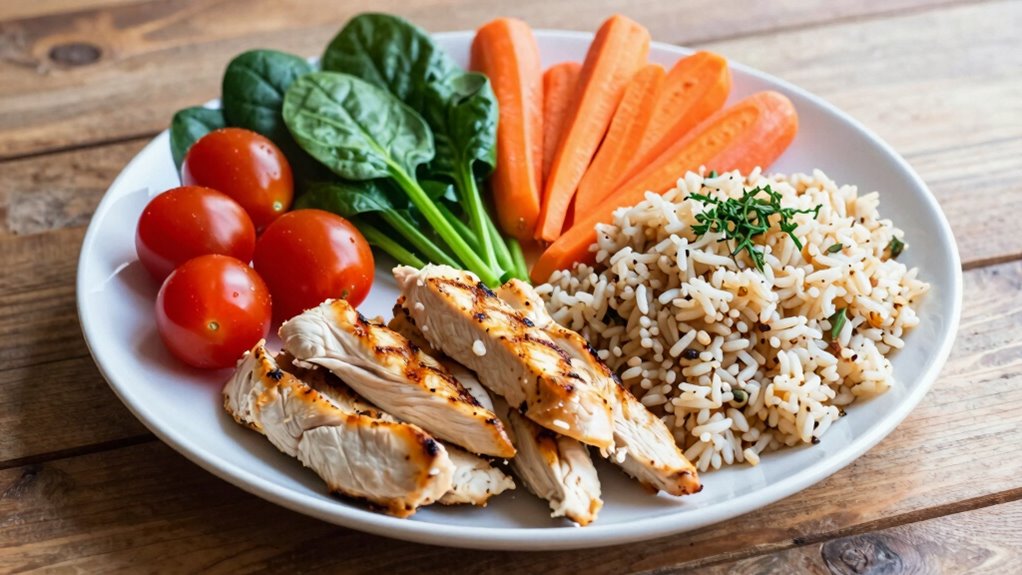
Have you ever wondered how to eat balanced meals without complicated calorie counting or strict dieting? The balanced plate method is rooted in nutritional science, making it an effective way to develop healthy habits effortlessly. It emphasizes portioning your plate into specific areas: half vegetables, a quarter lean protein, and a quarter whole grains. This simple visual guide helps you naturally include essential nutrients, supporting your overall health. By focusing on balance rather than restrictions, you’re more likely to stick with good eating patterns long-term. Plus, it removes the guesswork, making healthy choices intuitive and sustainable. The method’s effectiveness comes from its simplicity and reliance on proven nutritional principles, helping you build habits that promote well-being without feeling overwhelmed. Incorporating nutritional science into your routine ensures that your meals are both satisfying and nourishing. Understanding portion control as part of this approach further enhances your ability to maintain healthy eating habits effortlessly. Additionally, the visual representation of the plate makes it easier to remember and apply daily, promoting consistency in your diet. Emphasizing balanced eating supports sustainable living practices by reducing food waste and encouraging mindful consumption.
portion control plates for healthy eating
As an affiliate, we earn on qualifying purchases.
As an affiliate, we earn on qualifying purchases.
How to Visualize Your Plate for Better Nutrition
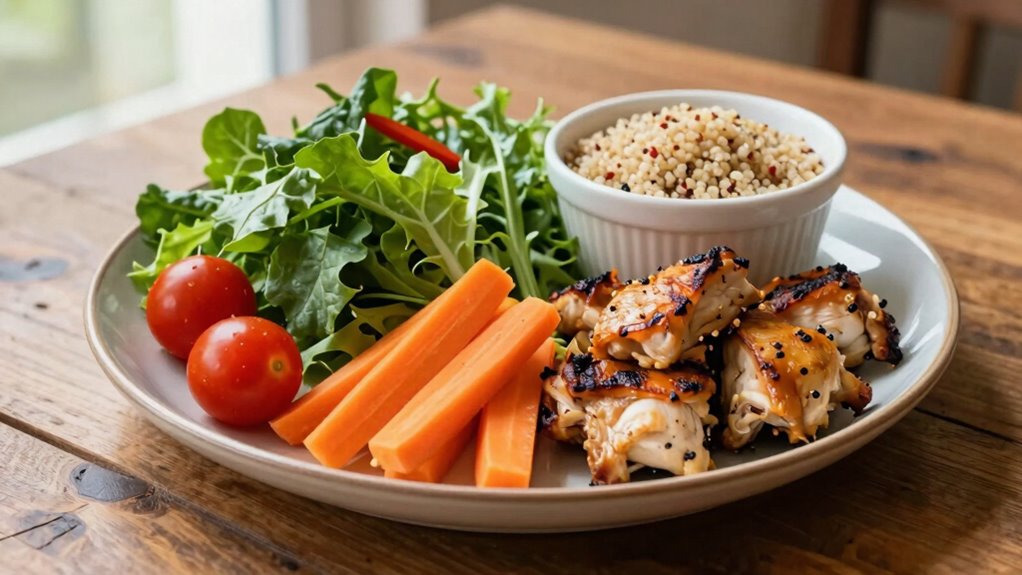
To improve your nutrition, learn to visualize your plate using simple visual cues. Think of your plate divided into sections for fruits, vegetables, proteins, and grains, making portion sizes easier to judge. This approach helps you balance your meals without needing measuring tools every time. Incorporating entertainment content can also motivate you to stay consistent with healthy eating habits. Additionally, understanding the importance of balanced diet can reinforce your commitment to making healthier choices daily.
Portion Sizes Made Simple
Wondering how to keep your portions in check without measuring every bite? The key is visualizing your plate to master portion control and simplify meal planning. Instead of weighing foods, think about dividing your plate into sections: half for vegetables and fruits, a quarter for lean proteins, and a quarter for whole grains. This visual approach helps you naturally limit overeating and guarantee balanced nutrition. When you plan meals, focus on filling your plate with nutrient-dense foods, making portion sizes manageable without strict measurements. Over time, this method trains your eye to recognize appropriate portions, making portion control effortless. Incorporating home exercise equipment and mindful eating practices can further support your overall wellness journey. By visualizing your plate this way, you’ll eat smarter, feel more satisfied, and develop healthier habits without the fuss of constant measuring.
Using Visual Cues
Visual cues are a powerful way to reinforce your understanding of portion sizes without relying on measuring tools. By focusing on color contrast and shape recognition, you can easily identify healthy portions. For example, use a dinner plate with a distinct color contrast between the sections—such as a white plate divided into sections with colorful foods—so you can quickly see where fruits, vegetables, grains, and proteins should go. Recognizing familiar shapes, like a palm-sized portion for meat or a cupped hand for carbohydrates, helps you gauge amounts more intuitively. These visual cues make it simple to balance your plate at a glance, making mindful eating more natural. Over time, your ability to judge portions improves, supporting better nutrition without the need for constant measurement.
As an affiliate, we earn on qualifying purchases.
Easy Tips to Make the Balanced Plate a Daily Habit
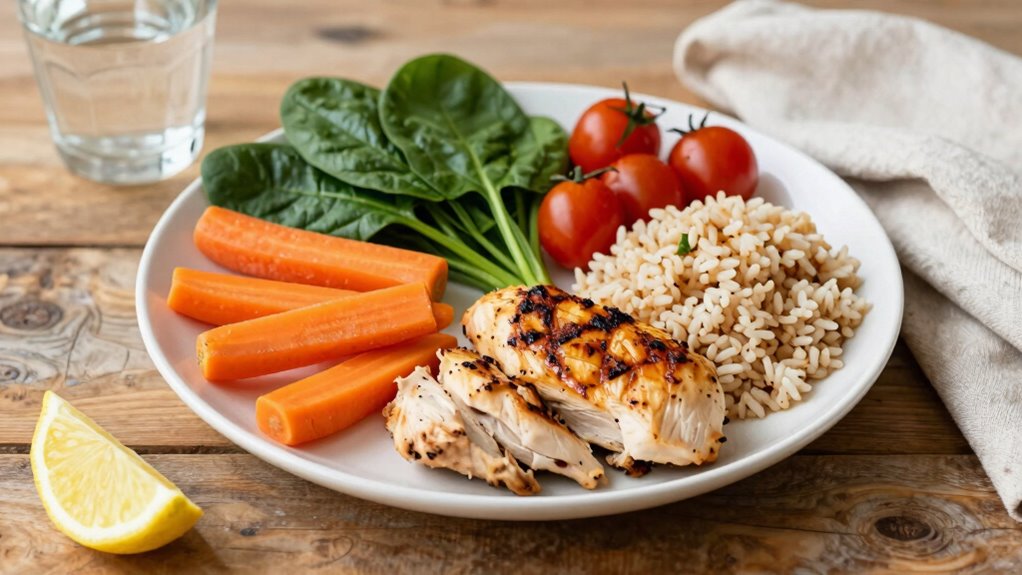
To make the balanced plate a daily habit, try preparing meals ahead of time so you’re ready to eat healthy without extra effort. Use visual guides, like dividing your plate into sections, to keep your portions on track. Incorporate a variety of foods each day to keep your meals interesting and guarantee you get all necessary nutrients. Additionally, staying hydrated throughout the day supports digestion and nutrient absorption, making it easier to maintain your healthy eating habits. Being aware of banking details such as SWIFT codes can help you manage your finances smoothly, especially when handling international transactions. Remember, understanding nutrition basics can also empower you to make better meal choices and stay consistent with your healthy eating routine.
Prepare Meals Ahead
Preparing meals ahead of time can remarkably simplify maintaining a balanced plate throughout the week. Incorporate meal prep and batch cooking into your routine to save time and reduce daily decision-making. Spend a few hours on weekends or evenings preparing ingredients or entire meals, then store them in portioned containers. This way, you’ll always have healthy options ready to go, making it easier to stick to your balanced plate goals. Batch cooking allows you to cook larger quantities of grains, proteins, and vegetables at once, which you can mix and match for different meals. By planning ahead, you eliminate the temptation of grabbing less nutritious options and guarantee your plate stays balanced every day. Smart home technology insights can further assist you in organizing your meal prep schedule and reminders. Consistent preparation makes healthy eating an effortless part of your daily routine. Additionally, utilizing meal planning tools can help you stay organized and ensure variety in your meals.
Use Visual Guides
Using visual guides can make it much easier to stick with a balanced plate every day. They provide clear visual cues for proper plate composition, helping you balance your meals effortlessly. Here are four simple ways to incorporate visual guides:
- Divide your plate into sections—half for vegetables and fruits, a quarter for lean proteins, and a quarter for grains.
- Use color contrasts—bright vegetables alongside neutral grains to guide your eye and remind you of variety.
- Place smaller plates or bowls inside larger ones to visually cue portion sizes.
- Keep a visual chart nearby as a quick reference for balanced plate composition, reinforcing the visual cues.
- Incorporate visual cues into your meal routine to make healthy eating a natural habit, similar to how cycling gear enhances performance and safety for cyclists.
These visual guides turn abstract ideas into concrete cues, making healthy eating a natural habit.
Incorporate Variety Daily
Incorporating variety into your daily meals guarantees you get a wide range of nutrients and keeps your eating habits interesting. Mix up your protein sources, include colorful vegetables, and rotate grains to guarantee balanced nutrition. Paying attention to meal timing helps prevent overeating and maintains energy levels. Also, choose diverse snack options—fresh fruit, nuts, or yogurt—to avoid boredom and support your health goals.
| Meal Type | Example Options |
|---|---|
| Breakfast | Oatmeal with berries, scrambled eggs |
| Snack | Apple slices, trail mix |
| Dinner | Grilled fish, roasted vegetables |
As an affiliate, we earn on qualifying purchases.
Watch Out for These Common Mistakes

Even with the best intentions, it’s easy to make mistakes when trying to follow the balanced plate method. Common pitfalls often involve neglecting portion control and meal planning. Here are four mistakes to watch out for:
- Overloading one food group, like carbs or protein, instead of balancing all sections.
- Skipping meal planning, which leads to impulsive choices and unhealthy snacks.
- Underestimating portion sizes, causing overeating or nutrient imbalance.
- Ignoring variety, resulting in missed nutrients and less satisfaction.
To avoid these errors, focus on mindful portion control and thoughtful meal planning. Keep your plate balanced by proportioning each food group correctly, and plan meals ahead to stay on track. Small adjustments make a big difference in maintaining a healthy, balanced diet.
Adapting the Balanced Plate for Vegetarian, Gluten-Free, and Other Diets
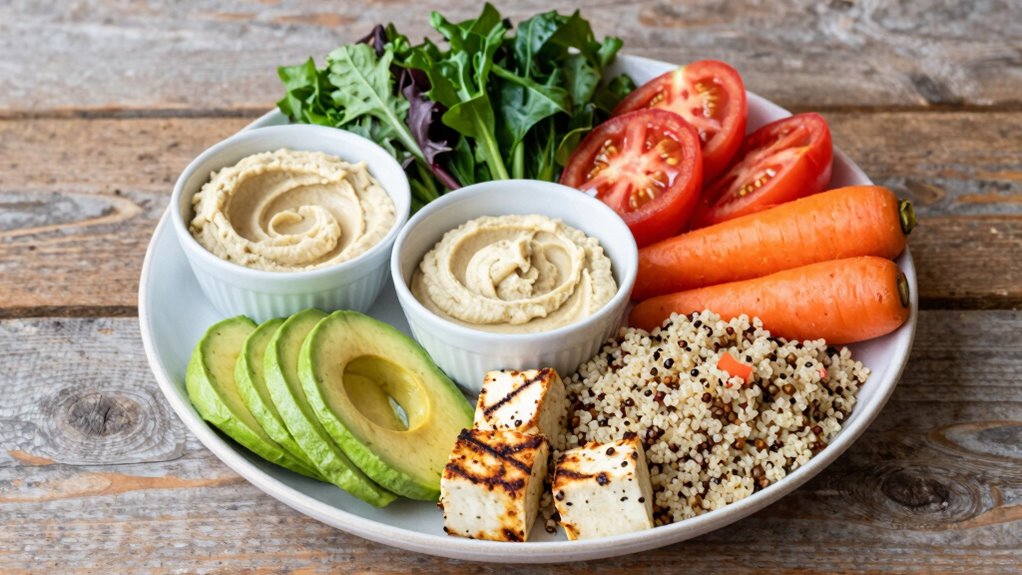
Adapting the balanced plate method to fit vegetarian, gluten-free, and other specialized diets requires understanding how to replace or modify key food groups while maintaining nutritional balance. For vegetarians and vegans, vegan substitutions like plant-based proteins, beans, and tofu guarantee you get enough protein without animal products. When it comes to gluten-free diets, swap traditional grains with gluten-free grains such as quinoa, rice, or buckwheat, which provide essential carbs and fiber. Be mindful to include a variety of colorful vegetables and healthy fats to complete your plate. Incorporating nutrient-dense foods ensures your diet remains nutritious and satisfying. It’s also important to consider dietary restrictions when planning your meals to ensure all nutritional needs are met. Paying attention to dietary diversity can help prevent nutritional gaps and promote overall health. Including a variety of whole, minimally processed foods supports optimal nutrition and helps maintain energy levels throughout the day. Balancing these elements helps you meet your nutritional needs while respecting your dietary choices. This approach keeps your meals flavorful, satisfying, and aligned with your health goals.
Why the Balanced Plate Makes Healthy Eating Simple and Enjoyable

The balanced plate makes healthy eating simple and enjoyable because it provides a clear visual guide that helps you assemble nutritious meals effortlessly. It encourages mindful eating by allowing you to see exactly how much of each food group to include. This promotes portion control, preventing overeating and supporting your health goals. To picture it:
- Fill half your plate with colorful vegetables and fruits.
- Allocate a quarter for lean proteins like chicken, beans, or fish.
- Reserve a quarter for whole grains such as brown rice or whole wheat bread.
- Add a small portion of healthy fats, like nuts or olive oil, as a finishing touch.
Practicing food safety alongside balanced eating can further protect your health and enhance your overall wellness. Understanding energy efficiency in meal preparation, such as using energy-saving appliances, can contribute to a more sustainable lifestyle. Incorporating portion control strategies can also help you maintain a balanced diet more effectively.
Frequently Asked Questions
How Can I Customize the Balanced Plate for Specific Health Conditions?
You can customize the balanced plate for specific health conditions by adjusting meal timing and hydration strategies. For example, if you have diabetes, eat smaller, more frequent meals and monitor carbohydrate intake. For kidney health, limit protein and stay well-hydrated. Always consult a healthcare professional to tailor your plate, ensuring your meal timing and hydration support your condition effectively while maintaining balanced nutrition.
What Portion Sizes Are Appropriate for Different Age Groups?
For different age groups, you should follow age-specific guidelines to manage portion control effectively. Young children need smaller servings, roughly a quarter to a third of adult portions, while teenagers require larger servings to support growth. Adults should aim for balanced portions based on activity level and health goals. Always adjust portion sizes to guarantee proper nutrition, and consult guidelines or a healthcare professional for personalized recommendations.
Can the Balanced Plate Method Support Weight Loss Goals?
Yes, the balanced plate method can support your weight loss goals. It promotes portion control by visually dividing your plate into healthy sections, helping you eat balanced meals without overeating. By practicing mindful eating, you become more aware of your hunger cues and fullness, making it easier to avoid unnecessary calories. This approach encourages sustainable habits, making it an effective tool for weight loss while still enjoying variety and nourishment.
How Does the Balanced Plate Approach Compare to Calorie Counting?
The balanced plate approach emphasizes portion control and dietary diversity, making it more sustainable than calorie counting. Instead of obsessing over exact numbers, you focus on filling your plate with a variety of healthy foods, which naturally limits excess intake. This method encourages mindful eating, helps you enjoy your meals, and promotes long-term habits, whereas calorie counting can feel restrictive and tedious over time.
Are There Cultural Variations of the Balanced Plate Concept?
Yes, there are cultural variations of the balanced plate concept. You’ll find different adaptations reflecting traditional practices and local foods worldwide. For example, Asian cultures might emphasize rice and vegetables, while Mediterranean diets focus on olive oil, fruits, and grains. These cultural adaptations preserve traditional eating habits, making the balanced plate approach more relatable and sustainable for diverse communities, helping you enjoy nutritious meals aligned with your cultural preferences.
Conclusion
So, there you have it—the magic of the balanced plate method, turning your chaotic eating habits into a masterpiece of simplicity. No more deciphering confusing diet rules or feeling overwhelmed at mealtime. Just fill your plate, enjoy your food, and pretend you’re a nutrition guru in disguise. Who knew healthy eating could be this effortless? Now go ahead, conquer your plate, and let your inner foodie flourish—because, after all, who has time for complicated diets anyway?
Fall Picks
fall essentials
As an affiliate, we earn on qualifying purchases.