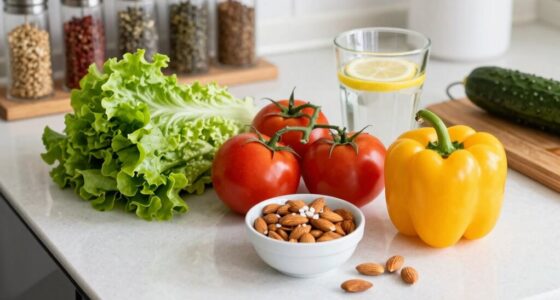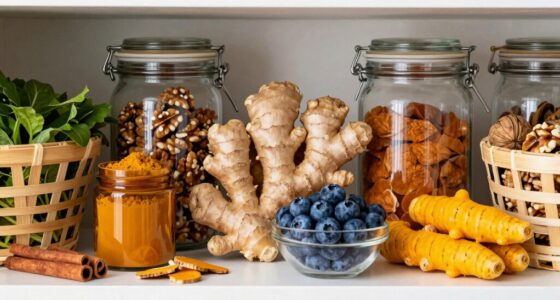

To make cooking lower in saturated fat easier, swap butter or lard for healthier oils like olive or avocado oil, and choose lean meats or fish rich in omega-3s. Use grilling, baking, or steaming instead of frying, and add herbs or lemon to boost flavor without extra fats. Practice portion control and remove poultry skin. With small swaps and smarter techniques, you can enjoy tasty, nutritious meals while cutting saturated fat—discover more simple strategies as you go.
Key Takeaways
- Swap high-fat ingredients like butter and lard with healthier oils such as olive or avocado oil.
- Use baking, grilling, or steaming instead of frying to reduce added fats.
- Incorporate herbs, spices, and acids like lemon juice to enhance flavor without unhealthy fats.
- Remove skin from poultry and drain excess fat from cooked meats for lower saturated fat content.
- Opt for lean proteins and nutrient-dense ingredients to maintain flavor while reducing saturated fats.
Reducing saturated fat in your cooking can considerably improve your overall health without sacrificing flavor. It’s a smart move that benefits your heart and helps maintain a balanced diet. The good news is that making these changes doesn’t mean giving up the taste and satisfaction of your favorite meals. Instead, it’s about smart choices—using healthy ingredient swaps and adopting simple cooking technique tips that make a big difference.
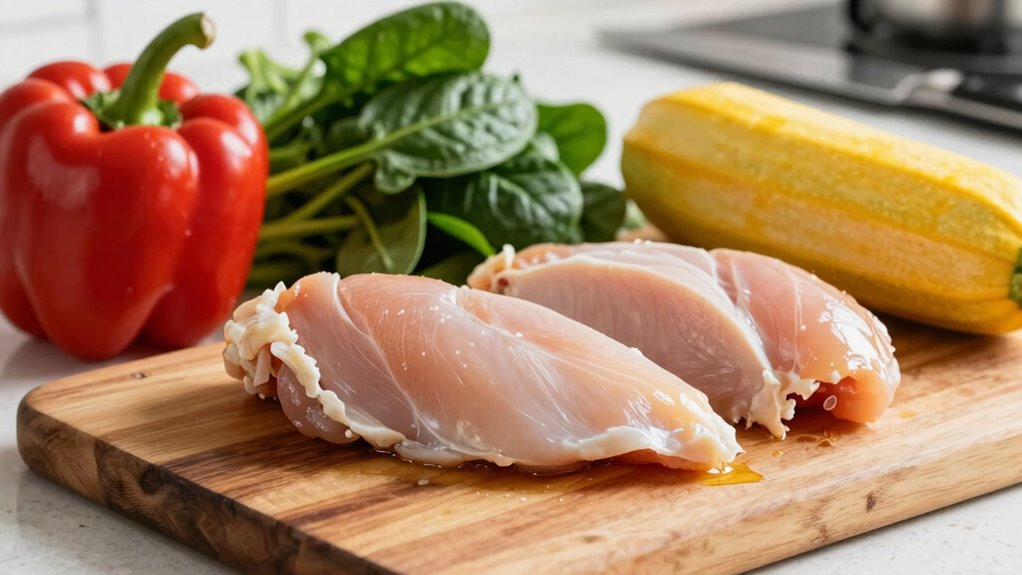
Start by swapping out butter or lard for healthier fats like olive oil or avocado oil. These oils are rich in monounsaturated fats, which can help lower bad cholesterol levels and reduce the risk of heart disease. When preparing meats, choose lean cuts such as chicken breast or turkey instead of fattier options like sausage or bacon. Incorporating fish like salmon or mackerel into your meals adds omega-3 fatty acids, which are excellent for your cardiovascular health. These healthy ingredient swaps are straightforward and don’t compromise flavor; they actually enhance the richness of your dishes.
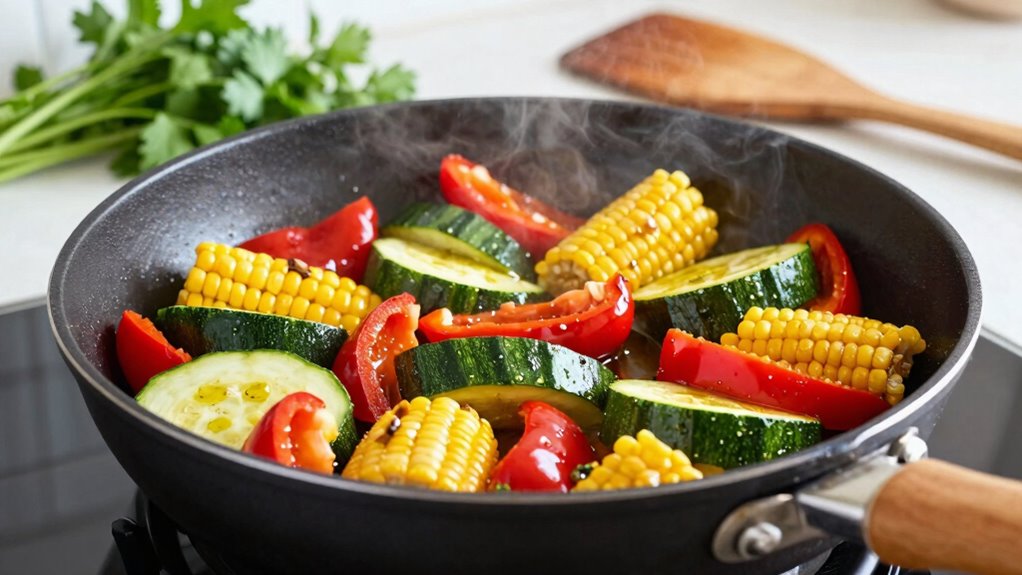
Cooking technique tips also play a crucial role in lowering saturated fat. For instance, grilling, baking, or steaming foods instead of frying can notably cut down on unhealthy fats. When you cook vegetables or proteins, avoid adding excessive amounts of butter or cream. Instead, use herbs, spices, lemon juice, or vinegar to amp up the flavor without adding extra saturated fats. If a recipe calls for butter or cream, consider using unsweetened almond milk, Greek yogurt, or pureed vegetables to retain creaminess while reducing fat content. These small tweaks help you develop healthier habits and healthy cooking methods, which are essential for maintaining a nutritious diet. Incorporating nutrient-dense ingredients can further enhance the health benefits of your meals without sacrificing flavor. Being mindful of portion control and cooking techniques can make a significant difference in your overall saturated fat intake as well.
Another useful tip is to be mindful of portion sizes and cooking methods. Roasting vegetables with a drizzle of olive oil rather than deep-frying makes a difference. Additionally, draining excess fat from cooked meats and removing skin from poultry reduces saturated fat intake. When baking, try replacing butter with applesauce or mashed bananas for moisture and flavor without the added saturated fat. Practicing mindful eating, such as paying attention to your hunger cues and limiting portion sizes, further supports your goals. These cooking technique tips are not only easy to adopt but also help you develop healthier habits over time.
Furthermore, exploring health-conscious cooking options can introduce you to new ingredients and methods that naturally lower saturated fat in your meals. In essence, lowering saturated fat in your diet is about making smarter choices that fit seamlessly into your routine. By swapping out unhealthy ingredients and using simple, health-conscious cooking techniques, you can enjoy delicious meals that support your wellbeing. It’s a practical approach that proves you don’t have to sacrifice flavor or satisfaction to eat healthily. Instead, you’re creating a sustainable, enjoyable way to nourish your body while still savoring every bite.
As an affiliate, we earn on qualifying purchases.
Frequently Asked Questions
Can I Cook With Plant-Based Fats Instead of Animal Fats?
Yes, you can definitely cook with plant-based fats instead of animal fats. Plant-based alternatives like olive oil, avocado oil, and coconut oil work well as fat substitution techniques. They add flavor and moisture while lowering saturated fat content. Simply swap animal fats with these options in your recipes, adjusting quantities if needed, and enjoy healthier meals that still taste great.
Are There Specific Cooking Techniques That Reduce Saturated Fat?
Yes, you can reduce saturated fat with specific techniques. Use fat reduction techniques like trimming excess fat from meats and draining excess oil after cooking. To boost flavor without adding saturated fats, incorporate herbs, spices, and acidic ingredients like lemon juice. Additionally, opt for cooking methods such as baking, grilling, or steaming, which naturally require less fat and help enhance flavors without relying on saturated fats.
How Does Lower Saturated Fat Impact Flavor and Texture?
Imagine biting into a juicy burger—removing excess saturated fat keeps that rich flavor intact while making it lighter. Lower saturated fat enhances flavor preservation by highlighting fresh ingredients, though it may lead to subtle texture modifications, like a slightly softer or less greasy feel. You notice a cleaner, crisper taste, and your dishes feel healthier without sacrificing the satisfying sensations that make your meals enjoyable.
Which Oils Are Best for High-Heat Cooking With Less Saturated Fat?
For high-heat cooking with less saturated fat, you should choose oils with a high smoke point and good oil stability. Options like avocado oil, refined olive oil, and grapeseed oil work well because they can handle the heat without breaking down or producing smoke. These oils stay stable during cooking, helping you reduce saturated fat intake while maintaining flavor and texture.
Is It Necessary to Completely Eliminate Saturated Fat From My Diet?
Think of your diet as a garden—you don’t need to weed out every unwanted plant, just keep the weeds in check. You don’t have to completely eliminate saturated fat; moderation is key. Focus on incorporating dairy alternatives and whole foods, and limit processed foods high in saturated fats. Balancing these choices helps maintain heart health without feeling deprived, making your diet sustainable and nourishing.
lean meat cuts for low saturated fat meals
As an affiliate, we earn on qualifying purchases.
As an affiliate, we earn on qualifying purchases.
Conclusion
Embracing lower saturated fat cooking isn’t just a choice; it’s planting seeds for a healthier future. Like tending a delicate garden, each mindful decision nurtures vibrant well-being and resilience. As you weave these practices into your daily routine, you’re sculpting a life where nourishment and energy flourish side by side. Remember, every small step is a brushstroke on the canvas of your health—painting a masterpiece that’s brighter, stronger, and more resilient with every mindful meal.
fish rich in omega-3 supplements
As an affiliate, we earn on qualifying purchases.
As an affiliate, we earn on qualifying purchases.
As an affiliate, we earn on qualifying purchases.