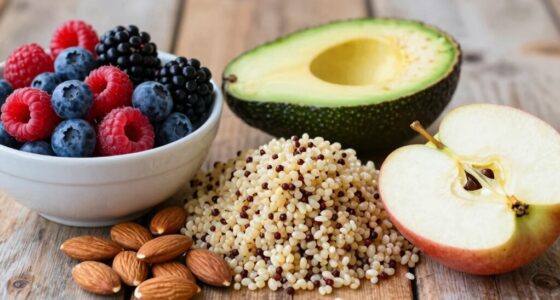
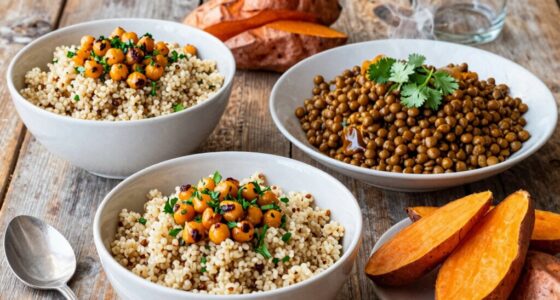
The pescatarian diet is a simple, sustainable way to enjoy nutritious foods by combining plant-based meals with fish and seafood. It offers high-quality protein, omega-3 fatty acids, and essential nutrients without red or processed meats. By choosing sustainable seafood options, you help protect the environment. This flexible approach keeps meals diverse and appetizing while supporting your health. Keep exploring to discover more delicious ideas and tips to make your pescatarian journey enjoyable and easy.

Get health and wellness essentials delivered free with Prime
- Fast, free delivery on millions of items
- Prime Video, Amazon Music and more included
- Member-only deals all year
Key Takeaways
- Combines vegetarian foods with fish and seafood for a nutritious, flexible diet.
- Emphasizes choosing sustainable seafood to protect marine environments.
- Provides essential Omega-3s from fatty fish, supporting brain and heart health.
- Offers versatile meal ideas like salads, sandwiches, and stir-fries with seafood.
- Promotes nutrient diversity and environmental responsibility for overall well-being.
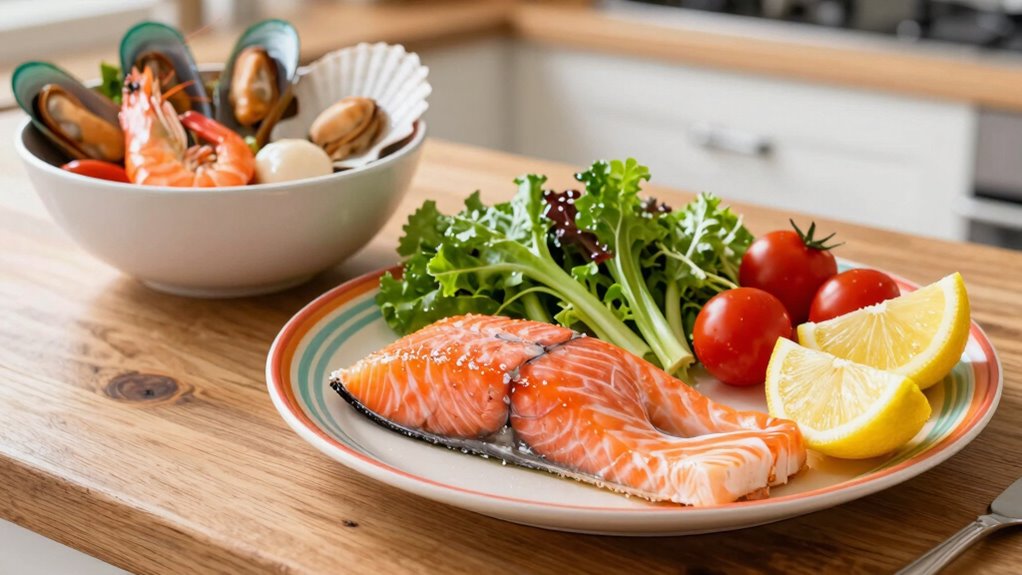
Are you looking for a balanced diet that combines the health benefits of vegetarian eating with the advantages of seafood? The pescatarian diet offers exactly that—a way to enjoy plant-based foods alongside fish and seafood, providing a nutrient-rich approach to eating. It’s a flexible, sustainable way to support your health while also considering environmental impacts. One of the key benefits is that you get access to high-quality protein and essential nutrients without relying on red or processed meats. Instead, fish becomes your primary animal protein, offering a variety of health benefits.
When it comes to choosing your seafood, it’s important to prioritize sustainable fishing practices, which help ensure that fish populations remain healthy and ecosystems stay balanced. Sustainable fishing ensures that fish populations remain healthy and ecosystems stay balanced. By being mindful of where your seafood comes from, you contribute to the preservation of marine life and promote responsible fishing industries. Look for labels or certifications indicating sustainable fishing methods, such as the Marine Stewardship Council (MSC) certification, which can help you make environmentally conscious choices. Incorporating sustainably sourced fish into your diet supports both your health and the planet. Additionally, understanding marine conservation efforts can deepen your appreciation for responsible seafood consumption.
A pescatarian diet is especially valuable because it provides excellent Omega 3 sources. Omega 3 fatty acids are essential for brain health, reducing inflammation, and supporting cardiovascular function. Fatty fish like salmon, mackerel, and sardines are among the best sources, delivering high concentrations of these beneficial fats. Unlike some plant-based Omega 3 sources, such as flaxseeds or walnuts, fish provide EPA and DHA—forms that are more readily absorbed and utilized by your body. Including these in your meals a few times a week can markedly boost your Omega 3 intake, helping to maintain ideal health. Additionally, choosing sustainable seafood supports marine conservation efforts, ensuring these resources remain available for future generations.
You’ll find that integrating seafood into your diet is simple and versatile. From grilled salmon salads to tuna sandwiches or seafood stir-fries, there are countless ways to enjoy fish. Pairing seafood with plenty of vegetables and whole grains creates balanced, nutritious meals that keep you energized. As a pescatarian, you also have the flexibility to explore a wide variety of plant-based foods—fruits, vegetables, legumes, grains—that complement your seafood choices. This combination not only enriches your diet but also ensures you’re getting a broad spectrum of vitamins, minerals, and fiber. Incorporating a variety of seafood can help prevent dietary monotony and promote a well-rounded nutritional intake.
sustainable seafood selection guide
As an affiliate, we earn on qualifying purchases.
As an affiliate, we earn on qualifying purchases.
Frequently Asked Questions
Can I Include Dairy and Eggs in a Pescatarian Diet?
Yes, you can include dairy and eggs in a pescatarian diet. Dairy inclusion is common, allowing you to enjoy milk, cheese, and yogurt, while egg consumption fits seamlessly into this eating style. These foods provide essential nutrients and variety, making your diet more balanced. Just make certain you’re choosing high-quality, ethically sourced options. Incorporating dairy and eggs can help you meet your nutritional needs without sacrificing your pescatarian principles.
Is a Pescatarian Diet Suitable for Children and Pregnant Women?
Yes, a pescatarian diet can be suitable for children and pregnant women if you focus on proper child nutrition and pregnancy safety. You should guarantee they get enough essential nutrients like omega-3 fatty acids, iron, and vitamin B12 from fish, eggs, and dairy. Consult healthcare providers to tailor the diet to individual needs, and avoid high-mercury fish to keep both children and pregnant women safe.
How Do I Ensure Adequate Iron Intake on a Pescatarian Diet?
Think of your iron intake like a puzzle, with each piece fitting perfectly. To guarantee enough iron, include plant-based sources like spinach, lentils, and fortified cereals, which are rich in non-heme iron. To boost iron absorption, pair these with vitamin C-rich foods like citrus or peppers. Avoid drinking tea or coffee during meals, as they can hinder absorption. This way, you’ll fill your iron puzzle efficiently and maintain health.
Are There Any Common Allergens in Seafood I Should Watch For?
You should watch for common seafood allergens like shellfish, which can trigger sensitivities in some people. If you have shellfish sensitivity, avoid shrimp, crab, and lobster. Also, be mindful of mercury concerns, especially with larger fish like tuna and swordfish, as high levels can pose health risks. Always choose fresh, reputable sources and consider consulting a healthcare professional if you’re unsure about specific seafood types.
Can I Eat Processed Seafood or Fish Products Regularly?
Think of processed seafood as a treasure chest—you can enjoy it, but not every day. Regular consumption depends on seafood preservation methods and fish farming practices. Opt for products from reputable sources that prioritize sustainable, safe practices. Processed seafood can be part of your diet if eaten in moderation, ensuring you avoid excess preservatives and additives, and supporting healthier choices for both you and the planet.
As an affiliate, we earn on qualifying purchases.
Conclusion
Embracing a pescatarian diet can brighten your health and broaden your culinary horizons. Imagine Sarah, who switched to fish and plant-based meals; she experienced increased energy and improved digestion within weeks. By choosing nutritious seafood and delicious vegetables, you’re not only nourishing your body but also supporting sustainable practices. So, give it a try—your body and the planet will thank you. Making small changes today can lead to a healthier, more vibrant tomorrow.
seafood cookbook for pescatarian meals
As an affiliate, we earn on qualifying purchases.
As an affiliate, we earn on qualifying purchases.
As an affiliate, we earn on qualifying purchases.
Halloween Picks
halloween
As an affiliate, we earn on qualifying purchases.