Choosing the best reverse osmosis system for a healthy kitchen involves balancing water purity, ease of use, and maintenance. The Philips Reverse Osmosis Water Filter Countertop stands out as the overall best choice thanks to its mineralization stage and high capacity, perfect for families. For those seeking portability, the Bluevua RO100ROPOT offers effective filtration without installation. Meanwhile, the Waterdrop G3P600 provides advanced tankless technology with smart features for tech-savvy users. The decision often comes down to whether you prioritize convenience, filtration quality, or budget. Keep reading for a detailed breakdown of each option to find your ideal match.
Key Takeaways
- The top systems balance effective contaminant removal with mineralization features for healthy, mineral-rich water.
- Countertop models offer ease of use and portability, but often have smaller capacities compared to under-sink options.
- Advanced features like tankless design and smart faucets are increasingly common and add convenience but may come at a premium price.
- Filtration stages and certifications (like NSF/ANSI) are key indicators of system reliability and contaminant reduction.
- Price varies widely; investing in a WQA-certified, multi-stage system generally provides better long-term water quality.





More Details on Our Top Picks
PHILIPS Reverse Osmosis Water Filter Countertop ADD6926WH/37(Ambient), 6-Stage Mineralization Filtration System with Aquaporin Tech, Large Capacity for Family, 6L Tank &1.8L Jug
This Philips countertop unit stands out for its advanced 6-stage filtration combined with Aquaporin technology, which mimics natural water channels to optimize flow and impurity removal. Compared with the Bluevua systems, it offers mineralization that improves taste and health benefits, making it ideal for families seeking a simple plug-and-play solution. Its real-time TDS display provides transparency on filtration performance, and the 6L capacity ensures ample water supply. However, the need to avoid unclean water sources and periodic maintenance are tradeoffs to consider. The unit’s compact size and no-installation design make it perfect for renters or those unwilling to modify plumbing. Yet, the system only dispenses room temperature water, which might limit versatility. This pick makes the most sense for households prioritizing mineral-balanced water with minimal setup and ongoing monitoring.
Pros:- Advanced 6-stage filtration with Aquaporin tech for efficient impurity removal
- Remineralization enhances taste and health benefits
- Certified safe with NSF/ANSI and SGS certifications
- Large 6L capacity and included jug for on-demand use
Cons:- Dispenses only room temperature water, limiting flexibility
- Requires tap water that is already relatively clean to avoid clogging or scaling
- Periodic maintenance and water source restrictions may be inconvenient
Best for: Families or individuals who want mineral-rich, great-tasting water without complex installation and value real-time performance data.
Not ideal for: Small kitchens with limited counter space or users who prefer hot or cold filtered water regularly, as it only dispenses room temperature water.
- Filtration stages:6
- Tank capacity:6L
- Display:Real-time TDS levels
- Flow rate:200ml/min
- Certification:NSF/ANSI/CAN 372
- Water temperature:Room temperature only
- Maintenance:Filter lasts 12 months
Bottom line: Ideal for families seeking a reliable, mineral-enhanced countertop water filter that requires no installation.
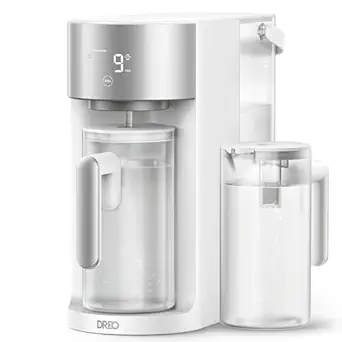
DREO Reverse Osmosis Water Filter Countertop, 7-Stage RO Water Filtration System, Installation-Free, Reduce TDS, Water Filter Pitcher for Home, Kitchen, 3:1 Pure to Drain, WF511 Upgraded
This DREO 7-stage system excels in delivering high-purity water with a 0.0001μm RO membrane and real-time TDS monitoring. Unlike the Philips countertop, it offers auto-flushing and a child lock, enhancing safety and ease of use. Its dual water filter pitchers allow for convenience on-the-go, and its 3:1 pure-to-drain ratio significantly reduces water waste. While the Bluevua systems focus on mineralization, DREO emphasizes contaminant removal efficiency, making it suitable for health-conscious users. However, it involves regular filter changes and manual refilling, which might be less convenient for busy households. The system’s portability and automatic features make it perfect for renters or those needing flexible placement. Still, its filtration speed and capacity are less suited for large families planning continuous use. This option is ideal for budget-conscious users prioritizing advanced filtration and portability.
Pros:- 7-stage filtration with UV light for maximum contaminant removal
- Real-time TDS display for performance monitoring
- No installation required—plug and play design
- Includes two portable pitchers for flexible use
Cons:- Manual refilling and filter replacement required
- Slower water output compared to under-sink systems
- Limited continuous flow capacity for large families
Best for: Health-conscious individuals or small families who want portable, high-purity water with minimal installation and ongoing convenience.
Not ideal for: Large households or those needing continuous, high-volume flow, as the system is best suited for moderate daily use and portability.
- Filtration stages:7
- Flow rate:variable
- Water waste ratio:3:1
- Filter lifespan:12 months
- Certifications:SGS, NSF/ANSI 372
- Water source:Tap water
Bottom line: Perfect for small households or individuals seeking portable, high-quality water without installation hassle.
Bluevua RO100ROPOT Countertop Reverse Osmosis Water Filter System, Portable RO Filtration with Remineralization, No Installation, WQA Certified – ROPOT-UV, 6-Stage RO
This Bluevua model offers a comprehensive 6-stage filtration including UV light and remineralization, ensuring reduction of harmful contaminants and enriched mineral content. Compared with the Philips system, it provides added UV sterilization, making it suitable for those concerned about microbial safety. Its portable design and certification by WQA and SGS make it a trustworthy choice. The system’s glass carafe reduces secondary pollution risks, and its long filter life—up to 24 months—minimizes maintenance. However, the lack of installation means it relies on manual refilling, which might be inconvenient for continuous use. Its automatic standby mode and water-saving features reflect a focus on efficiency but may not suit high-volume households. This makes it ideal for users who want a certified, versatile filter with added UV sterilization for peace of mind.
Pros:- 6-stage filtration with UV sterilization and remineralization
- WQA and SGS certification for safety and quality
- Glass carafe minimizes secondary pollution
- Filter lasts up to 24 months
Cons:- Manual refilling needed—no direct tap connection
- Limited flow rate for large volume needs
- Potentially higher upfront cost for quality features
Best for: Health-conscious households needing certified, UV-sterilized, mineralized water with portable convenience.
Not ideal for: Large families requiring high throughput or those preferring under-sink, in-line systems with continuous flow.
- Filtration stages:6
- Filter lifespan:up to 24 months
- Sterilization:UV light
- Carafe material:Glass
- Certification:WQA, SGS
- Flow rate:moderate
Bottom line: Great for users wanting certified, UV-sterilized, mineralized water with a portable design and long-lasting filters.
Bluevua RO100ROPOT Countertop Reverse Osmosis Water Filter System, Portable RO Filtration with Remineralization, No Installation, WQA Certified – ROPOT, 5-Stage RO
This Bluevua 5-stage RO system emphasizes water efficiency with a 2:1 pure to drain ratio, making it highly suitable for eco-conscious users. It includes a durable borosilicate glass carafe and a straightforward plug-and-play design similar to the Bluevua ROPOT-UV but without UV sterilization. Compared to the Philips system, it offers a simplified 5-stage filtration suitable for those valuing ease of use and sustainability. The filter life of 12-24 months reduces maintenance frequency, and its portable design allows placement flexibility. Its manual refilling and slower output make it less suitable for large or continuous-volume households. This model is ideal for individuals prioritizing water conservation and easy operation over advanced sterilization or mineralization features.
Pros:- Impressive 2:1 pure-to-drain ratio for water savings
- Portable, no installation needed
- Long-lasting filters up to 24 months
- Borosilicate glass carafe enhances purity
Cons:- No UV sterilization or remineralization
- Slower output compared to under-sink systems
- Requires manual refilling, less suitable for continuous use
Best for: Eco-conscious users or small households seeking efficient, easy-to-use countertop filtration with minimal waste and maintenance.
Not ideal for: Large families or those needing rapid, high-volume filtered water for daily heavy use, as it is more suited to moderate consumption.
- Filtration stages:5
- Water waste ratio:2:1
- Filter lifespan:12-24 months
- Carafe material:Borosilicate glass
- Certification:WQA
- Flow rate:slow
Bottom line: Excellent choice for eco-minded individuals seeking efficient, portable filtration with minimal waste and easy maintenance.
Philips AUT9340 Reverse Osmosis System, 400 GPD RO System, Tankless Under Sink Water Filter System,2.3:1 Pure to Drain Water Filtration, Reduces TDS, NSF/ANSI 372 Certified with No Standing Water
This Philips tankless under-sink system provides a high flow rate of 400 GPD with a 2.3:1 pure-to-drain ratio, making it well-suited for large households or busy kitchens. Its space-saving design eliminates the need for a tank, unlike most countertop options, which is ideal for small or cluttered spaces. The system’s 4-stage filtration with NSF/ANSI 372 certification guarantees reliable removal of lead, chlorine, and TDS, comparable to the Bluevua ROPOT UV but without UV sterilization. Its long filter life—up to two years—reduces maintenance frequency, and the easy, tool-free replacement supports DIY installation. However, it requires proper plumbing connections and some basic installation skills, which could be a barrier for renters or less handy users. This makes it a smart choice for those seeking high capacity, space efficiency, and certified filtration.
Pros:- High flow rate of 400 GPD for large households
- Tankless design optimizes space
- Long filter life of up to 2 years
- Certifications ensure safety and performance
Cons:- Requires plumbing installation—less portable
- Initial setup may be complex for some users
- No UV sterilization or remineralization features
Best for: Households needing high-volume, space-efficient filtration with minimal ongoing maintenance and reliable certifications.
Not ideal for: Renters or users unwilling to perform installation, or those preferring countertop models with no plumbing modifications.
- Flow rate:400 GPD
- Drain ratio:2.3:1
- Filter lifespan:up to 24 months
- Certification:NSF/ANSI 372
- Installation:Under sink, plumbing required
- Water storage:tankless
Bottom line: Ideal for large families or busy kitchens needing high-capacity, space-saving filtration with certification assurance.
DREO Reverse Osmosis Water Filter Countertop, RO Filtration System, 3:1 Pure to Drain, TDS & Filter Life & 2 Autofill Pitchers, Self-Cleaning Water Purifier, RO Water Filter
This countertop RO system excels in delivering fresh, purified water without the need for plumbing or installation, making it perfect for renters or those hesitant about under-sink setups. Compared to the Bluevua RO100ROPOT-Lite, it offers a higher pure-to-drain ratio of 3:1, reducing water waste significantly, which is ideal for water-conscious households. The integrated auto-fill pitchers and self-cleaning system provide a hassle-free experience, and the real-time TDS monitoring adds transparency to water quality. However, its smaller 5L tank means frequent refills for larger families, and the system’s reliance on external pitchers may be less elegant than built-in under-sink systems. The filter lasts 6 to 12 months at a low cost of about $0.025 per bottle, making maintenance affordable. Overall, this model suits users seeking portable, maintenance-light water purification with high impurity removal, but it isn’t ideal for large-volume demands.
Pros:- No installation required, portable and easy to set up
- High 3:1 pure-to-drain ratio reduces water waste
- Self-cleaning system ensures maintenance-free operation
Cons:- Limited 5L tank requires frequent refills for larger households
- External pitchers may be less sleek than integrated systems
- No under-sink installation option for more streamlined setup
Best for: Renters or small households needing easy, portable water purification without plumbing hassle
Not ideal for: Large families or users seeking continuous high-volume filtered water without refilling pitchers
- Filtration Method:Reverse Osmosis
- Pure to Drain Ratio:3:1
- Filter Life:6-12 months
- Tank Capacity:5 Liters
- Dimensions:15.7″L x 6.73″W x 13.35″H
- Weight:10.78 Pounds
- Water Waste Ratio:3:1
- Auto-Cleaning:Yes
Bottom line: Ideal for renters or small households prioritizing convenience and water efficiency over large volume capacity.
iSpring RCC7AK, NSF Certified, 75 GPD, Alkaline 6-Stage Reverse Osmosis System, pH+ Remineralization RO Water Filter System Under Sink, Patented Top-Mounted Faucet Design for Easy Installation
This under-sink RO system offers comprehensive 6-stage filtration, including mineral addition, making it perfect for households seeking balanced, mineral-rich drinking water. Compared to the Bluevua RO100ROPOT-Lite, the iSpring RCC7AK features a more sophisticated filtration process that restores essential minerals and maintains a stable pH, which is preferable for those concerned about the acidity of pure RO water. Its NSF/ANSI 58 certification guarantees quality and contaminant reduction, while the top-mounted faucet simplifies installation—eliminating the need to work underneath the sink. On the downside, its size and more complex installation process may be less suitable for very small kitchens or renters. The filters typically last 6-12 months, and the system produces about 75 gallons per day, enough for a small to medium household. This model is best for users wanting reliable, certified filtration with added minerals, but it involves a higher upfront cost and installation effort.
Pros:- NSF/ANSI Certified for high quality and contaminant removal
- Mineral and pH remineralization for healthier water
- Top-mounted faucet for easy, tool-free installation
Cons:- Requires under-sink installation; less ideal for renters
- Larger size may not fit in very small kitchens
- Higher initial cost compared to countertop options
Best for: Homeowners who want certified, mineral-balanced water with straightforward installation and ongoing support
Not ideal for: Renters or those with very limited under-sink space who prefer plug-and-play options
- Flow Rate:75 GPD
- Filtration Stages:6
- Certification:NSF/ANSI 58
- Remineralization:Yes
- Dimensions:15.5″L x 16″W x 18″H
- Weight:20 Pounds
- Daily Capacity:75 Gallons
- Supports:Under-sink
Bottom line: Best for homeowners seeking certified, mineral-enhanced RO water with reliable performance and simple faucet installation.
Waterdrop G3P600 Reverse Osmosis System, 8 Stage Tankless Water Filter, NSF/ANSI 42 & 53 & 58 & 372 Certified, Under Sink RO System, 2:1 Pure to Drain, Smart LED Faucet
The tankless Waterdrop G3P600 combines high capacity (600 GPD) with advanced 8-stage filtration, making it suitable for large households or small commercial settings. With its 2:1 pure-to-drain ratio, it significantly reduces water waste compared to traditional systems, which appeals to eco-conscious users. The integrated smart LED faucet provides real-time TDS monitoring and filter life tracking, adding a layer of convenience for tech-savvy households. Its sleek, space-saving design frees up under-sink space, and the quick-change filters make maintenance simple. However, it requires a power outlet, which may be inconvenient in some kitchens, and its high flow rate might be overkill for small families. The system is certified for multiple contaminants, including heavy metals and chemicals, ensuring high water quality. This pick is best for large households or those wanting a modern, efficient, and environmentally friendly RO system, but it’s less suited for small or rental kitchens.
Pros:- High 600 GPD capacity for large households
- Eco-friendly 2:1 pure to drain ratio
- Smart LED faucet with real-time TDS monitoring
Cons:- Requires electrical outlet for operation
- Potentially overpowered for small household needs
- Higher upfront cost and complexity
Best for: Large families or small commercial setups needing high-volume, eco-friendly RO water with smart monitoring
Not ideal for: Singles or small households with limited under-sink space or no access to electricity
- Flow Rate:600 GPD
- Filtration Stages:8
- Pure to Drain Ratio:2:1
- Certifications:NSF 42, 53, 58, 372
- Dimensions:18.12″L x 5.67″W x 17.72″H
- Supports:Electricity required
- Daily Capacity:600 gallons
- Design:Tankless
Bottom line: Ideal for large households or small businesses wanting high-volume, eco-conscious RO with smart features and space efficiency.
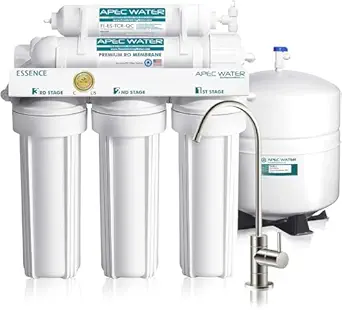
APEC Water 5-Stage Under Sink Reverse Osmosis Water Filter System, ROES-50 Essence Series, WQA Certified, 50 GPD, Reduces 99.99% of Contaminants, Home Water Filtration, DIY Install
The APEC ROES-50 has long been a favorite for those seeking proven, reliable filtration with high contaminant removal (up to 99.99%). Its 5-stage process effectively reduces arsenic, lead, fluoride, and over 1,000 impurities, making it a trusted choice for health-conscious households. With a 50 GPD flow rate, it’s well-suited for daily household use, and the DIY installation kit makes setup accessible to handy homeowners. Compared with the iSpring RCC7AK, it lacks remineralization, so water may taste flat unless supplemented with mineral drops or other filters. The system’s durable filters can last 6-12 months, and the WQA certification ensures standards compliance. While the installation is straightforward, it does involve working under the sink, which may be less convenient for renters or small kitchens. Overall, this system offers reliable, high-quality filtration with a solid reputation and excellent value, but it misses mineral balancing features.
Pros:- WQA Certified for quality and reliability
- Removes 99.99% of impurities including heavy metals
- Easy DIY installation with included kit
Cons:- No remineralization or pH adjustment
- Requires under-sink installation, less portable
- Less advanced features compared to newer models
Best for: Homeowners wanting a reliable, WQA-certified RO system with proven filtration performance
Not ideal for: Renters or users desiring mineralized, pH-balanced water without under-sink installation
- Flow Rate:50 GPD
- Filtration Stages:5
- Contaminant Removal:99.99%
- Certification:WQA
- Dimensions:15″L x 5″W x 17″H
- Supports:Under sink
- Daily Capacity:50 gallons
- Installation:DIY
Bottom line: Best for households prioritizing proven filtration reliability and certification over mineral enhancement or tankless design.
Bluevua RO100ROPOT-Lite(UV) Countertop Reverse Osmosis Water Filter System, 7-Stage Purification with UV and Remineralization, 3:1 Pure to Drain, Portable Water Purifier (Blue)
The Bluevua RO100ROPOT-Lite(UV) stands out for its comprehensive 7-stage filtration, including UV sterilization and remineralization, making it ideal for those who want portable, high-quality water with added health benefits. Its countertop design requires no plumbing, perfect for small kitchens, RVs, or travel use. Compared to the DREO Countertop, it includes UV sterilization, which provides extra protection against microorganisms, and a stylish glass carafe for safe storage. The system’s real-time display and filter alerts keep users informed, while the 3:1 pure to drain ratio minimizes waste. Its main tradeoff is a higher price and limited capacity—best suited for 1-2 people. Overall, it offers a full-spectrum, easy-to-use portable solution for healthy hydration on the go, but it’s less ideal for larger households or continuous use without refilling.
Pros:- Portable, no installation or plumbing required
- Includes UV sterilization for microbial safety
- Remineralization enhances taste and health
Cons:- Limited capacity suited for 1-2 people
- Higher cost relative to basic countertop filters
- Requires regular filter and UV lamp replacements
Best for: Individuals or small households prioritizing portability, UV sterilization, and added minerals
Not ideal for: Large families or those seeking high-volume daily filtered water in a fixed kitchen setup
- Filtration Stages:7
- Pure to Drain Ratio:3:1
- Water Capacity:1.2L
- UV Sterilization:Yes
- Dimensions:9.7″L x 9.5″W x 14.1″H
- Weight:5 Kilograms
- Supports:Countertop
- Daily Usage:Suitable for 1-2 people
Bottom line: Perfect for health-conscious individuals needing portable, UV-sterilized, mineral-enriched water, but not for high-demand households.
How We Picked
To evaluate these reverse osmosis systems, I focused on performance, ease of installation, maintenance requirements, build quality, and overall value. I prioritized models with certified contaminant reduction, mineralization features, and user-friendly designs suitable for a healthy kitchen setup. The ranking reflects how well each product balances these factors, considering both technical specs and practical usability. I aimed to highlight options for different user needs, from budget-conscious buyers to those seeking premium features, making sure each choice offers a clear benefit or tradeoff.Factors to Consider When Choosing Best Reverse Osmosis System For Healthy Kitchens
When selecting a reverse osmosis system for a healthy kitchen, understanding key factors can help you make an informed choice. Not all systems are equal in filtration quality, ease of use, or maintenance. Considering these factors ensures you invest in a system that supports your health goals without unnecessary complexity or cost. Keep in mind that your kitchen size, water quality, and budget will influence the best fit for your household.Filtration Stages and Certification
Look for systems with multiple filtration stages, ideally 5 or more, which effectively remove contaminants like chemicals, heavy metals, and bacteria. Certifications from NSF or ANSI provide assurance of performance, especially for reducing specific toxins. Cheaper, fewer-stage systems may compromise water quality, so prioritize certification and advanced stages if health is your main concern.
Mineralization and Water Health
Many systems now include mineralization stages that add beneficial minerals back into water, supporting your health and taste. If maintaining mineral content is important, choose models with remineralization features. Avoid systems that remove minerals entirely, which can lead to overly pure water that lacks essential nutrients, unless you plan to add minerals separately.
Ease of Installation and Maintenance
Countertop units are generally easier to set up and move, ideal for renters or those hesitant about plumbing work. Under-sink systems typically require plumbing but offer larger capacities and less frequent filter changes. Consider how often you’ll need to replace filters and whether maintenance is straightforward, as complex systems may discourage regular upkeep, reducing water quality over time.
Capacity and Water Output
Assess your household’s daily water needs. Larger families benefit from systems with higher GPD (gallons per day) ratings or larger tanks, while single users may prefer compact, lower-capacity models. Tankless options save space and reduce the risk of bacterial stagnation but often come at a higher price and complexity.
Cost and Long-Term Value
Initial purchase price is just one aspect; consider ongoing costs like filter replacements and energy use. Higher-quality systems with certified filters tend to be more expensive upfront but offer better durability and contaminant reduction. Cheaper models may save money initially but could require more frequent maintenance or offer inferior filtration, ultimately costing more over time.
Frequently Asked Questions
How often do I need to replace the filters in a reverse osmosis system?
Most reverse osmosis systems require filter replacements every 6 to 12 months, depending on water quality and usage. Pre-filters, post-filters, and RO membranes each have different lifespans, so following the manufacturer’s recommendations is key. Regular replacements ensure optimal filtration performance and help maintain the health benefits of your system.
Can I install a reverse osmosis system myself, or do I need a professional?
Many countertop and some under-sink RO systems are designed for DIY installation, often with straightforward instructions. However, more complex under-sink models with plumbing connections might benefit from professional installation to ensure proper setup and prevent leaks. Weigh your comfort level with DIY tasks against the complexity of the system to choose wisely.
Does a reverse osmosis system remove beneficial minerals from my water?
Yes, traditional RO systems effectively remove most contaminants, including beneficial minerals like calcium and magnesium. Some models include remineralization stages to add these minerals back, balancing health benefits with contaminant removal. If mineral content is a priority, selecting a system with a remineralization feature offers a practical solution.
What should I consider if I have hard water or high TDS levels?
If your water has high TDS (total dissolved solids) or hardness, opt for a system with a robust filtration stage and possibly a dedicated water softening component. Systems with higher GPD ratings and advanced filtration stages are more effective at reducing TDS. Regular maintenance and pre-treatment might also be necessary to prolong system life and maintain water quality.
Is a tankless reverse osmosis system better than one with a tank?
Tankless RO systems save space and reduce the risk of bacterial buildup due to lack of stored water. They typically feature faster output and modern designs but tend to be more expensive and complex to install. Your choice depends on your space constraints, water usage patterns, and willingness to invest in a more advanced system.
Conclusion
For most households prioritizing overall health and ease of use, the Philips Reverse Osmosis Water Filter Countertop offers a great balance of mineralization, capacity, and convenience. Those seeking maximum filtration performance might prefer the iSpring RCC7AK with its alkaline stage and certification. Budget-conscious buyers should consider the Bluevua ROPOT models for portable, no-installation options, while advanced users looking for smart features will find the Waterdrop G3P600 compelling. Beginners or renters will benefit from countertop models, whereas homeowners wanting a long-term solution might lean toward under-sink systems. Ultimately, your choice depends on your specific health goals, space, and budget — use this guide to pick the best fit for your healthy kitchen.