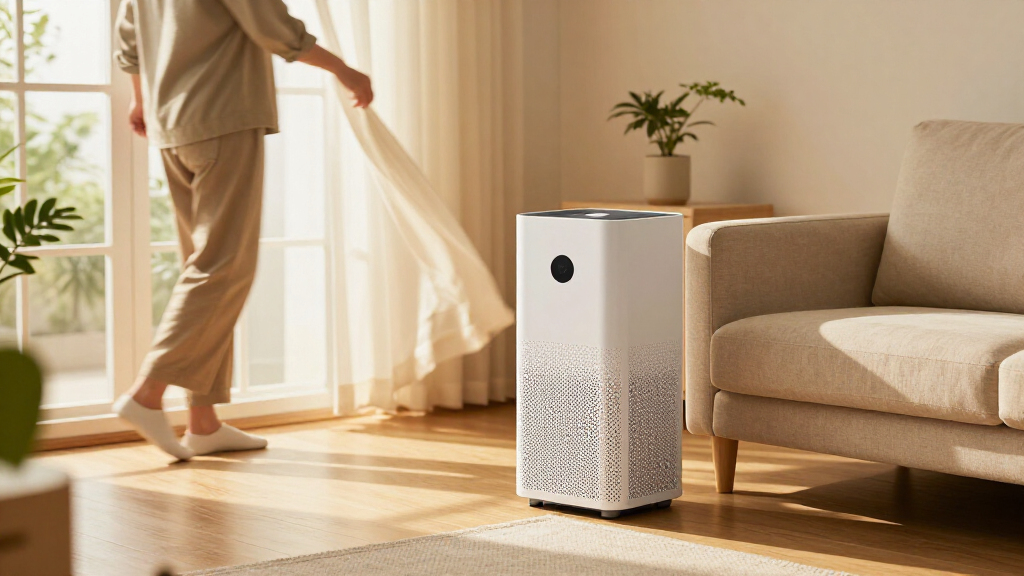

When allergies hit, the right air purifier can mean the difference between restless nights and real relief — but the category is crowded with lookalike claims, so the choice comes down to a few honest tradeoffs: room coverage versus cost, filter quality versus filter replacement expenses, and raw airflow versus bedroom-friendly quiet. My top pick overall is the Blueair Blue Pure 311i Max, which pairs true HEPA-class filtration with genuine large-room coverage and some of the lowest noise levels in this lineup. The Levoit Vital 200S-P stands out for smart features and a washable pre-filter that keeps long-term costs down, while the Levoit Core Mini-P proves you don’t need a big machine to get meaningful allergen relief in a small bedroom or dorm. If pet dander is your main trigger, models with washable pre-filters and higher air exchange rates earn their higher placement. Read on for the full breakdown of all 15 models, including who each one is actually for.

Get health and wellness essentials delivered free with Prime
- Fast, free delivery on millions of items
- Prime Video, Amazon Music and more included
- Member-only deals all year
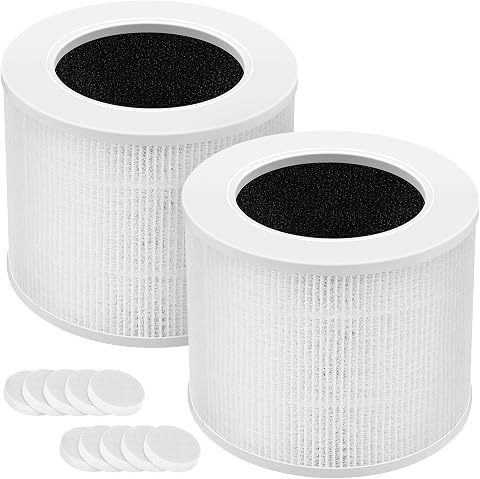
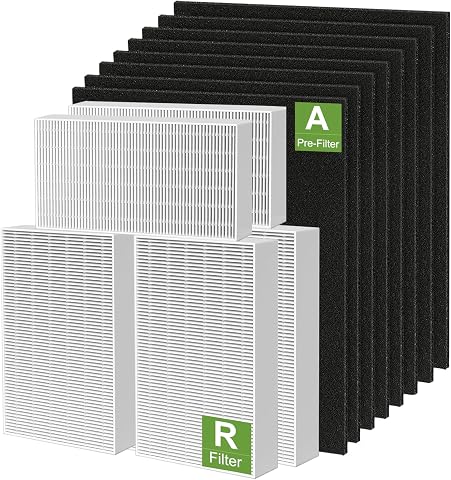
Complete the kit

Key Takeaways
- True HEPA filtration is table stakes in this lineup — what separated the top picks was real-world air exchange rate (ACH), and only the Blueair 311i Max, Levoit Vital 200S-P, and MOOKA 2200 sq ft model move enough air to genuinely serve large open rooms rather than just quoting big coverage numbers.
- Washable pre-filters (found on the MOOKA PR1, the 2600 sq ft HEPA model, and several Levoit units) meaningfully lower allergy-filtering costs because pet hair and dust load the main filter slower — a pattern worth prioritizing if you share your home with animals.
- Small-format units like the Levoit Core Mini-P and Purivortex bedroom model outperform large units in small sealed rooms because of air turnover per dollar, not raw power — buying big coverage for a bedroom wastes money and noise tolerance.
- Several budget models in the mid-table (VOOPNU, FreAire, KNKA) quote coverage figures based on a single air change per hour, which is too slow for allergy relief; I weighted them down accordingly even where feature lists look similar.
- Noise ratings diverge sharply at sleep settings: the Blueair and Vital 200S-P hold near-whisper levels at usable fan speeds, while some cheaper tower-style units stay audible even on their lowest setting — a deciding factor for bedroom use.
| Levoit Air Purifier for Home Pets Hair Allergens in Bedroom Quiet Purifier |  | Best for Bedroom Allergies | Power: 56 W | CADR (smoke): 143 CFM | CADR (dust): 153 CFM | VIEW LATEST PRICE | See Our Full Breakdown |
| Levoit Vital 200S-P Smart Air Purifier for Large Rooms up to 1875 sq ft |  | Best for Large Rooms | Coverage area: Up to 1,875 sq ft | Certification: AHAM Verified | Target pollutants: Pollen, pet dander, dust, and odors | VIEW LATEST PRICE | See Our Full Breakdown |
| KNKA Air Purifier for Home and Bedroom Up to 1,695 Sq Ft in 1 Hour, APH4000, White |  | Best for Air-Quality Feedback | Coverage area: 1,695 ft² at 1 air change per hour | CADR (smoke/dust/PM2.5): 226 CFM | CADR (pollen): 244 CFM | VIEW LATEST PRICE | See Our Full Breakdown |
| Levoit Core Mini-P Air Purifier for Bedroom, Home, Pets, Dorm Room |  | Best Compact Pick | Power: 7 W | Noise level: 27–45 dB | Dimensions: 6.5 × 6.5 × 10.4 in | VIEW LATEST PRICE | See Our Full Breakdown |
| Purivortex Air Purifier for Bedroom, Covers Up to 880 Sq Ft, Black |  | Best Mid-Size Coverage | Coverage area: Up to 880 sq ft | Filtration: Pre-filter, HEPA filter, activated carbon | Filter size: 6 in | VIEW LATEST PRICE | See Our Full Breakdown |
| VOOPNU Air Purifier for Home, High Efficiency Filter, Up to 1076 ft², White |  | Best Compact Pick | Coverage area: Up to 1,076 ft² | Dimensions: 6.69 x 6.69 x 9.84 inches | Filtration efficiency: 99.97% | VIEW LATEST PRICE | See Our Full Breakdown |
| Honeywell Allergen Plus Compact HEPA Small Room Air Purifier |  | Best for Sensor-Guided Small Rooms | Coverage: 110 sq. ft. at 4.8 air changes per hour; up to 530 sq. ft. at 1 air change per hour | Filtration: HEPA, activated carbon, pre-filter | Air-quality monitoring: Yes | VIEW LATEST PRICE | See Our Full Breakdown |
| MOOKA PR1 Large Room Air Purifier for Home and Pets, Washable Filter, PM 2.5 Display, Air Quality Sensor, Quiet Operation, White |  | Best for Pet Homes | Coverage area: Up to 2,200 sq. ft. | Filter type: Washable four-stage filtration | Sensor: PM 2.5 air-quality sensor | VIEW LATEST PRICE | See Our Full Breakdown |
| Air Purifier for Large Rooms up to 2600 sq ft with HEPA Washable Filters |  | Best for Broad Room Coverage | Coverage area: Up to 2,600 sq. ft. | Filter type: HEPA washable filter with washable pre-filter | Filtration efficiency: 99.97% | VIEW LATEST PRICE | See Our Full Breakdown |
| Purivortex HEPA Air Purifier for Large Rooms, Pet-Friendly, White |  | Best for Quiet Large-Room Use | Coverage area: Up to 2,640 sq. ft. | Filtration: Pre-filter, HEPA filter, activated carbon | Filtration efficiency: 99.97% | VIEW LATEST PRICE | See Our Full Breakdown |
| Levoit Vital 100S-P Air Purifier |  | Best for Pet Owners in Midsize Rooms | Coverage Area: Up to 222 sq ft | Filtration Efficiency: 99.97% of particles | Noise Level: As low as 25dB | VIEW LATEST PRICE | See Our Full Breakdown |
| FreAire Air Purifier KN6391RGB |  | Best Value for Large Bedrooms | Coverage Area: 1,086 sq ft | Filtration System: 3-level high-efficiency, down to 0.3 microns | Noise Level: As low as 20dB in sleep mode | VIEW LATEST PRICE | See Our Full Breakdown |
| MOOKA Air Purifier for Home and Bedroom, Large Room |  | Best for Open-Plan Living Areas | Coverage Area: 2,200 sq ft | Filtration System: 3-stage HEPA with activated carbon | Noise Level: 20dB in sleep mode | VIEW LATEST PRICE | See Our Full Breakdown |
| Levoit Core 300-P Air Purifier |  | Best Starter Pick for Small Bedrooms | Room Size: 222 sq ft (4.8 air changes/hour); 1,073 sq ft (1 change/hour) | CADR: 143 CFM smoke, 153 CFM dust, 167 CFM pollen | Filter Types: HEPA, Toxin Absorber, Smoke Remover, Pet Allergy | VIEW LATEST PRICE | See Our Full Breakdown |
| Blueair Blue Pure 311i Max Air Purifier |  | Best Premium Smart Pick | Coverage Area: Up to 2,107 sq ft (cleaned in one hour) | Filtration Technology: HEPASilent dual filtration | Particle Removal: 99.97% down to 0.1 microns | VIEW LATEST PRICE | See Our Full Breakdown |
| air purifiers for allergie | Coverage area |
|---|---|
| Levoit Air Purifier for Home P | — |
| Levoit Vital 200S-P Smart Air | Up to 1,875 sq ft |
| KNKA Air Purifier for Home and | 1,695 ft² at 1 air change per hour |
| Levoit Core Mini-P Air Purifie | — |
| Purivortex Air Purifier for Be | Up to 880 sq ft |
| VOOPNU Air Purifier for Home | Up to 1,076 ft² |
| Honeywell Allergen Plus Compac | — |
| MOOKA PR1 Large Room Air Purif | Up to 2,200 sq. ft. |
| Air Purifier for Large Rooms u | Up to 2,600 sq. ft. |
| Purivortex HEPA Air Purifier f | Up to 2,640 sq. ft. |
| Levoit Vital 100S-P Air Purifi | Up to 222 sq ft |
| FreAire Air Purifier KN6391RGB | 1,086 sq ft |
| MOOKA Air Purifier for Home an | 2,200 sq ft |
| Levoit Core 300-P Air Purifier | — |
| Blueair Blue Pure 311i Max Air | Up to 2,107 sq ft (cleaned in one hour) |
More Details on Our Top Picks
Levoit Air Purifier for Home Pets Hair Allergens in Bedroom Quiet Purifier
For a bedroom where pollen and pet dander are the main concerns, this Levoit pairs fine-particle filtration with a 24 dB Sleep Mode. Its listed CADR is strongest for pollen at 167 CFM, which gives allergy-focused buyers a more useful comparison point than a broad once-per-hour room figure. The stated 222-square-foot coverage at 4.8 air changes per hour is the better guide for regular allergen reduction; the much larger 1,073-square-foot figure reflects only one refresh per hour. Compared with the Levoit Vital 200S-P, this model is a simpler fit for a bedroom or office, while the Vital is aimed at much larger spaces. The tradeoffs are the need for official replacement filters and its 120V US-only specification.
Pros:- Pollen CADR of 167 CFM supports its allergy-focused bedroom role
- Sleep Mode is rated at 24 dB
- Listed filtration efficiency is 99.97% for particles from 0.1 to 0.3 microns
- Provides CADR figures for smoke, dust, and pollen
Cons:- 222-square-foot coverage at 4.8 air changes per hour limits its stronger allergy use to smaller rooms
- The description recommends official Levoit replacement filters
- 120V specification limits use to compatible electrical systems
Best for: People with pollen or pet-dander allergies who want a quiet purifier for a bedroom or home office up to about 222 square feet
Not ideal for: Buyers who need to clean a large open-plan area at frequent air changes, or who need a purifier for use outside the United States
- Power:56 W
- CADR (smoke):143 CFM
- CADR (dust):153 CFM
- CADR (pollen):167 CFM
- Room size:222 ft² at 4.8 air changes per hour; 1,073 ft² at 1 air change per hour
- Filtration efficiency:99.97% for particles 0.1–0.3 μm
- Sleep Mode noise:24 dB
- Voltage:120 V
Our verdict“Choose this Levoit for quiet, pollen-conscious cleaning in a bedroom-sized space; pick the Vital 200S-P for a much larger room.”
Levoit Vital 200S-P Smart Air Purifier for Large Rooms up to 1875 sq ft
The Vital 200S-P earns its place for allergy sufferers who need one purifier to serve a large room. Its stated coverage reaches 1,875 square feet, and AHAM verification gives buyers a named performance and safety standard to look for when comparing high-coverage models. The supplied product details also point to high CADR ratings for pollen, dust, and smoke, though they do not give the figures here, so I would compare room-specific performance before treating the maximum coverage as a frequent-cleaning target. Against the KNKA APH4000, the Vital is the larger-coverage pick; the KNKA provides stated CADR numbers and a sleep-mode noise range. The Vital’s smart features may suit connected homes, but setup can feel involved and high fan speeds may be noisy.
Pros:- Listed coverage extends to 1,875 square feet
- AHAM Verified for performance and safety
- Designed to target pollen, pet dander, dust, and odors
- Smart purifier format suits connected-home routines
Cons:- High fan speeds may be noisy
- Setup may be complex for some users
- The supplied specifications do not state CADR values or noise levels
Best for: Households managing pollen, dust, or pet dander across a large living room or open-plan space that benefits from smart controls
Not ideal for: People looking for a compact bedroom unit, or buyers who prioritize quiet operation at higher fan speeds and want detailed noise figures before choosing
- Coverage area:Up to 1,875 sq ft
- Certification:AHAM Verified
- Target pollutants:Pollen, pet dander, dust, and odors
- Product type:Smart air purifier
- CADR:High ratings stated for smoke, dust, and pollen; numeric values not provided
Our verdict“Choose the Vital 200S-P when large-room reach and smart operation matter more than a simple setup or quiet high-speed use.”
KNKA Air Purifier for Home and Bedroom Up to 1,695 Sq Ft in 1 Hour, APH4000, White
The KNKA APH4000 stands out for buyers who want to see both a defined filtration setup and live air-quality feedback. Its three-stage system combines a pre-filter, HEPA filter, and activated carbon, while the AQI display gives users a way to track changing conditions rather than relying only on a timer. A pollen CADR of 244 CFM is a concrete point of comparison for allergy-focused shopping. The listed 1,695-square-foot coverage is for one air change per hour, so I would size it around the room and cleaning rate needed, rather than assume that maximum means rapid allergen reduction. Compared with the Levoit Vital 200S-P, the KNKA provides specific CADR and sleep-noise figures, while the Vital lists greater coverage. Its filter changes every 3–6 months add upkeep.
Pros:- Pollen CADR is specified at 244 CFM
- Three-stage filtration includes pre-filter, HEPA, and activated carbon
- Real-time AQI display helps users observe air-quality changes
- Sleep Mode noise is listed at 22–24 dB
Cons:- Filter replacement interval is 3–6 months
- Setup may be complex for some users
- The 1,695-square-foot figure is specified at one air change per hour
Best for: Allergy sufferers who want a large-room purifier with a visible AQI reading and stated pollen CADR
Not ideal for: Buyers who want minimal filter maintenance, a very simple setup, or a unit sized specifically for frequent air changes across very large rooms
- Coverage area:1,695 ft² at 1 air change per hour
- CADR (smoke/dust/PM2.5):226 CFM
- CADR (pollen):244 CFM
- Filtration system:Three-stage: pre-filter, HEPA, activated carbon
- Sleep Mode noise:22–24 dB
- Filter replacement interval:3–6 months
- Air-quality display:Real-time AQI display
- Modes:Sleep, pet, and eco
- Certification:AHAM certified
Our verdict“Pick the KNKA if AQI feedback and a stated pollen CADR matter more than longer filter intervals or simpler setup.”
Levoit Core Mini-P Air Purifier for Bedroom, Home, Pets, Dorm Room
The Core Mini-P is the lineup’s space-saving option for a desk, dorm, or small bedroom where a larger purifier would be awkward. Its 6.5-inch footprint and 7 W power draw make it easy to place close to where someone sleeps or works, while Sleep Mode and odor reduction add everyday convenience. For allergy relief, though, a compact body also means limited coverage; the product details do not provide a room-size or CADR figure, so I would not choose it as the main purifier for a large room with persistent pollen or pet dander. The Levoit bedroom purifier listed above offers specified pollen CADR and particle-filtration figures for buyers who need more evidence of allergen performance. The Mini-P’s universal voltage range is useful for compatible travel, but essential oils need careful handling.
Pros:- Compact 6.5 × 6.5 × 10.4-inch dimensions fit tight spaces
- Uses 7 W of power
- Sleep Mode supports bedroom use
- 100–240 V input accommodates a broad voltage range
Cons:- Limited coverage due to its compact size
- No room-size or CADR figures are provided in the supplied specifications
- Essential oils require careful handling to avoid damage
Best for: Students and apartment dwellers who need a small purifier for a desk area, dorm room, or compact bedroom
Not ideal for: People who need documented CADR or room coverage for substantial allergy control across a medium or large room
- Power:7 W
- Noise level:27–45 dB
- Dimensions:6.5 × 6.5 × 10.4 in
- Voltage:100–240 V
- Frequency:50/60 Hz
- Modes and features:Sleep Mode and aromatherapy compatibility
Our verdict“Choose the Core Mini-P for a small personal space and odor support, but use a higher-capacity model for room-wide allergy filtration.”
Purivortex Air Purifier for Bedroom, Covers Up to 880 Sq Ft, Black
The Purivortex suits buyers who want broader coverage than a compact bedroom purifier without stepping up to the lineup’s largest-room models. Its three-layer filter combines a pre-filter, HEPA filter, and activated carbon, covering particle capture and odors in one unit. The stated 880-square-foot reach is useful context, but the supplied details do not say how many air changes that figure represents; allergy sufferers should check the intended room’s cleaning rate before relying on it for pollen control. Compared with the KNKA APH4000, the Purivortex has lower stated maximum coverage and fewer performance details, while offering several fan modes, timers, and night-light colors. Its 6-inch filter is described as supporting faster purification, but high fan settings may be noisy.
Pros:- Three-layer filtration includes pre-filter, HEPA, and activated carbon
- Listed coverage reaches up to 880 square feet
- Fan modes range from sleep to high
- Includes timer settings and a two-year warranty
Cons:- Coverage figure is not paired with a specified air-change rate
- No CADR figures are provided in the supplied specifications
- High fan settings may be noisy
Best for: People who want a mid-size purifier with particle and odor filtration for a bedroom or living area and value flexible timer and fan settings
Not ideal for: Buyers who need a stated pollen CADR, defined air-change rate, or quiet operation at high speeds before choosing
- Coverage area:Up to 880 sq ft
- Filtration:Pre-filter, HEPA filter, activated carbon
- Filter size:6 in
- Warranty:2 years
- Timer settings:4, 8, and 12 hours
- Fan modes:Sleep, low, medium, high
- Night-light modes:Multicolor, blue, green, purple
Our verdict“Choose the Purivortex for flexible controls and mid-size coverage, while allergy-focused buyers who need documented pollen performance should compare its figures with the KNKA APH4000.”
VOOPNU Air Purifier for Home, High Efficiency Filter, Up to 1076 ft², White
The VOOPNU’s small footprint makes it the easiest fit for a desk, bedside table, or crowded room among these five, while its listed coverage reaches farther than its size suggests. Its 360° airflow and three-layer filtration are aimed at airborne particles, including common allergy triggers, and the simple controls suit buyers who want a straightforward unit. Compared with the Honeywell Allergen Plus Compact HEPA, VOOPNU lists much broader coverage, but Honeywell adds air-quality sensing and automatic fan adjustment. VOOPNU’s 22 dB noise rating may suit quiet spaces, though allergy control depends on keeping it running. Its essential-oil tray is an optional comfort feature; it does not replace particle filtration. The tradeoffs are reliance on official replacement filters and limited published detail about room cleaning rate.
Pros:- Compact dimensions fit on crowded desks or bedside tables
- 360° airflow with a stated 99.97% filtration efficiency
- Listed 22 dB noise level supports quiet-room use
- Simple controls and an essential-oil tray
Cons:- Needs continuous operation for ongoing particle control
- Official replacement filters may add to upkeep
- Coverage claim is not paired with a stated air-change rate
Best for: People who need a small, simple purifier for a bedroom or home office and value quiet operation.
Not ideal for: Buyers who want sensor-guided automatic operation or clear room air-change performance data.
- Coverage area:Up to 1,076 ft²
- Dimensions:6.69 x 6.69 x 9.84 inches
- Filtration efficiency:99.97%
- Noise level:22 dB
- Airflow:360°
- Filtration:Triple-layer
- Certifications:DOE, ETL, FCC, CARB, CE, RoHS
Our verdict“Choose VOOPNU for a compact, quiet unit with broad stated coverage if simple controls matter more than automatic sensing.”
Honeywell Allergen Plus Compact HEPA Small Room Air Purifier
For a bedroom or nursery, the Honeywell Allergen Plus offers a focused setup: HEPA filtration, an activated-carbon layer, and a sensor that can adjust fan speed as air quality changes. Its stated coverage is strongest in smaller rooms, where it cleans the air 4.8 times per hour across 110 sq. ft.; the larger 530 sq. ft. figure is listed at one air change per hour. That distinction matters for allergy sufferers who want more frequent particle removal in their sleeping space. Compared with the VOOPNU, Honeywell gives up compact-unit simplicity for monitoring, auto mode, and a filter indicator. The tradeoff is its limited high-frequency coverage: it is less suited to a large living area than the MOOKA PR1. Filter replacement is also part of routine upkeep.
Pros:- HEPA and activated-carbon filtration for particles and odors
- Air-quality sensor supports automatic fan adjustment
- Sleep mode reaches a listed 20.81 dBA with dimmable lights
- Filter indicator and timer options aid routine use
Cons:- Frequent cleaning coverage is limited to 110 sq. ft.
- At 530 sq. ft., the listed rate is only one air change per hour
- Filters require replacement over time
Best for: Parents, pet owners, or allergy sufferers prioritizing sensor-led purification in a small bedroom or nursery.
Not ideal for: People trying to clean a large open-plan room frequently; its highest stated air-change rate applies to 110 sq. ft.
- Coverage:110 sq. ft. at 4.8 air changes per hour; up to 530 sq. ft. at 1 air change per hour
- Filtration:HEPA, activated carbon, pre-filter
- Air-quality monitoring:Yes
- Sleep-mode noise:As low as 20.81 dBA
- Filter indicator:Yes
- Timer:Yes
- Color:White
Our verdict“Pick Honeywell for a small sleeping space where automatic sensing and quiet controls matter more than broad room coverage.”
MOOKA PR1 Large Room Air Purifier for Home and Pets, Washable Filter, PM 2.5 Display, Air Quality Sensor, Quiet Operation, White
The MOOKA PR1 is the pet-focused choice here, pairing a dedicated Pet mode with a PM 2.5 display and sensor. That readout gives owners a visible indication of fine-particle levels, while six fan settings let them choose between quieter running and more active cleaning. Its washable four-stage filter is a practical draw for homes that collect fur and dust, although the listing still recommends filter replacement every three to six months. Compared with the Purivortex PX700, MOOKA specifies a washable four-stage system and six operating modes; Purivortex instead lists a 30-minute Pet mode and a lower sleep-mode noise figure. MOOKA’s stated 2,200 sq. ft. reach is broad, but the provided data does not pair it with an air-change rate, so buyers should match it to the room and cleaning frequency they need.
Pros:- Dedicated Pet mode among six operating settings
- PM 2.5 sensor and display provide real-time readings
- Washable four-stage filter supports routine cleaning
- Sleep-mode noise is listed as low as 26 dB
Cons:- Filter replacement is still recommended every 3–6 months
- Coverage figure does not specify an air-change rate
- Aroma function requires moistening the aroma pad
Best for: Pet owners who want a large-room purifier with a particle display and multiple fan modes.
Not ideal for: Buyers who need a clearly stated air-change rate for a large room or expect a washable filter to eliminate replacement needs.
- Coverage area:Up to 2,200 sq. ft.
- Filter type:Washable four-stage filtration
- Sensor:PM 2.5 air-quality sensor
- Fan modes:Sleep, I, II, III, Auto, Pet
- Sleep-mode noise:As low as 26 dB
- Filter replacement interval:Every 3–6 months
- Certifications:CARB, ETL, DOE, FCC
Our verdict“Choose the MOOKA PR1 for a pet household that values visible particle readings and flexible settings across a large room.”
Air Purifier for Large Rooms up to 2600 sq ft with HEPA Washable Filters
This purifier has the largest stated coverage area in this batch, at 2,600 sq. ft., and combines a HEPA washable filter with a sensor that can adjust fan speed. That makes it a candidate for open rooms where pollen, dust, and pet dander travel beyond one seating area. The four fan speeds and timer options give buyers some control over scheduled use, while the 22 dB sleep-mode figure is suited to quieter periods. Compared with the MOOKA PR1, it claims more coverage, but MOOKA provides six modes and a PM 2.5 display. The Purivortex PX700 also lists slightly broader coverage and a specified three-layer filter. Here, the tradeoff is limited detail on filter construction and no stated air-change rate for the headline coverage figure.
Pros:- Largest stated coverage in this batch at 2,600 sq. ft.
- HEPA filtration is listed at 99.97% particle capture
- Sensor supports real-time monitoring and automatic fan adjustment
- Washable pre-filter can extend the life of the main filter
Cons:- Main filter replacement is still listed every 3–6 months
- No air-change rate is provided for the coverage claim
- Filter construction details are limited
Best for: Households with large open-plan rooms seeking sensor-based fan adjustment and a washable pre-filter.
Not ideal for: Buyers who need a clearly documented room air-change rate or detailed filter-stage information before choosing.
- Coverage area:Up to 2,600 sq. ft.
- Filter type:HEPA washable filter with washable pre-filter
- Filtration efficiency:99.97%
- Air-quality sensor:Yes
- Fan speeds:4 adjustable speeds
- Timer:2, 4, 6, or 8 hours
- Sleep-mode noise:22 dB
- Filter replacement interval:Every 3–6 months
- Certifications:ETL, FCC, EPA, CARB, DOE
Our verdict“Consider this model for broad stated coverage and sensor control if its unspecified air-change rate fits your room needs.”
Purivortex HEPA Air Purifier for Large Rooms, Pet-Friendly, White
The Purivortex PX700 pairs broad stated coverage with a particularly low listed sleep-mode noise level, making it the quiet-focused large-room option in this group. Its pre-filter, HEPA, and activated-carbon layers address particles and odors, while auto adjustment responds to air-quality readings. The 30-minute Pet mode offers a short targeted run for pet areas, rather than the MOOKA PR1’s broader menu of six modes and washable four-stage filter. Compared with the 2,600 sq. ft. purifier in this batch, Purivortex lists slightly more coverage and names its filtration layers, which makes the setup easier to evaluate. Its removable pre-filter is washable, but that does not mean the whole filter system is washable. The large coverage claim also comes without a stated air-change rate, and higher fan use may raise energy consumption.
Pros:- Three named filtration layers target particles and odors
- Pet mode runs for a specified 30 minutes
- Sleep mode is listed as low as 20 dB
- Auto air-quality adjustment and a washable pre-filter
Cons:- Only the pre-filter is specified as washable
- No air-change rate is provided for the 2,640 sq. ft. claim
- Large-area operation may use more energy
Best for: Pet households with a large room that want quiet sleep settings, automatic adjustment, and a short targeted Pet mode.
Not ideal for: Buyers who want all filter stages to be washable or need a specified air-change rate for the coverage area.
- Coverage area:Up to 2,640 sq. ft.
- Filtration:Pre-filter, HEPA filter, activated carbon
- Filtration efficiency:99.97%
- Pet mode duration:30 minutes
- Sleep-mode noise:As low as 20 dB
- Pre-filter:Removable and washable
- Controls:Auto air-quality adjustment
Our verdict“Choose the PX700 for a large pet household that prioritizes quiet sleep operation and automatic fan adjustment.”
Levoit Vital 100S-P Air Purifier
Between the two Levoit units in this lineup, the Vital 100S-P is the smarter buy for pet households with a dedicated pet room or medium bedroom. Its washable pre-filter matters more than it sounds: pet hair clogs filters fast, and being able to rinse the pre-filter instead of replacing it extends filter life and lowers long-term costs. Compared with the Levoit Core 300-P, it adds app control and a Pet Mode that cycles fan speeds automatically, which helps when dander spikes after grooming or litter box visits. Sleep mode drops to a genuinely quiet 25dB. The tradeoff is coverage — at 222 sq ft it can’t handle open living areas the way the MOOKA 2200 sq ft model can, and skipping official filters undermines its performance.
Pros:- Washable pre-filter cuts maintenance costs in pet-heavy homes
- Pet Mode automatically adjusts fan speed for dander and odor spikes
- Quiet 25dB Sleep Mode with dimmed display
- VeSync app control for scheduling and remote operation
Cons:- Coverage capped at 222 sq ft, too small for large rooms
- Performance depends on official replacement filters
- App setup adds complexity for users who just want a power button
Best for: Pet owners cleaning a bedroom, nursery, or pet room up to 222 sq ft
Not ideal for: Anyone covering an open-plan living space — the 222 sq ft ceiling is a real limit
- Coverage Area:Up to 222 sq ft
- Filtration Efficiency:99.97% of particles
- Noise Level:As low as 25dB
- Pre-Filter:Washable
- Modes:Pet Mode, Sleep Mode, Auto Mode
- Control:VeSync app
Our verdict“The right pick for pet owners tackling dander and hair in a single midsize room, as long as that room isn’t huge.”
FreAire Air Purifier KN6391RGB
The FreAire KN6391RGB covers a surprising amount of square footage for a bedroom-focused unit — up to 1,086 sq ft — putting it well ahead of the Levoit Vital 100S-P in raw coverage while keeping sleep-mode noise down to 20dB. For allergy sufferers on a budget, that combination of reach and quiet is the core appeal. It also leans into bedroom comfort with ambient lighting and an aromatherapy tray, which the more clinical Blueair Blue Pure 311i Max doesn’t offer. Those extras are a matter of taste — if you want pure filtration performance and smart sensors, the Blueair is the stronger machine. The bigger concern here is opacity: FreAire gives little guidance on filter replacement timing, so you’ll need to monitor the filter yourself, and essential oils cost extra.
Pros:- Large 1,086 sq ft coverage for the category
- Very quiet 20dB sleep mode
- Ambient lighting and aromatherapy add bedroom-friendly comfort
- 3-level filtration handles pollen, dander, smoke, and odors
Cons:- Essential oils sold separately
- No clear filter replacement schedule or indicator
- Lacks the air quality sensors and app control of pricier rivals
Best for: Budget-minded buyers who want wide coverage and quiet sleep operation in one bedroom unit
Not ideal for: Buyers who want smart sensors, app control, or clear filter-replacement guidance
- Coverage Area:1,086 sq ft
- Filtration System:3-level high-efficiency, down to 0.3 microns
- Noise Level:As low as 20dB in sleep mode
- Lighting:Ambient light with 3 modes
- Aromatherapy:Supports essential oils (not included)
- Color:Black
Our verdict“A sensible value pick for allergy sufferers who prioritize coverage and quiet over smart features.”
MOOKA Air Purifier for Home and Bedroom, Large Room
When allergies hit in a living room rather than a bedroom, coverage is king, and the MOOKA large-room unit delivers it: 2,200 sq ft of rated space, edging out even the Blueair Blue Pure 311i Max and far beyond the FreAire’s 1,086 sq ft. Its 3-stage HEPA and activated carbon filter tackles the full allergy spectrum — pollen, pet hair, smoke, odors — and running costs stay reasonable at 0.63 kWh per 24 hours on max. The 8-hour timer and 20dB sleep mode make it livable in shared spaces. It’s less refined than the Blueair, though: there’s no app, no auto-adjusting sensor in this configuration, and the filter reset is manual, so forgetful owners may run a saturated filter longer than they should.
Pros:- Massive 2,200 sq ft coverage for whole living areas
- 3-stage HEPA with activated carbon handles odors and smoke, not just particles
- 20dB sleep mode and 8-hour timer for flexible scheduling
- Low power draw at 0.63 kWh per 24 hours on max
Cons:- Filter replacement reminder requires a manual reset
- No app control or automatic sensor-based adjustments
- Setup requires carefully removing protective plastic from the filter
Best for: Households cleaning open-plan living areas, basements, or lofts up to 2,200 sq ft
Not ideal for: Tech-forward buyers who want app control and automatic air quality sensing — this stays basic
- Coverage Area:2,200 sq ft
- Filtration System:3-stage HEPA with activated carbon
- Noise Level:20dB in sleep mode
- Fan Speeds:4 adjustable
- Timer:2/4/6/8 hours
- Power Consumption:0.63 kWh per 24 hours at max speed
- Certifications:CARB, ETL, DOE
- Color:White
Our verdict“The practical choice for clearing allergens across big shared spaces without paying premium smart-feature prices.”
Levoit Core 300-P Air Purifier
The Levoit Core 300-P is the entry point I’d point first-time allergy sufferers toward. It’s compact, straightforward, and — its real differentiator — offers swappable filter types: Pet Allergy, Smoke Remover, and Toxin Absorber versions let you match the filter to whatever triggers your symptoms, something no other unit in this roundup does. Its published CADR numbers (up to 167 CFM for pollen) are honest about its scope: it changes the air in a 222 sq ft room almost five times an hour, but only once an hour at 1,073 sq ft, so treat it as a single-room machine. Compared with the Vital 100S-P, you give up app control and the washable pre-filter; compared with the FreAire, you give up coverage. In exchange you get simplicity and strong per-room performance.
Pros:- Interchangeable filters (Pet Allergy, Smoke Remover, Toxin Absorber) match your specific triggers
- Strong CADR for its size: 167 CFM for pollen
- Whisper-quiet 24dB Sleep Mode
- Compact, sleek design that fits on a nightstand
Cons:- Requires official Levoit filters for best results
- US-only due to 120V voltage specification
- No washable pre-filter or app control unlike the Vital 100S-P
Best for: First-time buyers treating allergies in one bedroom or office up to ~220 sq ft
Not ideal for: Large or open spaces — its coverage math only works in single small rooms
- Room Size:222 sq ft (4.8 air changes/hour); 1,073 sq ft (1 change/hour)
- CADR:143 CFM smoke, 153 CFM dust, 167 CFM pollen
- Filter Types:HEPA, Toxin Absorber, Smoke Remover, Pet Allergy
- Noise Level:24dB in Sleep Mode
- Power:56W
- Voltage:120V (US only)
Our verdict“The easiest first step into allergy relief for one small room, especially if you want a filter tailored to your trigger.”
Blueair Blue Pure 311i Max Air Purifier
If allergies are serious enough that you want the machine to manage itself, the Blueair Blue Pure 311i Max earns its premium role. Its HEPASilent dual filtration captures 99.97% of particles down to 0.1 microns — smaller than the 0.3-micron claims of the FreAire and MOOKA — which matters for the finest smoke and virus-sized particles. Onboard sensors feed the app, so fan speed adjusts to real air quality rather than a guess, and the 360° intake with up to 2,107 sq ft coverage approaches the MOOKA’s reach with far more intelligence. The costs are real, though: it’s the priciest direction in this lineup, its minimalist look divides opinion, and filter maintenance is ongoing. Buyers who just want quiet, dumb filtration should stick with the MOOKA.
Pros:- Captures 99.97% of particles down to 0.1 microns — finer than most rivals
- Automatic sensor-based fan adjustments remove all guesswork
- Covers up to 2,107 sq ft with 360° air intake
- 23–50dB range works in bedrooms and nurseries
Cons:- Higher price point than every alternative in this lineup
- Ongoing filter maintenance adds to ownership cost
- Bare Scandinavian design may not suit every decor
Best for: Allergy sufferers who want automatic, sensor-driven air cleaning across a large home
Not ideal for: Budget buyers or minimalists who’d rather not pay for app features and sensors
- Coverage Area:Up to 2,107 sq ft (cleaned in one hour)
- Filtration Technology:HEPASilent dual filtration
- Particle Removal:99.97% down to 0.1 microns
- Noise Level:23–50 dB
- Control:App-enabled with automatic air quality sensors
- Design:Minimalist Scandinavian, 360° air intake
Our verdict“The pick for buyers who want the most capable, self-managing allergen filtration and will pay for it.”

How We Picked
Because this roundup is specifically about allergy relief, I judged every model through that lens rather than as a general air purifier. The first filter was filtration stage design: a true HEPA-class main filter for pollen, dust mites, and dander, ideally backed by a pre-filter that catches larger particles before they clog the expensive layer. The second was air exchange capacity — a coverage figure only matters if it reflects multiple air changes per hour, because allergen control depends on constant turnover, not one heroic pass. I treated single-pass coverage claims skeptically and rewarded machines whose airflow plausibly supports their stated room size.
From there, I weighed real-world livability: noise at sleep-level fan speeds, footprint, control simplicity, and whether features like air quality sensors and PM 2.5 displays actually change how you use the machine. Long-term cost played a large role too — filter replacement pricing and washable pre-filters often matter more over three years than the sticker price. Finally, I considered versatility across buyer situations: a dorm student, a pet household, and an open-plan living room all need different machines, and the ranking reflects which models earn their place for a clearly defined buyer rather than trying to please everyone.
Factors to Consider When Choosing Air Purifiers For Allergies
Before locking in a pick, it helps to understand what actually drives allergy relief from a machine — because the spec sheets rarely tell the full story, and the most common buying mistakes come from over-trusting coverage numbers and under-counting filter costs.Coverage Numbers Are Not What They Seem
The single biggest trap in this category is the square-footage claim. Manufacturers calculate coverage at different air-change rates — some assume one full air change per hour, others four or five — and for allergy sufferers that assumption changes everything. Allergen control typically needs 4–5 air changes per hour, so a unit “rated” for 2,000 square feet may only genuinely manage 400–500 square feet at allergy-effective turnover. A good habit is to find the unit’s CADR (clean air delivery rate) and divide by your room’s volume rather than trusting the headline figure. Also remember that open doorways and hallways extend the effective space a machine has to clean; a “bedroom” purifier placed in an open-plan room will underperform no matter how good its filter is. Sealing the room you’re in — door closed, machine running an hour before bedtime — produces more relief than a bigger machine in a leaky space.
Filter Type and the Cost of Clean Air
Almost every unit here advertises HEPA-class filtration, but the ongoing cost of keeping that filtration effective is where budgets get wrecked. Allergy filters need replacing every 6–12 months, and prices vary widely between brands — proprietary filters from major brands sometimes cost as much as a third of the machine per year. Washable pre-filters change the math considerably: they catch pet hair, lint, and coarse dust before it loads the main HEPA layer, stretching replacement intervals. A common mistake is buying the cheapest unit on the shelf and then discovering that its filters are hard to find, expensive, or sold only in multi-packs. Before choosing any model, check that replacement filters are readily available and priced sensibly, because a purifier with a exhausted filter is just a fan. If your allergies are seasonal, factor in whether you’ll run the unit year-round or store it — stored units still need fresh filters when restarted.
Noise, Bedrooms, and the Sleep Question
For most allergy sufferers, the bedroom is where a purifier earns its keep, and that makes noise the make-or-break spec. Allergy relief requires running the machine all night, so a unit that’s merely “quiet” in a living room can be maddening at 2 a.m. beside your pillow. Look for a dedicated sleep mode with a published decibel figure under 30 dB, and be skeptical of units that only list their noise at the lowest speed while their usable speeds run much louder. Fan design matters more than marketing: units with larger, slower-spinning fans generally move the same air at lower noise than compact high-RPM designs. One practical tip from how these machines behave: dander and dust levels drop fastest when airflow points toward your sleeping position, so noise and placement interact — a slightly louder unit across the room may beat a whisper-quiet one on the nightstand. If you’re a light sleeper, prioritize a model with a true dim or display-off mode too, since glowing indicator lights bother many people more than fan hum.
Pet Households Have Different Requirements
If pet dander drives your symptoms, your buying priorities shift. Dander particles are among the smallest common allergens, and shedding pets also load filters with hair and dander at a rate that shortens filter life dramatically. A washable pre-filter is close to mandatory for pet homes — without one, you’ll be replacing main filters far sooner than the manufacturer suggests. Higher airflow also matters more with pets because dander is continuously generated rather than drifting in seasonally like pollen. Air quality sensors and PM 2.5 displays, which might be a gimmick for pollen-only sufferers, are genuinely useful here: they show in real time when grooming or vacuuming has spiked particle levels and whether the machine is keeping up. The tradeoff is that pet-capable machines tend to run larger and cost more upfront; if your pet access is limited to one or two rooms, buying two mid-size units for those rooms beats one giant unit trying to cover everything.
Smart Features: Useful or Expensive Distraction?
App control, air quality sensors, and auto mode carry a price premium, and whether they’re worth it depends on how you’ll actually use the machine. Auto mode tied to a real particle sensor is the one feature that consistently justifies its cost for allergy sufferers — it ramps fan speed when allergens spike (cooking, vacuuming, open windows) and drops to quiet operation when air is clean, saving filters and sparing your ears. App scheduling helps if you want the bedroom cleared before you walk in, and filter-life tracking prevents the classic mistake of running a spent filter for months. On the other hand, voice assistant integration and colored mood lighting add little for allergy relief. A middle path exists: some mid-priced units include a basic PM 2.5 display without full app connectivity, which captures most of the benefit. If you’re choosing between a smart version and a plain version of similarly performing machines, put the difference toward better filtration or a second unit for another room.
When to Pay More — and When Not To
Premium pricing in this category buys three things: higher clean-air throughput, quieter operation at usable speeds, and better build quality that survives years of daily running. If you have a large open living space, persistent multi-trigger allergies, or a light-sleeper situation, spending more is rational because cheap machines fail at exactly those jobs. But for a single small bedroom, a compact unit often matches premium relief at a fraction of the cost, since small rooms are easy to turn over regardless of the machine’s headline power. The genuinely bad spend is the middle: a mid-priced unit with big coverage claims but weak airflow gives you neither budget discipline nor real performance. Another overlooked point — two modest units placed where you actually spend time usually outperform one flagship unit trying to clean a whole floor. Match the spend to the room and the severity of your symptoms rather than assuming the most expensive option is the safest choice.
Frequently Asked Questions
Do air purifiers actually help with allergies, or is the benefit exaggerated?
The honest answer is that they help with airborne allergens but do nothing for allergens already settled on surfaces. A true HEPA-class filter captures pollen, pet dander, and dust mite debris from the air, and consistent use in a closed room measurably reduces your exposure during the hours you spend there — which is why bedroom placement delivers the most felt relief. What a purifier cannot do is remove allergens from bedding, carpets, or upholstery, so it works best as one part of a routine that includes washing bedding and vacuuming with a HEPA vacuum. Expect gradual improvement over days of continuous running rather than instant symptom relief the first night. People with strong pollen or dander sensitivities tend to notice the difference most; those with mold or chemical sensitivities should verify the unit includes an appropriate carbon stage before expecting results.
Should I buy one large purifier for my whole home or several smaller ones?
Several smaller units almost always win for allergy relief, because air purifiers only clean the air that physically passes through them, and walls, doorways, and hallways block circulation. A single large machine in the living room will do almost nothing for a closed bedroom at the end of the hall. The practical strategy is to place units where you spend concentrated time — typically the bedroom overnight and the main living area during the day — and let each machine handle a space it can turn over several times per hour. This also explains why compact models like the Core Mini-P rank well in this lineup despite modest coverage claims: in a small sealed room, they achieve the same air turnover as a big machine in an open floor plan. The exception is a genuinely open-plan home where one high-throughput unit like a Blueair 311i Max can serve the shared space effectively.
How often do allergy sufferers really need to replace the filters?
The 6-to-12-month guidance on most packaging assumes average conditions, and allergy households often run dirtier air than that baseline. If you have pets, keep windows open in pollen season, or live near construction or roads, the main HEPA filter can load up in 4–6 months — a clogged filter both stops capturing allergens and strains the fan. Washable pre-filters change the equation: rinsing them monthly removes the coarse particle load and can extend the main filter toward the longer end of its rated life. Watch for the telltale signs of a spent filter rather than the calendar: reduced airflow at a given speed, more frequent allergy symptoms, or a musty smell from the unit. And when you replace filters, always use the manufacturer’s genuine replacements rather than cheap third-party cuts, since ill-fitting filters let unfiltered air bypass the media entirely — which quietly defeats the whole point of the machine.
Are air quality sensors and PM 2.5 displays worth paying extra for?
For allergy sufferers specifically, a real particle sensor paired with auto mode is one of the few premium features that pays for itself. Allergen load in a home is spiky, not constant — vacuuming, pet grooming, opening a window, or cooking can multiply particle counts within minutes — and auto mode responds to those spikes by ramping the fan instead of you guessing. The PM 2.5 readout also builds an intuition for which of your habits trigger symptoms, which many people find genuinely eye-opening. That said, sensor accuracy on mid-priced units is approximate; treat the number as a trend indicator rather than a laboratory measurement. If the sensor premium pushes you toward a machine with weaker filtration or less airflow, skip it — a plain unit running at the right speed will out-clean a smart unit that under-circulates air.
Can I run an allergy air purifier all night, and will it raise my electricity bill much?
Running all night is not just acceptable — it’s the recommended usage, since bedroom exposure during sleep is when most allergy sufferers get hit hardest. Modern purifiers draw surprisingly little power: most units in this lineup run in the 5–50 watt range, with sleep modes near the bottom of that band, meaning a typical machine costs a few dollars a month in electricity even with continuous operation. The real consideration is noise rather than power, so check the decibel figure at low speed and look for a display-dimming sleep mode. Placement matters too — keeping the unit a few feet from the bed, with airflow directed across the room rather than at your face, balances cleaning effectiveness against draft discomfort. Filter cost, not electricity, is the expense that surprises buyers, so budget for replacements when comparing machines.
Conclusion
After comparing all 15 machines against each other, the decision comes down to matching the machine to your room and your triggers rather than chasing the biggest coverage number. For the best overall pick, the Blueair Blue Pure 311i Max combines large-room throughput with quiet, low-hassle operation — the rare machine that handles a living space without becoming the loudest thing in it. For the best value, the Levoit Vital 200S-P delivers smart features, a washable pre-filter, and honest large-room performance at a mid-tier price, while the Purivortex 880 sq ft unit is the budget play for medium rooms. Beginners should start with the Levoit Core Mini-P or the Honeywell Allergen Plus Compact: simple controls, small footprint, and enough turnover for a bedroom — no app, no learning curve, no overthinking.
For pet households, the MOOKA PR1 stands out with its washable filter system and real-time air quality feedback, with the Levoit pet-focused models close behind for smaller spaces. If you need maximum coverage for open-plan homes, the MOOKA 2200 sq ft unit and the 2600 sq ft HEPA model with washable filters are the credible large-space options — just verify their footprint fits your room before committing. Whatever you choose, the habits matter as much as the hardware: run it continuously in the rooms where you actually spend time, rinse the pre-filter monthly, and replace the main filter on schedule. Do that, and any of the top picks here will earn its place in your allergy routine.