Countertop water filters range from simple faucet attachments to gravity-fed tanks and reverse osmosis systems, so the right choice depends on your water concerns, counter space, and tolerance for upkeep. My best overall pick is the Bluevua RO100ROPOT, which pairs broad reverse osmosis filtration with a self-contained countertop setup. The Brita UltraMax is a simpler choice for everyday pitcher-style dispensing, while the iSpring CKC1C suits buyers who want a faucet-connected filter focused on chlorine reduction. The main tradeoffs are filtration approach, capacity, installation, maintenance, and how much counter space a system claims. Read on for the full comparison and a buying guide to help match a filter to your household.

Get health and wellness essentials delivered free with Prime
- Fast, free delivery on millions of items
- Prime Video, Amazon Music and more included
- Member-only deals all year
Key Takeaways
- Reverse osmosis leads this lineup for buyers seeking more extensive filtration. The Bluevua RO100ROPOT, AquaTru Glass Carafe, and DREO models offer different pitcher, tank, and dispensing setups, so compare workflow and footprint as well as filtration.
- Gravity-fed systems trade speed and convenience for a non-plumbed design. Big Berkey, Culligan MaxClear, and Purewell share a broad use case, but buyers should compare filter replacement details and the space needed for a tall tank.
- Large dispensers suit frequent household use better than compact faucet attachments. Brita UltraMax, Waterdrop WFD-40L, and ZeroWater’s dispenser format keep more water ready, while the Waterdrop CTF-01 takes up less counter space but connects at the faucet.
- Extra features do not replace checking filter compatibility. A TDS meter on ZeroWater or UV treatment on the Bluevua RO100ROPOT-UV addresses a different concern than simple chlorine-focused filtration; neither feature alone tells you which contaminants a filter reduces.
- The DREO and Ninja choices are mainly workflow decisions. DREO offers tank-and-pitcher or two-autofill-pitcher configurations, while the two Ninja listings share the HydraSense model name and differ by listed finish or variant, so check the exact model before ordering.
| iSpring CKC1C Countertop Chlorine-Removal Water Filter System |  | Best for Faucet-Connected Simplicity | Model: CKC1C | Filter type: 5-micron carbon block cartridge | Stated chlorine reduction: 95% | VIEW LATEST PRICE | See Our Full Breakdown |
| Bluevua RO100ROPOT Countertop Reverse Osmosis Water Filter System |  | Best for Reverse Osmosis Without Plumbing | Model: RO100ROPOT | Purification method: Reverse osmosis | Filtration stages: 5, including remineralization | VIEW LATEST PRICE | See Our Full Breakdown |
| Brita UltraMax 27-Cup Water Dispenser with Standard Filter, Black |  | Best for High-Volume Fridge Storage | Capacity: 27 cups | Purification method: Carbon block; gravity fed | Included filter: 1 Standard filter | VIEW LATEST PRICE | See Our Full Breakdown |
| Big Berkey 2.25-Gallon Gravity-Fed Water Filter System with Two BB9-2 Filters |  | Best for Off-Grid, Large-Batch Use | Model: BK4X2-BB | Capacity: 2.25 gallons (8.5 liters) | Filter elements included: 2 Black Berkey BB9-2 | VIEW LATEST PRICE | See Our Full Breakdown |
| Culligan MaxClear Gravity Water Filter System, 2.25 Gallons |  | Best for Stated Contaminant-Reduction Targets | Model: MCS701B | Capacity: 2.25 gallons | Purification method: Ceramic and granular activated carbon | VIEW LATEST PRICE | See Our Full Breakdown |
| ZeroWater 32-Cup 5-Stage Water Filter Dispenser with TDS Meter | 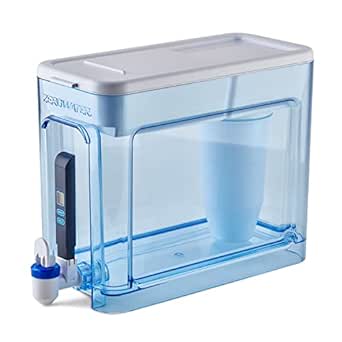 | Best for TDS Reduction | Capacity: 7.5 liters (32 cups) | Filtration: 5-stage ion exchange | Certified reductions: Lead, PFOA/PFOS, chromium, and mercury | VIEW LATEST PRICE | See Our Full Breakdown |
| Waterdrop CTF-01 Stainless Steel Faucet Water Filter |  | Best Faucet-Mounted Option | Material: 304 food-grade stainless steel | Filtration: 5-stage | Chlorine reduction: Up to 99% | VIEW LATEST PRICE | See Our Full Breakdown |
| AquaTru Glass Carafe Countertop Reverse Osmosis Water Filter |  | Best Glass-Carafe Reverse Osmosis Pick | Filtration method: Four-stage reverse osmosis | Container: Removable borosilicate glass carafe with lid | Dimensions: 14 x 7.5 x 13 inches | VIEW LATEST PRICE | See Our Full Breakdown |
| Waterdrop WFD-40L Water Filter Dispenser, 35-Cup, Black |  | Best Slim Gravity Dispenser | Capacity: 35 cups total; 19 cups in dispenser body | Dimensions: 14.4 x 5.5 x 10.2 inches | Filtration method: Gravity filtration with activated carbon fiber | VIEW LATEST PRICE | See Our Full Breakdown |
| Ninja HydraSense Intelligent Water Filtration System, WF1001 |  | Best for One-Touch Dispensing | Model: WF1001 | Purification method: Specialized ultrafine carbon | Listed contaminant reduction: Up to 99% of more than 80 contaminants | VIEW LATEST PRICE | See Our Full Breakdown |
| Bluevua RO100ROPOT-UV Countertop Reverse Osmosis Water Filter System |  | Best for Glass-Carafe RO Filtration | Filtration: Six-stage reverse osmosis with UV light and remineralization | Carafe capacity: 1,700 ml | Pure-to-drain ratio: 2:1 | VIEW LATEST PRICE | See Our Full Breakdown |
| DREO Countertop Reverse Osmosis Water Filter System with 3L Tank and 1.1L Pitcher | 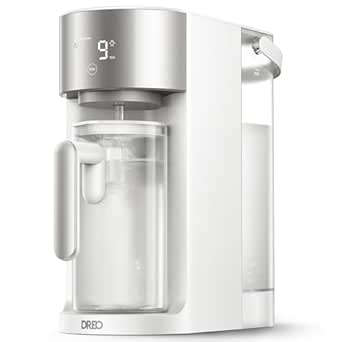 | Best for Simple Daily RO | Purification method: Reverse osmosis with a 0.0001 μm membrane | Tank capacity: 3 L | Pitcher capacity: 1.1 L | VIEW LATEST PRICE | See Our Full Breakdown |
| DREO Countertop Reverse Osmosis Water Filter with Two Autofill Pitchers |  | Best for Two-Pitcher Convenience | Purification method: Seven-in-one reverse osmosis filtration | Included pitchers: Two autofill pitchers | Capacity: 5 liters | VIEW LATEST PRICE | See Our Full Breakdown |
| Purewell 3-Stage Gravity Water Filter System, 2.25 Gallons |  | Best Non-Electric Gravity Filter | Filtration stages: 3 | Filter pore size: 0.01 microns | Capacity: 2.25 gallons | VIEW LATEST PRICE | See Our Full Breakdown |
| Ninja HydraSense Intelligent Water Filtration System, WF1001WH1 |  | Best for One-Touch Mineral-Preserving Dispensing | Purification method: Specialized ultrafine carbon filtration | Reservoir capacity: 96 oz | Filter life: Up to 120 gallons or 6 months | VIEW LATEST PRICE | See Our Full Breakdown |
| countertop water filter | Dimensions | Filter life | Capacity |
|---|---|---|---|
| iSpring CKC1C Countertop Chlor | 4.72 × 4.72 × 9.84 inches | 6–12 months, depending on water quality | 10,000 gallons |
| Bluevua RO100ROPOT Countertop | — | 12–24 months | — |
| Brita UltraMax 27-Cup Water Di | 18 × 5.67 × 10.47 inches | — | 27 cups |
| Big Berkey 2.25-Gallon Gravity | 8.5 × 8.5 × 19.25 inches | — | 2.25 gallons (8.5 liters) |
| Culligan MaxClear Gravity Wate | 8.6 × 8.6 × 26 inches | Up to 6 months per filter | 2.25 gallons |
| ZeroWater 32-Cup 5-Stage Water | 13.13 x 6 x 10.38 inches | — | 7.5 liters (32 cups) |
| Waterdrop CTF-01 Stainless Ste | — | Up to 12 months | — |
| AquaTru Glass Carafe Counterto | 14 x 7.5 x 13 inches | — | — |
| Waterdrop WFD-40L Water Filter | 14.4 x 5.5 x 10.2 inches | Up to 200 gallons or 2 months | 35 cups total; 19 cups in dispenser body |
| Ninja HydraSense Intelligent W | 14.37 x 5.07 x 5.07 inches | 6 months or 120 gallons | — |
| Bluevua RO100ROPOT-UV Countert | 10.9 × 15.4 × 14.3 in | 12 months listed in specifications; product description states 12–24 months | — |
| DREO Countertop Reverse Osmosi | 14.5 × 6.7 × 13.4 in | 6 months | — |
| DREO Countertop Reverse Osmosi | 15.7 × 6.7 × 13.4 in | 6 months | 5 liters |
| Purewell 3-Stage Gravity Water | 8.9 × 8.9 × 20 in | Up to 3,000 gallons per filter; replace every 6 months | 2.25 gallons |
| Ninja HydraSense Intelligent W | 14.37 × 5.07 × 13.78 in | Up to 120 gallons or 6 months | — |
More Details on Our Top Picks
iSpring CKC1C Countertop Chlorine-Removal Water Filter System
The iSpring CKC1C is a practical pick for buyers who want a countertop filter tied directly to the kitchen tap rather than a pitcher or a separate batch-filling dispenser. Its 5-micron carbon block is designed to reduce chlorine, odors, and visible sediment, while the clear housing makes it easier to see the cartridge condition. The stated capacity of 10,000 gallons and 6–12-month filter life mean fewer routine changes than the Brita UltraMax’s Standard filter, though actual timing depends on incoming water quality. Unlike the Bluevua RO100ROPOT, this model needs no electricity and does not use reverse osmosis; it also does not reduce TDS, so it is not the choice for buyers seeking broad dissolved-solids reduction. Installation avoids drilling, but it still depends on a compatible tap and occupies space beside the sink.
Pros:- Connects to most standard kitchen taps without drilling.
- Carbon block is designed to reduce chlorine, odors, sand, silt, sediment, and rust.
- Clear, BPA-free housing lets users inspect the cartridge.
- Stated 10,000-gallon capacity can mean fewer replacements than small pitcher filters.
Cons:- Does not reduce total dissolved solids.
- Filter replacement timing varies with local water quality.
- Requires a compatible faucet connection and counter space beside the sink.
Best for: Renters or homeowners with a compatible standard kitchen tap who want chlorine and sediment reduction without electricity or drilling.
Not ideal for: Buyers seeking reverse-osmosis treatment or TDS reduction, or households with a faucet that cannot accept the included diverter connection.
- Model:CKC1C
- Filter type:5-micron carbon block cartridge
- Stated chlorine reduction:95%
- Capacity:10,000 gallons
- Filter life:6–12 months, depending on water quality
- Dimensions:4.72 × 4.72 × 9.84 inches
- Installation:Countertop; connects to most standard kitchen taps; no drilling required
- Materials:Food-grade, BPA-free materials
- Warranty:1-year limited warranty
Our verdict“Choose the iSpring if you want tap-connected chlorine and sediment filtration without power, but skip it if TDS reduction is a priority.”
Bluevua RO100ROPOT Countertop Reverse Osmosis Water Filter System
For buyers who want reverse osmosis without a permanent installation, the Bluevua RO100ROPOT offers a more treatment-focused approach than the iSpring CKC1C or Brita UltraMax. Its five-stage process includes remineralization, and the monitor provides filter-life and water-quality information, giving users more guidance than a basic gravity dispenser. The borosilicate glass carafe also avoids storing finished water in a plastic pitcher. A 2:1 pure-to-drain ratio and standby mode help manage water use and power, but this remains an electric appliance: it needs an outlet, counter space, and time to process water at a maximum flow rate of 0.26 liters per minute. Compared with the AquaTru Glass Carafe in this roundup, it is another countertop RO option, but buyers should compare their preferred layout and maintenance needs rather than assuming all RO systems operate alike.
Pros:- Five-stage reverse-osmosis filtration includes remineralization.
- No plumbing or permanent installation is required.
- Borosilicate glass carafe avoids a plastic finished-water container.
- Monitor tracks filter life and water quality; standby mode and a 2:1 pure-to-drain ratio are built in.
Cons:- Requires electricity and a dedicated countertop footprint.
- Maximum flow rate is 0.26 liters per minute, so filling takes time.
- Filters require replacement, with a stated 12–24-month life.
Best for: Households that want multi-stage reverse-osmosis filtration and remineralization without plumbing changes, especially those who prefer a glass carafe.
Not ideal for: Buyers without convenient counter space or an outlet, and anyone who wants immediate tap-connected flow or a non-electric gravity system.
- Model:RO100ROPOT
- Purification method:Reverse osmosis
- Filtration stages:5, including remineralization
- Carafe material:Borosilicate glass
- Maximum flow rate:0.26 liters per minute
- Water ratio:2:1 pure to drain
- Maximum supported water TDS:1,000 ppm
- Filter life:12–24 months
- Dimensions and weight:10.9 × 15.4 × 14.3 inches; 5 kg
Our verdict“Pick the Bluevua for countertop RO with a glass carafe and monitoring, provided you can accommodate an electric appliance and slower batch production.”
Brita UltraMax 27-Cup Water Dispenser with Standard Filter, Black
The Brita UltraMax is the easiest fit for households that want filtered water ready in the refrigerator rather than an appliance on the counter. Its 27-cup reservoir and precision-pour spigot suit shared kitchens better than the smaller carafe arrangement of the Bluevua RO100ROPOT, while the locking lid helps during fridge storage. The Standard filter is designed to reduce chlorine taste and odor, copper, mercury, and other impurities; it is not a reverse-osmosis system, so it serves a different purpose from the Bluevua and does not offer the same treatment approach. The main upkeep tradeoff is frequent cartridge replacement: the included Standard filter is rated for 40 gallons or about two months. Plastic construction also separates it from the Culligan MaxClear’s stainless-steel gravity dispenser, though the Brita is shorter and made for refrigerator use.
Pros:- 27-cup capacity reduces how often a household needs to refill the dispenser.
- Fridge-friendly design includes a locking lid and precision-pour spigot.
- Standard filter is designed to reduce chlorine taste and odor, copper, and mercury.
- Compatible with both Standard and Elite filters, which have different rated lifespans.
Cons:- Included Standard filter is rated for about 40 gallons or two months.
- Plastic dispenser construction may not suit buyers seeking stainless steel or glass.
- Gravity-fed filtration requires filling the reservoir and waiting for water to pass through.
Best for: Families or shared households that want a large, fridge-stored supply of filtered water with a simple gravity-fed setup.
Not ideal for: Buyers who want reverse-osmosis filtration, a stainless-steel vessel, or longer intervals between filter changes with the included Standard cartridge.
- Capacity:27 cups
- Purification method:Carbon block; gravity fed
- Included filter:1 Standard filter
- Standard filter life:40 gallons or approximately 2 months
- Elite filter life:120 gallons or approximately 6 months
- Materials:BPA-free plastic; polystyrene container
- Dimensions:18 × 5.67 × 10.47 inches
- Features:Filter-change indicator, easy-locking lid, precision-pour spigot
- Certifications:WQA and NSF/ANSI
Our verdict“Choose the Brita UltraMax for a large, refrigerator-ready supply and straightforward dispensing, not for RO-level treatment or infrequent Standard-filter changes.”
Big Berkey 2.25-Gallon Gravity-Fed Water Filter System with Two BB9-2 Filters
The Big Berkey suits buyers who want a large, electricity-free countertop reservoir for home, office, or RV use. Its 2.25-gallon capacity and stainless-steel construction make it a more substantial shared-water station than the Brita UltraMax, while gravity operation avoids plumbing and power. The included pair of Black Berkey BB9-2 elements has a stated capacity of up to 6,000 gallons per pair, but the system’s maximum flow rate is only 0.03 gpm, so it is better for filling ahead than serving people who expect rapid output. Compared with the Culligan MaxClear, the Big Berkey’s listed filter capacity is much higher, while Culligan specifies a filter life of up to six months and identifies its reduction targets. The Big Berkey requires manual filling and filter priming, and its 19.25-inch height calls for careful counter-space planning.
Pros:- 2.25-gallon capacity supports batch preparation for multiple users.
- Gravity operation needs no electricity, plumbing, or water pressure.
- Polished stainless-steel construction is suited to repeated countertop use.
- Includes two Black Berkey BB9-2 elements with a stated capacity of up to 6,000 gallons per pair.
Cons:- Maximum listed flow rate is 0.03 gpm, making dispensing slow.
- Filter elements need manual priming and the upper chamber needs refilling.
- At 19.25 inches tall, it takes more vertical space than the Brita UltraMax.
Best for: Households, offices, or RV users who need a large gravity-fed supply and want to avoid electricity and plumbing.
Not ideal for: People who need fast, on-demand dispensing, have limited vertical counter space, or do not want to prime and maintain filter elements manually.
- Model:BK4X2-BB
- Capacity:2.25 gallons (8.5 liters)
- Filter elements included:2 Black Berkey BB9-2
- Stated filter capacity:Up to 6,000 gallons per pair
- Material:AISI 304 stainless steel
- Dimensions:8.5 × 8.5 × 19.25 inches
- Maximum flow rate:0.03 gpm
- Maximum supported TDS:1,000 ppm
- Power source:Gravity
Our verdict“Choose the Big Berkey for high-capacity, non-electric batch filtration, but not if you need quick dispensing or a compact countertop footprint.”
Culligan MaxClear Gravity Water Filter System, 2.25 Gallons
The Culligan MaxClear is a gravity-fed stainless-steel dispenser for buyers focused on its stated targets: microplastics, lead, and total PFAS. Like the Big Berkey, it holds 2.25 gallons and works without electricity or plumbing, but Culligan supplies one ceramic-and-carbon filter with a stated life of up to six months rather than the Berkey’s pair of elements and stated capacity of up to 6,000 gallons. That makes the Culligan’s replacement schedule clearer, though more frequent filter changes may be a drawback for long-term use. Its 26-inch assembled height is a substantial counter-space demand—taller than the Big Berkey—so measure overhead clearance before choosing it. The listed IAPMO certification and NSF/ANSI 42 standard add useful product context, but buyers should match the specified reduction claims to their own water concerns.
Pros:- Designed to reduce microplastics, lead, and total PFAS.
- 2.25-gallon capacity provides a substantial gravity-fed reserve.
- Stainless-steel construction and gravity operation require no electricity or plumbing.
- Filter compatibility is listed for several other gravity-filter brands.
Cons:- Filter life is up to six months per filter, so replacements are more frequent than the Big Berkey’s stated pair capacity suggests.
- At 26 inches tall, it needs considerable vertical counter clearance.
- The unit includes only one filter, unlike the Big Berkey bundle with two elements.
Best for: Buyers who want a stainless-steel gravity dispenser with specified microplastic, lead, and total-PFAS reduction targets and can follow a six-month filter schedule.
Not ideal for: Kitchens with low overhead clearance, or buyers who prefer a longer stated filter capacity and fewer scheduled replacements like the Big Berkey’s included pair.
- Model:MCS701B
- Capacity:2.25 gallons
- Purification method:Ceramic and granular activated carbon
- Filter life:Up to 6 months per filter
- Dimensions:8.6 × 8.6 × 26 inches
- Weight:4.55 kg
- Material:Stainless steel
- Maximum supported TDS:500 ppm
- Certifications:IAPMO certified; NSF/ANSI 42 standards
Our verdict“Pick the Culligan MaxClear if its stated reduction targets match your needs and you have room for a tall dispenser and scheduled filter changes.”
ZeroWater 32-Cup 5-Stage Water Filter Dispenser with TDS Meter
The ZeroWater 32-Cup dispenser is the clearest fit here for buyers focused on dissolved solids: its five-stage ion exchange filter is designed to reduce TDS, unlike the Waterdrop WFD-40L and Waterdrop CTF-01, which do not. IAPMO-certified reductions include lead, PFOA/PFOS, chromium, and mercury, while the included meter gives you a practical signal for filter changes. Its 32-cup capacity cuts down on refill trips, and the dispenser can sit on a counter or in a refrigerator. The tradeoff is that filter changes are tied to the meter reaching 006, so replacement timing may depend on incoming water. At 5.5 pounds, it is also heavier than the Waterdrop dispenser.
Pros:- Five-stage ion exchange filtration reduces TDS
- IAPMO-certified reduction of lead, PFOA/PFOS, chromium, and mercury
- 32-cup capacity means fewer refills
- Included TDS meter helps indicate when to replace the filter
Cons:- Filter replacement is indicated when the meter reaches 006, so timing can vary with source water
- At 5.5 pounds, it is heavier than the Waterdrop WFD-40L
- Does not provide one-touch electric dispensing like the Ninja HydraSense
Best for: Households that want TDS reduction, a large batch of filtered water, and a meter to guide filter changes
Not ideal for: Buyers who want a faucet-mounted filter, minimal filter monitoring, or the lightest dispenser to move when full
- Capacity:7.5 liters (32 cups)
- Filtration:5-stage ion exchange
- Certified reductions:Lead, PFOA/PFOS, chromium, and mercury
- TDS meter:Included; change filter when reading reaches 006
- Filter life cycle:73 days
- Dimensions:13.13 x 6 x 10.38 inches
- Material:BPA-free plastic
- Installation:Countertop; also fits in a refrigerator
Our verdict“Choose the ZeroWater if reducing TDS and tracking filter changes matter more to you than lighter weight or electric dispensing.”
Waterdrop CTF-01 Stainless Steel Faucet Water Filter
The Waterdrop CTF-01 suits buyers who want filtered water straight from a compatible faucet rather than storing a pitcher or dispenser. Its 304 stainless steel housing and switch between filtered and unfiltered flow make it a different kind of countertop choice from the ZeroWater 32-Cup dispenser or the gravity-fed Waterdrop WFD-40L. The stated chlorine reduction of up to 99% can help with taste and odor, and the filter is rated for up to 8,000 gallons or 12 months, with performance varying by water quality. Its main limitation is scope: it does not reduce TDS, so it is not a substitute for ZeroWater if dissolved solids are your concern. Faucet fit is another gate; pull-out, handheld, spray-style, and sensor-activated models are excluded.
Pros:- Switches between filtered and regular tap water
- 304 food-grade stainless steel housing
- Rated for up to 8,000 gallons or 12 months of municipal tap water
- Maximum flow rate of 1.6 gallons per minute
Cons:- Does not reduce TDS, unlike the ZeroWater 32-Cup dispenser
- Incompatible with several common faucet styles, including pull-out and sensor-activated models
- The stated filter life can vary with water quality
Best for: Renters or homeowners with a compatible standard faucet who want on-demand filtered water without filling a pitcher
Not ideal for: People with pull-out, handheld, spray-style, or sensor-activated faucets, or buyers seeking TDS reduction
- Material:304 food-grade stainless steel
- Filtration:5-stage
- Chlorine reduction:Up to 99%
- Filter capacity:Up to 8,000 gallons
- Filter life:Up to 12 months
- Maximum flow rate:1.6 gallons per minute
- Faucet compatibility:Standard faucets; not compatible with pull-out, handheld, spray-style, or sensor-activated faucets
- TDS reduction:Does not reduce TDS
Our verdict“Pick the CTF-01 if your faucet is compatible and you want on-demand chlorine reduction without managing stored water.”
AquaTru Glass Carafe Countertop Reverse Osmosis Water Filter
The AquaTru Glass Carafe is the strongest match in this group for buyers who want countertop reverse osmosis and prefer serving water from glass. Its four-stage RO filtration is listed to reduce contaminants including fluoride, lead, arsenic, microplastics, and PFAS, a broader purification approach than the chlorine-focused Waterdrop CTF-01 or the carbon-based Ninja HydraSense. No plumbing or drilling is required; purified water collects in a removable borosilicate carafe with a lid. That convenience comes with two practical limits: the unit needs a standard electrical outlet and takes more counter height than the slim Waterdrop WFD-40L. Filter schedules also differ by cartridge, so buyers will need to track several replacement intervals rather than one simple dispenser filter.
Pros:- Four-stage reverse osmosis filtration targets a wide range of listed contaminants
- Removable borosilicate glass carafe includes a lid
- Countertop setup requires no plumbing, drilling, or tools
- Specified filter intervals extend to six months or one year, depending on the cartridge
Cons:- Requires access to a standard electrical outlet, unlike the gravity-fed Waterdrop WFD-40L
- At 14 inches tall, it needs more vertical space than the slim WFD-40L
- Different cartridges have separate replacement intervals
Best for: Households seeking countertop reverse osmosis with a removable glass carafe and no plumbing work
Not ideal for: Buyers without a nearby outlet, with limited vertical counter space, or who prefer a single-filter replacement routine
- Filtration method:Four-stage reverse osmosis
- Container:Removable borosilicate glass carafe with lid
- Dimensions:14 x 7.5 x 13 inches
- Maximum flow rate:0.5 gallons per minute
- Supported maximum TDS:300 ppm
- Pre/carbon filter life:6 months or 300 gallons
- Reverse osmosis filter life:1 year or 600 gallons
- Installation and power:Countertop, no plumbing required; corded electric
Our verdict“Choose the AquaTru if you want countertop reverse osmosis served from glass and can accommodate its outlet and filter-care needs.”
Waterdrop WFD-40L Water Filter Dispenser, 35-Cup, Black
The Waterdrop WFD-40L makes the most sense for buyers who want a large gravity dispenser that can fit in a refrigerator, provided they check the dimensions first. At 5.5 inches wide, it is slimmer than the ZeroWater 32-Cup dispenser, and its sliding lid and handle suit fridge storage. Its activated carbon fiber filter is listed to reduce chlorine, odors, and several metals and compounds; NSF 42 and NSF 372 certifications cover the stated standards. The capacity needs a closer read, though: 35 cups is the total, with only 19 cups in the dispenser body. Unlike the ZeroWater, it does not reduce TDS, and the filter is rated for up to 200 gallons or two months. The replacement indicator helps with upkeep, but it does not remove the need for regular changes.
Pros:- Slim 5.5-inch width, handle, and sliding lid support refrigerator storage
- 35-cup total capacity, with 19 cups held in the dispenser body
- Replacement indicator helps track filter changes
- NSF 42 and NSF 372 certifications; BPA-free, lead-free food-grade materials
Cons:- Does not reduce TDS, unlike the ZeroWater 32-Cup dispenser
- Filter is rated for up to 200 gallons or two months, requiring regular replacement
- Refrigerator fit is not guaranteed; dimensions should be checked before purchase
Best for: Households wanting a slim, refrigerator-friendly gravity dispenser for taste and odor improvement
Not ideal for: Buyers who need TDS reduction, a full 35 cups readily available in the lower reservoir, or a guaranteed fit in an unmeasured fridge
- Capacity:35 cups total; 19 cups in dispenser body
- Dimensions:14.4 x 5.5 x 10.2 inches
- Filtration method:Gravity filtration with activated carbon fiber
- Filter life:Up to 200 gallons or 2 months
- Certification:NSF 42 and NSF 372
- Materials:Lead-free, BPA-free, food-grade materials
- Maximum supported water TDS:600 ppm
- Included components:Dispenser system, one replacement filter, and user manual
Our verdict“Choose the WFD-40L for a slim gravity dispenser focused on everyday taste and odor improvement, not TDS reduction.”
Ninja HydraSense Intelligent Water Filtration System, WF1001
The Ninja HydraSense WF1001 stands apart from the gravity dispensers by offering one-touch dispensing, customizable fill volume, and an interactive display that tracks water use and filter status. Its specialized ultrafine carbon system is stated to reduce more than 80 contaminants while preserving natural minerals and electrolytes; listed certifications include NSF/ANSI 42, 53, and 401. Compared with the AquaTru Glass Carafe, it is not a reverse osmosis system, and the supplied description does not list TDS reduction. The 96-ounce reservoir is smaller than the 32- and 35-cup Waterdrop and ZeroWater dispensers, so frequent users may refill it more often. It also needs countertop space and manual refills, while its filter is rated for six months or 120 gallons.
Pros:- One-touch dispensing with customizable fill volume
- Interactive display tracks water use and filter status
- Listed to reduce more than 80 contaminants while preserving natural minerals and electrolytes
- No plumbing or installation required
Cons:- 96-ounce reservoir is smaller than the ZeroWater and Waterdrop gravity dispensers
- Requires manual reservoir refills and countertop space
- Filter is rated for six months or 120 gallons, unlike the Waterdrop CTF-01’s stated capacity of up to 8,000 gallons
Best for: People who want measured, one-touch pours and on-screen filter tracking without plumbing or a reverse osmosis setup
Not ideal for: Large households that need high stored capacity, buyers seeking reverse osmosis or stated TDS reduction, or kitchens short on counter space
- Model:WF1001
- Purification method:Specialized ultrafine carbon
- Listed contaminant reduction:Up to 99% of more than 80 contaminants
- Certifications:NSF/ANSI 42, 53, and 401
- Reservoir capacity:96 ounces
- Filter life:6 months or 120 gallons
- Dimensions:14.37 x 5.07 x 5.07 inches
- Installation:Countertop; no plumbing required
Our verdict“Choose the HydraSense if convenient portioned dispensing and live filter tracking matter more than large capacity or reverse osmosis.”
Bluevua RO100ROPOT-UV Countertop Reverse Osmosis Water Filter System
The Bluevua RO100ROPOT-UV suits buyers who want reverse osmosis without plumbing and prefer storing purified water in borosilicate glass. Its six-stage process adds UV treatment and remineralization, giving it a more involved setup than the Ninja HydraSense, which uses carbon filtration and preserves natural minerals rather than using RO. A 2:1 pure-to-drain ratio also uses less feed water per volume produced than the DREO systems’ stated 3:1 ratio, though those DREO models offer more pitcher-focused convenience.
The tradeoff is a relatively slow 0.26-liter-per-minute flow rate and a 1.7-liter carafe, so it suits measured batches better than high-volume serving. At 17.8 pounds, it is also less convenient to move than the lighter DREO DR-KWF002. Choose it for glass storage and multi-stage RO; skip it if you want a lightweight unit or instant dispensing.
Pros:- Six-stage reverse osmosis includes UV light and remineralization.
- Borosilicate glass carafe avoids storing filtered water in a plastic pitcher.
- No plumbing is required, making countertop setup straightforward.
- Built-in TDS and filter-life monitoring help track water and maintenance.
Cons:- The 0.26-liter-per-minute flow rate makes filling larger containers slow.
- The 1.7-liter carafe may require frequent refills for multiple people.
- At 17.8 pounds, it is cumbersome to relocate and requires an electrical outlet.
Best for: Households seeking countertop reverse osmosis, UV treatment, and a glass carafe without connecting to plumbing.
Not ideal for: People who need fast, continuous dispensing, a large ready-to-serve reservoir, or a filter that is easy to move between counters.
- Filtration:Six-stage reverse osmosis with UV light and remineralization
- Carafe capacity:1,700 ml
- Pure-to-drain ratio:2:1
- Flow rate:0.26 liters per minute
- Maximum supported TDS:500 ppm
- Dimensions:10.9 × 15.4 × 14.3 in
- Weight:17.8 lb
- Filter life:12 months listed in specifications; product description states 12–24 months
- Certification and testing:WQA certified to NSF/ANSI/CAN 372 for lead-free; tested by SGS
Our verdict“Choose this Bluevua if you want glass-carafe RO with UV treatment and can accept slower batch production and a heavy, powered unit.”
DREO Countertop Reverse Osmosis Water Filter System with 3L Tank and 1.1L Pitcher
The DREO DR-KWF002 puts routine use ahead of a complex feature list: its auto-fill pitcher, touch controls, and self-cleaning function reduce the small tasks that can make countertop RO feel cumbersome. The 3-liter tank and 1.1-liter pitcher are sized for one or two people, while its 9.5-pound weight makes it easier to reposition than the heavier Bluevua RO100ROPOT-UV. Its stated 3:1 pure-to-drain ratio is less water-efficient than that Bluevua’s 2:1 ratio, but the DREO offers a more automated pitcher routine.
Real-time TDS readings and filter reminders make maintenance more visible, and SGS testing to NSF/ANSI 58 is provided in the product data. The limits are clear: six-month filter life, counter space, and a capacity that may feel small for a family. Compared with the two-pitcher DREO DR-KWF003, this model is the simpler fit for a smaller household, not a larger serving setup.
Pros:- Auto-fill pitcher and self-cleaning function simplify day-to-day operation.
- Real-time TDS monitoring and filter reminders make maintenance easier to track.
- At 9.5 pounds, it is lighter than the Bluevua RO100ROPOT-UV.
- Twist-to-install replacement filter is designed for quick changes.
Cons:- The 3-liter tank and 1.1-liter pitcher are aimed at one or two people.
- The filter is rated for six months, requiring regular replacement.
- The stated 3:1 pure-to-drain ratio uses more feed water per volume produced than the Bluevua RO100ROPOT-UV’s 2:1 ratio.
Best for: One- or two-person households that want countertop RO with an auto-fill pitcher and reminders for filter changes.
Not ideal for: Families or frequent hosts who need more serving capacity, or buyers who want to avoid regular filter changes.
- Purification method:Reverse osmosis with a 0.0001 μm membrane
- Tank capacity:3 L
- Pitcher capacity:1.1 L
- Pure-to-drain ratio:3:1
- Filter capacity:265 gallons (1,000 L)
- Filter life:6 months
- Dimensions:14.5 × 6.7 × 13.4 in
- Weight:9.5 lb
- Testing:SGS tested to meet NSF/ANSI 58 standards
Our verdict“Pick the DR-KWF002 for low-fuss countertop RO in a small household, but choose the DREO DR-KWF003 if you need two pitchers ready for serving.”
DREO Countertop Reverse Osmosis Water Filter with Two Autofill Pitchers
For households that want a pitcher ready while another is being used, the DREO DR-KWF003’s two autofill pitchers are its main advantage over the DR-KWF002, which includes one. Its install-free, seven-stage RO system also provides a built-in TDS meter, filter-change indicator, and self-cleaning function, so users can monitor basic upkeep without adding plumbing. The 3:1 pure-to-drain ratio is shared with the smaller DREO, while the 5-liter stated capacity gives this version more room for serving.
That added convenience takes up more counter space: at 15.7 inches long, it is larger than the DR-KWF002. The product description claims reduction of up to 99.9% of possible contaminants, but the supplied data does not name a certification for that claim, so buyers should not treat it as a substitute for a specific contaminant certification. Six-month filter replacement is another ongoing task. Pick this over the single-pitcher model when spare ready-to-use water matters more than a smaller footprint.
Pros:- Two autofill pitchers provide more serving flexibility than the DREO DR-KWF002.
- Seven-stage reverse osmosis filtration is paired with TDS and filter-life monitoring.
- Self-cleaning function reduces one part of routine upkeep.
- Install-free design avoids a plumbing connection.
Cons:- Its 15.7-inch length needs more counter space than the DREO DR-KWF002.
- Filters are listed for replacement about every six months.
- The supplied product data does not specify certification supporting the stated contaminant-reduction claim.
Best for: Households that regularly share filtered water and want two autofill pitchers available without plumbing installation.
Not ideal for: People with limited counter space, low water use, or a preference for a smaller single-pitcher RO system.
- Purification method:Seven-in-one reverse osmosis filtration
- Included pitchers:Two autofill pitchers
- Capacity:5 liters
- Pure-to-drain ratio:3:1
- Filter life:6 months
- Dimensions:15.7 × 6.7 × 13.4 in
- Weight:10.8 lb
- Materials:Acrylonitrile butadiene styrene (ABS)
- Features:TDS meter, filter-change indicator, touch control, and self-cleaning
Our verdict“Choose the DR-KWF003 over the single-pitcher DREO when two ready-to-fill pitchers matter more than saving counter space.”
Purewell 3-Stage Gravity Water Filter System, 2.25 Gallons
The Purewell is the lineup’s straightforward choice for buyers who want a non-electric countertop filter with a large, 2.25-gallon housing. Its gravity-fed design avoids the cord and batch-processing routine of the Bluevua RO100ROPOT-UV, while the stainless steel body and included stand suit a fixed kitchen spot or some outdoor use. A three-stage combination of activated carbon, silver ion membrane, and 0.01-micron hollow fiber is listed for reducing chlorine and intercepting rust, sediment, organic matter, and some heavy metals.
The key distinction from both DREO RO systems is that this Purewell does not lower TDS; buyers seeking that function should choose reverse osmosis instead. It also depends on gravity, so dispensing is less controlled than the one-touch Ninja HydraSense. The stated flow rate is up to four gallons per hour, but water quality affects filter life, and the top chamber may leak if refilled while the bottom is full. Its large capacity comes with a 20-inch height.
Pros:- Gravity operation needs no electricity or plumbing.
- 2.25-gallon capacity reduces the need for frequent refills.
- Three filtration materials include a 0.01-micron hollow fiber membrane.
- 304 stainless steel housing, spigot, two filters, and non-slip stand are included.
Cons:- Does not lower total dissolved solids, unlike the DREO reverse-osmosis systems.
- At 20 inches tall, it may not fit under some cabinets.
- The top chamber may leak if refilled while the lower chamber is full, and filter life varies with water quality.
Best for: Households or campers seeking a large-capacity, electricity-free gravity filter for chlorine, sediment, and similar listed concerns.
Not ideal for: Buyers who need lower TDS, reverse-osmosis treatment, controlled one-touch dispensing, or a compact filter for low cabinets.
- Filtration stages:3
- Filter pore size:0.01 microns
- Capacity:2.25 gallons
- Flow rate:Up to 4 gallons per hour
- Filter life:Up to 3,000 gallons per filter; replace every 6 months
- Housing:304 stainless steel
- Dimensions:8.9 × 8.9 × 20 in
- Weight:8.5 lb
- Certifications:NSF/ANSI 42 and 372
Our verdict“Choose the Purewell for high-capacity gravity filtration without electricity, but skip it if lowering TDS is a priority.”
Ninja HydraSense Intelligent Water Filtration System, WF1001WH1
The Ninja HydraSense is the clearest fit for buyers who want measured, one-touch dispensing rather than an RO pitcher workflow. Its specialized ultrafine carbon filtration is listed to reduce more than 80 contaminants, including microplastics and PFAS, while preserving natural minerals. That makes it a different choice from the Bluevua RO100ROPOT-UV and DREO systems: those use reverse osmosis, while Ninja’s approach keeps minerals in the water. The interactive display tracks usage and filter status, so the owner can follow maintenance without relying on a calendar alone.
Its 96-ounce reservoir is larger than a single 1.1-liter DREO pitcher, but it still needs refilling as water is dispensed. The six-month or 120-gallon filter limit may arrive sooner in a high-use household. Unlike the gravity-fed Purewell, this model gives volume-controlled dispensing but needs power and more electronic parts. Consider it if convenience and mineral retention matter more than RO treatment or electric-free operation.
Pros:- One-touch volume controls make dispensing more convenient than pouring from a pitcher.
- Product data lists reduction of more than 80 contaminants while preserving natural minerals.
- Interactive display tracks usage and filter status.
- No plumbing connection is required.
Cons:- The 96-ounce reservoir needs refilling as water is dispensed.
- The filter is rated for up to 120 gallons or six months, whichever comes first.
- Unlike the Bluevua and DREO RO systems, it does not use reverse osmosis.
Best for: People who want countertop filtration with selectable dispensing volumes, usage tracking, and natural minerals retained.
Not ideal for: Buyers who specifically want reverse osmosis or TDS reduction, or households that prefer a non-electric gravity filter.
- Purification method:Specialized ultrafine carbon filtration
- Reservoir capacity:96 oz
- Filter life:Up to 120 gallons or 6 months
- Dimensions:14.37 × 5.07 × 13.78 in
- Weight:6.6 lb
- Installation:Countertop; no plumbing required
- Features:Touchscreen display, usage tracking, filter-change indicator, one-touch dispensing
- Certifications:NSF/ANSI 42, 53, and 401
Our verdict“Choose the HydraSense for tracked, one-touch carbon filtration that retains minerals, not for buyers seeking reverse osmosis.”
How We Picked
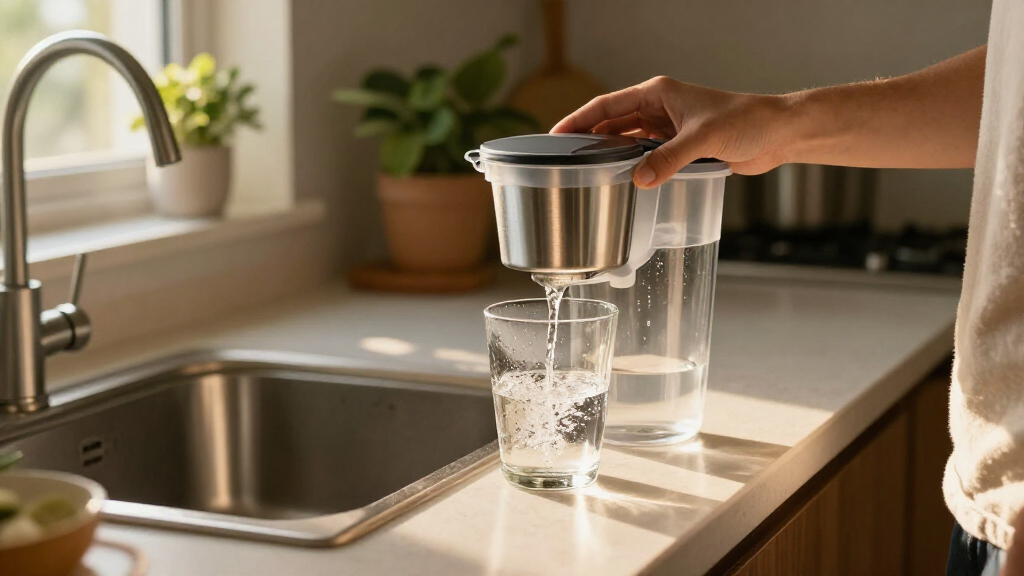
I ranked these countertop water filters by how well their format fits common household needs, not by treating every filtration method as interchangeable. I compared the role of each system—faucet-connected, dispenser, gravity-fed, or reverse osmosis—alongside capacity, countertop footprint, installation demands, dispensing convenience, and the maintenance a buyer should expect. I also looked at how clearly each option’s design supports a specific use case, such as keeping a larger reserve ready or avoiding a faucet connection.
The order gives more weight to versatility and everyday usability than to a single headline feature. The Bluevua RO100ROPOT ranks first for its self-contained reverse osmosis format; alternatives rank higher for narrower needs, such as a simple dispenser, faucet connection, or gravity-fed operation. Closely related models are separated by their setup and practical role, and the two Ninja entries are treated cautiously because the supplied names indicate the same HydraSense model with different listed variants. Buyers should verify current filter specifications, replacement intervals, and the exact model configuration before choosing.
Factors to Consider When Choosing Countertop Water Filters
Choosing among countertop water filters starts with a question that product names often obscure: what do you want the filter to do, and how will you use it every day? The factors below help separate filtration needs from convenience features, so you can avoid paying for a system that does not fit your water, space, or routine.
Match the filtration method to your water concern
Start with your local water report or a test suited to the concern you want to address; a filter’s general label does not tell you which contaminants it reduces. Reverse osmosis, activated carbon, and gravity-fed systems are not interchangeable, and no single method should be assumed to remove every substance. Check the exact filter’s performance claims and certification details for the specific contaminant, rather than relying on terms such as “purification” or a long list of stages. A TDS meter can show changes in dissolved solids, but it does not identify which substances are present or prove water safety. A common mistake is choosing the most elaborate system without confirming that its tested claims match the household’s actual concern.
Plan around water demand, not just stated capacity
Capacity tells you how much water a system can hold, but it does not tell you how quickly it can supply your household or how often you will refill it. Estimate daily drinking and cooking use, then consider whether the filter’s output and refill routine can keep up at busy times. Large dispensers and gravity tanks keep a reserve on hand, while pitcher-based and compact systems may call for more frequent refills or staged batches. A larger reservoir can reduce refill interruptions but occupy more counter space and feel cumbersome to clean or move. Avoid buying by cup count alone; the usable capacity, refill process, and household habits matter together.
Check installation and the space around the unit
“Countertop” does not always mean “place it anywhere”: faucet-connected models need a compatible faucet and room for the attachment, while self-contained systems need a nearby outlet if they use powered filtration. Measure the intended spot, including the height needed to open lids, remove pitchers, or replace cartridges. Allow room for maintenance access, not just the unit’s listed footprint. Renters may prefer a non-permanent setup, but should still check whether an adapter or faucet change is required. A frequent buying error is measuring the base and forgetting that a tall gravity tank or top-loading reservoir needs clearance above it.
Compare ongoing maintenance before choosing a format
Every filter format creates recurring work: cartridges need replacement, reservoirs need cleaning, and some systems ask you to manage several filter stages. Check the manufacturer’s replacement schedule and the exact compatible filter names before committing. Simple access to replacement parts can matter more than an extra feature if the system will be used every day. Consider whether you are comfortable tracking multiple cartridges, handling a heavy gravity unit, or following a reverse osmosis system’s cleaning routine. Do not assume that a longer stated filter life means less hassle without checking usage conditions and replacement availability.
Decide whether extra features solve a real problem
Features such as UV treatment, a TDS meter, autofill pitchers, or smart sensing can change how a system fits your routine, but they do not all improve the same thing. Ask whether the feature addresses a specific need: autofill can reduce pouring and refilling, while a meter offers a reading that should not be mistaken for a contaminant test. Added electronics may introduce power needs or more components to maintain. If you mainly want better-tasting municipal water, a simpler carbon filter may be a more direct fit than a complex system. Pay for added functions only when their everyday benefit is clear to you.
Balance footprint, water handling, and household habits
Counter space is only one part of the fit; also think about where filtered water will be poured, stored, and served. A dispenser is handy for repeated glasses, a pitcher can move to the table or refrigerator if its dimensions allow, and a faucet attachment provides water at the sink without storing a large batch. Choose the workflow you will actually maintain, especially if several people share the kitchen. Families may value a ready reserve, while a one-person household may prefer a compact system with fewer parts. Before choosing a larger unit, check whether its filled weight and cleaning routine are manageable for the person who will maintain it.
Frequently Asked Questions
Should I choose reverse osmosis or a carbon countertop filter?
Choose based on the specific substances you want to reduce, not on the method that sounds more advanced. Reverse osmosis systems such as the Bluevua and AquaTru models offer a different filtration approach from carbon-focused options such as the iSpring CKC1C, but you still need to check each model’s documented performance for your concern. Carbon filtration can suit buyers focused on taste and chlorine-related issues, while reverse osmosis may be a better match when its stated reduction claims fit the water concern. Compare maintenance, power needs, output, and water handling as well as filtration. If you do not know what is in your water, check a local water report or use an appropriate test before deciding.
Can a countertop water filter work in a rental without plumbing changes?
Many countertop models are self-contained, but the category also includes faucet-connected units, so the answer depends on the design. Gravity-fed systems and countertop reverse osmosis units can avoid a permanent plumbing installation, though powered models need an outlet and may still require regular filling or draining. The Waterdrop CTF-01 connects at the faucet, so check faucet compatibility and whether its attachment can be removed cleanly. Measure your available space and confirm any setup requirements before purchase. If you cannot modify a faucet, prioritize a unit that clearly operates without a faucet connection.
Does a TDS meter tell me whether filtered water is safe?
No. A TDS meter measures the combined level of dissolved substances in a water sample, but it does not identify those substances or establish that water is safe to drink. ZeroWater’s included meter can help track a particular reading, yet it is not a substitute for contaminant-specific testing or a filter performance claim. Some substances of concern may not be reflected in a way that makes the reading useful for safety decisions. Check the filter’s tested reduction claims and your water source instead. Treat meter readings as one limited measurement, not a complete water-quality assessment.
How much counter space should I leave for a countertop filter?
Measure the unit’s full operating space, not just its base: lids, removable reservoirs, pitchers, and filter access all need clearance. Tall gravity-fed systems may require more vertical room than a dispenser, while reverse osmosis units can need space for both the machine and a carafe or tank. Leave enough room to fill and clean the system without moving it every time. Also consider the path from the unit to the sink, since carrying a full reservoir can be awkward. If your counter is crowded, a faucet-connected filter may use less surface area, provided your faucet is compatible.
Are two similar listings of the same filter system different products?
Not always. The two Ninja HydraSense entries in this roundup have the same WF1001 model name, with one listing specifying a white variant, so the supplied details do not establish a difference in filtration performance. Before choosing between similar listings, compare the exact model number, included filters, finish, accessories, and replacement cartridge compatibility. The same check is useful for Bluevua and DREO variants, where UV treatment or pitcher configuration can change the setup. Do not assume a different listing title means a different filtration system. Confirm the manufacturer’s specifications for the precise version you plan to buy.
Conclusion
My best overall recommendation is the Bluevua RO100ROPOT for buyers who want a self-contained reverse osmosis setup; choose the AquaTru Glass Carafe or a DREO configuration instead if its pitcher or autofill workflow better suits your kitchen. For best value in a straightforward dispenser format, start with the Brita UltraMax, while the iSpring CKC1C is a sensible beginner pick for buyers who specifically want faucet-connected chlorine-focused filtration. The best premium-style choice depends on what you mean by premium: compare the Bluevua RO100ROPOT-UV for its UV feature or the DREO two-autofill-pitcher setup for hands-off dispensing, then verify the extra features match your needs. Choose Big Berkey, Culligan MaxClear, or Purewell if a non-plumbed gravity-fed tank fits your routine; pick ZeroWater if its TDS meter is useful to you, and the Waterdrop CTF-01 if keeping counter space clear is the priority. Before ordering, match the exact filter claims to your water concern and confirm cartridge availability, fit, and maintenance requirements.
Black Friday Picks

Vitamix Nano Personal Blender with SmoothiePilot, Black
As an affiliate, we earn on qualifying purchases.