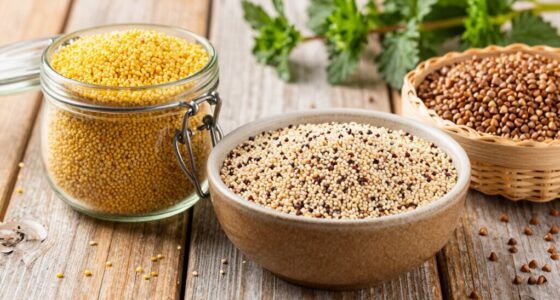
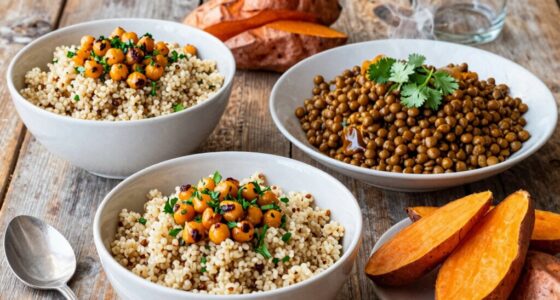
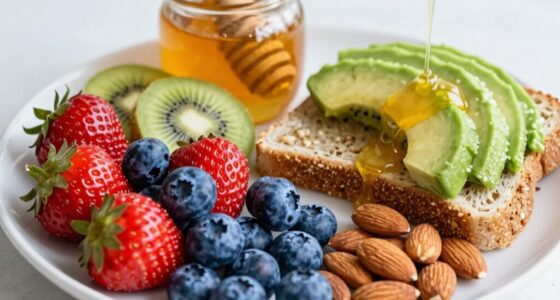
Vegan protein comes from foods like beans, lentils, tofu, nuts, seeds, and grains, which help you meet your daily needs. Since many plant proteins are incomplete, combining foods like rice and beans guarantees you get all essential amino acids. Proper preparation methods like soaking, sprouting, or fermenting improve absorption by reducing antinutrients. Eating a variety and spacing your protein sources optimizes digestion and health benefits. Keep exploring to discover how to maximize your plant-based protein intake effectively.
Key Takeaways
- Plant-based proteins include beans, lentils, tofu, nuts, seeds, and grains, which can meet daily protein needs when combined properly.
- Combining incomplete plant proteins, like rice and beans, ensures all essential amino acids are obtained for complete nutrition.
- Cooking methods such as soaking, sprouting, and fermenting improve nutrient bioavailability and reduce antinutrients that inhibit absorption.
- Incorporating diverse plant proteins throughout the day maximizes amino acid intake and enhances overall protein absorption.
- A balanced vegan diet emphasizes variety, proper food preparation, and sufficient calorie intake to support optimal health and muscle maintenance.

If you’re looking to boost your protein intake on a vegan diet, you’ll find plenty of nutrient-rich options beyond animal products. Plant-based sources like beans, lentils, tofu, tempeh, nuts, seeds, and whole grains can help you meet your daily protein needs. But it’s not just about including these foods; understanding protein absorption is key to making the most of your plant-based diet. Unlike animal proteins, which are complete and easily absorbed, many plant-based sources are incomplete proteins, meaning they lack one or more essential amino acids. However, by combining different plant foods throughout the day, you can guarantee you get all the amino acids your body needs. For example, pairing rice with beans creates a complete protein, helping your body absorb the nutrients more efficiently.
Your body’s ability to absorb protein from plant sources can vary based on the food’s structure and how you prepare it. Cooking methods like soaking, sprouting, and fermenting can considerably improve protein absorption by reducing antinutrients that inhibit nutrient uptake. For instance, sprouting lentils or fermenting soy products like tempeh breaks down complex compounds, making amino acids more accessible for digestion. Additionally, consuming a diverse range of plant proteins throughout the day maximizes your chances of absorbing all essential amino acids efficiently. Incorporating food preparation techniques such as soaking and fermenting can significantly enhance nutrient bioavailability. Moreover, understanding the role of antinutrients in inhibiting nutrient absorption can help you optimize your diet. You can also consider incorporating targeted supplements if necessary to meet your specific amino acid requirements, especially for those with higher protein needs. Remember, it’s not necessary to eat all these sources at once; spacing them out ensures your body has a steady supply of amino acids for muscle repair and overall health.
Improving plant protein absorption through soaking, sprouting, and fermenting enhances amino acid availability and overall nutrient intake.
While plant-based sources may have lower protein density compared to animal products, they often come with added benefits like fiber, antioxidants, and healthy fats, which support overall health and digestion. Consuming enough total calories from these sources guarantees your body gets enough protein, even if individual foods are lower in protein content. Pay attention to portion sizes and incorporate a variety of foods into your meals to optimize both intake and absorption. For example, adding nuts and seeds as snacks or toppings boosts your protein intake and enhances absorption due to their healthy fat content, which aids in nutrient uptake.
Ultimately, a well-planned vegan diet that emphasizes diverse plant-based sources and mindful preparation can provide all the protein your body needs. By understanding the importance of protein absorption and combining foods strategically, you can maintain strong muscles, support immune function, and enjoy a balanced, nutrient-rich plant-based diet.
As an affiliate, we earn on qualifying purchases.
Frequently Asked Questions
Can Vegan Protein Sources Provide Complete Amino Acids?
Yes, vegan protein sources can provide complete amino acids, but it depends on your choices. By combining various plant-based amino acids, you achieve complete protein diversity, ensuring your body gets all essential amino acids. Foods like quinoa, soy, and buckwheat are naturally complete proteins. Eating a varied diet with these plant sources helps you meet your protein needs without relying on animal products, making your vegan diet nutritionally balanced.
How Do Vegan Proteins Compare in Cost to Animal Proteins?
Imagine walking through a market stall filled with colorful beans, grains, and plant-based powders—vegan proteins often cost less than animal proteins, especially when buying in bulk. The cost comparison varies due to factors like brand and accessibility, but generally, vegan options offer a more budget-friendly choice. Price variability means you can find affordable, nutritious plant-based proteins to fit your budget without sacrificing quality or nutrition.
Are Vegan Proteins Suitable for Athletes and Bodybuilders?
Yes, vegan proteins are suitable for athletes and bodybuilders. Plant-based nutrition provides essential amino acids necessary for muscle growth and recovery. Many athletes find that incorporating diverse vegan protein sources like beans, lentils, and tofu supports their athletic performance effectively. With proper planning, vegan diets can meet high protein needs, helping you stay strong, energized, and competitive in your training.
What Are Common Allergies Related to Vegan Protein Sources?
You should be aware that some people develop allergies to vegan protein sources, like soy allergy or gluten sensitivity. Soy-based proteins can trigger allergic reactions in sensitive individuals, causing symptoms like hives or stomach issues. Gluten, found in some plant-based proteins like wheat or seitan, may cause problems for those with gluten sensitivity or celiac disease. Always check ingredient labels and consult a healthcare professional if you’re unsure about your allergies.
How Should Vegans Supplement Their Protein Intake?
To supplement your protein intake, you should incorporate plant-based snacks like nuts, seeds, and legumes into your diet. Use protein blending techniques, combining different plant proteins such as rice and beans or hemp and chia, to boost amino acid profiles. This approach helps guarantee you’re meeting your protein needs naturally. Keep experimenting with various combinations to keep your meals interesting while maximizing the nutritional benefits of your vegan diet.
As an affiliate, we earn on qualifying purchases.
Conclusion
Now that you’re armed with all the knowledge about vegan protein, you can confidently fuel your body with plant-based power. With these versatile sources, you’ll outshine even the most seasoned athletes, transforming your meals into unstoppable energy sources. Remember, choosing vegan protein isn’t just a diet—it’s a revolution that can turn your health into a blazing beacon of vitality. So go ahead, embrace it and watch your wellness soar to heights you never thought possible!
As an affiliate, we earn on qualifying purchases.
As an affiliate, we earn on qualifying purchases.