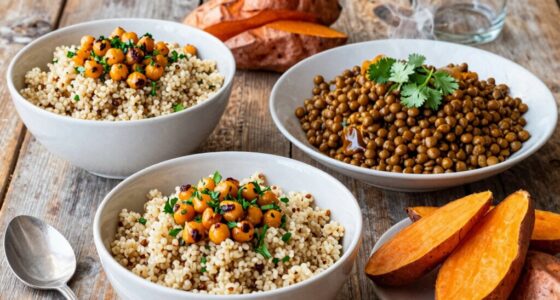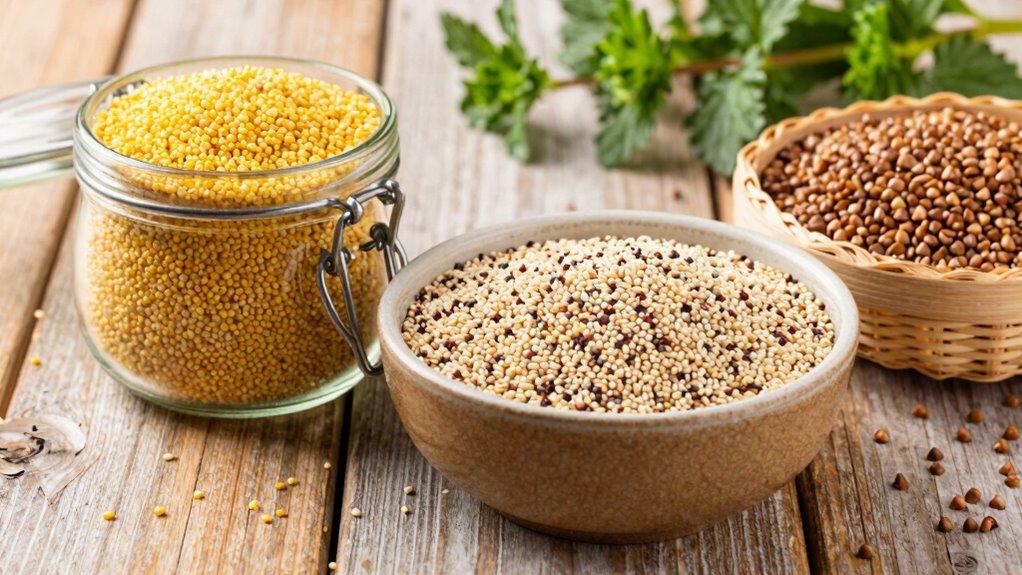
Choosing gluten-free ancient grains like quinoa, millet, and teff can boost your diet with rich flavors and essential nutrients like fiber, vitamins, and minerals. These versatile grains are easy to prepare and can be used in salads, porridges, or baked goods, making your meals more wholesome and diverse. Many are sustainably grown, supporting eco-friendly choices. Keep exploring to discover simple swaps and tasty recipes that keep your healthy eating exciting and satisfying.

Get health and wellness essentials delivered free with Prime
- Fast, free delivery on millions of items
- Prime Video, Amazon Music and more included
- Member-only deals all year
Key Takeaways
- Incorporate ancient grains like quinoa, millet, amaranth, and teff as nutritious, gluten-free alternatives to traditional grains.
- Use versatile cooking methods to prepare grains for salads, porridges, baked goods, and side dishes.
- Substituting traditional grains with gluten-free options enhances meal variety and boosts nutritional value.
- Many ancient grains are easy to cook and environmentally sustainable, supporting healthy and eco-friendly diets.
- Experimenting with these grains promotes diverse, wholesome, and minimally processed meals for everyday health.
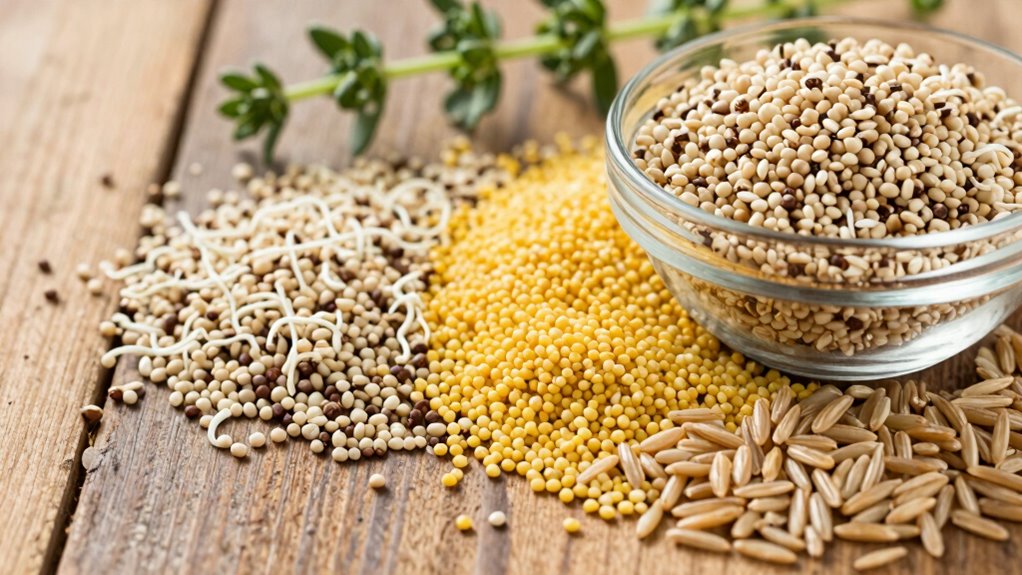
If you’re looking to diversify your diet or manage gluten sensitivity, exploring gluten-free grains is a great place to start. These grains open up new culinary possibilities while offering nutritional benefits that can enhance your daily meals. Among the most popular options are ancient grains, which have been cultivated for thousands of years and are known for their rich flavors and dense nutrient profiles. They include varieties like quinoa, millet, amaranth, and teff, each bringing unique textures and tastes to your table. Incorporating these grains into your diet isn’t just about avoiding gluten — it’s about enriching your meals with wholesome, minimally processed foods that provide fiber, vitamins, and minerals.
Using ancient grains as grain substitutions can significantly improve your overall diet. For example, swapping out traditional wheat for quinoa in salads or breakfast bowls adds a nutty flavor and boosts your protein intake. Millet can serve as a rice alternative, perfect for stuffing vegetables or making porridge. Amaranth, with its slightly sweet taste, works well in baked goods or as a thickener in soups. Teff, being tiny but nutrient-dense, is excellent for making gluten-free bread or injera, a traditional Ethiopian flatbread. These substitutions are not only healthful but also introduce a variety of textures and flavors that can make your meals more interesting.
When choosing gluten-free grains, consider their versatility in your kitchen. Many ancient grains are easy to cook and adapt well to different recipes. Quinoa, for instance, cooks quickly and can be used in salads, as a side dish, or even as a breakfast cereal. Millet can be cooked much like rice and flavored with herbs or spices to suit your taste. Amaranth can be popped like popcorn or cooked into porridge, providing a unique texture. Teff flour can be used in baking to create gluten-free bread, pancakes, or muffins. Incorporating sustainable grains supports a more environmentally friendly diet, as many of these grains are grown with fewer resources and have lower environmental impacts than some conventional grains. By experimenting with these grains, you’ll find countless ways to replace wheat and other gluten-containing grains, making your diet more diverse and nutritious.
Additionally, choosing ancient grains that are less processed supports a more sustainable and environmentally friendly diet. Many of these grains are grown with fewer resources and have lower environmental impacts than some conventional grains. They also tend to be less processed, preserving more nutrients and offering a more natural choice. As you explore gluten-free grains, you’ll discover that they’re not only practical substitutes but also a way to enjoy delicious, healthful meals every day. With a bit of experimentation, you’ll find that embracing ancient grains and grain substitutions can transform your eating habits into a more vibrant, nourishing experience.
As an affiliate, we earn on qualifying purchases.
Frequently Asked Questions
Are Gluten-Free Grains Suitable for All Types of Diets?
Gluten-free grains are generally suitable for most diets, especially for those with gluten sensitivities or celiac disease. They promote gluten free farming and support grain diversity, which benefits overall health. However, individual dietary needs vary, so it’s vital to verify ingredients and consult a healthcare professional if you have specific health concerns. Incorporating a variety of gluten-free grains helps ensure balanced nutrition and broadens your dietary options.
How Do Gluten-Free Grains Compare Nutritionally to Wheat?
Gluten-free grains generally differ nutritionally from wheat, often offering more fiber and essential nutrients, though this varies by grain. Nutritional differences depend greatly on how the grains are processed—whole grains retain more nutrients, while refined options may lose some. You’ll find that gluten-free grains can be a healthy alternative, providing crucial nutrients without gluten, but always check processing details to guarantee you’re getting the most nutritional benefit.
Can Gluten-Free Grains Help With Gluten Intolerance Symptoms?
Yes, gluten-free grains can help with gluten intolerance symptoms. When you switch to grains like rice, quinoa, or millet, you avoid gluten that triggers your symptoms. This often leads to symptom relief, such as reduced bloating, stomach pain, and fatigue. Incorporating these grains into your diet guarantees you still get essential nutrients while managing gluten intolerance effectively. Just be sure to choose certified gluten-free options to avoid cross-contamination.
Are Gluten-Free Grains More Expensive Than Regular Grains?
Yes, gluten-free grains are often more expensive than regular grains. Limited availability and specialized production processes drive up costs. However, you can find affordable options by shopping at stores that mass-produce gluten-free products or buy in bulk. Look for sales and local markets to save money. While they might cost more initially, these strategies help you enjoy gluten-free options without overspending.
How Should Gluten-Free Grains Be Stored for Freshness?
Did you know that properly stored gluten-free grains can last up to a year? To keep them fresh, use airtight containers and store them in a cool, dark place. Avoid humidity and direct sunlight, which can shorten their shelf life. For longer storage, consider refrigeration or freezing. These storage methods help maintain quality, flavor, and nutritional value, ensuring your grains stay fresh and delicious for as long as possible.
As an affiliate, we earn on qualifying purchases.
Conclusion
Now that you’re familiar with these gluten-free grains, you’re equipped to make healthier, more varied choices for your daily meals. Think of it as your modern-day pantry’s secret weapon, turning everyday cooking into a culinary adventure, much like a knight wielding a trusty sword. Embrace these grains, experiment with recipes, and enjoy the benefits of a balanced, gluten-free diet. Your taste buds and your body will thank you—no need for a magic wand, just your newfound knowledge!
As an affiliate, we earn on qualifying purchases.
As an affiliate, we earn on qualifying purchases.
Fall Picks
fall essentials
As an affiliate, we earn on qualifying purchases.