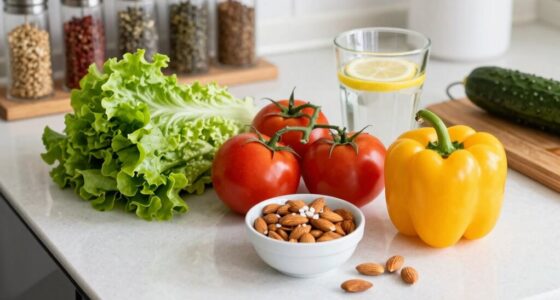
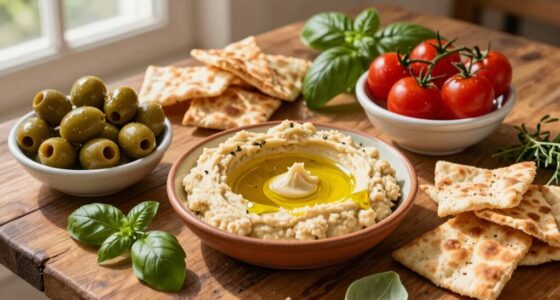
Starting the Mediterranean diet doesn’t have to be stressful. Focus on small, simple changes like swapping processed snacks for nuts or adding extra vegetables to your meals. Use olive oil, choose fresh produce, whole grains, and lean proteins like fish or chicken. Incorporate these gradually into your routine to avoid feeling overwhelmed. With time, these habits become natural. If you want straightforward tips and tasty ideas to get started effortlessly, you’ll find plenty more helpful guidance ahead.

Get health and wellness essentials delivered free — and shop member deals
- Fast, free delivery on millions of items
- Access to Prime Big Deal Days deals on October 6–7
- Prime Video, Amazon Music and more included
Key Takeaways
- Start with small, manageable changes like swapping processed snacks for nuts, fruits, or olives.
- Focus on simple, fresh foods such as vegetables, whole grains, and healthy fats like olive oil.
- Plan easy meals using traditional ingredients like grilled fish, salads, and whole grain wraps.
- Prioritize gradual habit-building and mindful portion sizes to avoid overwhelm.
- Maintain variety and celebrate small victories to stay motivated long-term.
As an affiliate, we earn on qualifying purchases.
How to Start the Mediterranean Diet Without Stress
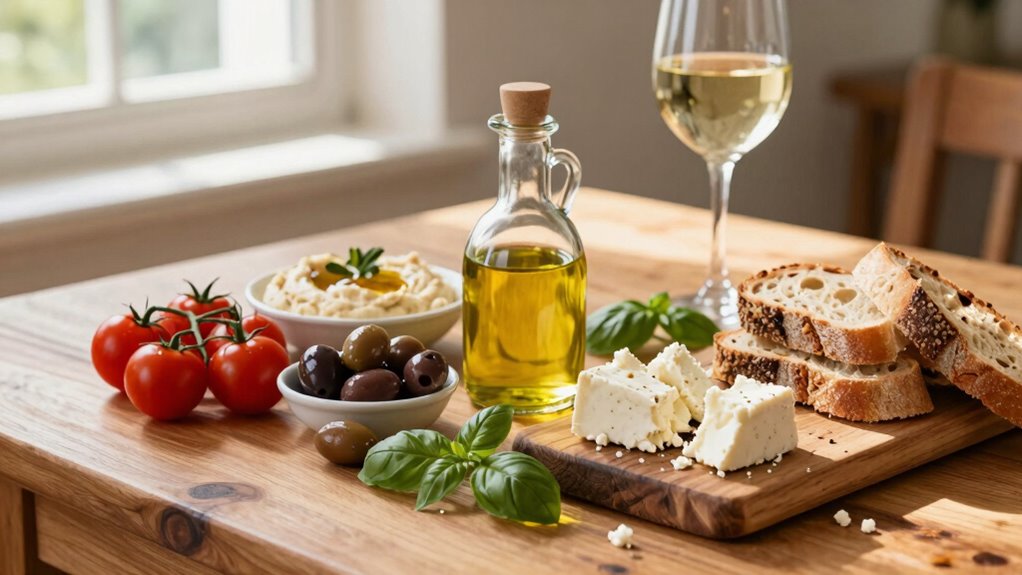
Starting the Mediterranean diet doesn’t have to feel overwhelming. Focus on simple changes, like swapping out processed snacks for Mediterranean snacks such as nuts, olives, or fresh fruit. These options keep your energy steady and satisfy cravings without guilt. Meal prepping is your best friend here; dedicate a little time each week to prepare healthy, flavorful ingredients. Chop vegetables, portion out nuts, or make a big batch of hummus—this makes quick snacks and meals more accessible. Remember, you don’t need to overhaul your entire diet overnight. Small, consistent steps—like choosing whole grains or adding extra vegetables—build momentum. Over time, these habits become second nature, making your progression to the Mediterranean lifestyle smooth and stress-free. Incorporating healthy eating habits can further support your journey and make sticking to the diet easier. Additionally, understanding the importance of nutrient-dense foods can help you make smarter choices that align with the Mediterranean way of eating. Paying attention to proper nutrition can enhance your overall health and make your transition more manageable. Emphasizing balanced meals can also help you maintain energy and satisfaction throughout your day, especially when you focus on incorporating whole grains and healthy fats into your diet.
As an affiliate, we earn on qualifying purchases.
What Is the Mediterranean Diet and Why Is It Healthy?
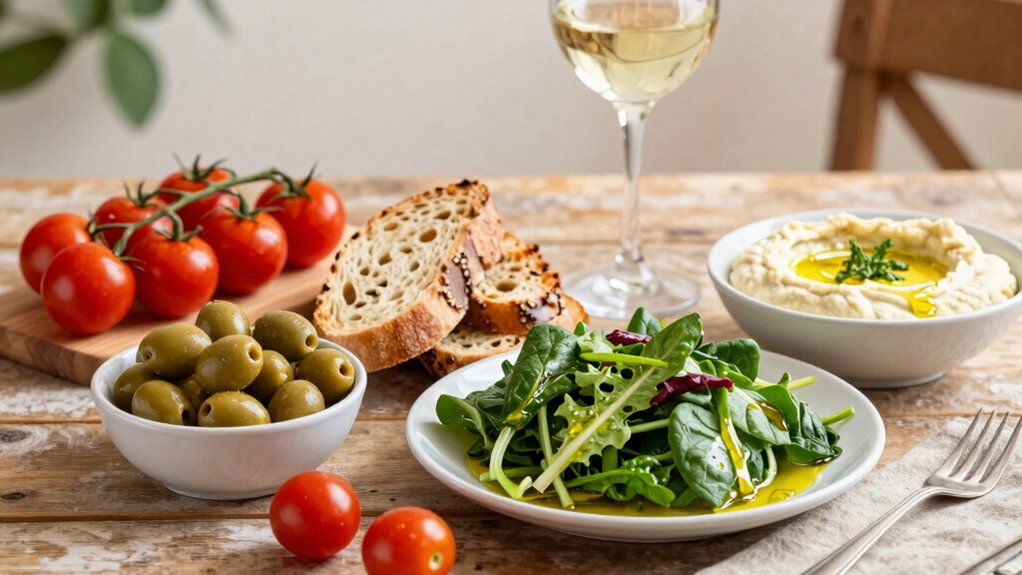
The Mediterranean diet is a way of eating inspired by the traditional cuisines of countries bordering the Mediterranean Sea, such as Greece, Italy, and Spain. It reflects Mediterranean culture and ancient traditions that emphasize fresh, whole foods. This diet is rich in fruits, vegetables, whole grains, nuts, and healthy fats like olive oil. It also includes moderate amounts of fish, poultry, dairy, and red wine. The health benefits come from these nutrient-dense ingredients, which support heart health, weight management, and overall well-being. By embracing this way of eating, you align with centuries-old practices that promote longevity and vitality. The Mediterranean diet isn’t just a trend; it’s a proven approach rooted in time-tested traditions.
As an affiliate, we earn on qualifying purchases.
Essential Guidelines for Beginners to Eat Mediterranean-Style
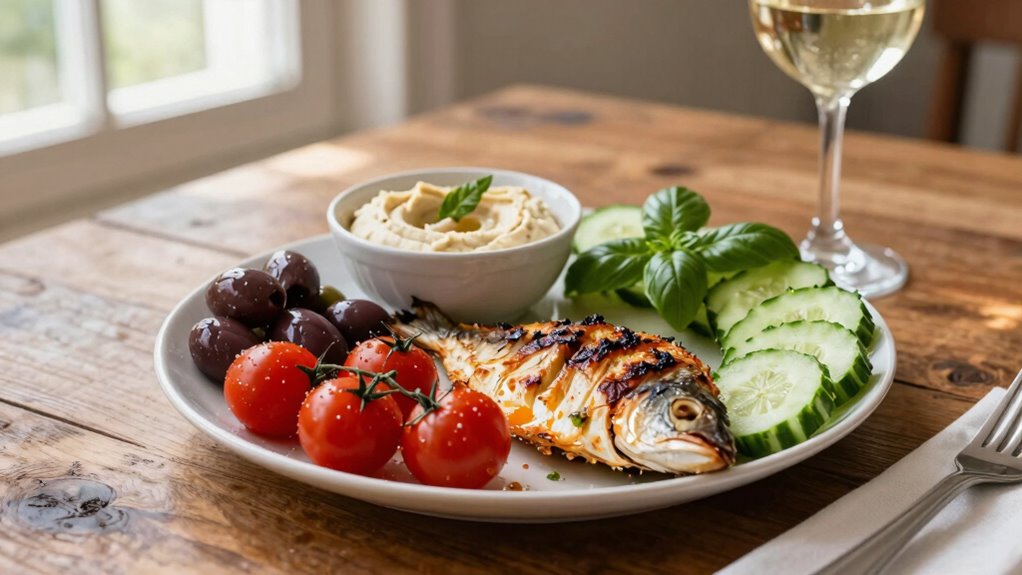
To successfully embrace a Mediterranean-style diet, it’s important to focus on incorporating its core food groups into your daily routine. Start by understanding the role of Mediterranean farming, which emphasizes fresh, seasonal produce and sustainable practices that support local communities. This approach influences the vibrant flavors and quality of the ingredients you consume. Additionally, embrace cultural food traditions by preparing meals that honor Mediterranean customs, such as using olive oil as your primary fat and including plenty of vegetables, legumes, and whole grains. Keep meals simple and focus on fresh, minimally processed foods. By respecting these traditions and supporting local farming, you’ll naturally develop healthier eating habits that align with the Mediterranean lifestyle. Incorporating biodiversity into your diet can also enhance the variety and nutritional value of your meals, encouraging the inclusion of a diverse range of native plants and animals. Recognizing the importance of sustainable farming can help you make environmentally conscious choices that support the health of our planet. Understanding the benefits of local sourcing can further deepen your connection to the Mediterranean way of eating.
As an affiliate, we earn on qualifying purchases.
Top Mediterranean Foods You Should Include in Your Diet
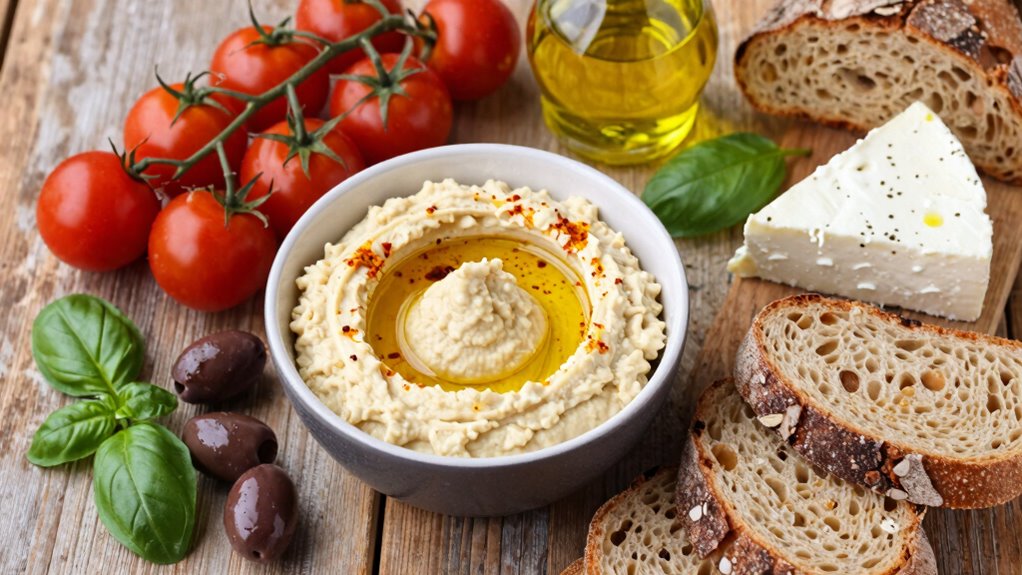
You should prioritize fresh vegetables and fruits in your meals—they’re packed with nutrients and flavor. Incorporate healthy whole grains like oats and brown rice for sustained energy throughout the day. These foods form the foundation of a true Mediterranean diet and boost your overall health. Additionally, including honest product reviews can help you choose quality ingredients and kitchen tools to support your healthy eating journey. Incorporating natural health practices, such as herbal remedies, can further enhance your wellness routine. Learning about smart investment strategies, like IRA rollovers and gold investments, can also help you build a resilient financial future to complement your healthy lifestyle. To elevate your kitchen setup, exploring modern bathroom fixtures can inspire you to create a more functional and stylish space for meal prep and relaxation. Being mindful of electric scooter safety tips can also ensure your outdoor activities remain fun and accident-free.
Fresh Vegetables and Fruits
- Tomatoes, cucumbers, and bell peppers for crunch and hydration
- Berries and citrus fruits for antioxidants and vitamin C
- Leafy greens like spinach and kale for fiber and minerals
- Melons and stone fruits for hydration and natural sweetness
- Incorporating marine equipment tips can help you select the freshest produce, ensuring your meals are both nutritious and enjoyable.
- Paying attention to food safety practices can help prevent spoilage and preserve the nutrients in your produce.
Healthy Whole Grains
Incorporating healthy whole grains into your Mediterranean diet is a simple way to boost fiber, nutrients, and energy levels. Ancient grains like farro, bulgur, and barley are excellent choices, offering rich flavors and dense nutrition. Whole cereals such as oats and brown rice also fit perfectly, providing sustained energy and heart health benefits. These grains are minimally processed, so they retain essential nutrients and fiber that support digestion and help you feel full longer. Adding smart home devices can help you monitor and manage your diet more effectively by tracking your nutritional intake. Incorporating whole grains can also promote better blood sugar regulation and overall metabolic health. Switch out refined grains for these options in your meals—try a hearty farro salad or a comforting bowl of brown rice. Including a variety of whole grains keeps your diet interesting while ensuring you get crucial nutrients that support overall health and vigor.
Simple Mediterranean Meal Ideas and Recipes for Beginners

Starting with simple, flavorful ingredients makes it easy to enjoy the Mediterranean diet even if you’re new to it. You can whip up quick and satisfying meals using staples like olive oil, fresh herbs, and whole grains. For snacks, try Mediterranean options like hummus with veggie sticks or olives and nuts. These are great for meal prep tips, helping you stay on track throughout your busy week. Easy recipes include a Greek salad with feta, grilled fish with lemon, or whole grain pita wraps filled with veggies and lean protein. Focus on fresh, wholesome ingredients to keep it stress-free and delicious. Incorporating cooking science principles can help you better understand ingredient interactions and improve your meal results. Understanding nutritional balance can further enhance your meal planning and promote overall health. By paying attention to ingredient quality, you can ensure your meals are both nutritious and flavorful. With these ideas, you’ll find sticking to the Mediterranean way both simple and enjoyable as you build healthy habits.
How to Add More Fruits, Vegetables, and Whole Grains

Adding more fruits, vegetables, and whole grains to your diet can be simple and enjoyable when you incorporate them into your daily routines. Start by choosing seasonal produce, which is fresh, flavorful, and often more affordable. Incorporate fruits into breakfast with yogurt or oatmeal, and try fruit pairing for snacks—pair apples with almond butter or berries with cheese. Fill half your plate with colorful vegetables at lunch and dinner to boost nutrition and variety. Swap white rice or pasta for whole grains like quinoa, bulgur, or farro to add fiber and nutrients. Keep pre-chopped vegetables handy for quick salads or stir-fries, making it easier to include more plant-based foods each day. These small shifts make your diet richer and more aligned with the Mediterranean way of eating.
Tips for Dining Out and Attending Social Events on the Mediterranean Diet
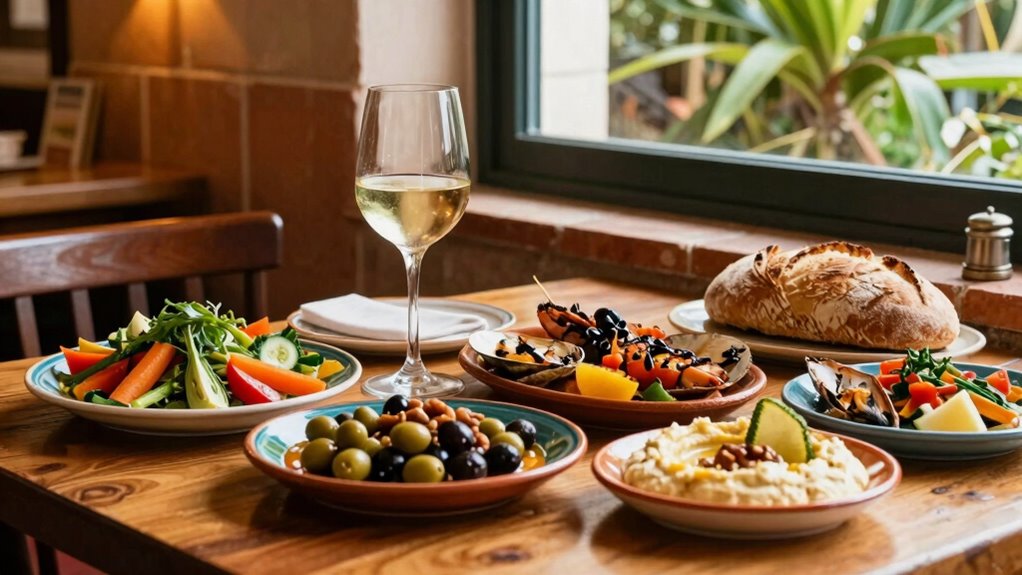
When dining out or attending social events, you can make healthier choices by carefully steering menus and selecting Mediterranean-inspired dishes. It’s smart to ask about ingredients or choose dishes that focus on vegetables, lean proteins, and healthy fats. With some planning and confidence, you can enjoy social moments without compromising your diet goals.
Navigating Restaurant Menus
Finding your way through restaurant menus on the Mediterranean diet can seem challenging at first, but with a few simple strategies, you can make healthy choices without sacrificing social enjoyment. Start by looking for dishes that highlight Mediterranean spices and focus on traditional cooking methods. Don’t hesitate to ask for modifications to incorporate more vegetables, whole grains, and healthy fats. When in doubt, opt for grilled, baked, or steamed options instead of fried foods.
- Scan menus for Mediterranean-inspired appetizers or salads
- Request olive oil and lemon instead of creamy dressings
- Choose lean proteins like fish or chicken, prepared with herbs and spices
- Avoid heavy sauces or processed ingredients, favoring fresh, whole foods
Smart Social Strategies
Managing social events while sticking to the Mediterranean diet can be easier than you think if you plan ahead and communicate your preferences clearly. Embrace Mediterranean traditions by suggesting restaurants that focus on fresh vegetables, lean proteins, and whole grains—key components of social dining with a healthy twist. When attending events, don’t hesitate to ask hosts to include Mediterranean-inspired dishes or bring your own healthy options. Be confident about your choices and explain your dietary goals without feeling awkward. Remember, social dining is about connection, not perfection. By sharing your preferences and selecting venues that align with the Mediterranean lifestyle, you’ll enjoy the celebration without compromising your health goals. Staying true to your diet while participating in social events becomes simple with a little preparation. Incorporating small wood stoves into your home can provide an efficient and cozy way to enjoy healthy, homemade meals that support your Mediterranean lifestyle.
Common Mistakes to Avoid When Starting the Mediterranean Diet
Starting the Mediterranean diet can be exciting, but it’s easy to fall into common pitfalls that might hinder your progress. Many people encounter Mediterranean misconceptions, believing it’s just about eating olive oil or pasta all day. These diet misconceptions can lead to overeating or ignoring balance. To avoid these mistakes:
- Expect quick results; lasting change takes time.
- Overlook portion sizes, thinking more is better.
- Rely on processed “Mediterranean-style” foods instead of whole, fresh ingredients.
- Forget that variety is key—sticking to a limited range of foods can sabotage your success.
Recognizing these pitfalls helps you stay on track and truly enjoy the health benefits of the Mediterranean diet without falling for diet misconceptions.
Staying Motivated and Making the Mediterranean Diet a Sustainable Lifestyle
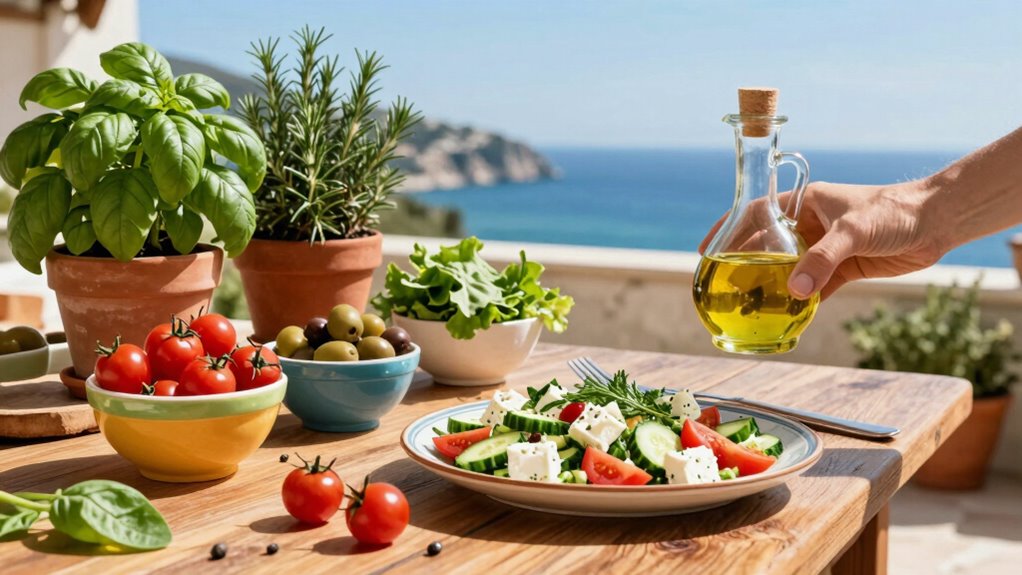
Maintaining motivation is key when adopting the Mediterranean diet as a lasting lifestyle, especially after overcoming common pitfalls. To stay on track, focus on mindful motivation—reminding yourself of your health goals and the joy of nourishing your body. Celebrate small victories to reinforce positive habits and build confidence. Making sustainable habits involves integrating the diet into your daily routine in a realistic way, rather than forcing drastic changes. Keep variety in your meals to prevent boredom, and be flexible when plans shift. Visualize long-term benefits, like increased energy and better health, to stay inspired. Remember, balanced eating habits are essential for lasting success. By cultivating mindful motivation and forming sustainable habits, you’ll find the Mediterranean lifestyle becomes natural and enjoyable over time.
Frequently Asked Questions
Can I Follow the Mediterranean Diet if I Have Food Allergies?
Yes, you can follow the Mediterranean diet if you have food allergies. Just look for allergy-friendly options and safe ingredient substitutes. Focus on fresh fruits, vegetables, lean proteins, and healthy fats that suit your allergies. Be mindful of common allergens like nuts, dairy, or seafood, and choose alternatives that fit your dietary needs. This way, you enjoy the diet’s benefits without risking allergic reactions.
How Does the Mediterranean Diet Compare to Other Popular Diets?
You’ll find the Mediterranean diet offers great diet diversity, emphasizing fruits, vegetables, whole grains, and healthy fats, making it more flexible than some diets. Its focus on cultural authenticity means it celebrates traditional recipes and lifestyle habits. Compared to others like keto or paleo, it’s less restrictive and easier to sustain long-term. This balance helps you enjoy a variety of foods while supporting overall health, making it a practical, enjoyable choice.
Are Supplements Necessary When Eating a Mediterranean-Style Diet?
Supplements aren’t usually your safety net when you’re eating a Mediterranean-style diet, but they can fill nutritional gaps if your meals lack variety. Think of supplements as the seasoning that enhances your dish—they’re not always necessary, but sometimes they help guarantee you get enough nutrients like vitamin D or omega-3s. Listen to your body and consult with a healthcare professional to determine if supplements are right for you.
How Flexible Is the Mediterranean Diet for Vegetarian or Vegan Lifestyles?
The Mediterranean diet is quite flexible for vegetarian or vegan lifestyles. You can incorporate plant-based substitutions like beans, lentils, and tofu, making it easy to enjoy traditional dishes without meat. Many vegan-friendly options, such as nuts, seeds, and whole grains, fit seamlessly into the diet. You’ll find plenty of delicious, nutrient-rich choices that align with your plant-based preferences, ensuring you stay satisfied and healthy while following this flexible, heart-healthy eating pattern.
What Are Some Budget-Friendly Tips for Mediterranean Meal Planning?
Think of your meal plan as a garden, where affordable ingredients are your seeds. To save money, focus on staples like beans, lentils, seasonal produce, and whole grains, which grow easily and cheaply. Embrace meal prep strategies—batch cooking and freezing—to make the most of your ingredients. This way, you nurture a thriving, budget-friendly Mediterranean garden, ensuring fresh, healthy meals without breaking the bank.
Conclusion
So, there you have it—dive into the Mediterranean lifestyle, where your plate is a vibrant canvas and every bite is a step toward health. Forget about stressing over perfect meals; just imagine your dinner plate as a Mediterranean sunset—beautiful and welcoming. With a little practice, you’ll be sailing smoothly on this flavorful sea. Before long, you’ll be the life of the party, tossing olives and feta like a seasoned local. Cheers to your stress-free, delicious journey!
Fall Picks
fall essentials
As an affiliate, we earn on qualifying purchases.