
If you’re torn between frozen and fresh fruit costs, frozen options are usually more budget-friendly and practical for long-term storage. They’re often cheaper per pound, have a longer shelf life, and help reduce waste since they stay good for months. Frozen fruit is also processed at peak ripeness, so it preserves nutrients well. Keep exploring to discover more about how each choice can fit your budget and needs effectively.

Get health and wellness essentials delivered free — and shop member deals
- Fast, free delivery on millions of items
- Access to Prime Big Deal Days deals on October 6–7
- Prime Video, Amazon Music and more included
Key Takeaways
- Frozen fruit is often more affordable per pound due to bulk purchasing and longer shelf life.
- Freezing preserves nutrients, making frozen fruit nutritionally comparable or superior to fresh.
- Frozen options reduce waste and spoilage costs, offering better overall cost-effectiveness.
- Fresh fruit prices fluctuate seasonally, while frozen fruit provides consistent pricing year-round.
- Convenience and practicality of frozen fruit support budget-friendly, versatile usage without spoilage concerns.

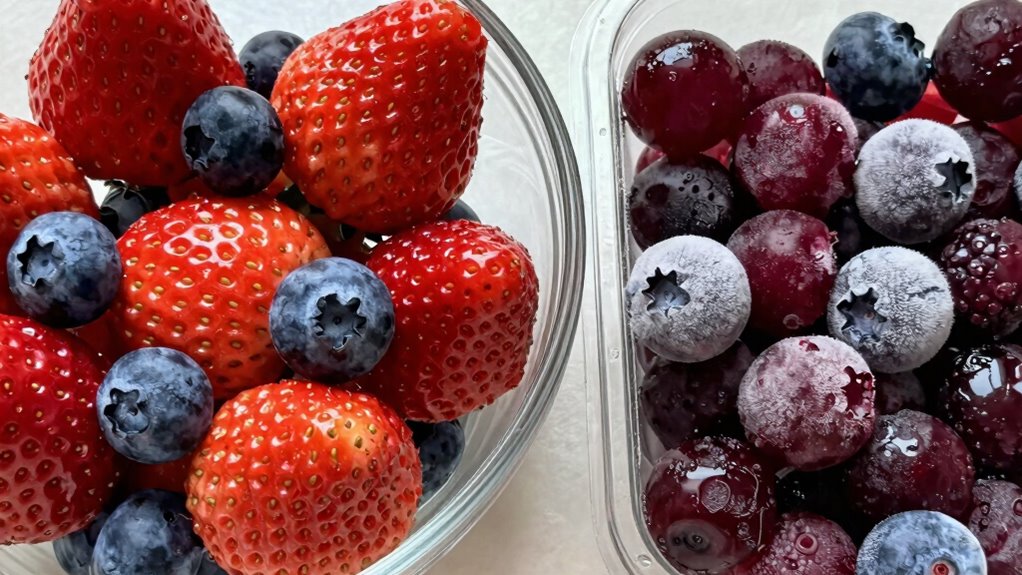
Have you ever wondered whether frozen fruit is more affordable than fresh? It’s a common question, especially when you’re trying to stretch your grocery budget without sacrificing nutrition. The truth is, the cost difference hinges on a few factors, including nutritional differences and storage methods. Frozen fruit often comes at a lower price per pound, partly because it’s processed at peak ripeness, which helps preserve its nutrients and reduces waste. Fresh fruit, on the other hand, can be more expensive due to seasonal fluctuations, transportation costs, and shorter shelf life. When you compare prices, you might find that frozen options allow you to buy in bulk and store for longer periods, making them more economical. Additionally, nutritional stability is maintained through flash-freezing, ensuring you get the same health benefits from frozen as from fresh. Nutritional differences are often a concern. Some people assume fresh fruit is always more nutritious, but that’s not necessarily true. Frozen fruit is typically flash-frozen soon after harvesting, locking in vitamins and minerals. In contrast, fresh fruit can lose some nutrients during transportation and storage, especially if it’s been sitting on shelves for days. So, in many cases, the nutritional content of frozen fruit is comparable, if not superior, to that of fresh fruit. This means you’re not sacrificing health benefits when choosing frozen. It’s a practical way to enjoy a variety of fruits year-round without worry about spoilage or nutrient loss. Proper storage methods also help maintain fruit quality and reduce waste, making frozen options even more cost-effective. The preservation process used in freezing further ensures minimal nutrient degradation. When considering cost efficiency, frozen fruit stands out because it minimizes waste and allows for flexible purchasing habits. Storage methods also play an essential role in the cost comparison. Fresh fruit often requires careful handling and quick consumption to avoid spoilage, which can lead to waste and additional costs. If you don’t finish it promptly, it may go bad, forcing you to buy more frequently. Frozen fruit, however, can be stored for months in your freezer with minimal quality loss. This long shelf life reduces waste and enables you to buy in larger quantities at a lower unit cost. Plus, freezing preserves the fruit’s texture and flavor, so it’s just as versatile for smoothies, baking, or snacking. Ultimately, frozen fruit tends to be more budget-friendly, especially when you factor in the ability to buy in bulk, limit waste, and enjoy consistent quality. Both options have their merits, but if cost and convenience are your main concerns, frozen fruit offers a smart choice without compromising nutrition. By understanding these differences in storage methods and nutritional stability, you can confidently select the best option for your needs and wallet.
As an affiliate, we earn on qualifying purchases.
Frequently Asked Questions
How Does Storage Duration Differ Between Frozen and Fresh Fruit?
Frozen fruit typically lasts much longer than fresh fruit due to better storage efficiency, often staying good for months. Fresh fruit, however, has a shorter storage duration because of higher spoilage rates, usually only lasting a week or two. Your choice depends on how long you need the fruit to stay fresh—frozen provides extended storage, reducing spoilage concerns, while fresh fruit offers immediate consumption.
Are There Any Nutritional Differences in Frozen Versus Fresh Fruit?
Imagine biting into a sun-kissed berry—whether fresh or frozen, their nutrients are still a treasure chest. Frozen fruit often retains more nutrients because it’s flash-frozen at peak ripeness, locking in flavor and vitamins. Seasonal availability influences food safety, ensuring you get the freshest, safest options. While fresh fruit may lose some nutrients over time, both forms offer health benefits, making your choice more about convenience and taste than nutritional loss.
Which Type of Fruit Is Better for Smoothies—Frozen or Fresh?
Frozen fruit is better for smoothies because it preserves flavor and maintains a thick, icy texture. You’ll find that frozen options often keep their freshness longer, ensuring consistent taste and texture. While fresh fruit offers vibrant flavor and crispness, it can make your smoothie watery if not used quickly. So, for a creamy, chilled beverage with great flavor, go for frozen fruit—you’ll love the texture and convenience.
How Does Packaging Affect the Cost of Frozen and Fresh Fruit?
Packaging considerably impacts fruit costs—frozen fruit often benefits from innovations like vacuum-sealed or resealable packs, which reduce spoilage and extend shelf life. Fresh fruit packaging, with clear labeling transparency, can be pricier due to more delicate handling and branding efforts. Notably, studies show that packaging innovations can cut costs by up to 15%, making both options more affordable while also influencing your purchasing choices.
Can Frozen Fruit Be Used as a Substitute for Fresh in Baking?
Yes, you can use frozen fruit as a substitute for fresh in baking, but keep in mind flavor preservation and texture differences. Frozen fruit tends to have a softer texture and may release more moisture, which can affect your baked goods. To minimize impact, drain excess liquid and adjust baking times if needed. While flavor remains fairly preserved, the texture difference might slightly alter the final product’s consistency.
As an affiliate, we earn on qualifying purchases.
Conclusion
So, next time you’re choosing between frozen and fresh fruit, remember that the cost difference isn’t just about dollars—it’s about timing and intention. Sometimes, a bag of frozen berries can be just as good as fresh, especially when life’s busy moments sneak up on you. It’s funny how a simple choice can mirror life’s surprises—what’s frozen today might just be perfectly ripe tomorrow. Embrace the convenience, and trust that good things often come in unexpected ways.
As an affiliate, we earn on qualifying purchases.
As an affiliate, we earn on qualifying purchases.
Fall Picks
fall essentials
As an affiliate, we earn on qualifying purchases.