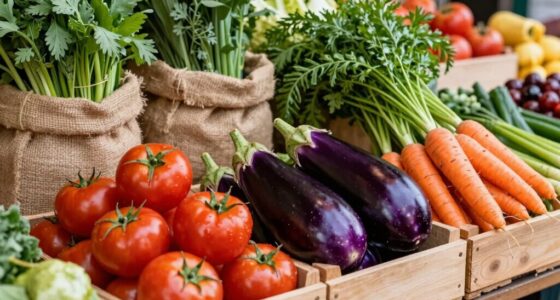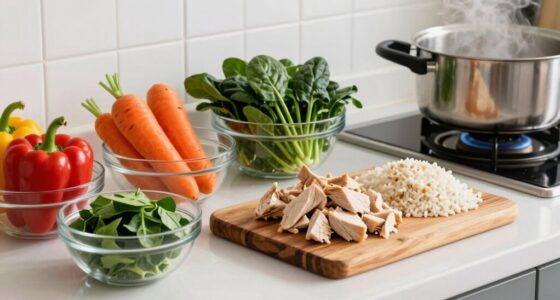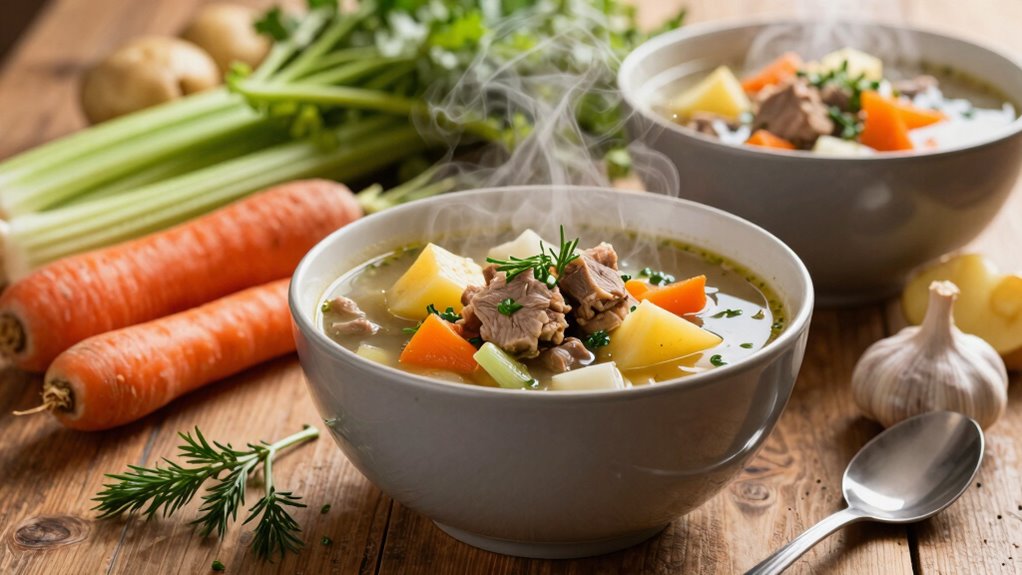

For affordable soups and stews, gather pantry staples like dried beans, rice, pasta, and vegetable broth. Include seasonal or frozen vegetables like carrots, potatoes, and onions for flavor and cost savings. Add plant-based proteins such as lentils or tofu for filling meals. Enhance taste with herbs and spices, and consider using grains for extra satisfaction. Keep versatile ingredients on hand to create hearty, budget-friendly dishes—keep exploring for more tips to maximize flavor and savings.
Key Takeaways
- Prioritize in-season vegetables and frozen produce to save money and maximize flavor in soups and stews.
- Stock pantry staples like dried beans, grains, and pasta to create filling, budget-friendly meals.
- Use homemade or vegetable broth for rich flavor without added cost.
- Incorporate affordable protein sources like lentils, chickpeas, tofu, or tempeh.
- Keep herbs and spices on hand to enhance flavor without significantly increasing expenses.
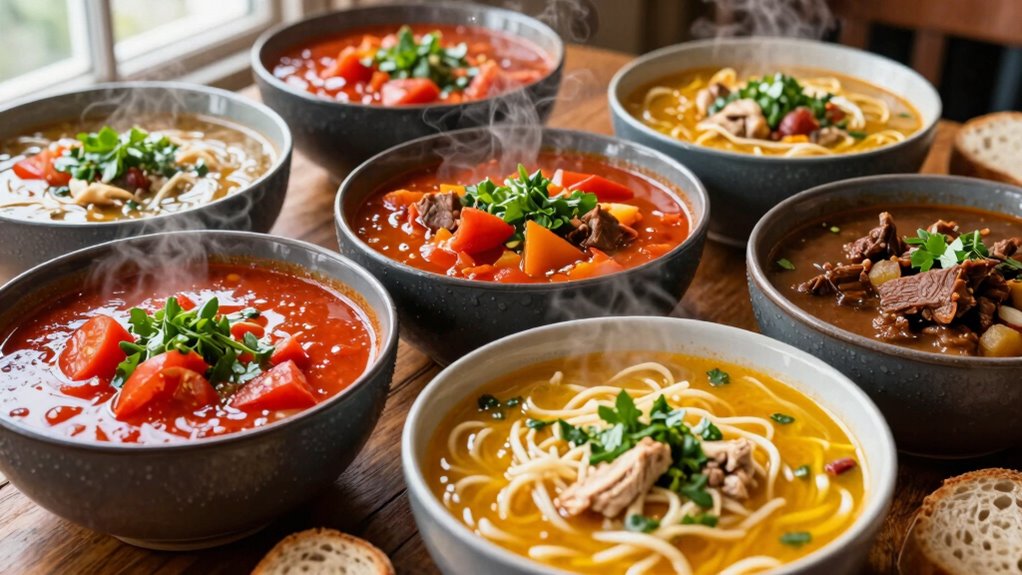
Have you ever wondered why soups and stews have been staples in so many cultures for centuries? It’s because they’re versatile, affordable, and packed with flavor. When you’re planning your next grocery run, knowing what ingredients to stock can make preparing these comforting dishes both easy and budget-friendly. Start with a good vegetable broth—it’s the backbone of many soups and stews. Vegetable broth is inexpensive, lasts long in the fridge or freezer, and adds rich flavor without extra cost. It also serves as a great base if you’re aiming for a plant-based meal or want to cut down on meat expenses. Stock up on cartons or make your own at home using vegetable scraps; it’s simple, cost-effective, and gives you control over the ingredients. Making your own broth is a great way to reduce waste and customize flavors.
Beyond broth, consider meat alternatives to keep your dishes hearty without breaking the bank. Lentils, chickpeas, and beans are excellent choices—they’re cheap, filling, and add protein to your meals. Tofu or tempeh can also stand in for meat in stews, offering texture and flavor when seasoned properly. These options are not only budget-friendly but also versatile, allowing you to switch up your recipes easily. For example, lentil and vegetable stew becomes a nourishing, inexpensive meal with just a few pantry staples. Keep dried beans in your pantry—they’re cost-effective and last for years, making them perfect for spontaneous soup or stew ideas. pantry staples are essential for quick and budget-conscious meal prep. Incorporating cost-effective ingredients like these helps maximize flavor while minimizing expenses. Additionally, understanding nutritional value of these ingredients can help you create balanced, healthy meals on a budget.
A helpful tip is to explore sustainable shopping practices, such as choosing bulk items or local produce, which can further reduce costs and environmental impact. When shopping, focus on in-season vegetables—carrots, potatoes, onions, and celery—because they tend to be less expensive and add depth to your dishes. Frozen vegetables are another smart choice—they’re often cheaper than fresh, last longer, and retain most of their nutrients. Incorporating grains like rice, barley, or pasta can also help you stretch your ingredients further, making your meal more filling and economical. These ingredients soak up flavors and make your dish more satisfying. Additionally, storing herbs and spices properly can extend their shelf life, ensuring your spice rack stays well-stocked without frequent replacements. Lastly, don’t forget about herbs and spices—they’re small investments that deliver big flavor. With a well-stocked spice rack, you can transform simple ingredients into flavorful, satisfying meals. By choosing these affordable staples—vegetable broth, meat alternatives like beans and tofu, seasonal produce, grains, and spices—you set yourself up for a week of delicious, budget-conscious soups and stews. Planning ahead with these ingredients will help you maximize flavor without overspending, making your next grocery run both smart and satisfying.

Pacific Foods Organic Vegetable Broth, Plant Based, 32 oz Carton
- Organic vegetable broth: Rich, plant-based flavor
- Versatile cooking base: Ideal for soups and sides
- Savory vegetable blend: Leeks, onions, garlic, carrots, celery, tomatoes
As an affiliate, we earn on qualifying purchases.
As an affiliate, we earn on qualifying purchases.
Frequently Asked Questions
Can I Make Soups and Stews Vegan or Vegetarian?
Yes, you can easily make soups and stews vegan or vegetarian. Use vegan substitutes like tofu, tempeh, or plant-based meat for added texture and flavor. Incorporate vegetarian protein sources such as beans, lentils, or chickpeas to boost nutrition. By swapping out animal products with these ingredients, you create hearty, delicious, and affordable vegan or vegetarian soups and stews that everyone will enjoy.
How Long Do Homemade Soups and Stews Typically Last?
Homemade soups and stews generally last 3 to 4 days in the fridge, thanks to proper soup storage. To extend their shelf life, store them in airtight containers and reheat thoroughly before eating. If you want to keep them longer, consider freezing; soups and stews can last 2 to 3 months in the freezer. Always check for signs of spoilage before consuming.
What Are Some Cost-Effective Ingredients for Soups and Stews?
You can make budget-friendly soups and stews using affordable protein options like beans, lentils, and eggs. Incorporate budget-friendly vegetables such as carrots, potatoes, onions, and frozen mixed vegetables to keep costs down. These ingredients are versatile, filling, and easy to find, making your meals nutritious and economical. By focusing on these affordable options, you’ll create hearty, delicious soups and stews without breaking the bank.
Are There Quick Recipes for Busy Weeknights?
Did you know that 60% of busy weeknights involve quick meal prep? To save time, try simple recipes like instant pot stews or one-pot soups. Use meal prep tips to chop ingredients ahead and keep substitutions in mind—swap frozen vegetables for fresh, or use pre-cooked beans. These tricks help you whip up hearty, affordable soups and stews fast, even on your busiest nights.
How Can I Store Leftovers to Maintain Flavor?
To preserve flavor, store leftovers in airtight containers and cool them quickly before refrigerating. Use freezing tips like labeling with dates and leaving some space for expansion if freezing for longer periods. When reheating, do so gently to preserve taste and texture. Proper storage guarantees your soups and stews stay flavorful, so you can enjoy them later without losing their rich taste or aroma.

Goya 16 Bean Soup Mix No. 1 Grade, 14 oz, 1 bag
- Kosher Certified: Suitable for kosher diets
As an affiliate, we earn on qualifying purchases.
As an affiliate, we earn on qualifying purchases.
Conclusion
Next time you shop, remember that affordable soups and stews are like a warm hug on a chilly day—comforting and budget-friendly. I once watched my friend turn a few simple ingredients into a hearty stew that fed her family for days, proving that with a little creativity, you don’t need to spend much to get a lot. So grab those affordable staples, and let your kitchen be your cozy, cost-effective haven.

365 by Whole Foods Market, Organic Extra Firm Tofu, 14 oz
- Brand: 365 by Whole Foods Market
- Product Type: Organic Extra Firm Tofu
- Size: 14 oz
As an affiliate, we earn on qualifying purchases.
As an affiliate, we earn on qualifying purchases.

Amazon Grocery, Mixed Vegetables, 12 Oz, Frozen
- Package Size: 12-ounce bag of mixed vegetables
- Preservative-Free: No preservatives or artificial ingredients
- Storage Instructions: Keep frozen
As an affiliate, we earn on qualifying purchases.
As an affiliate, we earn on qualifying purchases.