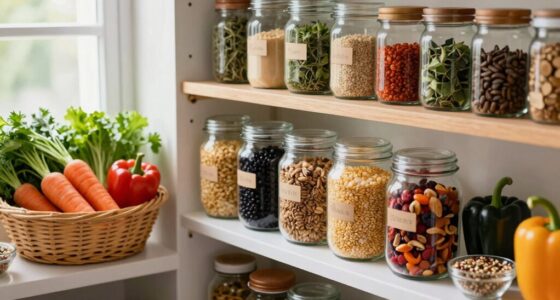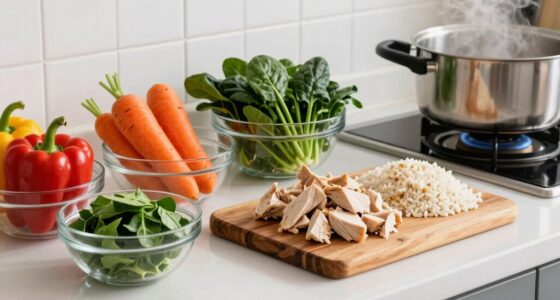
To lower grocery bills without sacrificing quality, focus on smart planning and strategic shopping. Create a weekly meal plan and stick to a precise shopping list, avoiding impulsive buys. Buy staples in bulk, compare prices, and shop during seasonal sales for fresher, cheaper produce. Use store brands and coupons to save more while maintaining good quality. Being organized and intentional is key—continue exploring ways to optimize your grocery shopping and save even more.

Get health and wellness essentials delivered free with Prime
- Fast, free delivery on millions of items
- Prime Video, Amazon Music and more included
- Member-only deals all year
Key Takeaways
- Plan meals and create a shopping list to avoid impulsive buys and reduce waste.
- Buy in bulk and store ingredients efficiently to lower costs without sacrificing quality.
- Use price comparison, seasonal produce, and store brands for smarter, cost-effective choices.
- Shop when not hungry, stick to your list, and leverage coupons and sales to save money.
- Be organized and strategic, aligning shopping with discounts and maximizing the use of ingredients.
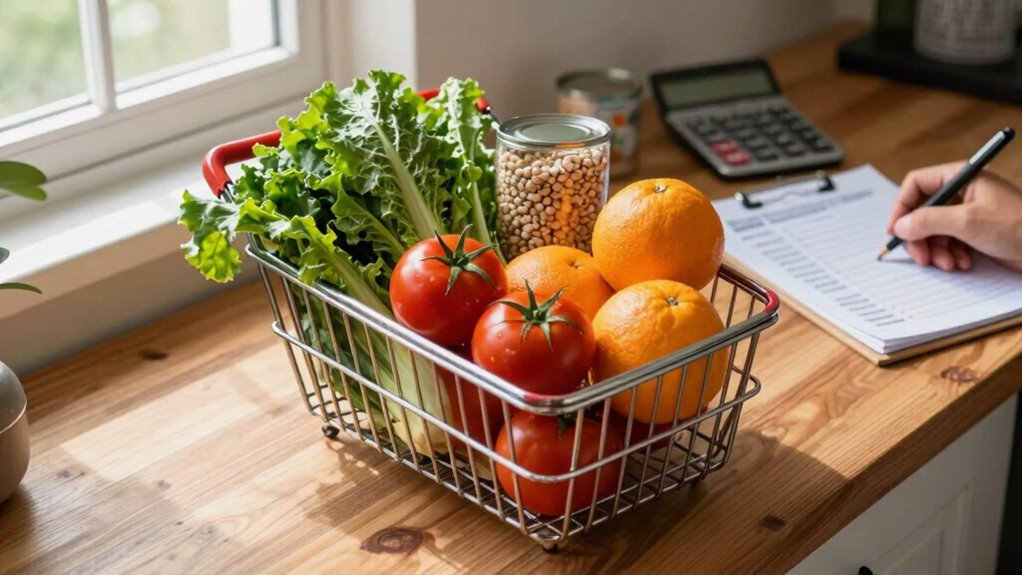
Cutting your grocery bills can seem challenging, but with a few strategic changes, you can save a significant amount each month. One of the most effective ways is to focus on meal planning. When you plan your meals ahead of time, you avoid impulsive buys and reduce waste. Take a little time each week to decide what you’ll eat, create a shopping list based on those meals, and stick to it. This way, you only buy what you need, which cuts down on unnecessary expenses. Meal planning also helps you take advantage of ingredients across multiple dishes, making your grocery trips more efficient and cost-effective. Incorporating cost-saving techniques can further enhance your ability to stay within budget without sacrificing quality.
Another powerful strategy is bulk buying. When you purchase staples like rice, beans, pasta, or frozen vegetables in larger quantities, you often get a better price per unit. Bulk items can be stored easily and used over time, reducing the frequency of shopping trips and saving money in the long run. Look for deals at warehouse stores or online bulk retailers, and compare prices to ensure you’re getting the best value. Just be mindful of expiration dates and storage space — only buy in bulk what you know you’ll use before it spoils or becomes outdated. Combining bulk buying with meal planning amplifies your savings, as you can prepare multiple meals around ingredients bought in larger quantities. Additionally, understanding price comparison techniques can help you identify the best deals and maximize your savings. Being aware of unit pricing can further empower you to make smarter purchasing decisions at the store. Moreover, staying informed about sales cycles can help you plan your shopping trips around discounts, further stretching your budget. Familiarizing yourself with seasonal produce options can also lead to significant savings and fresher ingredients.
You don’t need to sacrifice quality or enjoyment to lower your grocery bill. Instead, focus on smarter shopping habits. For instance, avoid shopping when you’re hungry, which tends to lead to impulse purchases of items you don’t need. Keep a list based on your meal plan and stick to it, resisting the temptation to buy extras that aren’t essential. Additionally, explore store brands, which often offer comparable quality at a lower price than name brands. Using coupons and taking advantage of sales can further reduce costs, especially when combined with your planned purchases. Being flexible with your meal choices allows you to adapt to available discounts and seasonal sales, making it easier to stay within budget. Remember, the key isn’t just buying cheaper food but making smarter, more intentional choices with your shopping and meal prep strategies. With a little effort, you can lower your grocery bills without eating worse, simply by focusing on what truly matters—being organized, intentional, and strategic in your approach.
Products Worth Considering

Vitamix 64 oz Low-Profile Blender Container with SELF-DETECT, BPA-Free

Vitamix 5200 Blender with 64 oz. Container, Black

Ninja PossibleCooker PRO Plus 9-in-1 Multicooker, 8.5 qt, Blue Macaron (MC2001)
As an affiliate, we earn on qualifying purchases.
Frequently Asked Questions
Can Meal Planning Really Save Me Money?
Yes, meal planning can definitely save you money. When you meal prep, you buy only what you need, reducing waste and impulsive purchases. Using budget tips like shopping with a list, choosing store brands, and cooking in bulk helps stretch your dollars further. Consistent meal planning makes it easier to stick to your budget, avoid last-minute takeouts, and eat healthier without sacrificing taste or variety.
Are Store Brands Always Cheaper Than Name Brands?
Yes, store brands are usually way cheaper than name brands, sometimes by a landslide! You might think brand loyalty means better product quality, but often store brands match or even surpass them. Don’t let fancy labels fool you—saving money is about choosing smartly, not splurging on familiar names. Give store brands a shot; you’ll be amazed at how much money you can keep in your wallet without sacrificing quality.
How Do I Avoid Impulse Buys at the Grocery Store?
To avoid impulse buys, practice impulse control by sticking strictly to your shopping list. Before shopping, plan your meals and list only the items you need. During your trip, resist the temptation of tempting displays or special offers not on your list. If you feel the urge to buy something extra, pause and ask yourself if it’s necessary. This approach keeps your spending intentional and your budget intact.
What Are the Best Days to Shop for Discounts?
You should shop early in the week, like Mondays or Tuesdays, when stores often feature fresh discounts on seasonal produce. Take advantage of loyalty programs to earn rewards and access exclusive deals. These programs often provide discounts on popular items, helping you save more. By shopping on these days and utilizing loyalty perks, you maximize savings without sacrificing quality, ensuring you enjoy nutritious, affordable meals.
Does Buying in Bulk Always Save Money?
Buying in bulk doesn’t always save money, especially if you don’t use items fast enough or lack proper storage. Bulk discounts tempt you with savings, but if you let food spoil, you lose more. To truly benefit, invest in storage tips like airtight containers and cool, dark spaces. This way, you maximize bulk discounts without waste, making your grocery budget smarter and your pantry more organized.
Conclusion
Imagine your grocery bill as a garden. With careful planning, you can prune expenses without sacrificing the beauty or nourishment it provides. I once cut my grocery costs by focusing on versatile ingredients, and suddenly, my meals became more creative and satisfying. Remember, it’s not about eating worse, but about tending wisely. Small changes, like choosing seasonal produce, can make a big difference. Cultivate mindful shopping habits, and watch your savings—and your meals—thrive.