To cook safely with kids, choose age-appropriate tasks that match their skills, like washing vegetables or spreading butter, and always supervise closely. Keep hazards out of reach and teach safety rules about hot surfaces and sharp objects. Make the experience fun and positive by praising efforts and reinforcing safety habits throughout. By tailoring activities to their age and maintaining a calm, patient approach, you’ll create a safe, enjoyable kitchen environment—more tips to keep everyone safe and confident await you.

Get health and wellness essentials delivered free with Prime
- Fast, free delivery on millions of items
- Prime Video, Amazon Music and more included
- Member-only deals all year
Key Takeaways
- Assign age-appropriate, simple tasks like washing, tearing, and pouring to build confidence safely.
- Always supervise children, demonstrating safety rules such as handling knives and hot surfaces properly.
- Keep hazardous items locked away and create a calm, organized environment to minimize accidents.
- Teach safety protocols regularly, including proper handwashing, using oven mitts, and avoiding running in the kitchen.
- Praise efforts and reinforce safety habits to foster a positive, educational cooking experience for kids.
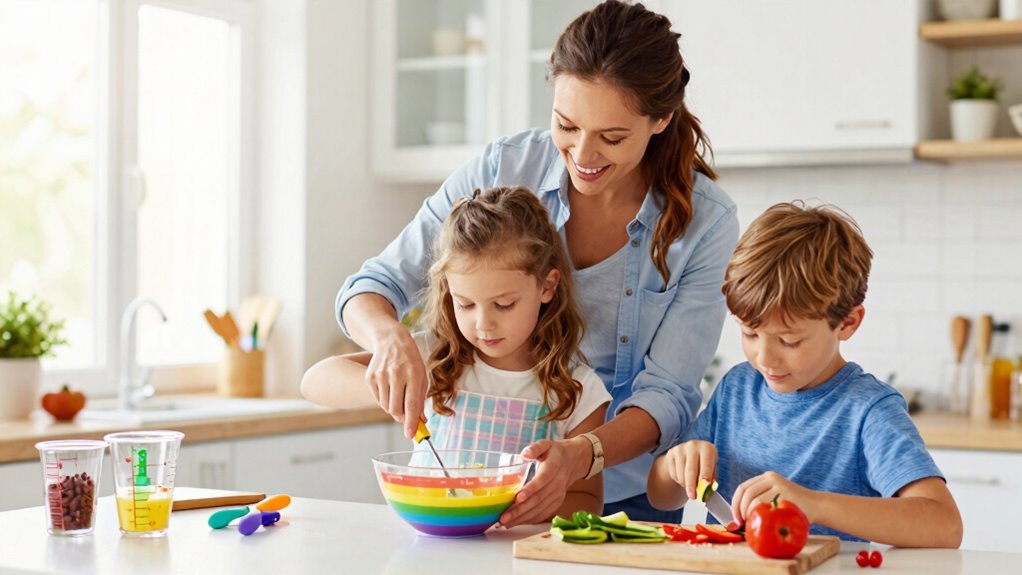
Cooking with kids can be a fun and rewarding experience, but safety should always come first. When you’re involving children in the kitchen, it’s vital to prioritize kitchen safety to guarantee everyone stays safe and enjoys the process. One of the most effective ways to do this is by assigning age-appropriate tasks. Understanding what your child can handle at their current age helps prevent accidents and builds their confidence gradually.
For younger kids, around ages 3 to 5, focus on simple tasks that don’t involve heat or sharp objects. They can help with washing vegetables, tearing lettuce, or pouring ingredients into bowls. These activities teach them about ingredients and involve them in the process without risking injury. Make sure you supervise closely during these tasks, and always demonstrate proper handwashing techniques beforehand to instill good hygiene habits.
As children grow older, around ages 6 to 8, they can take on slightly more complex tasks, like stirring batter, assembling salads, or using a butter knife to spread spreads. However, you should still monitor their activities carefully, especially when using appliances or handling knives. It’s a good idea to teach them about kitchen safety rules beforehand, like never touching hot surfaces or running in the kitchen, and to keep hot items out of their reach.
For kids aged 9 and above, they can gradually handle more advanced tasks, such as chopping soft vegetables, measuring ingredients, or operating small appliances like a toaster or blender. Even at this stage, supervision remains vital, especially when working around heat or sharp tools. Emphasize safety protocols, like using oven mitts, turning pot handles inward, and never leaving cooking food unattended. Encourage them to ask for help if they’re unsure about a task, fostering a safe cooking environment.
Throughout all stages, maintaining a calm and patient attitude helps your child learn safety habits effectively. Keep your focus on teaching rather than rushing, and praise their efforts to boost their confidence. Establish clear rules for the kitchen, like no running or horseplay, and keep hazardous items, such as knives or cleaning supplies, locked away or out of reach. Educating children about kitchen safety measures and other relevant safety concepts helps reinforce good habits. By tailoring tasks to their age and consistently reinforcing safety rules, you help your kids develop essential skills while minimizing risks. Remember, the goal is to create a positive, educational experience where safety is integrated into every step.
As an affiliate, we earn on qualifying purchases.
Frequently Asked Questions
How Do I Get My Child Interested in Cooking Safely?
To get your child interested in cooking safely, involve them in simple, fun tasks like washing vegetables or stirring ingredients. Use engaging activities that promote child engagement and teach cooking safety, such as explaining hot surfaces and knife safety. Encourage their curiosity by letting them pick a recipe or decorate dishes. Your enthusiasm and patience will help them develop confidence and a positive attitude toward cooking, while emphasizing safety at every step.
What Are Age-Appropriate Kitchen Tools for Kids?
You should choose child safety-focused kitchen equipment like small, lightweight utensils, knife sets with safety blades, and non-slip cutting boards. Look for tools with rounded edges, easy-grip handles, and safety features that prevent accidents. Age-appropriate tools help your kids build confidence while keeping them safe. Always supervise their use of kitchen equipment, ensuring they learn proper techniques and stay protected from potential hazards.
How Can I Handle Allergies During Cooking Activities?
Think of allergy awareness like a safety net—you want to catch any accidental exposure. Always ask about allergies beforehand, read labels carefully, and keep a list of safe ingredients for your child. When a common allergen appears, try safe ingredient substitution to keep everyone included. I once replaced nuts with sunflower seeds in a recipe, ensuring my allergic friend could enjoy the treat safely.
What Should I Do if My Child Gets Injured?
If your child gets injured, act quickly with first aid to minimize harm. Clean the wound with soap and water, apply pressure to stop bleeding, and use a bandage if necessary. Stay calm, reassure your child, and keep injury prevention in mind to avoid future accidents. If the injury is serious, seek medical help immediately. Always be prepared with a well-stocked first aid kit during cooking activities.
How to Manage Cleanup After Kids Cook?
After kids cook, manage cleanup by involving them in food presentation and kitchen organization. Encourage them to clear their workspace and wipe surfaces, making cleanup part of the fun. Use child-friendly cleaning tools and demonstrate proper technique. This teaches responsibility and keeps the kitchen tidy. By turning cleanup into an engaging activity, you foster good habits and guarantee the kitchen stays safe and organized for future cooking adventures.
As an affiliate, we earn on qualifying purchases.
Conclusion
Remember, the kitchen is a place of discovery and joy—think of every moment as a gentle dance rather than a high-wire act. With patience and a watchful eye, you’ll help your little ones develop skills and confidence while keeping everyone safe. Embrace these gentle lessons, and soon you’ll find that cooking together becomes a cherished memory, rich with laughter and learning. After all, the sweetest memories often sprout from the most carefully tended seeds.
age-appropriate kids cooking tools
As an affiliate, we earn on qualifying purchases.
As an affiliate, we earn on qualifying purchases.
As an affiliate, we earn on qualifying purchases.
Cold & flu season Picks
humidifiers
As an affiliate, we earn on qualifying purchases.