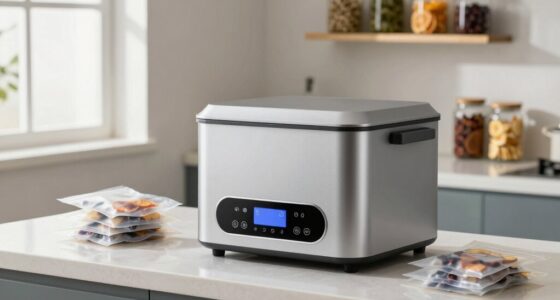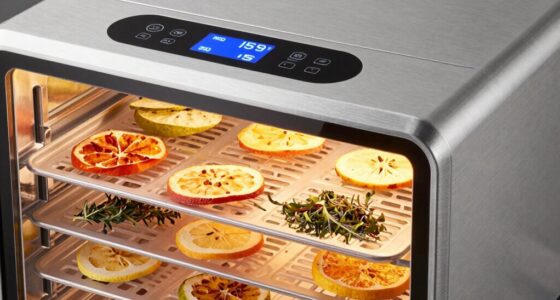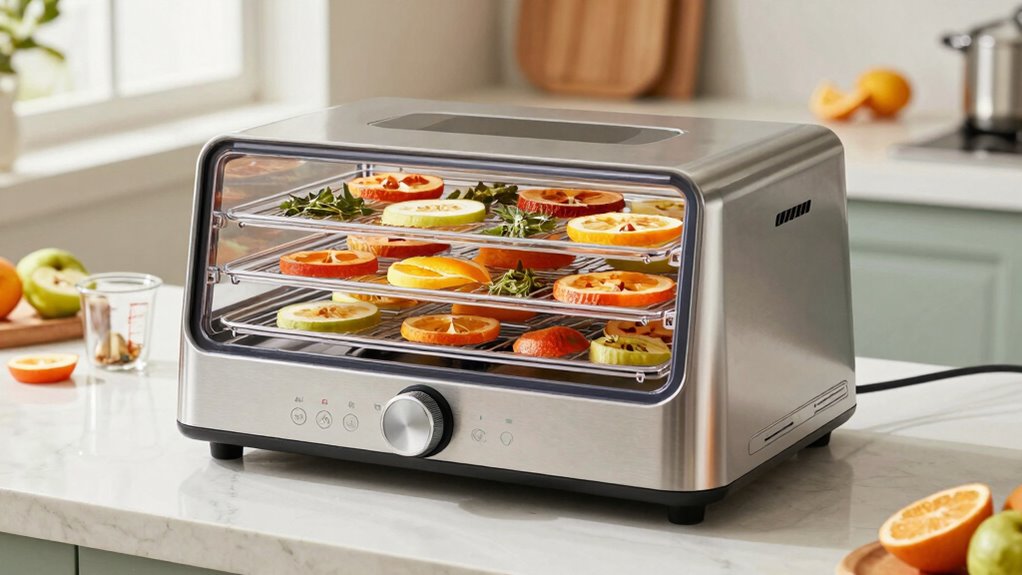

When buying a food dehydrator, avoid focusing only on price or brand without considering your specific needs. Make sure it has the right capacity and tray design for your typical batches, and check if it offers adjustable temperature controls for different foods. Don’t overlook airflow and ventilation, as these affect drying quality and safety. Also, choose one that’s easy to clean and maintain. If you keep these tips in mind, you’ll find the perfect model—there’s more to discover on how to make an informed choice.

Get health and wellness essentials delivered free — and shop member deals
- Fast, free delivery on millions of items
- Access to Prime Big Deal Days deals on October 6–7
- Prime Video, Amazon Music and more included
Key Takeaways
- Prioritize food-specific features like adjustable temperature controls and airflow for even drying and safety.
- Match dehydrator capacity and tray design to your batch size and types of foods.
- Avoid models with limited temperature ranges; choose precise, easy-to-read digital thermostats.
- Ensure proper ventilation and low noise levels for consistent drying and a quiet environment.
- Select models with removable, dishwasher-safe trays for easy cleaning and long-term maintenance.
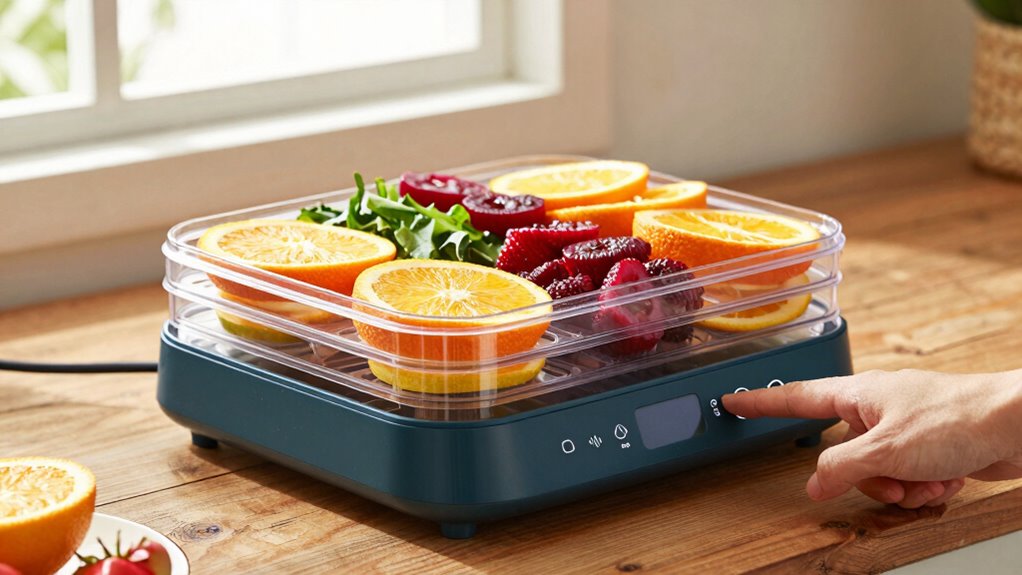
Choosing the right food dehydrator can be tricky, especially if you’re new to dehydration or overwhelmed by the many options available. Many beginners make the mistake of focusing solely on price or brand reputation without considering their specific needs. For example, if you’re interested in fruit preservation, you’ll want a dehydrator with adjustable temperature controls to prevent over-drying delicate fruits. Similarly, if jerky drying is your goal, you’ll need a model with consistent airflow to guarantee even drying and prevent bacteria growth. Overlooking these details can result in wasted money and unsatisfactory results.
Choose a dehydrator with adjustable temperature controls and consistent airflow for optimal fruit preservation or jerky drying.
One common mistake is buying a dehydrator that’s too small or too large for your intended use. If you plan to dry small batches of herbs and fruits, a compact model may suffice, but if you want to process large quantities, investing in a larger unit with multiple trays makes more sense. Not considering the capacity can lead to frustration and inefficient drying sessions. Also, don’t forget about tray design. Flat, stackable trays are easier to clean and maintain, which is especially important when dealing with sticky or sugary fruits. If you’re into jerky drying, look for trays that allow good air circulation and are easy to sanitize. Additionally, understanding temperature range is crucial to achieve optimal results, as different foods require specific temperatures for effective dehydration.
Another mistake is ignoring the temperature range and control. Many people underestimate how significant temperature is for different foods. For fruit preservation, lower temperatures help retain flavor and nutrients, while jerky drying requires higher, controlled heat to eliminate bacteria. If your dehydrator only offers a limited temperature range or lacks precise adjustments, you could end up with dried-out fruits or undercooked jerky. It’s worth investing in a model with a digital thermostat or clear temperature markings so you can fine-tune your drying process. Proper temperature regulation also helps prevent over-drying or under-drying, which can ruin the texture and quality of your dried foods. Recognizing food-specific temperature guidelines is essential for achieving the best results and avoiding spoilage, especially when working with sensitive foods like herbs or delicate fruits.
Additionally, some buyers overlook ventilation and airflow features. Good air circulation ensures even drying and reduces the risk of mold or spoilage. If your dehydrator has poor airflow, some parts may end up soggy or overly dried. For jerky, consistent airflow is especially essential to achieve a uniform texture. Also, consider the noise level; some models operate loudly, which can be distracting if you plan to run them frequently. Proper ventilation and airflow can significantly impact drying efficiency and food safety, making it a critical feature to consider.
Finally, don’t forget about maintenance and cleaning. Dehydrators with removable, dishwasher-safe trays save you time and effort. If cleaning is cumbersome, you might neglect proper hygiene, especially when drying meats for jerky or sticky fruits. Regular cleaning not only prolongs the lifespan of your dehydrator but also ensures health safety by preventing bacterial buildup. By paying attention to these factors—capacity, temperature control, airflow, and ease of cleaning—you avoid common mistakes and ensure your dehydrator serves your needs efficiently, whether for fruit preservation or jerky drying.
food dehydrator with adjustable temperature controls
As an affiliate, we earn on qualifying purchases.
As an affiliate, we earn on qualifying purchases.
Frequently Asked Questions
Are Expensive Dehydrators Always Better?
Expensive dehydrators aren’t always better; instead, focus on dehydration performance, features, and brand reputation. Higher prices often reflect premium materials or advanced technology, but some affordable models work just as well for home use. Consider your needs and budget, and research brands with good reputations. A mid-range dehydrator can deliver excellent results without the hefty price tag, so don’t assume that cost equals quality.
How Loud Are Most Food Dehydrators?
Most food dehydrators produce moderate noise levels, typically comparable to a quiet refrigerator or a white noise machine. Their sound comparison shows that they’re generally not disruptive, but some models with powerful fans can be louder. If noise matters to you, look for dehydrators labeled as quiet or with low noise levels. You’ll find that the right choice can keep your kitchen peaceful while still doing its job effectively.
Can Dehydrators Dry All Food Types Equally?
Think of your dehydrator as a versatile artist, but not every palette suits every food. It doesn’t dry all food types equally, as some textures are more delicate or dense. For perfect results, consider how food texture affects drying and nutrient retention. Fruits and herbs dry quickly, preserving nutrients, while meats and thicker items need more careful temperature control. Tailoring your approach guarantees each food type retains flavor, nutrients, and ideal texture.
Do Dehydrators Consume a Lot of Energy?
Dehydrators don’t typically consume a lot of energy, especially when compared to other kitchen appliances. Their energy consumption varies based on size and power efficiency, but most models are designed to be quite efficient. If you want to save on energy costs, look for dehydrators with good power efficiency ratings. Using your dehydrator wisely—such as drying in batches or during off-peak hours—can further reduce energy consumption, making it an eco-friendly choice.
How Long Do Dehydrator Components Typically Last?
Like a well-worn tapestry, dehydrator components can last several years if you prioritize maintenance. Typically, trays and fans endure about 3 to 5 years with regular cleaning and careful handling. Replacement parts’ longevity depends on usage and care—some may need replacing sooner, especially if damaged. To maximize lifespan, follow manufacturer guidelines, clean thoroughly, and inspect parts regularly. Proper maintenance guarantees your dehydrator remains efficient and extends its overall durability.
large capacity food dehydrator for jerky and fruits
As an affiliate, we earn on qualifying purchases.
As an affiliate, we earn on qualifying purchases.
Conclusion
Avoiding these common mistakes turns a good food dehydrator into a game-changer. Imagine savoring perfectly dried snacks, wild herbs, or homemade jerky, instead of wasting money on a machine that underperforms or ruins your efforts. Think of the frustration melted away by choosing wisely—like selecting the right size, features, and budget. With the right knowledge, you’ll confidently create delicious, healthy treats, transforming your kitchen into a dehydration haven rather than a source of regret.
dishwasher safe trays food dehydrator
As an affiliate, we earn on qualifying purchases.
As an affiliate, we earn on qualifying purchases.
quiet food dehydrator with good airflow
As an affiliate, we earn on qualifying purchases.
As an affiliate, we earn on qualifying purchases.
Fall Picks
fall essentials
As an affiliate, we earn on qualifying purchases.