
Yes, you can freeze herbs to keep their flavor and aroma for later use. The best method depends on the herb type and how you’ll use it. Chopped herbs like parsley and cilantro freeze well in ice cube trays with water or oil, while whole herbs like rosemary and thyme can be frozen on a baking sheet before storing. Proper packaging and labeling help maintain quality, and if you want to discover more tips and techniques, there’s plenty more to learn.
Key Takeaways
- Yes, most herbs can be frozen to preserve freshness and flavor for later use.
- Techniques like chopping herbs into ice cubes with water or oil work well for many varieties.
- Blanching delicate herbs like basil and mint helps maintain color and aroma during freezing.
- Store herbs in airtight containers or freezer bags, and label with freeze date for optimal quality.
- Use frozen herbs within a few months for the best flavor and texture.

If you’ve ever wondered whether you can preserve fresh herbs for later use, the good news is that freezing is a practical option. Herb preservation through freezing helps you enjoy your favorite herbs long after their peak season, saving you money and reducing waste. When it comes to freezing techniques, there are several methods you can try, each suited for different types of herbs and culinary needs. The key is to choose the right approach to maintain flavor, aroma, and texture as much as possible.
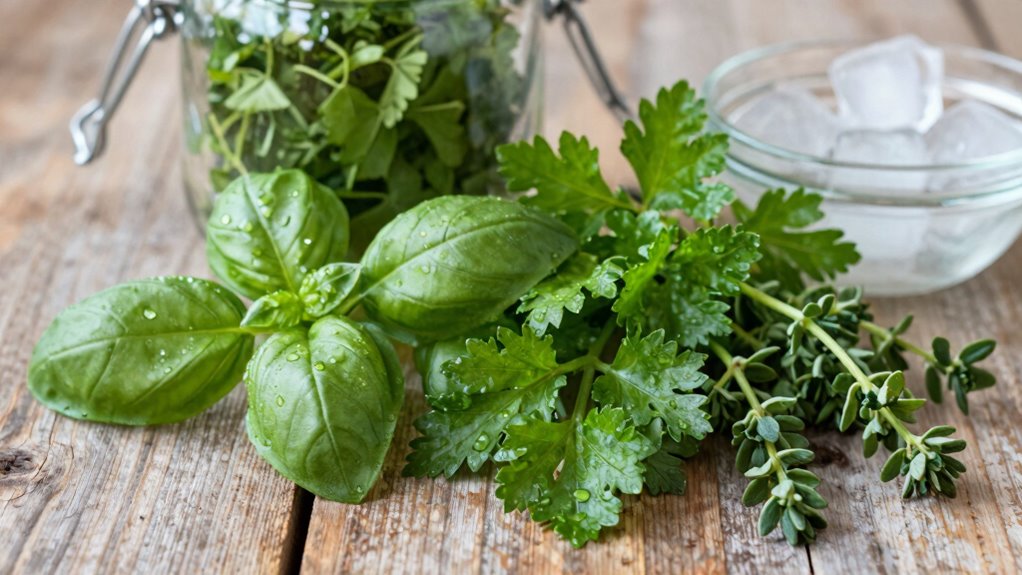
One common method for freezing herbs is to chop them finely and place them in ice cube trays. You fill each compartment with herbs, then cover them with water or olive oil before freezing. Once frozen, you can pop out a cube whenever you need herbs for cooking. This technique is excellent for herbs like parsley, cilantro, or chives, which work well when chopped and incorporated into dishes. The advantage of this approach is convenience—each cube is a ready-to-use portion. Using freezing techniques that suit the herb type can help preserve their qualities better.
Another herb preservation technique involves blanching the herbs briefly in boiling water, then plunging them into ice water before drying them thoroughly. After that, you can pack the herbs in airtight containers or freezer bags. This method helps preserve the herbs’ flavor and color better than just freezing them raw. It’s especially useful for delicate herbs like basil or mint, which tend to discolor or lose aroma quickly if frozen without proper preparation. Blanching is an effective way to preserve herbs’ vibrant color and aroma, especially when combined with proper drying.
For herbs meant to be used in cooked dishes, you can also choose to freeze whole sprigs. Simply wash and dry the herbs thoroughly, then spread them on a baking sheet to freeze individually. Once frozen, transfer the sprigs into airtight containers or freezer bags. This method keeps herbs like rosemary, thyme, or oregano intact, making it easy to grab a sprig or two when needed. Just remember, these whole herbs are best used in cooking where their texture isn’t critical. Properly storing these whole herbs can extend their usability throughout the year.
In all cases, it’s best to label your frozen herbs with the date to keep track of freshness. Proper herb preservation through freezing extends their usability, but storage time should ideally be kept within a few months to retain ideal flavor. To maximize the benefits of freezing, understanding the freezing methods that work best for each herb type is essential. With the right freezing techniques, you can enjoy fresh-tasting herbs year-round, reducing waste and making your cooking more flavorful.

1 Tbsp Silicone Freezer Molds – Perfect for Storing Garlic, Herbs, Ginger, Pesto, Tomato Paste, Lemon Juice,Vegetable Purees,Purees and More – Silicone Food Freezer Tray (Multicolor 3 Pack)
- Versatile Food Storage: Suitable for garlic, herbs, and more
- Easy Release Design: Slides out with a gentle push
- Simple Cleanup: Rinse and wipe clean easily
As an affiliate, we earn on qualifying purchases.
As an affiliate, we earn on qualifying purchases.
Frequently Asked Questions
Do Frozen Herbs Lose Flavor Over Time?
Yes, frozen herbs can lose flavor over time, but proper herb preservation and freezing techniques help minimize this. When you freeze herbs correctly, using methods like ice cube trays or freezing herbs in oil, you retain more flavor and aroma. However, after several months, they may start to taste duller. To keep their freshness, use frozen herbs within 3-6 months and store them in airtight containers.
Which Herbs Freeze Best Without Losing Potency?
You’ll find that herbs like dill, parsley, chives, and cilantro freeze best without losing potency, like capturing a fleeting whisper of summer’s freshness. For herb preservation, use freezing methods that lock in flavor—chopping herbs, then freezing them in ice cube trays with oil or water. These gentle techniques help preserve their vibrant aroma and essential oils, ensuring your herbs stay lively and potent long after harvest.
Can You Freeze Chopped Herbs Directly?
You can freeze chopped herbs directly, but for better herb preservation, consider using freezing techniques like freezing in ice cube trays with water or oil. This method helps maintain flavor and texture, making it easy to add herbs to dishes later. Avoid just freezing chopped herbs in a bag, as they tend to lose potency and become mushy. Proper freezing techniques guarantee your herbs stay fresh and flavorful longer.
How Long Can Herbs Be Stored in the Freezer?
Imagine herbs tucked away like tiny green treasures in your freezer—you’re safe to store them for up to 12 months. Proper herb preservation relies on effective freezing techniques, which preserve flavor and freshness longer. To maximize their shelf life, use airtight containers or ice cube trays, label with dates, and make certain your freezer stays constant in temperature. This way, your herbs remain vibrant and ready whenever your culinary creativity calls.
Is Freezing Herbs Safe for All Types of Herbs?
Freezing herbs is safe for most types, but some delicate herbs like basil may lose flavor or texture. For herb preservation, use appropriate freezing methods—chopping herbs and placing them in ice cube trays with water or oil works well. Hardier herbs like thyme and rosemary freeze better with simple packaging. Keep in mind, delicate herbs might need alternative preservation methods to maintain their quality and flavor.

60pcs 1 Quart Mylar Bags for Food Storage with Oxygen Absorbers and Labels
- Package Quantity: 60 bags with oxygen absorbers and labels
- Bag Size: 1 quart, 7×10 inches
- Multi-Use Storage: Suitable for grains, beans, dried foods
As an affiliate, we earn on qualifying purchases.
As an affiliate, we earn on qualifying purchases.
Conclusion
Freezing herbs is like planting a tiny seed of flavor for future meals—you’ll appreciate the burst of freshness when you need it most. I once froze a bunch of basil, and months later, it was still vibrant enough to turn into pesto. Just like saving a treasure for a rainy day, proper freezing keeps your herbs lively and ready to elevate your dishes. So go ahead, freeze away, and keep your kitchen bursting with flavor year-round.
As an affiliate, we earn on qualifying purchases.

OXO Good Grips Produce Saver – Herb Keeper
- BPA-Free Herb Keeper: Creates ideal environment for herbs
- Water Fill Line: Ensures proper hydration levels
- Ventilated Basket: Provides airflow for freshness
As an affiliate, we earn on qualifying purchases.
As an affiliate, we earn on qualifying purchases.