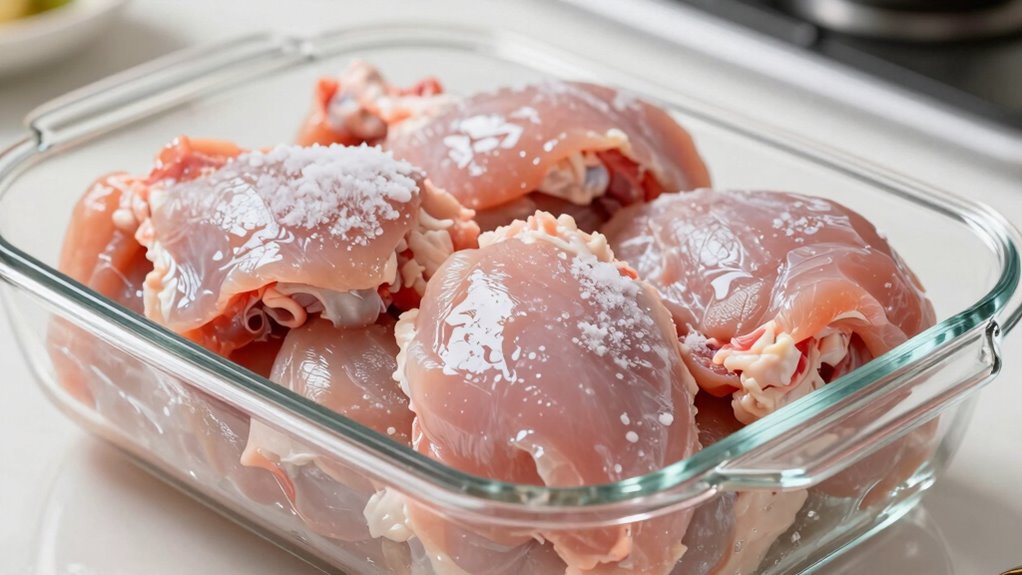
You can refreeze thawed food safely if you follow proper guidelines. If the food thawed in the refrigerator and hasn’t been out at unsafe temperatures, it’s usually safe to refreeze. But if you thawed it in the microwave or cold water, you’ll need to cook it first before refreezing. Keep track of how long the food stays in the danger zone (40°F–140°F) and store properly to maintain quality. To prevent ruining good food, understanding these steps is essential—more details are just ahead.
Key Takeaways
- Refreeze foods thawed in the refrigerator if they haven’t been at unsafe temperatures or for more than 1-2 days.
- Foods thawed in the microwave or cold water must be cooked immediately before refreezing.
- Quality may decline with each freeze-thaw cycle; limit refreezing to preserve texture and flavor.
- Proper packaging and removing air help maintain quality when refreezing thawed food.
- Label frozen items with the date to monitor storage time and prevent refreezing food past safe limits.

Food safety should always be your top priority. If you thawed food in the refrigerator, it’s generally safe to refreeze it, provided it hasn’t been left out at room temperature for too long. The refrigerator maintains a consistent, safe temperature, which slows bacterial growth. However, if you thawed food in the microwave or using cold water, you need to cook it immediately before refreezing. That’s because these methods can sometimes encourage bacterial growth if the food isn’t cooked promptly afterward.
When it comes to storage tips, always keep track of how long food spends in the temperature danger zone, between 40°F and 140°F. Bacteria thrive in this range, so the longer food sits there, the higher the risk of spoilage or illness. If thawed food has been kept in the fridge for more than a few days, it’s best to discard it rather than refreeze it. Conversely, if it’s only been a day or two, and it looks and smells normal, you can refreeze it after cooking or reheating. Proper handling and understanding of food safety guidelines can help prevent foodborne illnesses. Additionally, paying attention to the storage duration can help ensure food quality and safety. It’s also helpful to monitor the thawing process to prevent accidental temperature abuse.
Refreezing can sometimes lead to quality loss — the texture might change, and flavors can diminish. To minimize this, store food in airtight containers or freezer bags, removing as much air as possible to prevent freezer burn. Proper packaging ensures the food maintains its quality during the refreezing process. Remember, each time you freeze and thaw food, the quality tends to decline, so only refreeze when necessary. Additionally, understanding freezer burn and how it affects food quality can help you better prepare and store your items. It’s also helpful to label your frozen foods with the date to keep track of their freshness and prevent unnecessary refreezing.
airtight food storage containers
As an affiliate, we earn on qualifying purchases.
As an affiliate, we earn on qualifying purchases.
Frequently Asked Questions
Does Refreezing Affect the Nutritional Value of Food?
Refreezing food can cause some nutrient loss, but it generally doesn’t considerably affect nutritional retention. Vitamins, especially water-soluble ones like vitamin C and B vitamins, may degrade with freezing and thawing cycles. However, most essential nutrients remain intact if you refreeze food properly and avoid repeated cycles. To preserve nutritional quality, try to refreeze promptly and use food within safe timeframes, minimizing vitamin loss and maintaining the food’s overall health benefits.
Can Refreezing Cause Food Poisoning?
Refreezing food can be a risky dance with food safety. If you thawed it improperly or left it out too long, bacteria may have started their silent work, and refreezing won’t halt their threat. This can increase the risk of food poisoning, compromising quality preservation. To keep your meals safe and tasty, handle thawed food promptly, and only refreeze if you’re confident it stayed at safe temperatures.
How Many Times Can You Safely Refreeze Food?
You can safely refreeze food about once or twice, but it depends on the food’s texture and how it was frozen initially. Repeated freezing can cause food texture to deteriorate, making it less appealing and potentially unsafe if mishandled. Use proper freezing methods to maintain quality, and always thaw food safely in the fridge or microwave. If food shows signs of spoilage or has been thawed for too long, don’t refreeze it.
Is There a Difference Between Refreezing Cooked and Raw Foods?
Yes, there’s a difference between refreezing cooked and raw foods. When you refreeze cooked foods, you should guarantee proper thawing methods, like quick thawing in the fridge or microwave, to prevent bacteria growth. Raw foods, especially meat and seafood, need careful freezing techniques to avoid freezer burn and maintain quality. Always refreeze within safe time limits, and avoid refreezing repeatedly to keep your food safe and flavorful.
Does the Type of Food Change Refreezing Safety Guidelines?
Many believe that the type of food affects refreezing safety, but the real concern is maintaining food texture and flavor. You can refreeze cooked meats, fruits, or vegetables safely if they’ve been thawed in the fridge and haven’t been left out. However, some foods, like seafood or items with high moisture content, may lose quality, impacting texture and flavor. Always check for spoilage before refreezing to guarantee safety.
As an affiliate, we earn on qualifying purchases.
Conclusion
Refreezing thawed food is like trying to catch lightning in a bottle—possible, but tricky. If you follow the rules, you keep your kitchen orchestra harmonizing rather than hitting a sour note. Trust your senses, don’t rush the process, and remember that safety is your compass. When done right, refreezing can be a safety net, but mishandling turns your culinary symphony into a chaotic cacophony. Play it safe, and your food will sing with flavor and freshness.
As an affiliate, we earn on qualifying purchases.
As an affiliate, we earn on qualifying purchases.