To keep your cutting boards sanitary, wash them with hot, soapy water after each use and scrub all surfaces thoroughly. Disinfect with white vinegar or diluted bleach, especially after raw meats, then rinse well and dry completely. Use separate boards for meats and vegetables to prevent cross-contamination, and inspect for deep cuts where bacteria can hide. Handling knives safely and following these practices guarantees your kitchen stays hygienic—stay with us for more essential tips.

Get health and wellness essentials delivered free — and shop member deals
- Fast, free delivery on millions of items
- Access to Prime Big Deal Days deals on October 6–7
- Prime Video, Amazon Music and more included
Key Takeaways
- Wash cutting boards with hot, soapy water after each use, scrubbing all surfaces thoroughly.
- Disinfect with white vinegar or diluted bleach, especially after raw meat preparation.
- Dry completely or air dry to prevent bacterial growth; avoid soaking wooden boards.
- Use separate boards for meats and produce to prevent cross-contamination.
- Regularly inspect and replace boards with deep cuts or grooves where bacteria can hide.
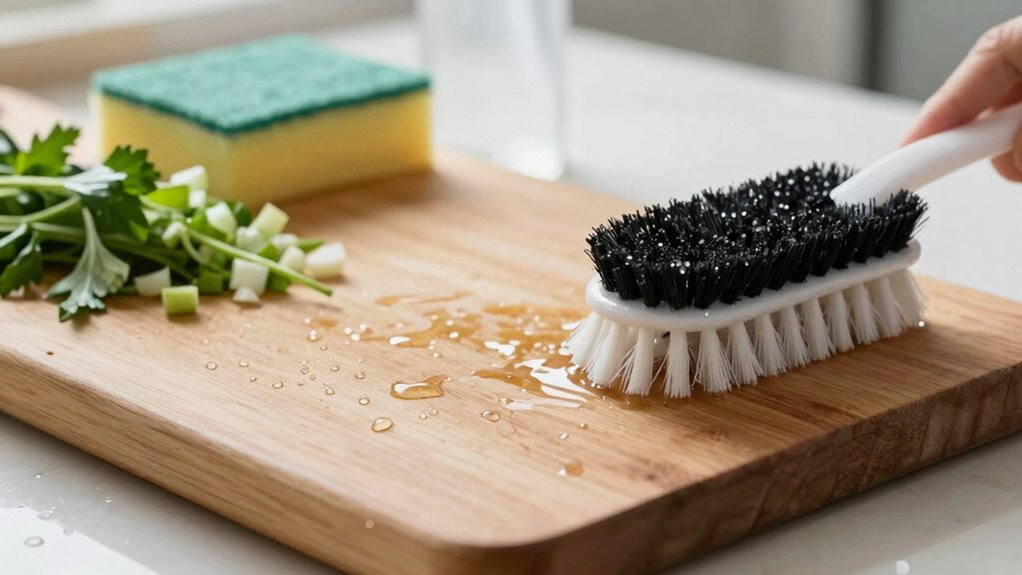
Ever wondered how clean your cutting board really is? If you’re like most busy home cooks, you probably don’t spend enough time thinking about its cleanliness, but it’s vital for safe food preparation. A dirty cutting board can harbor bacteria, which can transfer to your food and make you sick. To keep your kitchen safe, understanding proper cleaning techniques and practicing knife safety are essential. When it comes to cleaning techniques, you need to be thorough. After each use, wash your cutting board with hot, soapy water, scrubbing all surfaces to remove food particles and bacteria. For added sanitation, especially after cutting raw meats, use a solution of white vinegar or a diluted bleach mixture to disinfect. Rinse well with hot water afterward to remove any residues. Don’t forget to dry your cutting board completely with a clean towel or air dry it, as moisture promotes bacterial growth. If your cutting board is wooden, avoid soaking it, since excess water can cause warping or cracking, which makes cleaning more difficult and less effective. For plastic boards, consider running them through the dishwasher regularly, as the high heat and detergent kill germs effectively. No matter the material, replace your cutting boards once they show deep cuts or grooves, as bacteria can settle in these areas and become hard to clean. Using the right technique isn’t just about cleaning; it’s about guaranteeing safety when handling knives. Knife safety involves careful handling to prevent accidents, especially when cleaning or transferring the board. Always cut away from your body and keep knives sharp to reduce slips. When cleaning your knives, wash them separately from your cutting boards and dishes, and store them safely to avoid accidental cuts. After use, dry knives immediately and store them properly, either in a knife block or on a magnetic strip—never in a sink where they can get buried or cause injury. When cleaning your cutting board, be sure to sanitize thoroughly to eliminate bacteria, especially after chopping raw meats or poultry. Use separate cutting boards for meats and vegetables to prevent cross-contamination, and always wash your hands afterward. Additionally, being aware of kitchen sanitation practices can further reduce the risk of bacterial contamination. Incorporating proper sanitation routines, such as regular cleaning schedules, is crucial for maintaining a hygienic kitchen environment. Regularly inspecting your cutting boards for deep cuts or grooves can help prevent bacterial buildup and ensure safer food prep. Remember that proper storage plays a key role in maintaining cleanliness and preventing contamination. Maintaining good knife safety and cleaning techniques helps guarantee your kitchen remains a safe environment. It might take a little extra effort, but consistent sanitation routines keep you and your family healthy. With just a few simple steps—thorough washing, proper disinfecting, and careful handling—you can make your cutting board a safe surface for all your culinary adventures. Remember, a clean cutting board isn’t just about appearance; it’s about protecting your health with every meal you prepare.
plastic cutting board dishwasher safe
As an affiliate, we earn on qualifying purchases.
As an affiliate, we earn on qualifying purchases.
Frequently Asked Questions
How Often Should I Replace My Cutting Boards?
You should replace your cutting boards every 1 to 3 years, depending on wear and tear. Regularly inspecting them for deep cuts or grooves is vital for kitchen safety and maintaining food hygiene. If your boards are heavily stained, warped, or harbor bacteria that can’t be cleaned, it’s time for a new one. Staying vigilant guarantees you minimize cross-contamination risks and keep your kitchen a safe, hygienic space for food prep.
Can I Sanitize Cutting Boards in the Dishwasher?
Imagine you’re in the age of the Wild West, but today, yes, you can sanitize cutting boards in the dishwasher. Dishwasher cleaning is effective for sanitation techniques, especially for plastic or rubber boards. Place your board on the top rack, run a hot cycle, and you’ll eliminate bacteria and germs. Just make certain your board is dishwasher-safe, and you’ll keep your food prep area hygienic and safe with minimal effort.
What Are Natural Disinfectants for Cutting Boards?
You can use herbal disinfectants and citrus sanitizers as natural options for cleaning your cutting boards. Herb-based solutions like tea tree oil or thyme are effective because they have antimicrobial properties. Citrus sanitizers, made from lemon or orange peels, release natural acids that kill germs. Simply apply these natural disinfectants, let them sit briefly, then rinse thoroughly. They’re safe, eco-friendly, and help keep your cutting boards clean without harsh chemicals.
How Do I Prevent Cross-Contamination Between Different Foods?
Imagine your cutting board as a battlefield where food safety is your shield. To prevent cross-contact, use separate boards for raw meats, vegetables, and cooked foods. Wash them thoroughly with hot, soapy water after each use, and sanitize with natural disinfectants like vinegar or lemon juice. Always dry boards completely before switching tasks. This way, you stop germs from crossing the line, ensuring a safer cooking environment every time.
Are Plastic or Wooden Cutting Boards More Sanitary?
Plastic cutting boards are generally more sanitary because they have fewer cracks and crevices where bacteria can hide, making cleaning easier and reducing bacterial growth. Wooden boards are durable but tend to harbor bacteria in their deeper grain patterns, which can be harder to clean thoroughly. If you prefer wooden boards, make sure they’re well-maintained and sanitized regularly to prevent bacterial growth, considering their material durability.
wooden cutting board with juice groove
As an affiliate, we earn on qualifying purchases.
As an affiliate, we earn on qualifying purchases.
Conclusion
So, next time you grab that seemingly clean cutting board, remember—it’s not just about avoiding germs but about respecting your food and health. Ironically, in our rush to prepare meals quickly, we often forget that sanitation isn’t just a chore—it’s a small act of self-care. Don’t let convenience compromise safety. After all, the real flavor comes from knowing you’ve taken the time to do it right. Happy cooking—and stay sanitized!
disinfectant spray for kitchen surfaces
As an affiliate, we earn on qualifying purchases.
As an affiliate, we earn on qualifying purchases.
As an affiliate, we earn on qualifying purchases.
Fall Picks
fall essentials
As an affiliate, we earn on qualifying purchases.