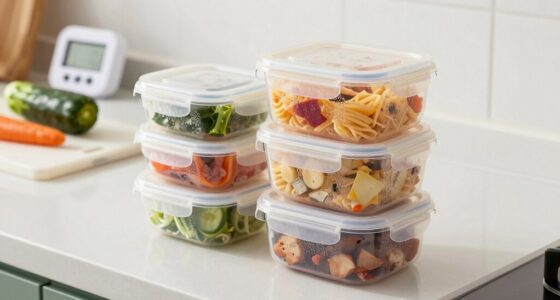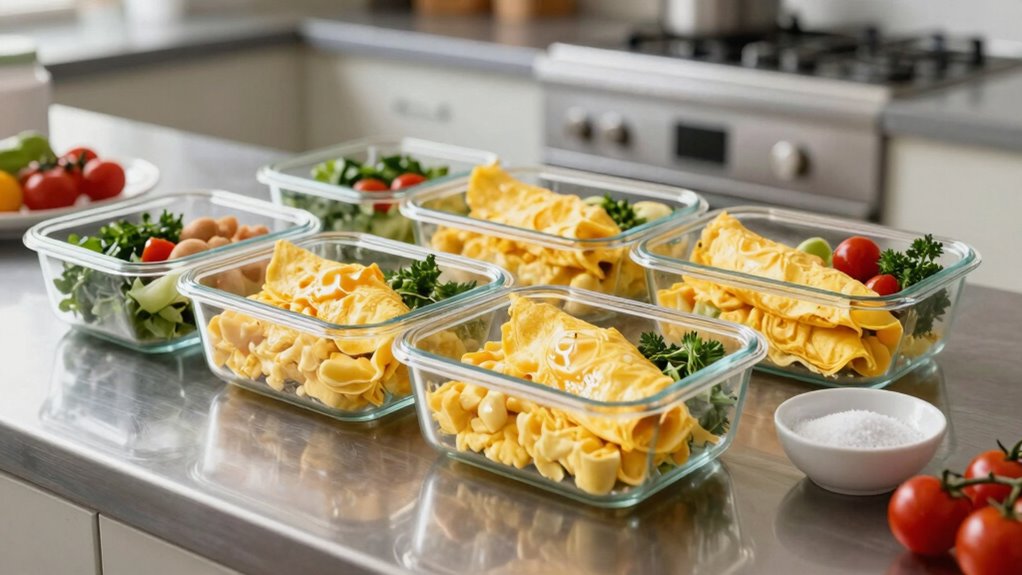

Yes, you can meal prep eggs effectively by choosing the right methods. Boiled eggs are easy to peel and last well in the fridge. Scrambled eggs can be cooked in bulk or baked in muffin tins for quick storage. Always cool cooked eggs quickly and store them in sealed containers to maintain freshness and safety. Reheat baked eggs in the microwave before eating. To learn more about making your egg prep even better, keep exploring these tips.
Key Takeaways
- Yes, eggs can be meal prepped by boiling, scrambling, or baking for easy, grab-and-go options.
- Store cooked eggs in sealed containers in the fridge to maintain freshness and safety.
- Cool boiled eggs immediately in ice water to stop cooking and preserve texture.
- Reheat baked eggs in the microwave for quick, safe consumption.
- Proper handling and storage prevent spoilage and foodborne illnesses during meal prep.
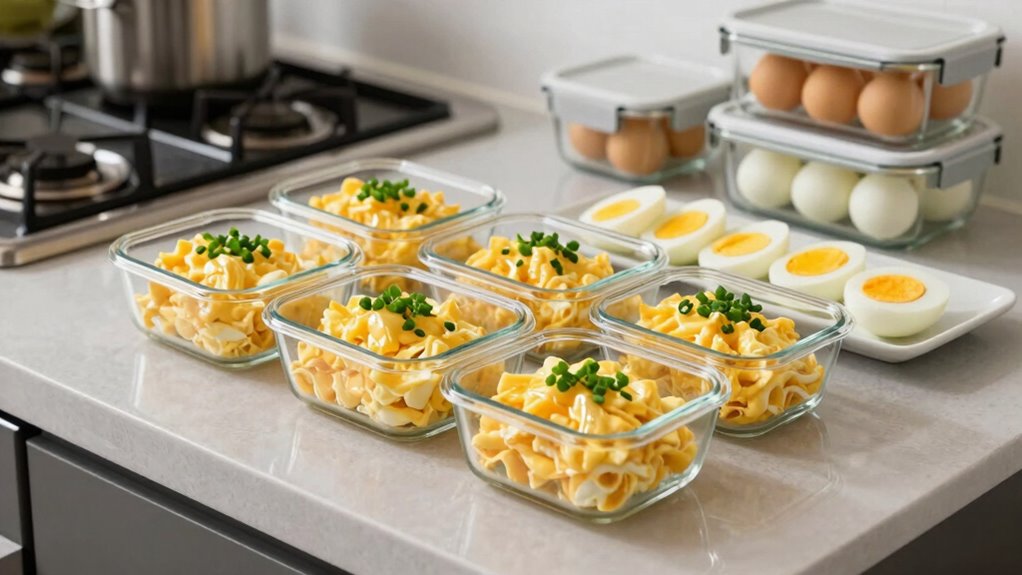
Cooking methods play a vital role in how well your eggs hold up during meal prep. You can boil, scramble, or bake eggs in advance—each method suits different needs. Boiled eggs are particularly popular because they’re easy to peel and transport. Simply boil eggs for about 9-12 minutes, then cool them immediately in ice water to stop the cooking process. Once cooled, store them in the fridge in a sealed container. Scrambled eggs can be cooked in bulk in a skillet or baked in the oven, then portioned into containers. Just make sure not to overcook them, as they can become rubbery and less appealing after reheating. Baking eggs in muffin tins is another efficient method; you can prepare multiple at once and store them for several days. Reheating these baked eggs is simple—just microwave them for about 30 seconds to a minute, and they’ll be ready to eat. Additionally, understanding proper storage techniques can help maintain egg freshness and safety during meal prep.
The key to successful meal prep with eggs is understanding how to handle them safely and choose the right cooking method for your schedule. Raw eggs should be kept cold and used within a few weeks, while cooked eggs need to be stored properly to maintain quality. When reheating, do so thoroughly to avoid any foodborne illnesses. With these tips, you can confidently prepare eggs in advance, saving time without sacrificing flavor or safety. Proper egg storage and versatile cooking methods make meal prepping eggs not only feasible but also incredibly convenient, helping you stay on top of your nutrition even on your busiest days.
As an affiliate, we earn on qualifying purchases.
Frequently Asked Questions
How Long Can Cooked Eggs Be Stored Safely?
You can safely store cooked eggs for up to four days in the refrigerator. To maintain egg freshness and guarantee safety, keep them in an airtight container and promptly refrigerate after cooking. Avoid leaving cooked eggs at room temperature for more than two hours, as this increases the risk of bacteria growth. Proper storage duration and handling help preserve the quality and safety of your cooked eggs.
Do Meal Prep Eggs Lose Nutrients Over Time?
Surprisingly, meal prep eggs do lose some nutrient retention over time, but not enough to ruin your breakfast routine. As eggs age, their freshness decreases, and a tiny bit of their nutritional punch fades. Ironically, that means eating eggs sooner preserves their full nutrient profile. Still, if you store them properly in airtight containers, they’ll stay fresh and nutritious for a few days, making your meal prep both convenient and worthwhile.
Can You Reheat Pre-Cooked Eggs Without Ruining Texture?
You can reheat pre-cooked eggs without ruining their texture if you choose the right reheating method. Using gentle heat, like a microwave on low or stovetop with a splash of water, helps maintain the egg’s moisture and prevents rubberiness. Avoid high heat, which can make eggs tough and dry. Covering them while reheating also helps preserve their soft, pleasant egg texture, making your meal enjoyable again.
What Are the Best Containers for Storing Meal Prep Eggs?
Surprisingly, the best containers for storing meal prep eggs are those that keep eggs fresh without sacrificing durability. You’ll want airtight, leak-proof containers that lock in egg freshness and prevent odors. Opt for BPA-free plastic or glass with secure lids—these handle the chill of the fridge and the heat of reheating. Avoid flimsy options; your eggs deserve containers that are durable enough to survive your busy schedule, after all.
Are There Any Eggs That Don’T Reheat Well?
Some eggs, especially those with delicate shells or softer textures, don’t reheat well because their flavor changes and they can become rubbery. Egg flavor can intensify or become odd after reheating, and shell strength varies, making eggs prone to cracking during storage or heating. Soft-boiled or poached eggs tend to reheat poorly, often losing texture and flavor. Hard-boiled eggs with strong shells usually reheat better but still require gentle warming to avoid rubberiness.
As an affiliate, we earn on qualifying purchases.
Conclusion
Meal prepping eggs is like planting a garden—you get to enjoy the fruits of your labor all week long. By choosing the right cooking method and storing them properly, you’re setting yourself up for success and convenience. Remember, the key is to keep it simple and consistent, so your meal prep garden flourishes. With a little effort now, you’ll harvest tasty, nutritious breakfasts that make your mornings smoother and brighter.
As an affiliate, we earn on qualifying purchases.
microwave safe egg reheating containers
As an affiliate, we earn on qualifying purchases.
As an affiliate, we earn on qualifying purchases.