To safely pack lunchboxes, use airtight, non-toxic containers to keep food fresh and prevent leaks. Include cold packs, placed properly near perishables like dairy and meats, to maintain safe temperatures and slow bacteria growth. Always follow hygiene practices and store foods at the right temperatures to reduce contamination. Choosing the right containers and cold packs are key, and if you keep these tips in mind, you’ll guarantee your food stays safe and tasty all day long.
Key Takeaways
- Use reusable, airtight, BPA-free containers made from non-toxic materials to prevent leaks and chemical transfer.
- Incorporate cold packs properly positioned to maintain safe food temperatures and inhibit bacterial growth.
- Keep cold packs at the top or sides of the lunchbox, avoiding direct contact with food to prevent freezing or damage.
- Follow food safety guidelines for proper storage, temperature control, and handling to reduce contamination risks.
- Choose durable, eco-friendly containers that facilitate portion control and reduce spoilage.
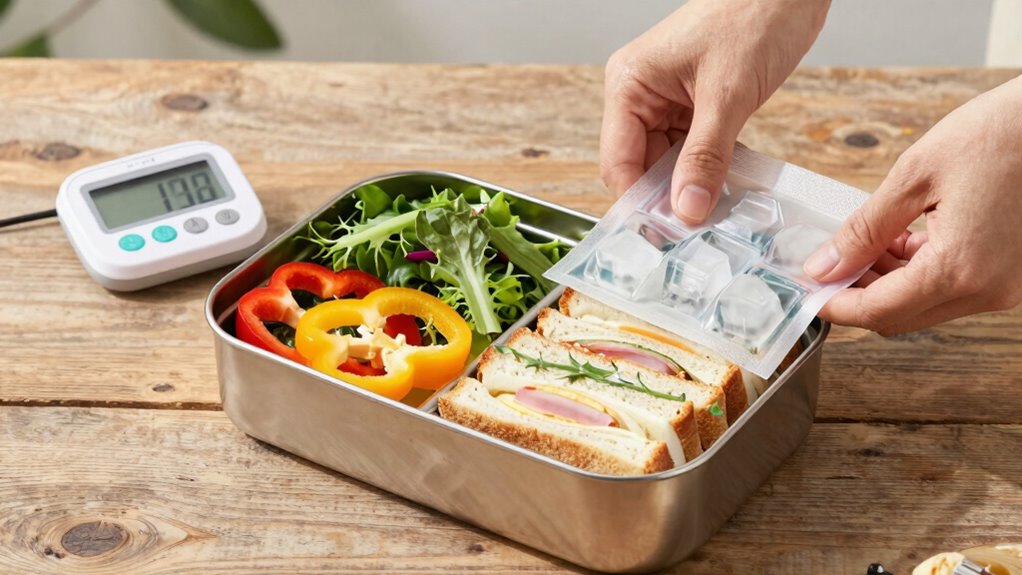
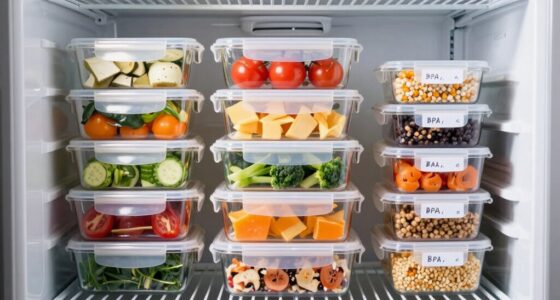
Packing a lunchbox might seem simple, but doing it safely is vital to prevent foodborne illnesses. The way you pack your food can make all the difference in keeping it fresh and safe to eat. One of the most effective ways to guarantee safety is by using reusable containers. These containers are durable, eco-friendly, and designed to keep food secure. When choosing your containers, opt for those that are airtight and made from safe, non-toxic materials. This helps prevent leaks and contamination, especially if you’re packing liquids or moist foods. Reusable containers also make it easier to portion out your meals, which reduces the temptation to overpack or leave food sitting out too long. Additionally, selecting containers with BPA-free materials ensures that no harmful chemicals leach into your food over time.
Using airtight, non-toxic reusable containers keeps food secure and prevents leaks for safe, fresh lunches.
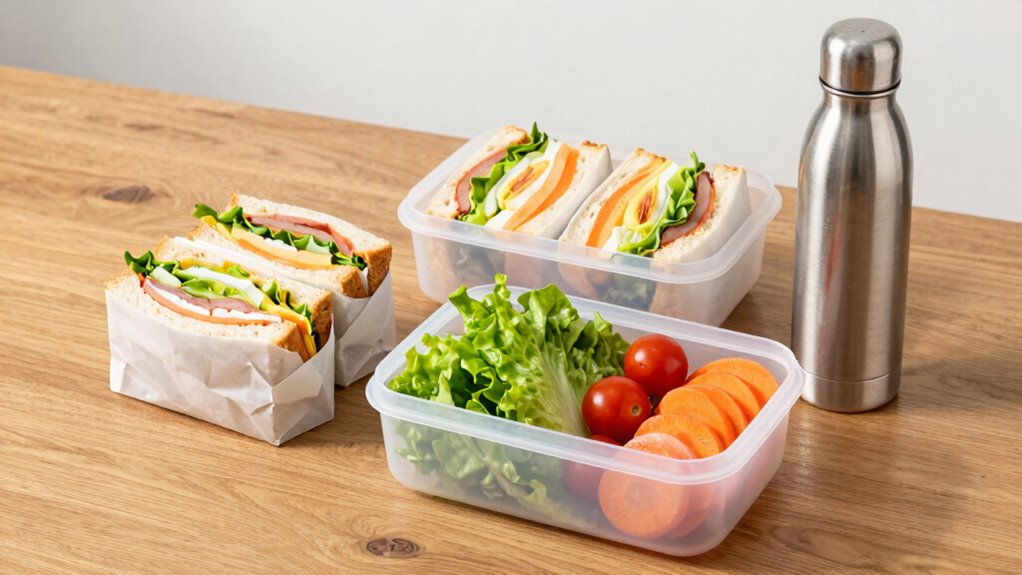
Another essential aspect of safe packing is temperature control. Cold packs are vital for keeping perishable foods at the right temperature until they’re ready to eat. When you include a cold pack in your lunchbox, it helps inhibit the growth of bacteria that can cause foodborne illnesses. Be sure to freeze cold packs overnight so they remain effective throughout the day. Position the cold pack near the foods that are most vulnerable to spoilage, like dairy, meats, or cut fruits. This guarantees that the entire meal stays chilled, especially during warm weather or if you’re traveling for an extended period. Proper placement of cold packs is key—keep them at the top or sides of the lunchbox, away from direct contact with foods to prevent freezing or crushing delicate items. Using food safety guidelines can help you better understand the optimal temperatures and handling techniques for different foods. Following these guidelines can also help you prevent cross-contamination** and ensure your foods stay safe. Incorporating proper food storage** practices can further enhance the safety of your packed meals by reducing exposure to environmental contaminants and prolonging freshness.

Rubbermaid Brilliance Tritan Plastic Food Storage Containers BPA Free Airtight Lids Ideal for Lunch Meal Prep & Leftovers Set of 5 (3.2 Cup)
- Leak-proof Seal: 100% leak-proof with secure latches
- Crystal-clear Material: Stain and odor-resistant Tritan plastic
- Lightweight & Durable: Easy to carry and sturdy for daily use
As an affiliate, we earn on qualifying purchases.
As an affiliate, we earn on qualifying purchases.
Frequently Asked Questions
Can I Pack Hot Foods in a Lunchbox?
Yes, you can pack hot foods in a lunchbox, but hot food safety is essential. Use thermal insulation containers to keep foods hot and prevent bacteria growth. Preheat the container before packing hot items, and guarantee the food stays at safe temperatures (above 140°F). Also, consume the hot food within a few hours to maintain safety and freshness. Proper insulation and timing are key to enjoying hot meals on the go.
How Long Can Lunch Items Stay Safely at Room Temperature?
You should not leave lunch items at room temperature for more than two hours to guarantee food safety. For meal prep, plan to refrigerate perishable foods promptly to prevent bacteria growth. If the temperature is above 90°F, reduce this time to just one hour. Always use an insulated lunchbox with ice packs to keep food safe until you’re ready to eat. This way, you protect your health and enjoy your meal safely.
Are There Eco-Friendly Lunchbox Options?
Yes, eco-friendly lunchbox options exist, and you’re about to discover a smarter choice. Reusable containers cut down waste and last for years, making them a sustainable pick. Pair them with biodegradable wraps for snacks that won’t harm the planet. These eco-conscious options aren’t just good for the environment—they also encourage healthier habits. Choosing eco-friendly lunch solutions transforms your routine into a small act of environmental kindness, with lasting positive impacts.
What Are the Best Ways to Prevent Leaks?
To prevent leaks, use leak-proof containers designed for liquids and sauces. Guarantee these containers are tightly sealed, checking the sealing techniques before packing. Double-check lids and closures, and consider placing containers upright to minimize spills. Wrap particularly juicy foods in plastic wrap or foil before sealing, and opt for compartments that keep different foods separate. These steps help keep your lunch neat and prevent messy leaks throughout the day.
How Do I Clean Lunchboxes Properly?
Cleaning your lunchbox is like tending a garden—you need proper care for it to stay healthy. Start by emptying out all food and rinsing it with warm water. Use mild soap and a soft brush or sponge to scrub all surfaces thoroughly, paying special attention to corners and seals. Rinse well, dry completely, and store in a clean, dry place. Good hygiene practices keep food storage safe and prevent bacteria buildup.

Cool Coolers By Fit & Fresh 4 Pack Slim Ice Packs, Quick Freeze Space Saving Reusable Ice Packs for Lunch Boxes or Coolers, Multi Colored, Single Pack
- Herbal Formulas: Natural herbal ingredients included
As an affiliate, we earn on qualifying purchases.
As an affiliate, we earn on qualifying purchases.
Conclusion
So, after all that advice, it turns out the safest way to pack your lunch is… to just toss everything together and hope for the best? Ironically, sometimes overthinking safety measures can make us forget the simple steps—like washing hands or keeping things cold—that really matter. So, next time you pack that lunch, remember: a little common sense and basic hygiene are your best friends. Who knew safety could be so straightforward?

Rubbermaid Brilliance BPA-Free Food Storage Containers, Medium Deep, 4.7 Cup, 2-Pack, Airtight & Leak-Proof, Microwave & Dishwasher Safe
- Leak-Proof Design: Airtight seal and secure latches
- Versatile Use: Ideal for lunches, snacks, and parties
- Clear Visibility: Crystal-clear, glass-like appearance
As an affiliate, we earn on qualifying purchases.
As an affiliate, we earn on qualifying purchases.

Bento Box Adult Lunch Box, Containers for Adults Men Women with 4 Compartments, Lunchable Food Container with Utensils, Sauce Jar, Muffin Liners, 40 Oz/5 Cup, Microwave & Dishwasher Safe, Brown
- Color Accuracy Notice: Packaging may differ from product color
- Complete Dining Set: Includes utensils, sauce jar, and muffin liners
- Four-Compartment Design: Separate sections for different foods
As an affiliate, we earn on qualifying purchases.
As an affiliate, we earn on qualifying purchases.