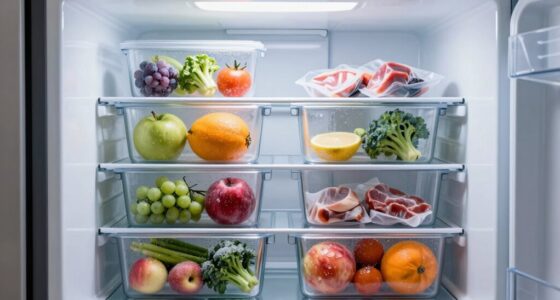
To keep your fruits fresh and nutritious, store them properly by adjusting temperature, humidity, and airflow. Ripe fruits like apples and pears should go in the fridge’s crisper wrapped in paper towels, while berries need breathable containers to prevent mold. Tropical fruits and melons are best kept at room temperature until ripe, then refrigerated. Regularly check for spoilage and organize your produce to minimize waste. Keep exploring for more tips to extend freshness and enjoy healthy meals.
Key Takeaways
- Use breathable containers and proper temperature control to extend fruit freshness and prevent spoilage.
- Store delicate fruits in the refrigerator’s crisper drawer for optimal humidity and airflow.
- Regularly check fruits for signs of over-ripening or spoilage, removing affected items promptly.
- Separate ethylene-producing fruits like bananas from others to slow ripening and maintain quality.
- Handle fruits gently and organize storage by ripening stage to minimize waste and maximize health benefits.
breathable fruit storage containers
As an affiliate, we earn on qualifying purchases.
As an affiliate, we earn on qualifying purchases.
Understanding How Fruits Ripen and Spoil
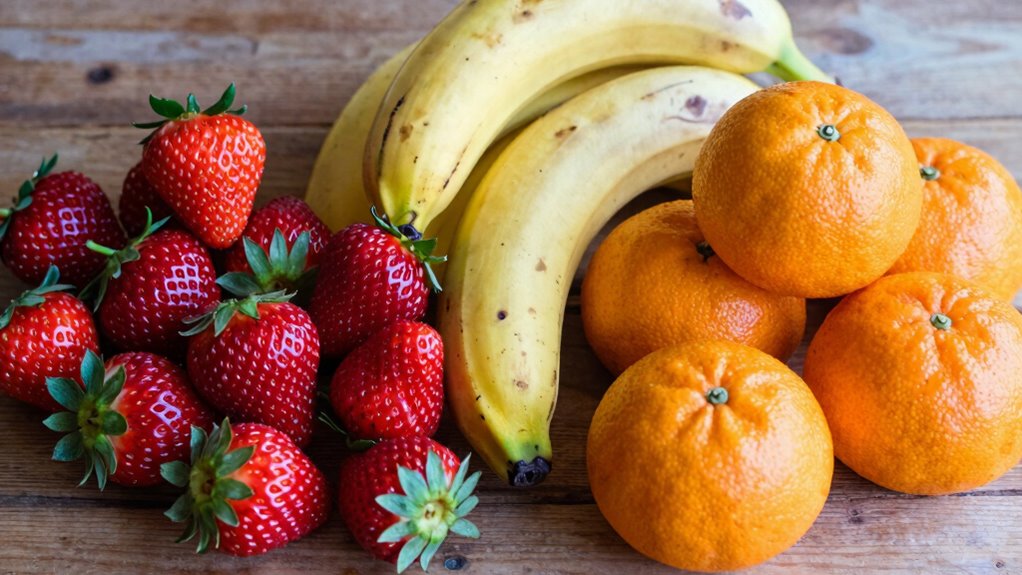
Fruits ripen and spoil through natural biological processes driven by enzymes and microorganisms. As they ripen, the fruit’s color changes, signaling its progress—many fruits turn from green to vibrant shades like red, yellow, or orange. Ripening enzymes, such as polyphenol oxidase and amylase, break down starches into sugars, making the fruit sweeter and softer. This process also affects texture and aroma, indicating ripeness but also vulnerability to spoilage. You’ll notice that overripe fruits often develop spots, become mushy, or emit unpleasant odors. Understanding how these processes work helps you recognize the signs of ripening and spoilage, so you can enjoy fresh, healthy fruit at its best. Monitoring biological processes in fruits can help extend their freshness and reduce waste. Being aware of enzymatic activity can also guide you in selecting the perfect fruit for your needs. Additionally, understanding fruit ripening stages can assist in planning your purchases and storage to maximize freshness. Recognizing the role of microorganisms in spoilage can further help in preventing fruit decay and maintaining quality. Knowledge of environmental factors such as temperature and humidity also plays a crucial role in controlling the ripening and spoilage process.
refrigerator crisper drawer organizer
As an affiliate, we earn on qualifying purchases.
As an affiliate, we earn on qualifying purchases.
Choosing the Best Storage Methods for Your Fruits

Choosing the right storage method can substantially extend the freshness and quality of your fruits. Proper storage preserves fruit flavor and prevents spoilage. For most fruits, maintaining appropriate storage temperatures is key—refrigerate berries and soft fruits to slow ripening, while tropical fruits like bananas and pineapples do better at room temperature until ripe.
Proper storage extends fruit freshness by controlling temperature, humidity, and airflow.
Consider these tips:
- Use perforated containers or breathable bags to allow airflow and reduce moisture buildup.
- Keep fruits separate based on ripeness and moisture content to prevent overripening or mold.
- Store delicate fruits in the crisper drawer of your fridge, where temperature and humidity are controlled for ideal freshness.
- Understanding fruit storage techniques can help you make the most of your produce and reduce waste. Additionally, being aware of water quality in your home can influence how well your produce stays fresh, especially if you rinse fruits with tap water before storage. Proper water quality and storage environment are both important factors in maintaining fruit freshness effectively. Ensuring your storage space is free from moisture buildup can further prevent mold and prolong shelf life. Maintaining a clean storage area also helps minimize mold growth, which can otherwise lead to quicker spoilage.
As an affiliate, we earn on qualifying purchases.
Tips to Keep Berries and Soft Fruits Fresh Longer

To keep berries and soft fruits fresh for as long as possible, proper handling and storage techniques are essential. Start by inspecting berry varieties and soft fruit for any signs of damage or mold, removing spoiled items immediately. Rinse soft fruit gently in cold water and dry thoroughly with a paper towel, as excess moisture accelerates spoilage. Store berries and soft fruit in breathable containers or containers lined with paper towels to absorb excess moisture. Keep them in the refrigerator’s main compartment, ideally in the crisper drawer set to high humidity. Avoid overcrowding, which can crush delicate berries. By handling your soft fruit carefully and maintaining the right storage environment, you’ll extend freshness and enjoy their vibrant flavors longer. Additionally, understanding proper storage methods can help preserve their nutritional value and prevent spoilage more effectively. Ensuring the correct temperature control is also vital to slow down ripening and microbial growth. Proper temperature regulation can help maintain optimal freshness and quality over time.
fruit ripening and spoilage monitor
As an affiliate, we earn on qualifying purchases.
As an affiliate, we earn on qualifying purchases.
How to Store Apples and Pears for Maximum Freshness
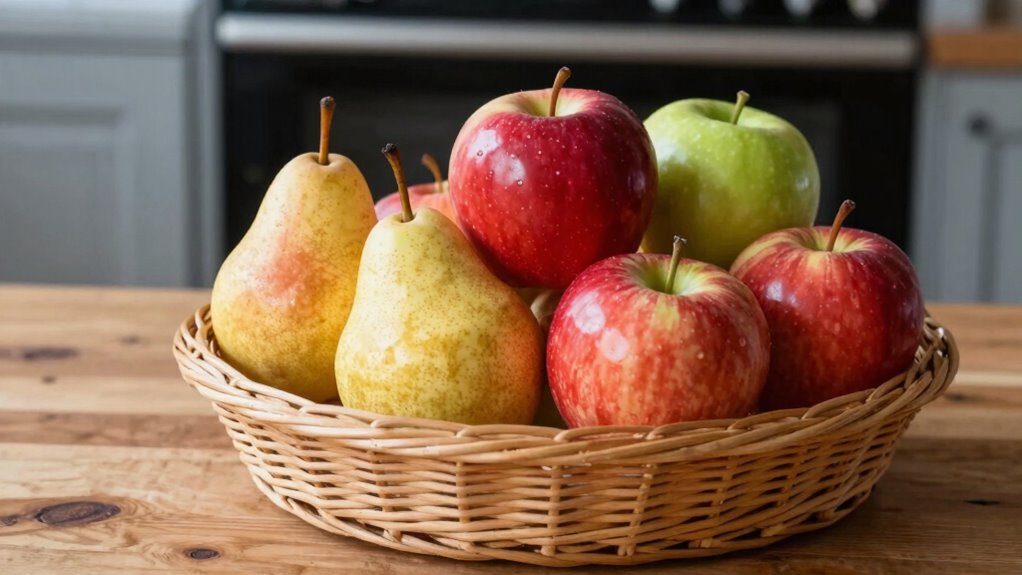
Storing apples and pears properly can considerably extend their freshness and flavor. To keep apple varieties and pear varieties at their best, store them in a cool, humid environment. Ideally, place them in the refrigerator’s crisper drawer, wrapped in a paper towel to absorb excess moisture. This helps prevent spoilage and maintains firmness. Be mindful of ripeness; store ripe fruit separately to avoid overripening. Regularly check for bruises or signs of spoilage, removing affected fruit immediately. Additionally, avoid storing them near strong-smelling foods, as they can absorb odors and lose their natural flavor. Keep apples and pears away from strong-smelling foods to preserve their natural flavor. Store different apple varieties and pear varieties separately to prevent flavor transfer. Use perforated plastic bags to regulate humidity and improve airflow. Proper storage techniques are also essential for maintaining fruit quality, ensuring your produce remains fresh for as long as possible. Proper storage conditions are crucial for extending the lifespan of your fruit and maintaining its nutritional value. Additionally, maintaining consistent temperature and humidity levels can further optimize storage outcomes.
Keeping Citrus Fruits Juicy and Tasting Great
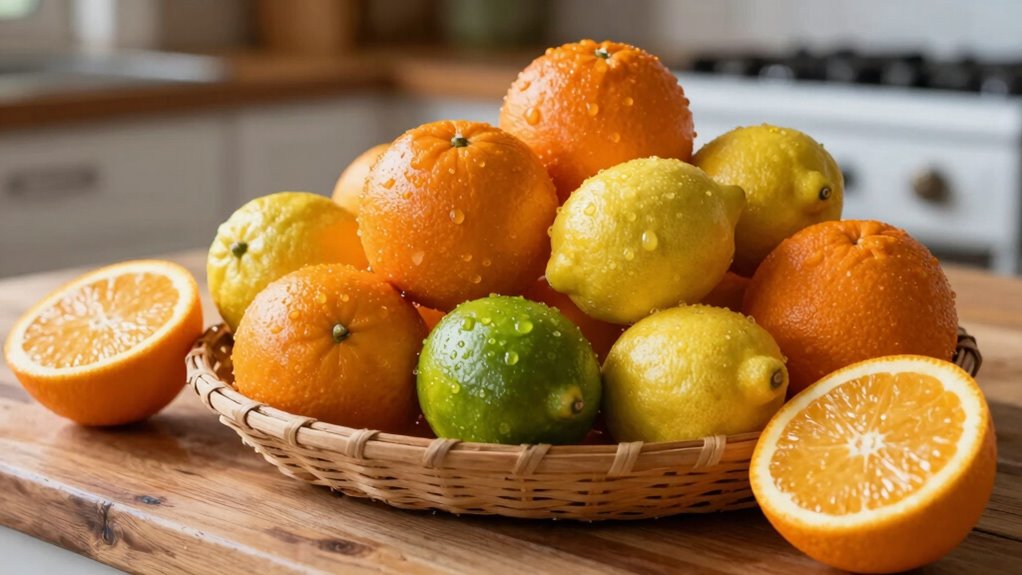
Ever wonder how to keep your citrus fruits juicy and bursting with flavor? The key lies in understanding different citrus varieties and their ideal storage methods. Most citrus, like oranges, grapefruits, and tangerines, stay freshest when kept in a cool, dry place or in the refrigerator’s crisper drawer. Juicy preservation depends on maintaining proper humidity and avoiding temperature fluctuations. Store citrus separately from ethylene-producing fruits like bananas to prevent premature spoilage. For maximum juiciness, consume your citrus fruits within a week of purchase. If you notice slight softness or dryness, a quick room temperature rest can sometimes revive some moisture. Proper storage guarantees your citrus remains flavorful, juicy, and ready to enjoy whenever you crave that zesty burst of freshness. Additionally, understanding the best storage conditions for different citrus varieties can help extend their freshness and flavor, which is essential for preserving their quality over time. Maintaining consistent storage temperatures can significantly impact how long your citrus stays fresh and juicy. Incorporating the right humidity control techniques can further enhance their longevity. Being aware of the ideal storage temperature for citrus can also make a significant difference in maintaining their peak quality.
Best Techniques for Preserving Melons and Tropical Fruits

While citrus fruits benefit from specific storage methods, melons and tropical fruits require their own careful techniques to stay fresh and flavorful longer. To preserve their fruit flavor, you should store melons and tropical fruits properly. Keep ripe melons in the refrigerator, ideally in a breathable storage container to prevent moisture buildup. For tropical fruits like mangoes and pineapples, store uncut fruits at room temperature until ripe, then transfer to the fridge. When storing cut fruits, always use airtight storage containers to prevent spoilage and flavor loss. To maintain the best fruit flavor, avoid stacking heavy items on delicate fruits, and consume cut fruits within a few days for the best taste and texture. Proper storage ensures your tropical fruits stay juicy and delicious. Additionally, understanding the best storage techniques can help maximize freshness and flavor retention.
How to Slow Down Ripening and Prevent Over-Storage

To slow down ripening and prevent over-storage, you need to control the environment around your fruits carefully. The ripening speed is directly affected by storage temperature; cooler temperatures slow down the process, while warmth accelerates it. Keep most fruits in the refrigerator, ideally between 35-40°F, to extend freshness and delay over-ripening. Ethylene-producing fruits, like bananas and tomatoes, should be stored separately to prevent premature ripening of other produce. Avoid exposing fruits to direct sunlight or high temperatures, which can speed up ripening. Use perforated containers or breathable bags to allow airflow and reduce moisture buildup. By managing storage temperature and environment, you can effectively slow ripening and prolong the shelf life of your fruits. Understanding fruit ripening processes can help you optimize storage conditions even further, especially by controlling ethylene exposure, which plays a significant role in ripening.
Signs Your Fruit Has Gone Bad and When to Discard
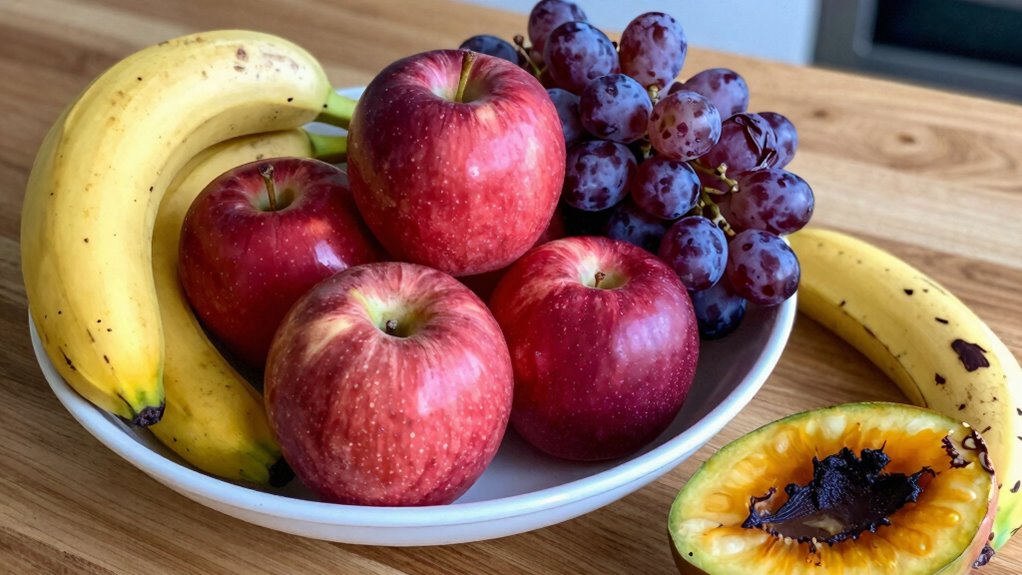
When your fruit shows visible mold or dark spots, it’s time to toss it out. An unpleasant odor or a soft, mushy texture are also signs that it’s gone bad. Trust these clues to decide when your fruit is no longer safe to eat.
Visible Mold or Spots
Visible mold or dark spots on fruit are clear signs that it has gone bad and should be discarded. Fruit mold indicates spoilage and can pose health risks, so don’t try to salvage it. When spotting mold or spots, avoid attempting spot removal, as it doesn’t eliminate hidden bacteria or spores. Instead, inspect your fruit carefully:
- Look for fuzzy, discolored patches that are typical of fruit mold.
- Check if dark spots are soft or sunken, signaling decay.
- Discard fruit with extensive mold or widespread spots, even if some areas seem unaffected.
Unpleasant Odor
A strong, unpleasant odor is a clear indicator that your fruit has gone bad and should be discarded. When you notice a sour or rotten fruit scent, it’s time to check if the fruit is spoiled. Proper storage containers can help contain odors, but they won’t mask a bad smell.
| Good Fruit Scent | Bad Fruit Scent |
|---|---|
| Fresh, sweet aroma | Sour, rancid smell |
| Light, fruity fragrance | Pungent, foul odor |
| Pleasant and inviting | Overpowering, offensive |
If your stored fruit emits a strong, unpleasant odor, it’s best to discard it to avoid spoilage spreading to other produce. Always trust your nose—your sense is the best guide for fresh, safe fruit.
Soft or Mushy Texture
A soft or mushy texture is often one of the first signs that your fruit has started to spoil. When you notice this change, it indicates the fruit’s texture has broken down, making it less appealing and possibly unsafe to eat. Soft fruit handling requires care; avoid pressing too hard or squeezing, which can hasten spoilage.
Signs to watch for include:
- Excessive softness or liquid seepage from the fruit
- Noticeable indentations or bruising
- An off smell accompanying the mushiness
Discard fruit with a mushy texture immediately, as it may harbor bacteria or mold. Proper storage can slow this process, but once the fruit becomes overly soft, it’s best to avoid consuming it to prevent foodborne illness.
Organizing Your Fruit Storage to Reduce Waste and Stay Fresh

Organizing your fruit storage effectively can considerably reduce waste and keep your produce fresher longer. Start by grouping fruits based on their ripening needs, such as seasonal varieties that ripen simultaneously. Use fruit pairing strategies to store complementary items together, like apples and pears, which can ripen evenly and stay fresh longer. Keep ripening fruits separate from already ripe ones to prevent over-softening. Designate specific areas for different types—berries in the fridge, tropical fruits in a cool, dry place. Regularly check and remove spoiled items to prevent spoilage from spreading. Proper labeling helps you track freshness. By organizing this way, you minimize waste, enjoy seasonal varieties at their peak, and ensure your fruit stays delicious and nutritious longer.
Frequently Asked Questions
How Can I Tell if Fruit Is Ripe Without Tasting It?
You can tell if fruit is ripe without tasting it by looking for ripeness indicators like color and firmness. For example, ripe bananas are bright yellow with no green tips, while peaches should have a slight give when gently pressed. Apples should be firm but not hard, and berries should be plump and vibrant. Trust these cues to choose fruit that’s at its peak for delicious, healthy eating.
Are There Specific Storage Tips for Organic Versus Conventional Fruits?
Yes, there are specific storage tips for organic versus conventional fruits. For organic preservation, store organic fruits in breathable containers and keep them separate from conventional fruits to prevent cross-contamination. Organic produce often lacks preservatives, so you should consume it sooner. For conventional freshness, use airtight containers and refrigeration to extend shelf life. Proper storage helps maintain quality, flavor, and nutritional value regardless of whether fruits are organic or conventional.
Can Freezing Fruits Affect Their Nutritional Value or Texture?
Freezing fruits can somewhat impact their texture, making them softer once thawed, but it generally preserves their nutritional retention well. The freezing impact on nutrients is minimal if you freeze fruits at their peak ripeness quickly. To maximize nutritional benefits, use airtight containers and avoid thawing multiple times. So, freezing is a great way to extend fruit shelf life without considerably compromising their health benefits, as long as you store them properly.
What Is the Best Way to Store Cut Fruit Safely?
To store cut fruit safely, you should place it in airtight storage containers to prevent spoilage and contamination. Keep the containers in the refrigerator, ideally at or below 40°F, to extend its shelf life. Make sure to consume the fruit within 2-3 days for peak freshness and safety. Proper storage containers and timely consumption are key to maintaining quality and preventing foodborne illnesses.
How Do Climate and Humidity Impact Fruit Storage at Home?
Climate and humidity considerably impact your fruit storage. You should prioritize temperature control; cooler temperatures slow down ripening and spoilage. Humidity levels matter too—high humidity helps keep fruits like berries fresh, while low humidity prevents mold. Adjust your storage methods based on your climate. In humid areas, use ventilated containers, and in dry climates, keep fruits in sealed bags to maintain ideal freshness and extend shelf life.
Conclusion
Now that you’re armed with expert tips, your fruit will stay fresher longer—and that means fewer trips to the store and more vibrant, healthy snacks. Think of your fridge as a treasure chest, where proper storage reveals nature’s sweetest secrets. Don’t let ripeness sneak up on you; master the art of preservation, and your fruit will reward you with flavor and nutrition, turning every bite into a celebration of nature’s bounty.