
TL;DR

Get health and wellness essentials delivered free with Prime
- Fast, free delivery on millions of items
- Prime Video, Amazon Music and more included
- Member-only deals all year
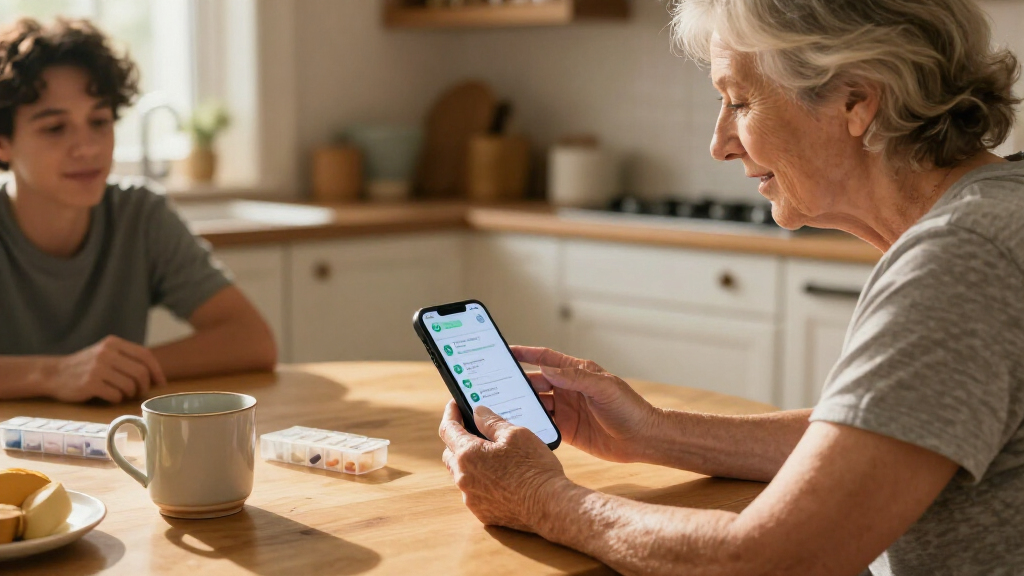
A report by a researcher who studies older adults and technology says AI chatbots can help older adults understand health information, but their answers may be wrong or misleading. The researcher recommends “informed skepticism”: check sources, avoid sharing identifying details and do not treat chatbot responses as a substitute for professional care.
A report published by Medical Xpress says AI chatbots and voice assistants are already being used by older adults to seek health information, while warning that their answers can be inaccurate or overly agreeable. The researcher behind the report recommends “informed skepticism”: use the tools to understand information, but check their responses and do not rely on them in place of medical professionals.
The report describes the appeal of chatbots for health questions: they can respond quickly, explain complicated topics in simpler language and provide a way to ask about sensitive subjects. That convenience may matter to people who face a long wait for an appointment or find it difficult to navigate information across multiple websites. The researcher also says using these tools at home may help older adults feel more involved in managing their health.
A 2025 poll conducted by the researcher and colleagues found that one in two older adults surveyed reported using AI chatbots or voice assistants, and about 14% said they used them to access health information. Separately, a survey of 300 adults found that about one in five turned to AI chatbots with health questions. These are survey findings, not estimates that establish how all older adults use the technology.
The report warns that chatbots can give incorrect advice, misclassify conditions or agree with a user in ways that produce inaccurate answers. Since chatbots generate responses by predicting likely language patterns, a confident-sounding reply is not proof that it is correct. The report also cites a survey finding that four in five respondents who had used a health chatbot said they never verified its output. The report says chatbot warnings about mistakes can be easy to miss.
Fast Answers Need Careful Checks
For older adults managing chronic conditions or new diagnoses, a quick explanation can make health information easier to understand and help them prepare questions for a clinician. Yet a mistake about symptoms, medication or a potential emergency could have consequences if a user treats the response as authoritative. The report’s central point is not that older adults should avoid AI, but that speed and accessibility do not guarantee accuracy.
The issue also concerns privacy and independence. Chatbots can offer a private-feeling way to ask questions, and using them at home may give users more control over how they seek information. But public chatbot providers may retain prompts to help train future systems, according to the report. Users therefore face a trade-off: convenience and explanation on one side, and the need to verify information and limit personal disclosures on the other.
Products Worth Considering

Instant Pot Duo 6-Quart 7-in-1 Electric Pressure Cooker

Instant Pot Pro 8-Quart 10-in-1 Electric Pressure Cooker

KitchenAid Classic Series 4.5 Quart Tilt-Head Stand Mixer (K45SS), Onyx Black
As an affiliate, we earn on qualifying purchases.
How Older Adults Use AI
The report challenges the stereotype that older adults are generally uninterested in technology. Its author studies how people interact with computers and technology, including older adults’ use of voice assistants and chatbots such as Alexa and ChatGPT. The cited poll indicates that chatbot and voice-assistant use is present among older adults, though it does not show that every person in this age group uses the tools or uses them for health questions.
The author’s research also suggests that some older people prefer to begin and finish a voice-assisted search on the same device. The report contrasts this with younger adults, who may treat an AI response as one step and continue searching elsewhere. If users are less likely to move between devices or formats, they may be less likely to check a chatbot’s answer against other sources. The report says that difference makes clear guidance on verification especially relevant.
In the United States, the bipartisan Aging with AI Act was introduced in the Senate in 2026. The report says the bill points to a need for more research into AI’s benefits and risks for older adults; it does not describe the bill as enacted law.
““informed skepticism””
— The report’s author, who studies older adults’ use of technology
Limits of the Survey Evidence
The material does not provide the full methods, dates of fieldwork or demographic breakdown for the 2025 poll of older adults, so its results should not be treated as a precise measure of national use. The separate survey of 300 adults is also limited in size, and the supplied report does not give enough information to judge how representative its respondents were. The findings describe the surveyed groups, not every older adult or chatbot user.
The report does not identify which chatbot systems produce the most accurate health information, or quantify how often their errors cause harm. It also does not establish whether the cited research strategies reduce mistakes in real-world health decisions. Privacy practices differ among services, and the material does not specify how long each provider retains prompts or how settings vary by product. Readers should check the policies and controls of the service they use.
Practical Checks Before Asking
The report recommends learning how to opt out of AI-generated search results where that option exists, and using tools within chatbots that show or link to information sources. It says Google Search users can add “-ai” to a query to remove AI content from the results, while noting that search engines handle AI features differently. Availability and behavior can change, so users should check the controls currently offered by their service.
For health questions, the report’s guidance is to cross-check chatbot responses against reliable published sources and consult a qualified health professional for medical decisions. It also recommends leaving out personally identifiable information when using public chatbots. The next broader development will depend on further research and policy discussions, including the 2026 Senate bill; the supplied material does not give a legislative timetable or a next action date.
Key Questions
Can older adults use AI chatbots for health information?
The report describes chatbots as potentially useful for quick explanations and summaries. It also warns that answers can be inaccurate, so they should be checked rather than treated as medical advice.
What does “informed skepticism” mean?
It means staying open to information a chatbot provides while checking its sources and credibility. A fluent or confident answer alone does not show that the answer is correct.
How common was chatbot use among older adults in the cited poll?
A 2025 poll conducted by the report’s author and colleagues found that one in two older adults surveyed used AI chatbots or voice assistants; about 14% reported accessing health information through them. The supplied material does not establish that these figures represent all older adults.
The report says researchers generally recommend not including personally identifiable information because public chatbot providers may retain prompts. Users should review the privacy settings and policies for the service they use.
Source: rss