

TL;DR

Get health and wellness essentials delivered free with Prime
- Fast, free delivery on millions of items
- Prime Video, Amazon Music and more included
- Member-only deals all year
A MedPage Today opinion article by South Asian physician Hamayle Saeed describes a mismatch between diabetes screening guidance for Asian Americans and BMI thresholds commonly used in GLP-1 coverage decisions. The article cites research on diabetes risk, trial eligibility and semaglutide outcomes, but does not establish that all insurers or patients face the same rules.
A South Asian physician says she was screened for diabetes at a BMI of 23 under guidance recognizing elevated risk among Asian Americans, but could not qualify for a GLP-1 drug at a BMI of 26.5 without diabetes. In an October 31 MedPage Today opinion article, Hamayle Saeed argues that the contrast exposes a gap between ethnicity-aware clinical thresholds and the criteria used for medication access.
Saeed writes that the American Diabetes Association’s guidance led her doctor to begin diabetes screening once her BMI passed 23. She says she asked about a GLP-1 receptor agonist but was told she did not meet the relevant threshold: the article describes FDA-approved weight-management eligibility as generally beginning at a BMI of 30, or 27 with a weight-related condition. Saeed says her BMI was 26.5 and she did not have diabetes. Her account is a personal experience; the article does not identify the clinician, insurer or specific coverage decision.
The article argues that standard BMI thresholds may not reflect differences in body composition and diabetes risk across populations. It cites World Health Organization action points of BMI 23 and 27.5 for Asian populations, and a study of nearly 1.5 million adults in England that estimated diabetes risk among South Asian adults at BMI 23.9 was comparable to the risk among white adults at BMI 30. The figures describe population-level research, not an individual diagnosis or treatment decision.
Saeed also points to a 2026 analysis of 352 GLP-1 trials, which she says found BMI criteria particularly restrictive for Asian participants. In the analysis, a BMI cutoff of 30 made 41.5% of non-Asian American adults eligible, compared with 13.5% of Asian Americans and 7.2% of Korean adults. She cites the 2025 STEP 11 semaglutide trial in South Korea and Thailand, where participants with BMI of at least 25 lost an average of 16% of body weight, compared with 3.1% for placebo. A post hoc subgroup below BMI 30 showed 17.6% weight loss among 45 semaglutide recipients and 4.4% among 23 placebo recipients.
The Gap Between Risk and Coverage
The concern is that patients may be identified as being at higher risk at a lower BMI, yet still face coverage rules built around thresholds that do not make the same adjustment. Saeed says this can leave some Asian patients with elevated metabolic risk outside the usual BMI criteria for weight-management medication unless they have an additional qualifying condition. That raises practical questions for clinicians and patients about how risk assessments translate into treatment access.
The article also describes a changing coverage environment. Saeed reports that California’s Medi-Cal program dropped coverage for GLP-1 drugs prescribed for weight loss in January 2026 and that MassHealth followed in July. Such decisions can affect access independently of clinical guidance, though the article does not give enrollment figures or document the impact on particular patient groups.
Evidence cited in the opinion article may inform debate about trial design and reimbursement policy, but it does not establish that a lower BMI threshold should automatically lead to GLP-1 treatment. Treatment decisions and coverage depend on the medicine’s approved use, a patient’s health circumstances and the applicable payer rules.
Products Worth Considering

Instant Pot Pro 8-Quart 10-in-1 Electric Pressure Cooker, Black
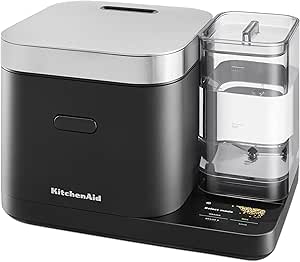
KitchenAid 8-Cup Grain and Rice Cooker with Integrated Scale, Black Matte

Instant Pot Duo 6-Quart 7-in-1 Electric Pressure Cooker
As an affiliate, we earn on qualifying purchases.
How BMI Thresholds Diverged
The article traces the mismatch to different purposes for different thresholds. A screening cutoff is intended to identify people who may need further evaluation; a drug label or insurer’s prior-authorization rule determines when a medicine may be prescribed or covered. Saeed says Asian-specific BMI and waist thresholds have increasingly appeared in clinical guidance, while payer forms have often retained BMI values of 30 or 27.
She notes that the ADA’s 2026 Standards of Care advise clinicians to confirm excess adiposity using cutoffs appropriate to ethnicity and specifically mention South Asian patients. She also cites revised 2026 semaglutide labeling and tirzepatide labeling, which she says state the indication in terms of obesity or overweight with a weight-related condition without listing a BMI number in that indication. The article argues that trial criteria and payer forms can continue to rely on the familiar 30 and 27 thresholds even when label wording differs.
International approaches vary. Saeed says the UK’s National Institute for Health and Care Excellence uses a BMI threshold of 35 with a comorbidity for tirzepatide, while advising a 2.5-point reduction for several ethnic groups, including South Asian and Chinese patients. Those policies are not directly equivalent to U.S. labeling or insurance coverage, but illustrate how systems may account for risk differences.
“The ADA guideline that flags me for annual diabetes screening and the prior authorization form that denies me the drug are describing the same 26.5. Only one of them was written with an Asian body in mind.”
— Hamayle Saeed, MD, in MedPage Today
What Coverage Rules Still Show
The article does not provide the prior-authorization form or identify the insurer involved in Saeed’s case, so it is not possible to determine which specific policy governed her request. Coverage criteria can differ by insurer, plan, drug and indication. The reported account should not be read as evidence that every Asian American patient with a BMI below 30 is denied GLP-1 treatment.
It is also unclear how widely U.S. payers have updated their forms following changes to drug labeling and clinical guidance. The source does not report a survey of insurers or a current national count of patients affected. The cited trial results and population-risk estimates do not by themselves establish an appropriate coverage threshold for every patient or prove the same benefits across all Asian ethnic groups.
Policy Reviews and Patient Eligibility
The next practical steps are likely to depend on individual insurers and health systems reviewing their coverage criteria, as well as clinicians applying current guidance to patient-specific risk. Saeed’s article calls attention to the difference between screening and treatment rules, but it does not announce a new policy or a scheduled change to U.S. coverage.
For patients, the applicable drug indication and payer requirements remain the immediate factors in access. Any change to thresholds would require decisions by regulators, insurers or public programs; the article does not say that such changes are underway. Further reporting would be needed to establish how many patients encounter the same gap and whether coverage policies are changing.
Key Questions
What happened in the report?
South Asian physician Hamayle Saeed wrote that her doctor began diabetes screening at a BMI above 23, but she did not qualify for a GLP-1 under the BMI criteria she describes because her BMI was 26.5 and she did not have diabetes.
Why does the article discuss a BMI of 23?
Saeed says Asian-specific guidance recognizes that diabetes risk can arise at lower BMI levels in Asian populations. A screening threshold prompts evaluation; it does not automatically determine eligibility for a drug.
What BMI thresholds for GLP-1 treatment does the article cite?
The opinion article describes common weight-management criteria as a BMI of 30 or higher, or 27 or higher with at least one weight-related condition. Individual drug labels and payer policies can differ, so patients should check the rules for their specific plan and prescription.
Do the cited studies show that everyone below BMI 30 should receive semaglutide?
No. The article cites trial results and population-level risk findings, including a subgroup analysis, but those results do not establish that every person below BMI 30 should receive treatment. Eligibility and clinical decisions depend on individual circumstances and applicable guidance.
Has U.S. insurance coverage changed in response to the article’s concerns?
The source does not report a new coverage change. Saeed says Medi-Cal and MassHealth ended coverage for GLP-1 drugs prescribed for weight loss in 2026, but it does not provide evidence of a national policy update or a review by all insurers.
Source: medpagetoday.com