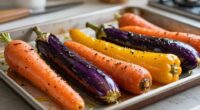
Roasting vegetables is a simple, healthy way to boost flavor and improve texture for everyday meals. Start by choosing fresh, firm, seasonal vegetables and washing them thoroughly. Preheat your oven to around 400°F, toss the veggies with oil and seasonings, then roast until they are tender and caramelized, creating a crispy exterior. Proper tools and techniques guarantee the best results. Keep leftovers properly stored, and you’ll discover even more ways to enjoy roasted vegetables.

Get health and wellness essentials delivered free — and shop member deals
- Fast, free delivery on millions of items
- Access to Prime Big Deal Days deals on October 6–7
- Prime Video, Amazon Music and more included
Key Takeaways
- Select fresh, seasonal vegetables and store them properly to maximize flavor and nutritional value.
- Preheat the oven to 400-425°F and use the right tools for even, crispy roasting.
- Toss vegetables with oil and seasonings to enhance natural sweetness and develop rich flavors through caramelization.
- Achieve perfect texture with high heat, creating tender insides and crispy exteriors.
- Store leftovers correctly and reheat to maintain flavor and texture for healthy, convenient meals.
oven roasting vegetables baking sheet
As an affiliate, we earn on qualifying purchases.
As an affiliate, we earn on qualifying purchases.
How to Roast Vegetables: A Step-by-Step Guide
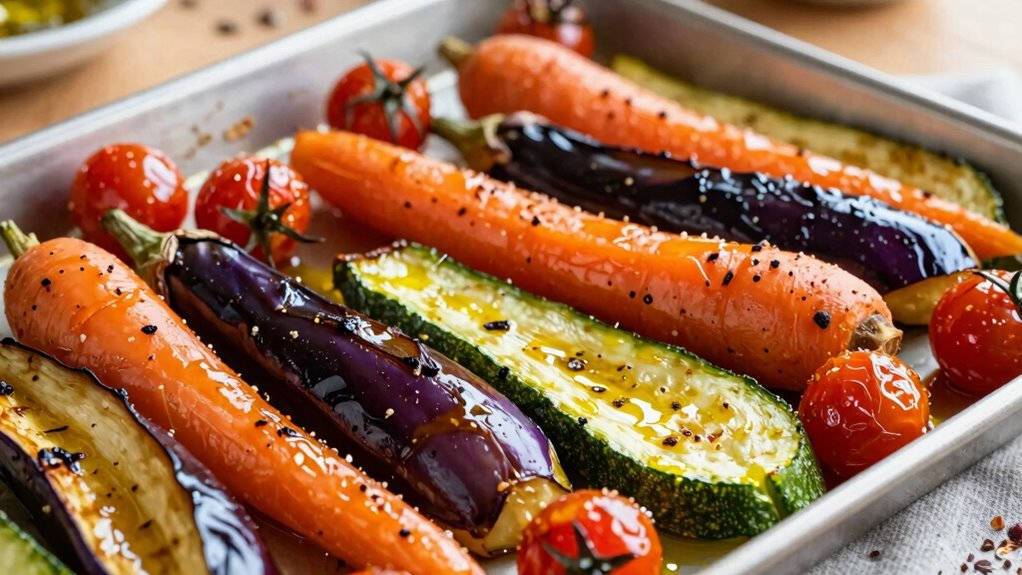
Roasting vegetables is a simple way to bring out their natural flavors and create delicious, caramelized dishes. Before you start, proper vegetable storage is key—keep vegetables in a cool, dry place or the fridge to preserve freshness and flavor. When preparing for roasting, wash and cut your vegetables into uniform pieces for even cooking. Toss them with oil and your favorite seasonings, ensuring they’re well coated to maximize flavor enhancement. Preheat your oven to the right temperature, usually around 400°F (200°C). Spread the vegetables in a single layer on a baking sheet, avoiding overcrowding. Roast, flipping halfway through, until they’re golden and tender. Proper storage and preparation make all the difference in achieving perfectly roasted vegetables with rich flavor. Additionally, choosing seasonal vegetables supports biodiversity and promotes sustainable eating practices. Maintaining optimal vegetable freshness through proper storage techniques can significantly improve roasting outcomes and flavor development. Using fresh, seasonal vegetables can also enhance the nutritional value of your dishes, making your meals both tasty and healthy. Incorporating appropriate storage methods can further ensure your vegetables stay fresh longer, leading to better roasting results.
As an affiliate, we earn on qualifying purchases.
How to Choose the Best Vegetables for Roasting
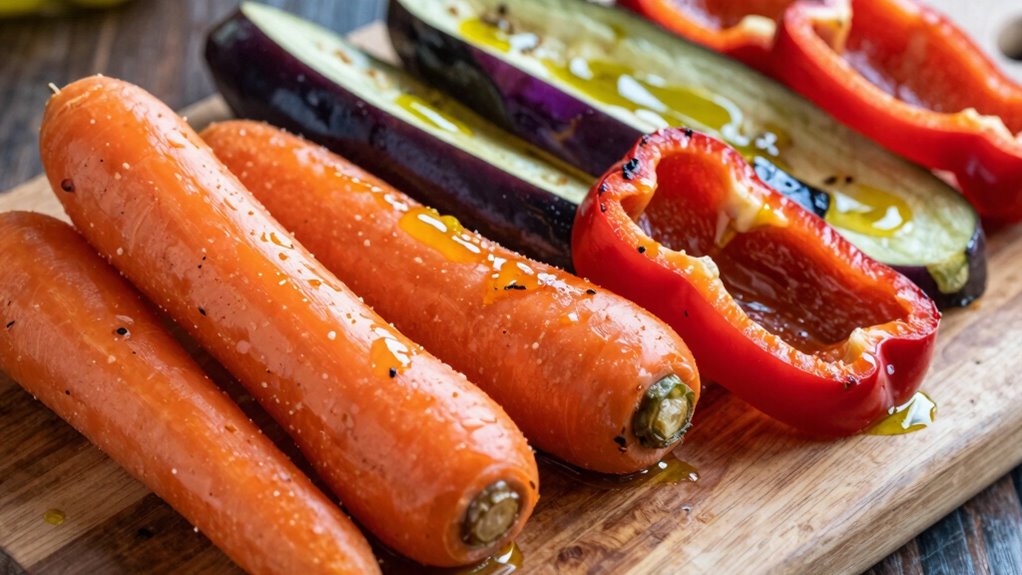
Choosing the right vegetables can make a big difference in your roasting results. Start by selecting vegetables with maximum vegetable freshness—firm, brightly colored, and free of blemishes. Fresh produce roasts more evenly and tastes better. Opt for seasonal selection whenever possible, as seasonal vegetables are at their peak flavor and nutrient content, enhancing your dish. For example, carrots, Brussels sprouts, and squash are ideal in fall, while zucchini, peppers, and tomatoes shine in summer. Avoid vegetables that are wilted or soft, as they may not hold up well during roasting. Also, consider texture: firmer vegetables like carrots or potatoes hold their shape better, while softer ones like eggplant or zucchini can become mushy if overcooked. Paying attention to cooking science can help you understand how different vegetables respond to heat, allowing you to tailor your roasting time for optimal results. Choosing fresh, seasonal vegetables sets the foundation for delicious roasted dishes.
As an affiliate, we earn on qualifying purchases.
Essential Tools and Techniques for Perfectly Roasted Veggies
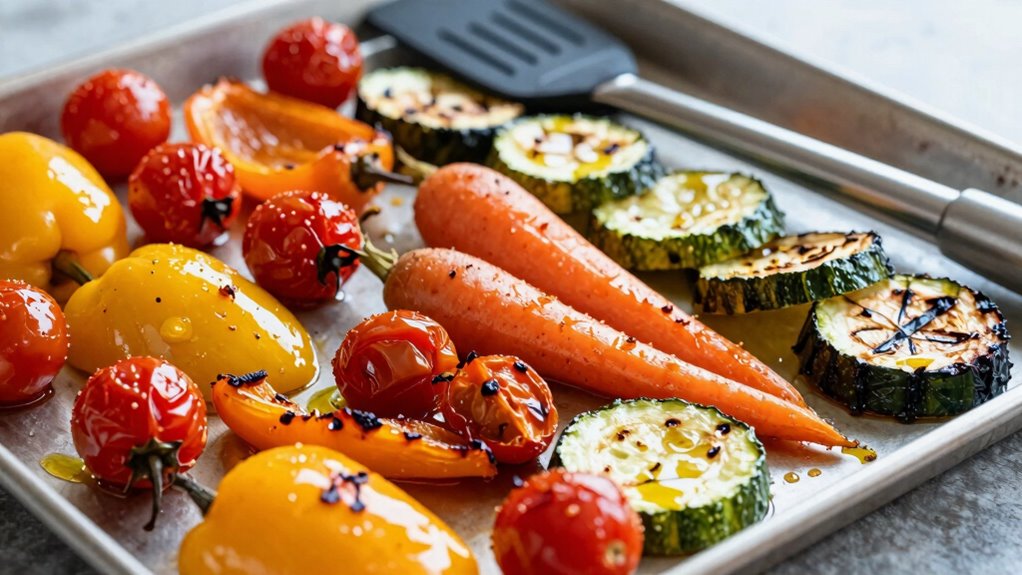
To get perfectly roasted vegetables, you need to focus on choosing the right oven temperature, preparing your veggies properly, and using the right tools. Setting the ideal temperature guarantees even cooking and caramelization, while proper preparation prevents sogginess and promotes crispness. Having essential roasting tools on hand makes the process smoother and results consistently delicious vegetables.
Choosing the Right Oven Temperature
Have you ever wondered why your roasted vegetables sometimes turn out soggy or unevenly cooked? The key is choosing the right oven temperature. Too low, and veggies won’t crisp up, becoming limp instead. Too high, and they might burn on the outside while remaining undercooked inside. For even roasting, set your oven between 400-425°F (200-220°C). This range balances oven safety and energy efficiency, preventing overheating and reducing unnecessary energy use. Always preheat the oven fully before roasting, which ensures consistent heat distribution. Keep an eye on your oven’s temperature with an accurate thermometer to avoid hot spots. Properly selecting the right temperature not only enhances flavor and texture but also keeps your kitchen safe and your energy bills in check.
Proper Vegetable Preparation Techniques
Getting perfectly roasted vegetables starts with proper preparation, which involves using the right tools and techniques to guarantee even cooking and ideal texture. Start by vegetable peeling when necessary, removing skins that might burn or hinder even heat distribution. Use sharp knives and proper cutting techniques to ensure uniform pieces, which help vegetables cook evenly. Consistent size and shape, such as slicing or chopping into similar chunks, promote uniform roasting and texture. Be mindful of the cut thickness: thinner pieces roast faster, while thicker ones need more time. Proper vegetable preparation not only improves flavor and presentation but also assures your vegetables cook evenly without burning or remaining underdone. Mastering peeling and cutting techniques sets the foundation for perfectly roasted vegetables every time.
Essential Roasting Tools
Equipping yourself with the right roasting tools is essential for achieving perfectly cooked vegetables. Start with a sharp vegetable peeler to guarantee clean, even vegetable peeling, which helps them cook uniformly. A high-quality baking sheet or roasting pan with a rim prevents juices from spilling and promotes even heat distribution. When it comes to roasting rack selection, choose a sturdy rack that elevates your vegetables, allowing hot air to circulate and ensuring crisp, evenly browned edges. Using a roasting rack also prevents sogginess by allowing excess moisture to drain away. Keep your tools simple but effective, as they’re key to mastering roasting techniques. With the right vegetable peeling tools and a reliable roasting rack, you’re set up for delicious, perfectly roasted vegetables every time. Additionally, understanding the importance of proper tools and techniques can significantly enhance your cooking results.
As an affiliate, we earn on qualifying purchases.
Why Roasting Enhances the Natural Flavors of Vegetables
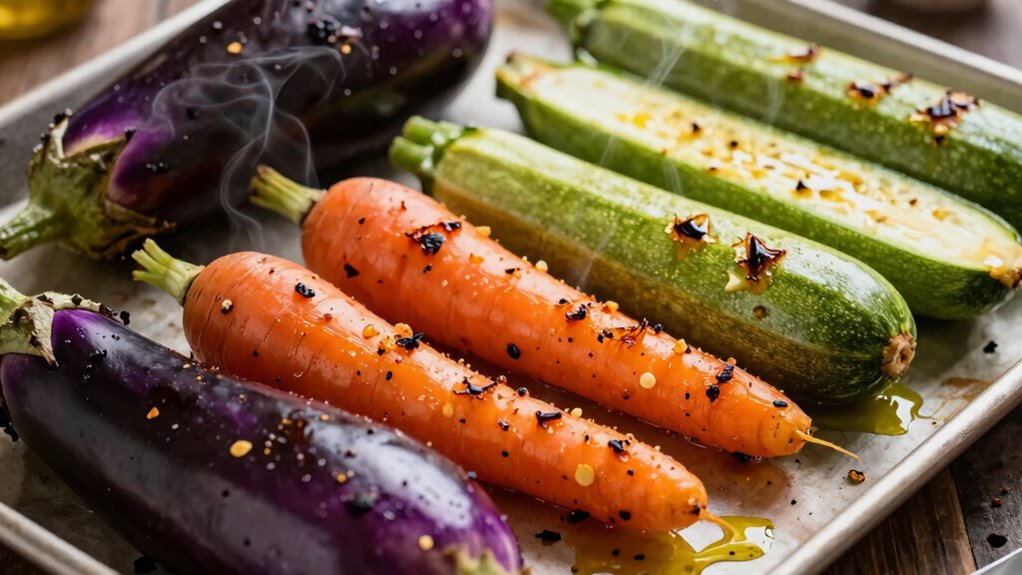
When you roast vegetables, caramelization brings out richer, deeper flavors you might not notice otherwise. The natural sweetness becomes more intense, making each bite more satisfying. Plus, the texture gains a pleasing, tender-crisp quality that enhances the overall experience. Incorporating smart home technology insights can help you create a more efficient and enjoyable cooking environment.
Caramelization Unlocks Flavors
As vegetables roast, their natural sugars undergo a process called caramelization, which is key to revealing richer, deeper flavors. During the caramelization process, heat causes the sugars to break down and form complex compounds, enhancing the vegetable’s taste. This transformation amplifies flavor development, giving roasted vegetables their characteristic sweetness and savory depth. As the sugars caramelize, they create new flavor layers, balancing bitterness and acidity while adding a subtle richness. The process also produces attractive browning and a slight crunch, making each bite more satisfying. By understanding how caramelization works, you can better appreciate why roasting elevates simple vegetables into flavorful, mouthwatering dishes. It’s a natural, chemical transformation that truly discloses the full potential of fresh produce. caramelization is a crucial stage that unlocks the full flavor potential of roasted vegetables.
Natural Sweetness Intensifies
Roasting amplifies the natural sweetness of vegetables by concentrating their sugars through heat. This process enhances sweetness enhancement and flavor concentration, making vegetables taste richer without added sugars. As you roast, the heat breaks down cell walls, releasing natural sugars and intensifying their flavor. You’ll notice a subtle, caramel-like sweetness that wasn’t as prominent raw.
- The natural sugars caramelize, creating a deeper, more complex flavor.
- The heat transforms simple vegetables into a sweeter, more appealing dish.
- The flavor concentration makes each bite more satisfying.
- You’ll often find roasted vegetables taste sweeter even if no extra sweeteners are added.
This natural sweetness intensifies, elevating your vegetables and adding depth to your meals effortlessly.
Texture Becomes Richer
The high heat of roasting transforms vegetables by breaking down their cell walls, which releases moisture and concentrates flavors. This process creates a crispy exterior that adds a satisfying crunch and enhances texture. Inside, the vegetables become tender, allowing their natural flavors to fully develop without becoming mushy. As moisture evaporates, the surface caramelizes, adding depth and richness to the dish. The contrast between the crispy outside and tender inside gives the vegetables a more complex, satisfying texture. This transformation not only elevates the eating experience but also makes vegetables more appealing and enjoyable. Roasting turns simple vegetables into flavorful, textured bites that feel indulgent while remaining healthy. It’s a straightforward way to deepen flavor and improve the overall mouthfeel.
How to Season and Flavor Your Roasted Vegetables
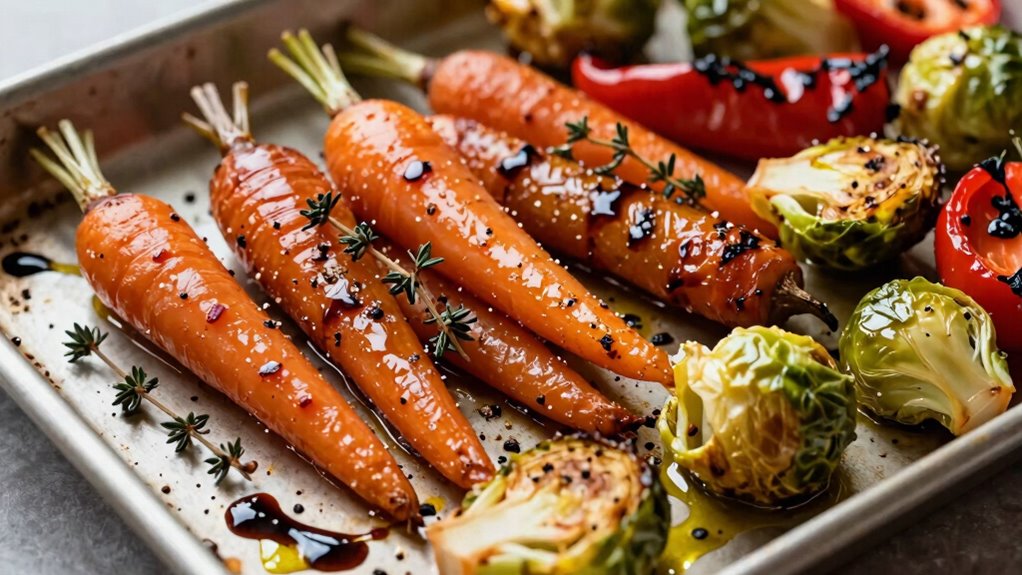
Seasoning your vegetables properly can elevate their natural flavors and make your roasted dishes truly stand out. Start with herb combinations like thyme, rosemary, and parsley for fresh, earthy notes. For bolder flavors, try bold spice blends such as cumin, smoked paprika, or chili powder to add warmth and depth. Don’t forget to season generously with salt and pepper to enhance overall taste. You can also experiment with a splash of lemon juice or balsamic vinegar for brightness. Here are some ideas to get you started:
- Herb combinations: thyme, rosemary, parsley
- Bold spice blends: cumin, smoked paprika, chili powder
- Acidic touches: lemon juice, balsamic vinegar
- Basic seasonings: salt and pepper
Mix and match these to create your perfect flavor profile. Incorporating home theater and gaming gear can make your cooking experience more enjoyable with immersive audio and visual entertainment while you prepare your meals.
Tips for Storing and Reusing Roasted Vegetables

Storing roasted vegetables properly guarantees they stay fresh and flavorful for later use. For leftover storage, transfer the vegetables to an airtight container and keep them in the refrigerator for up to four days. To prevent sogginess, let them cool completely before storing. When reheating, choose methods that preserve texture and flavor. Oven reheating at 350°F for 10-15 minutes works well, maintaining crispness. Alternatively, reheating in a skillet over medium heat allows you to revive their roasted texture. Avoid microwaving if possible, as it can make vegetables soggy. By using proper leftover storage techniques and suitable reheating methods, you’ll enjoy delicious, healthy roasted vegetables even days later. Proper storage methods are essential for maintaining freshness and flavor over time. Additionally, understanding food safety guidelines ensures that leftovers remain safe to eat during storage.
Frequently Asked Questions
Can I Roast Vegetables Without Oil?
Yes, you can roast vegetables without oil by using oil alternatives like vegetable broth or water to prevent sticking. To enhance flavor, toss your veggies with herbs, spices, or a splash of lemon juice before roasting. Keep a close eye on them and turn occasionally to make certain of even cooking. This method keeps your dish healthy, flavorful, and low in fat while still delivering great taste and texture.
What Are Common Mistakes to Avoid When Roasting Vegetables?
Don’t let your vegetables turn into a burnt offering; avoid common mistakes like uneven seasoning or improper vegetable preparation. Make sure you cut vegetables uniformly for even roasting, and experiment with seasoning variations to enhance flavor. Also, don’t overcrowd the pan, or they’ll steam instead of roast. Remember, patience is key—give them enough space and time, and you’ll achieve perfectly roasted, flavorful vegetables every time.
How Do I Prevent Vegetables From Sticking to the Pan?
To prevent vegetables from sticking to the pan, make sure you dry them thoroughly before roasting, as excess moisture can cause sticking. Toss your vegetables with a bit of oil to create a non-stick surface. Additionally, season your pan beforehand by lightly greasing it or using a well-seasoned pan. These steps help manage vegetable moisture and pan seasoning, ensuring your vegetables roast evenly without sticking.
What Temperature Is Ideal for Roasting Different Vegetables?
Imagine your oven humming at just the right warmth—around 400°F (200°C)—to bring out the best in your vegetables. For tender, caramelized textures, stick to these temperatures, adjusting based on vegetable type. Root vegetables like carrots need a steady 425°F, while delicate ones like zucchini roast beautifully at 375°F. Using proper roasting techniques guarantees even heat, creating crisp edges and soft insides, perfect every time.
How Do I Achieve Evenly Cooked Roasted Vegetables?
To achieve evenly cooked roasted vegetables, start by prepping them consistently, cutting pieces to similar sizes for uniform cooking. Toss vegetables with oil and seasonings to enhance flavor, making certain each piece is well-coated. Spread them out in a single layer on the baking sheet, avoiding overcrowding, which helps with even heat exposure. Turn or stir halfway through roasting to ensure all sides develop flavor and cook evenly.
Conclusion
Now that you’re armed with all the tips and tricks, roasting vegetables becomes a simple, delicious ritual. Embrace the process, experiment with flavors, and enjoy the natural sweetness that shines through. Remember, even in the age of smartphones, a good roast can transport you back to simpler times—like gathering around a fire in the village square. Keep practicing, and soon you’ll be creating veggie masterpieces that nourish both body and soul.
Fall Picks
fall essentials
As an affiliate, we earn on qualifying purchases.