To roast vegetables evenly, start by cutting them into uniform sizes to promote consistent cooking. Know that dense root veggies need more time, so consider smaller cuts or start roasting them earlier. Keep softer vegetables like zucchini or peppers for later steps or higher temps to prevent burning. Manage moisture by adjusting cooking time and temperature based on each vegetable’s water content. By understanding these factors, you’ll get perfectly roasted vegetables every time — and there’s more to discover if you continue.

Get health and wellness essentials delivered free — and shop member deals
- Fast, free delivery on millions of items
- Access to Prime Big Deal Days deals on October 6–7
- Prime Video, Amazon Music and more included
Key Takeaways
- Cut vegetables into uniform sizes for even heat distribution and consistent cooking.
- Roast denser vegetables first or at lower temperatures, adding softer vegetables later.
- Use consistent sizing and shapes to ensure all vegetables cook evenly.
- Adjust roasting times and temperatures based on each vegetable’s texture and moisture content.
- Toss vegetables with oil and seasonings evenly to promote uniform browning and flavor.

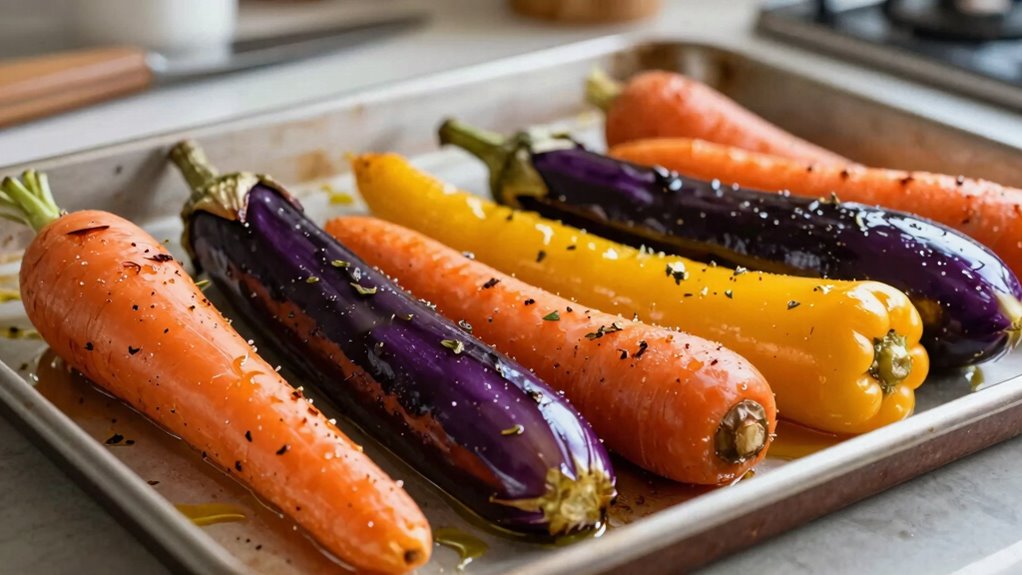
Roasting vegetables evenly can make all the difference between a flavorful, tender side and unevenly cooked scraps. To achieve this, you need to consider the variety of vegetables you choose and master the right roasting techniques. Different vegetable varieties have unique textures and moisture contents, which influence how they cook. For example, root vegetables like carrots, parsnips, and potatoes are dense and need longer roasting times, while softer vegetables such as zucchini, bell peppers, and cherry tomatoes cook quickly and can burn if not watched carefully. Knowing these differences helps you plan your roasting process better and ensures each vegetable is cooked perfectly.
Choose vegetables wisely and master roasting techniques for perfectly cooked, flavorful results every time.
When selecting vegetable varieties for roasting, aim for uniform sizes. Cutting your vegetables into similar-sized pieces promotes even cooking because it allows heat to penetrate each piece at the same rate. For denser vegetables, give them a head start by roasting at a slightly lower temperature or cutting them into smaller pieces to speed up their cooking. Softer or more delicate vegetables should be added later in the roasting process or cooked at higher temperatures briefly to prevent overcooking. This simple step minimizes the risk of uneven results and makes your roasting more predictable. Additionally, understanding the variety of vegetables and their specific cooking needs can help you fine-tune your process for perfect results, especially when considering moisture content and texture differences. Paying attention to moisture levels can also prevent vegetables from becoming soggy or overly dry during roasting. Recognizing how vegetable size and shape impact heat distribution can further refine your technique, ensuring consistent doneness. Moreover, adjusting your technique based on cooking times for different vegetables ensures they all reach the ideal tenderness simultaneously.
oven roasting vegetables baking sheet
As an affiliate, we earn on qualifying purchases.
As an affiliate, we earn on qualifying purchases.
Frequently Asked Questions
Can I Roast Vegetables at a Higher Temperature?
Yes, you can roast vegetables at a higher temperature, but it affects vegetable texture and cooking time. Higher heat speeds up cooking, so vegetables become crispy on the outside sooner, but they risk burning or uneven texture if not monitored carefully. To prevent this, cut vegetables into uniform pieces, keep a close eye, and adjust cooking time accordingly. This way, you achieve a perfect balance between crispness and tenderness.
Should I Marinate Vegetables Before Roasting?
You should marinate vegetables before roasting for better flavor enhancement, but timing matters. If you marinate too long, vegetables might become soggy or lose their texture. Aim for at least 30 minutes, but no more than a few hours, depending on the vegetable. This way, the marinade can infuse flavor without compromising the texture. Proper marinade timing guarantees your roasted vegetables are flavorful and perfectly cooked.
How Do I Prevent Vegetables From Sticking?
Think of your vegetables as dancers on a stage, needing space to perform gracefully. To prevent sticking, toss them with enough oil — like giving them a smooth dance floor — and spread them out in a single layer. This preserves their vegetable texture and guarantees even cooking times. Using parchment paper or a non-stick baking sheet also helps, making sure they don’t cling and lose their perfect form.
Is It Necessary to Flip Vegetables During Roasting?
Yes, flipping vegetables during roasting is often necessary for even cooking, especially for thicker and denser types like carrots or potatoes. Use suitable cookware like a rimmed baking sheet or roasting pan that allows air circulation and prevents sticking. By turning vegetables halfway through, you guarantee they brown uniformly, avoiding burnt spots and undercooked areas. Keep a close eye, and flip when you see they’re getting golden, for perfect results.
What Is the Ideal Oven Rack Position for Roasting?
You should place the oven rack in the middle position for even roasting. This spot offers ideal oven rack placement, allowing heat to circulate uniformly around your vegetables. Keep the roasting temperature steady, around 400°F, to guarantee perfect caramelization without burning. Don’t underestimate the importance of rack position—this simple step makes all the difference, transforming your roasted veggies from good to irresistibly delicious.
vegetable chopper for uniform cuts
As an affiliate, we earn on qualifying purchases.
As an affiliate, we earn on qualifying purchases.
Conclusion
Roasting vegetables evenly is simple when you follow these tips. Just remember to cut everything into similar sizes, spread them out in a single layer, and give the pan a shake halfway through. Don’t worry if some pieces look a little different—those slight variations add flavor and texture. With practice, you’ll find it easy to serve perfectly roasted vegetables every time, making your meals more colorful, delicious, and satisfying.
silicone roasting mats for vegetables
As an affiliate, we earn on qualifying purchases.
As an affiliate, we earn on qualifying purchases.
vegetable roasting seasoning set
As an affiliate, we earn on qualifying purchases.
As an affiliate, we earn on qualifying purchases.
Fall Picks
fall essentials
As an affiliate, we earn on qualifying purchases.