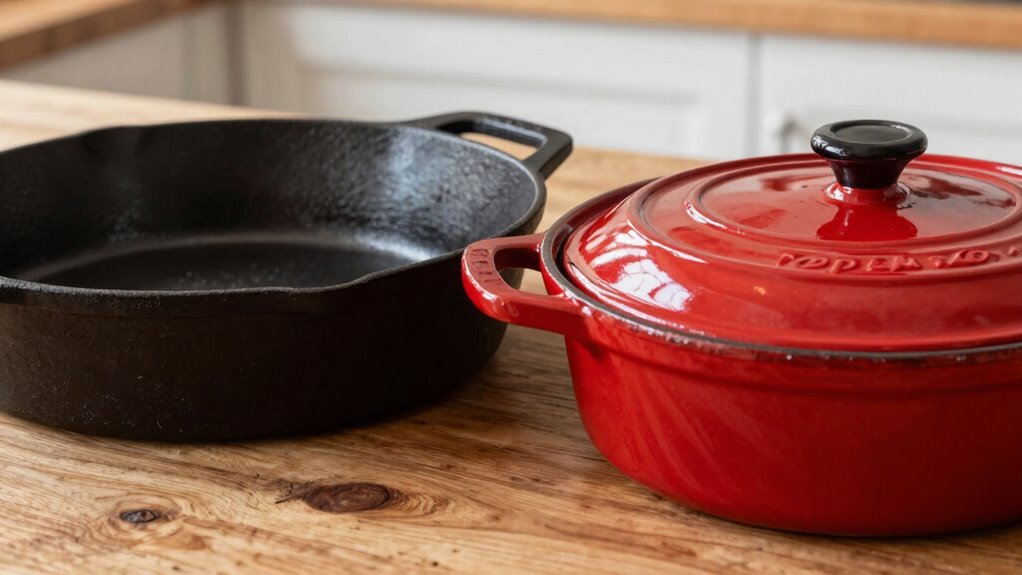

Choosing between cast iron and enameled cast iron depends on what you prefer in your kitchen. If you enjoy high-heat cooking, searing, and don’t mind extra upkeep, cast iron offers durability and versatility. On the other hand, if you want easier cleaning, a stylish look, and less maintenance, enameled cast iron is ideal. Understanding your cooking habits and preferences can help you make the best choice—stay tuned to discover which suits your needs best.

Get health and wellness essentials delivered free with Prime
- Fast, free delivery on millions of items
- Prime Video, Amazon Music and more included
- Member-only deals all year
Key Takeaways
- Cast iron offers superior heat retention and high-temperature versatility, ideal for searing and outdoor cooking.
- Enameled cast iron is low-maintenance, easy to clean, and better suited for beginners or those seeking convenience.
- Cast iron is more durable for rough use and outdoor activities, but enameled is resistant to rust and easier to care for.
- Enameled cast iron provides aesthetic appeal and presentation-ready options, making it suitable for serving directly from the stove.
- The choice depends on your cooking style, willingness to maintain, and preference for appearance versus traditional ruggedness.
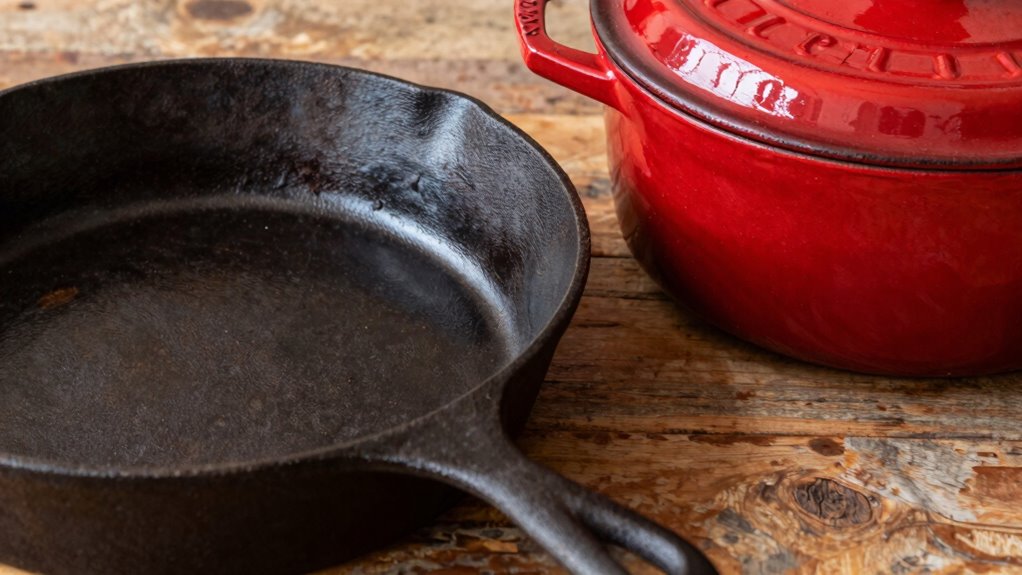
When choosing cookware, understanding the differences between cast iron and enameled cast iron can help you make an informed decision. Both types offer excellent cooking capabilities, but their versatility and maintenance needs vary significantly. Cast iron is renowned for its exceptional cooking versatility; you can use it on the stovetop, in the oven, or even over open flames. It heats evenly, retains heat well, and is perfect for searing, frying, baking, and slow-cooking. Enameled cast iron shares many of these benefits but adds a layer of ease, especially for those who prefer less maintenance. Its non-reactive enamel coating means you don’t have to season it regularly or worry about rust, making it more beginner-friendly.
When considering maintenance differences, cast iron demands a bit more attention. It requires seasoning—a process of applying a thin layer of oil and heating it to create a natural non-stick surface. You need to dry it thoroughly after washing to prevent rust and occasionally reapply oil to maintain its coating. Cleaning cast iron involves avoiding soap and scrubbing with abrasive materials, which can strip the seasoning. On the other hand, enameled cast iron is much easier to care for. You can clean it with soap and water without damaging the surface, and it doesn’t require seasoning. Its enamel coating resists rust and corrosion, so you just need to keep it dry and avoid metal utensils that might scratch the surface. Additionally, enameled cast iron is often available in a variety of aesthetic options, making it a versatile choice for both cooking and presentation. Its durability means it can withstand regular use without the worry of damaging the enamel. Moreover, the non-reactive surface of enameled cast iron makes it suitable for cooking acidic foods without affecting the flavor or the cookware itself.
In terms of cooking versatility, cast iron truly excels in high-temperature cooking and techniques that benefit from its heat retention, like frying or baking cornbread. Its durability means it can handle rough use, including camping trips and outdoor cooking. Enameled cast iron, however, is ideal if you want a more maintenance-friendly piece that can handle slow simmering stews or roasting, without the concern of seasoning or rust. It also offers a broader color palette and aesthetic appeal, making it a popular choice for serving directly from the stove to the table.
Ultimately, your choice hinges on how much effort you’re willing to invest in maintenance and what cooking tasks you prioritize. If you love traditional, seasoned cookware and don’t mind the upkeep, cast iron offers unmatched versatility and toughness. But if you prefer a more convenient, low-maintenance option that still provides excellent performance, enameled cast iron makes more sense. Both have their strengths, so consider your cooking style, cleaning preferences, and how much effort you want to put into upkeep.
As an affiliate, we earn on qualifying purchases.
Frequently Asked Questions
Which Cookware Is More Eco-Friendly to Produce?
Enameled cast iron is generally more eco-friendly to produce because it involves sustainable manufacturing practices and safer chemical processes compared to traditional cast iron. It uses fewer harmful emissions and materials during manufacturing. Additionally, both types promote recycling practices, but enameled options often have a lower environmental impact due to energy-efficient production methods. Overall, enameled cast iron aligns better with eco-conscious choices for sustainable cookware.
Can Enameled Cast Iron Be Used on Induction Stoves?
Yes, enameled cast iron can be used on induction stoves. Think of it as a dance partner perfectly in sync—its surface compatibility with induction cooktops guarantees your cookware makes a smooth, seamless connection. Thanks to its excellent heat distribution, your dishes heat evenly and efficiently. Just remember, gentle handling preserves the enamel, allowing your cookware to shine and perform beautifully through many culinary performances.
How Do I Properly Store Each Type of Pan?
To store your cast iron and enameled cast iron pans properly, keep them dry to prevent rust and maintain pan seasoning. For cast iron, apply a thin layer of oil before stacking or use a paper towel between pans to avoid scratching. Enameled pans don’t need seasoning—just wash and dry thoroughly. Store both in a dry, cool place, and avoid stacking heavy items on top to prevent damage.
Are There Health Concerns With Cast Iron Leaching Iron?
Think of cast iron as Aladdin’s magic lamp—releasing iron during cooking, which can be beneficial or concerning. Iron leaching is natural, and for most people, it’s safe, even helpful if you need more iron. However, excessive iron intake may pose health risks, especially for those with hemochromatosis. If you’re concerned, monitor your diet or consult a doctor. For most, cooking with cast iron is safe and adds a nutritional boost.
What Is the Best Way to Clean and Maintain Each?
You should clean cast iron with warm water and a brush, avoiding soap, then dry and re-season it to prevent rust and maintain its non-stick surface. For enameled cast iron, use warm water and mild soap, avoiding metal scrubbers to prevent chipping. Both require proper seasoning techniques for cast iron, while enameled cookware benefits from gentle cleaning. Regular maintenance guarantees durability and peak performance for both types.
As an affiliate, we earn on qualifying purchases.
Conclusion
Think of cast iron and enameled cast iron as two trusty friends on your culinary journey. Cast iron is like the rugged adventurer—durable, versatile, but needing a bit of care. Enameled cast iron is the polished diplomat—easier to handle and clean, but slightly less rugged. Both serve you well, but choosing the right one depends on your cooking style and lifestyle. In the end, your kitchen’s story depends on which companion feels just right.
As an affiliate, we earn on qualifying purchases.
As an affiliate, we earn on qualifying purchases.
Fall Picks
fall essentials
As an affiliate, we earn on qualifying purchases.