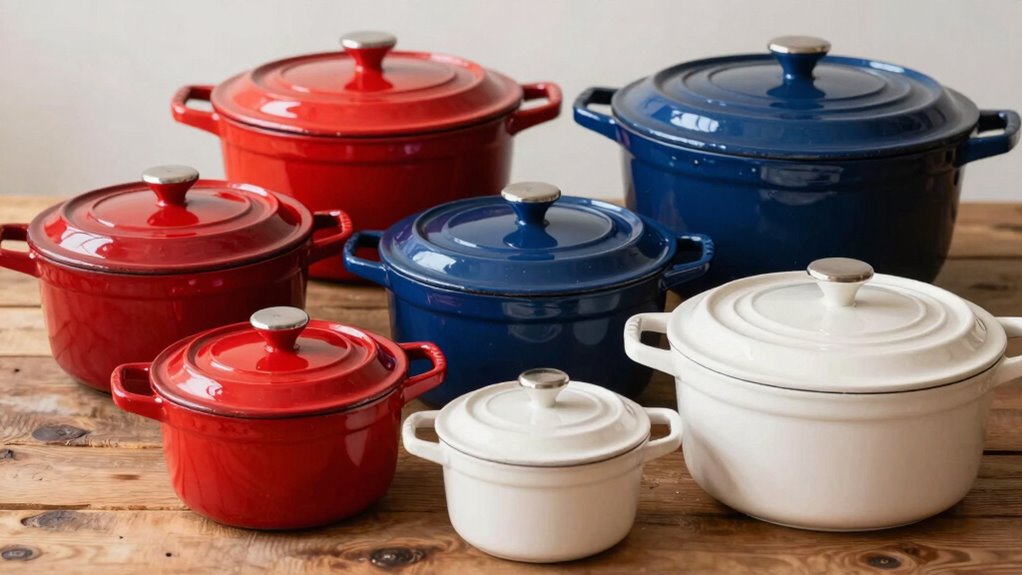
Dutch oven sizes range from small 3-4 quarts to large 7+ quarts, suited for different cooking needs. Smaller sizes are perfect for quick meals, side dishes, or for small households, while larger ones handle roasts, big batches of soup, or family feasts. Material matters too—cast iron offers durability, enameled options are easier to clean. Curious about which size fits your lifestyle? Keep going to discover how to pick the perfect Dutch oven for your kitchen.
Key Takeaways
- Dutch oven sizes range from small (3-4 quarts) to extra-large (7+ quarts), suited for different recipes and household needs.
- Smaller sizes are ideal for quick meals and side dishes, while larger sizes are perfect for roasts and big gatherings.
- Material (cast iron vs. enameled) affects size choice, maintenance, and suitability for everyday or special use.
- Handle weight and storage space should influence your size selection for safe, convenient use.
- Larger Dutch ovens support more diverse recipes but can be heavier and less maneuverable for everyday tasks.
3 quart enameled cast iron Dutch oven
As an affiliate, we earn on qualifying purchases.
As an affiliate, we earn on qualifying purchases.
Dutch Oven Sizes Explained: What You Should Know

When choosing a Dutch oven, understanding the different sizes is essential to guarantee it fits your cooking needs. The historical significance of Dutch ovens dates back centuries, used by early settlers for their durability and versatility. Today, their size varies to accommodate different recipes and household needs. Material varieties like cast iron, enameled cast iron, and even ceramic influence size choices, as each material offers unique benefits. Cast iron Dutch ovens are known for their heat retention and durability, often available in larger sizes for family meals. Enameled versions come in smaller, more manageable sizes with easier cleaning. Knowing the history behind these pots helps you appreciate their design, while understanding material varieties guides you in selecting the right size for your cooking style. Additionally, biodiversity considerations can influence sustainable choices in cookware materials, encouraging eco-friendly options. Recognizing the environmental impact of different materials can help you make more sustainable decisions when purchasing your Dutch oven. Exploring sustainable cookware options can further enhance your eco-conscious cooking practices. Incorporating eco-friendly materials into your selection process supports environmentally responsible manufacturing and reduces waste. Furthermore, considering the environmental impact of your cookware choices can lead to a more mindful and sustainable kitchen.
7 quart cast iron Dutch oven
As an affiliate, we earn on qualifying purchases.
As an affiliate, we earn on qualifying purchases.
Popular Dutch Oven Sizes and Their Dimensions
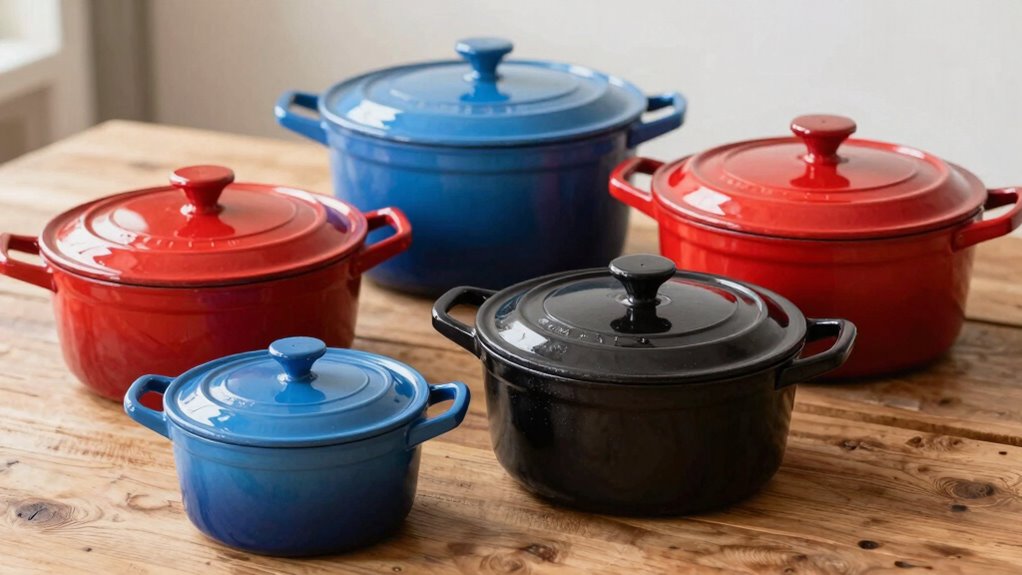
Popular Dutch oven sizes typically range from small to extra-large, with their dimensions directly impacting how you cook and serve different dishes. Historically, Dutch ovens originated in the Netherlands, crafted from cast iron, which remains popular today for its durability and heat retention. Material comparisons show that enameled versions are easier to clean and require less maintenance, while traditional cast iron offers better seasoning and versatility. A long-lasting cookware like cast iron durability makes it a preferred choice for many cooking enthusiasts. Additionally, the variety of sizes allows for greater flexibility depending on the recipe or occasion. Knowing these dimensions helps you select the right size for your specific cooking needs and understand the timeless appeal rooted in their historical origins.
small Dutch oven for quick meals
As an affiliate, we earn on qualifying purchases.
As an affiliate, we earn on qualifying purchases.
Which Dutch Oven Size Is Best for Small, Medium, or Large Meals?

Choosing the right Dutch oven size depends on how many people you plan to serve and the types of dishes you make. For small meals or side dishes, a 3-4 quart oven works well, especially if you’re just cooking for one or two. Medium-sized options, like 5-6 quarts, are versatile for family dinners or batch cooking. Large Dutch ovens, 7 quarts or more, are ideal for big gatherings or roasts. When selecting, consider seasoning techniques—smaller sizes heat up faster, while larger ones require longer seasoning to prevent rust. Also, compare materials: enameled cast iron is low-maintenance, while bare cast iron needs more care but offers excellent heat retention. Match your needs to the size and material for the best results. Choosing the right size is essential for both ease of use and meal quality.
large Dutch oven for family cooking
As an affiliate, we earn on qualifying purchases.
As an affiliate, we earn on qualifying purchases.
How to Choose the Perfect Dutch Oven Size for Your Cooking Needs
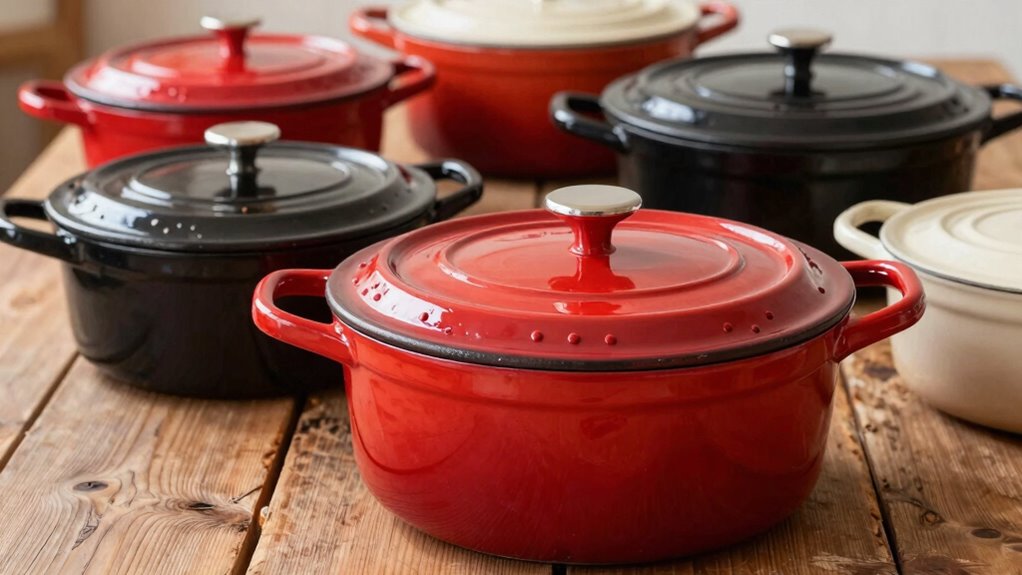
Selecting the right Dutch oven size starts with evaluating your cooking habits and household needs. If you often cook for a small family or enjoy single-serving meals, a smaller size (3-5 quarts) will suffice. For larger families or batch cooking, a 6-7 quart oven is ideal. Consider your storage space and how often you’ll use it, as larger sizes may be cumbersome to handle. When choosing, prioritize cooking safety by selecting a sturdy, well-made piece that won’t tip or crack easily. Cleaning tips are equally important—stick to hand washing with gentle scrubbers to preserve the seasoning and avoid damage. Additionally, understanding cooking science can help you select a Dutch oven that complements your kitchen aesthetic. Picking the right size guarantees you cook efficiently and keep your Dutch oven in great shape for years. It’s also helpful to familiarize yourself with different material options to ensure durability and heat retention tailored to your cooking style. Knowing the proper maintenance techniques can also prolong the lifespan of your Dutch oven and maintain its performance over time. Maintaining the correct seasoning will further enhance your cooking experience and extend the life of your cookware.
Pros and Cons of Small vs. Large Dutch Ovens

Small Dutch ovens are more versatile and easier to handle, making them perfect for quick meals or limited storage. However, they have less cooking capacity, which can be a drawback for larger families or batch cooking. Additionally, choosing the right size can impact your kitchen organization, especially if you have limited space for storing cookware. A size selection is essential to ensure your Dutch oven meets your cooking needs without cluttering your kitchen. Understanding Dutch oven sizes can help you make an informed decision based on your cooking habits and space constraints. Large Dutch ovens offer more space for big recipes but can be heavier and more cumbersome to lift and manage.
Versatility for Recipes
When it comes to cooking versatility, the size of your Dutch oven can greatly influence what recipes you can tackle. A smaller Dutch oven is perfect for quick stews, bread baking, or side dishes, fitting easily into your culinary traditions. Larger sizes excel at making roasts, hearty soups, or feeding a crowd, offering more flexibility for big meals.
Consider these points:
- Smaller Dutch ovens are easier to handle and store, ideal for single servings or small recipes.
- Larger ones accommodate more ingredients, making them great for family dinners or batch cooking.
- Both sizes offer excellent cookware durability, but smaller pots may wear longer with frequent use.
- The size of your Dutch oven can also influence how safely you handle hot dishes, especially in a busy kitchen environment.
- Additionally, the versatility of Dutch oven sizes can impact how well you can adapt your cookware to different types of recipes.
- When selecting a size, it’s helpful to consider how your kitchen space influences your storage and usage options.
- The durability of Dutch ovens is often linked to the size and material, impacting long-term usability and maintenance.
Cooking Capacity Differences
The capacity of your Dutch oven directly affects how much you can cook at once, offering distinct advantages and drawbacks depending on its size. Smaller Dutch ovens are great for quick cooking techniques like sautéeing or simmering small portions, and they heat up quickly due to less material. A compact size can also make storage easier in smaller kitchens. Larger ovens, on the other hand, excel for slow-cooking techniques like braising or roasting large cuts of meat, making meal prep easier for families or gatherings. Material comparisons matter too; enameled cast iron retains heat well in both sizes, but larger models may require more time to heat evenly. Smaller sizes are more versatile for everyday use, while bigger ones shine for batch cooking. Choosing the right size depends on your cooking style and the amount of food you typically prepare. Material size influences heat retention and cooking efficiency, impacting your overall experience.
Ease of Handling
Is handling a Dutch oven manageable, or does size make it cumbersome? Larger models can be heavy, making handle comfort a concern, especially when lifting or moving. Smaller Dutch ovens are easier to manage but might require more frequent refilling or multiple batches.
Here are some key points:
- Handle comfort: Smaller pots typically have lighter handles, reducing strain during transport. Larger ones can be awkward and require a firm grip.
- Weight considerations: Larger Dutch ovens can weigh 20 pounds or more, which might be challenging for some. Smaller sizes are easier to lift and maneuver.
- Ease of storage: Smaller Dutch ovens are lighter and easier to store, while larger ones may require more effort and space to handle safely.
Ideal Uses for 3-Quart and 4-Quart Dutch Ovens
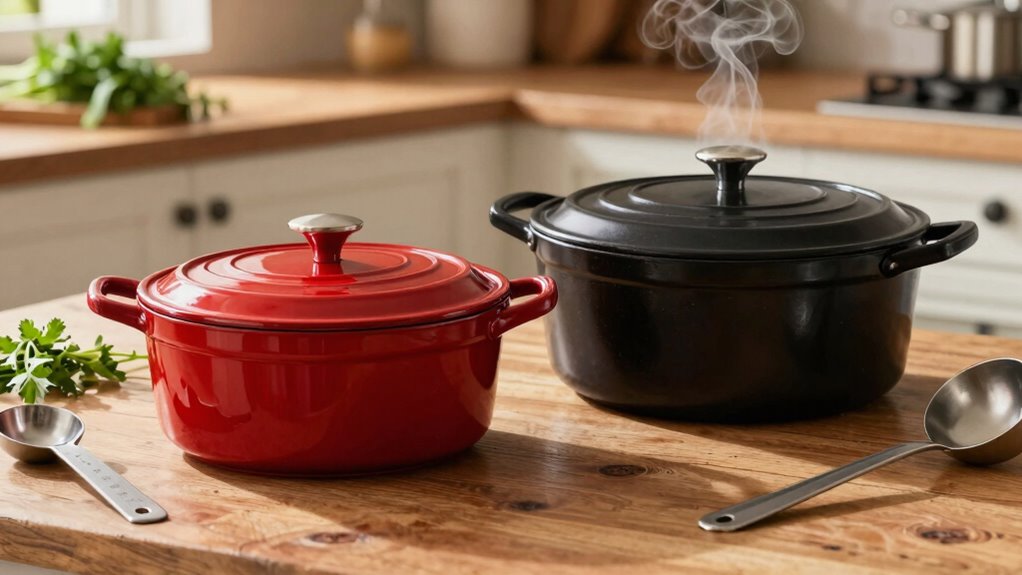
A 3-Quart or 4-Quart Dutch oven is perfect if you’re cooking for a small family or making quick, everyday meals. These sizes are great for preparing dishes like soups, stews, and casseroles without taking up too much space. They also excel in baking bread and desserts, making them versatile additions to your kitchen.
Perfect for Small Families
For small families, 3-quart and 4-quart Dutch ovens are perfect choices because they offer just the right capacity for everyday meals without taking up too much space. They’re versatile for preparing soups, stews, and casseroles, making mealtime easier. Plus, their size helps you manage cooking safety, as smaller Dutch ovens stay manageable on the stovetop. To enhance your experience, consider essential Dutch oven accessories like heat-resistant lids and trivets. Here are some ideal uses:
- Cooking batch meals that serve 2-4 people
- Making breakfast dishes like baked eggs or French toast
- Preparing side dishes, such as rice or vegetables
These ovens are great for small families, streamlining your cooking without sacrificing quality.
Ideal for Quick Dishes
Small Dutch ovens excel at quick, everyday meals thanks to their manageable size and fast heating capabilities. They’re perfect for one-pot dishes like stews, soups, or reheating leftovers. These sizes heat evenly, making seasoning techniques easier to apply for a non-stick surface. Cleaning methods are straightforward; use warm water and gentle scrubbers to preserve seasoning. Keep in mind, their size is ideal for smaller portions, so batch cooking isn’t necessary. Here’s a quick comparison:
| Dish Type | Suitable Sizes | Cooking Time |
|---|---|---|
| Soups & Stews | 3-Quart & 4-Quart | 30-60 minutes |
| Reheating | 3-Quart | 10-20 minutes |
| Sautéed Veggies | 4-Quart | 10-15 minutes |
| Quick Casseroles | 3-Quart & 4-Quart | 20-30 minutes |
These sizes make everyday cooking simple and efficient.
Great for Baking
You can easily turn your 3-Quart or 4-Quart Dutch oven into a versatile baking vessel that produces hearty, crusty bread, cobblers, and even cakes. Its even heat distribution and tight-fitting lid create perfect conditions for baking. To enhance your baking experience, consider Dutch oven accessories like silicone mitts or a baking rack. These accessories help with handling hot cookware and even baking. Historically, Dutch ovens have their origins in cast iron cookware used for baking in open fires, making them ideal for rustic bread and desserts. Here are some great baking ideas:
- Artisan bread with a crispy crust
- Fruit cobblers or crisps
- Moist, tender cakes
This size offers the perfect balance of capacity and control for baking mastery.
When to Opt for a 5- or 6-Quart Dutch Oven
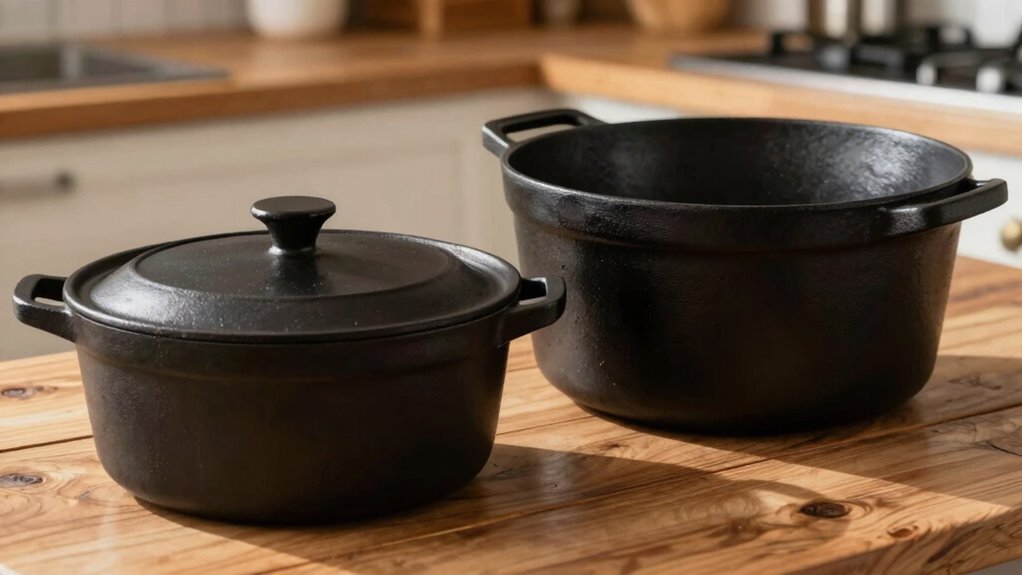
A 5- or 6-quart Dutch oven is an excellent choice when cooking for a family or preparing hearty, one-pot meals. You’ll find these sizes come in a variety of color options, allowing you to match your kitchen decor or personal style. They’re versatile enough for stews, roasts, and braised dishes. Material durability is a key factor, as these sizes often feature enameled cast iron, which resists chipping and staining over time. This guarantees your Dutch oven will last through many meals. If you frequently cook for four to six people or enjoy making large batches, these sizes strike a great balance between capacity and ease of handling. Overall, they’re perfect for everyday use and special occasions alike.
Caring for and Storing Your Dutch Oven by Size
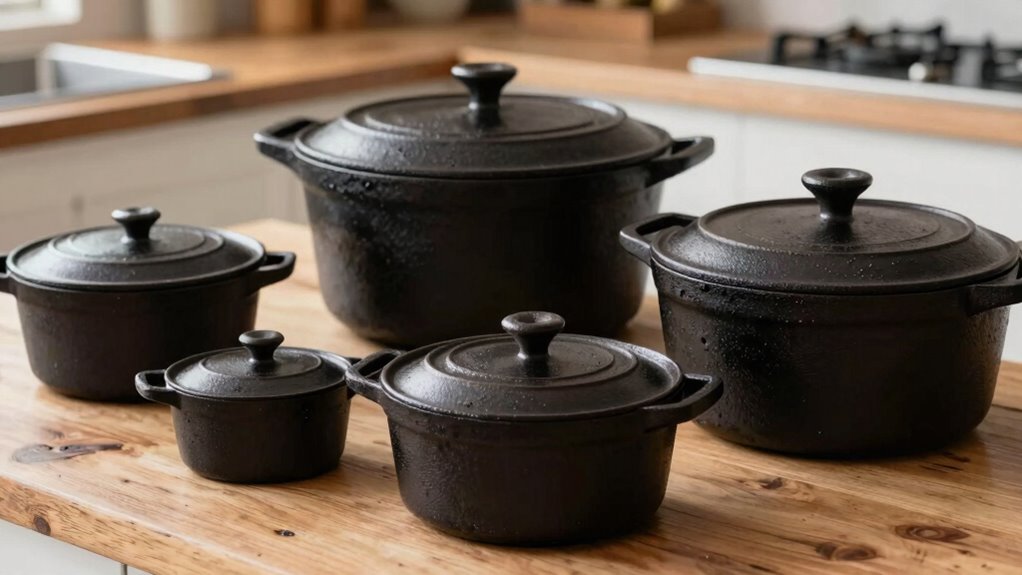
Proper care and storage of your Dutch oven depend on its size, as larger models require a bit more attention to prevent damage and maintain performance. For cleaning, use gentle methods like warm water and a soft brush; avoid harsh abrasives that can damage the surface. When storing, choose solutions that allow airflow, such as placing a paper towel between the lid and pot to prevent moisture buildup. Larger Dutch ovens benefit from more careful handling to avoid dents or warping.
Proper care varies by size; gentle cleaning and breathable storage prevent damage and ensure longevity.
Here are some tips:
- Clean with mild soap and avoid soaking large models for long periods.
- Store in a dry, well-ventilated space to prevent rust.
- Use padding or a dedicated cabinet to keep larger sizes protected.
Frequently Asked Questions
Are Dutch Oven Sizes Standardized Across Brands?
Dutch oven sizes are not fully standardized across brands, so you might notice variations due to material differences and brand consistency. For example, a 5-quart Dutch oven from one brand could be slightly larger or smaller than another. It’s crucial to check the specific measurements and volume capacity before purchasing. Material variations, like cast iron versus ceramic, may also influence the overall size and shape, so always review product details to make sure you get the right fit for your needs.
Can I Use a Larger Dutch Oven for Small Recipes?
Using a larger Dutch oven for small recipes is like fitting a tiny gem into a spacious treasure chest; it’s doable but might require some adjustments. You’ll need to take into account recipe scaling, as ingredients could cook differently, and storage solutions, since a bigger pot might be more cumbersome to store. Keep an eye on the cooking process to avoid overcooking or uneven results, ensuring your dish turns out just right.
How Does Material Affect Dutch Oven Size Selection?
Material greatly impacts your Dutch oven size choice because of weight and heat retention. Heavier materials like cast iron provide excellent heat retention, making even larger pots easy to handle and cook evenly. Lighter materials, such as aluminum, are easier to maneuver but may not retain heat as well, so consider smaller sizes for better control. Your cooking style and comfort with handling weight will guide the best material and size for you.
Are There Space Considerations for Storing Different Sizes?
Yes, storage considerations matter when choosing Dutch oven sizes. You should think about storage solutions that maximize space and keep your kitchen organized. Larger Dutch ovens need more room, so consider stacking or using shelves to optimize space. Smaller sizes are easier to tuck away in cabinets or drawers. Assess your kitchen layout and storage options to select sizes that fit comfortably, ensuring efficient space utilization and easy access when cooking.
Do Different Sizes Require Different Cooking Times?
You’ll find that different Dutch oven sizes can influence cooking times slightly, mainly due to heat distribution and volume. Smaller sizes heat up faster, so you might need to adjust your cooking temperature or time a bit. Larger sizes may require longer cook times for even heat penetration. Always check oven compatibility and monitor your dish to guarantee ideal results, regardless of the size you choose.
Conclusion
Choosing the right Dutch oven size is like finding the perfect dance partner—you’ll glide through your culinary routines with ease and grace. Whether you’re crafting intimate stews or hearty roasts, selecting the right size guarantees your kitchen symphony flows smoothly. So, weigh your needs, consider your space, and embrace the art of informed choice. With the right fit, your Dutch oven will become an extension of your culinary soul, always ready to turn simple ingredients into masterpieces.