
If you want reliable accuracy and better control over your cooking, an oven thermometer makes more sense. Built-in thermostats are convenient but can drift over time, leading to uneven results. Using a thermometer helps verify actual oven temperatures, ensuring your food cooks evenly and saving energy. For everyday use, the built-in thermostat may suffice, but for precise baking or roasting, combining both tools is ideal. Keep exploring to learn how to get the most out of your oven tools.

Get health and wellness essentials delivered free with Prime
- Fast, free delivery on millions of items
- Prime Video, Amazon Music and more included
- Member-only deals all year
Key Takeaways
- Built-in thermostats offer convenience but can drift over time, affecting cooking accuracy.
- Oven thermometers provide precise, real-time temperature readings for better control.
- Using both ensures accurate calibration, improving cooking results and energy efficiency.
- Thermometers are essential for delicate baking and professional-level precision.
- Relying solely on built-in thermostats may lead to uneven cooking without external verification.
When it comes to ensuring your oven cooks exactly how you want, understanding the difference between an oven thermometer and a built-in thermostat is essential. Both tools help you achieve better cooking precision, but they serve different purposes and can impact your kitchen routines in distinct ways. Knowing which one makes more sense for your needs can improve not only your cooking results but also your energy efficiency.
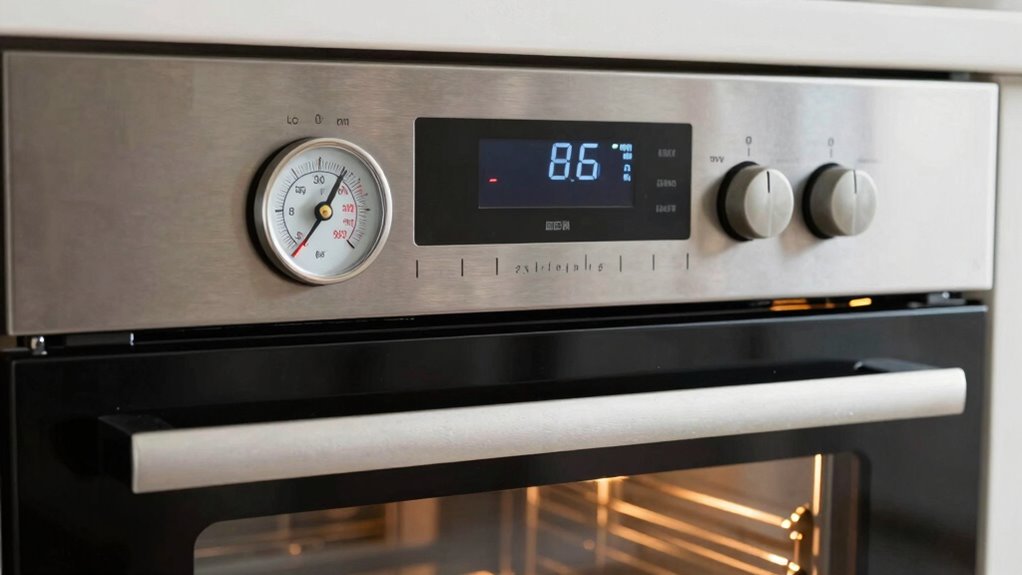
A built-in thermostat is an integral part of your oven’s control system. It automatically regulates the temperature, turning the heating elements on and off to maintain the set temperature. While convenient, these thermostats can sometimes be inaccurate, especially as they age or if your oven calibration drifts. This inaccuracy can lead to uneven cooking or hot spots, making it harder to rely solely on your oven’s display for precise results. If your main goal is consistent performance without much fuss, the built-in thermostat offers a simple, hands-off solution. However, if you’re seeking cooking precision — particularly for baking delicate pastries or roasting meats to exact doneness — you might find that the thermostat’s limitations hinder your culinary ambitions.
Built-in thermostats regulate temperature automatically but can become inaccurate over time, affecting cooking precision and consistency.
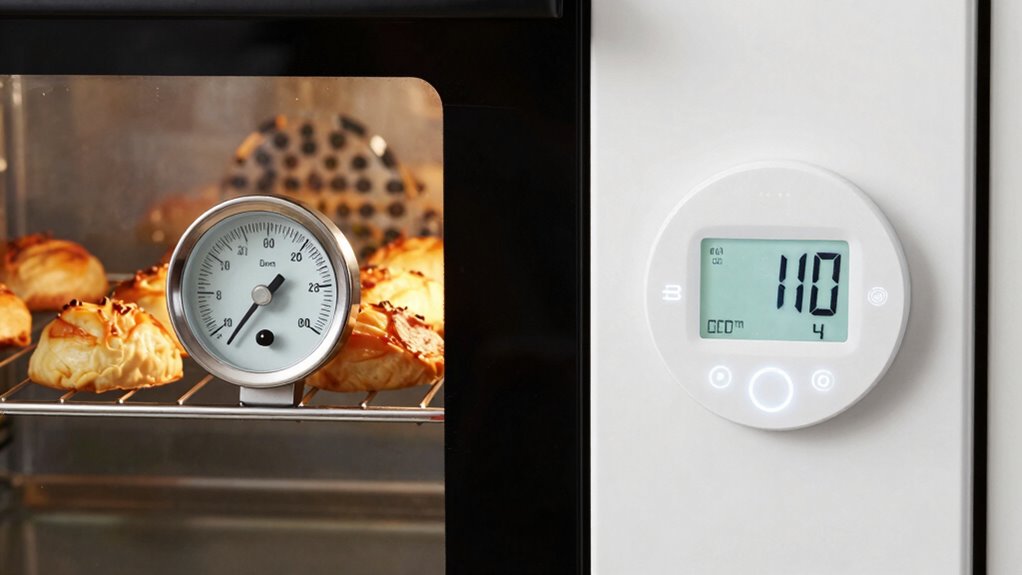
An oven thermometer, on the other hand, provides an external, real-time reading of your oven’s actual temperature. It’s a simple device you place inside the oven, giving you an accurate measure of the heat. This allows you to identify temperature discrepancies between what you set and what you actually get, so you can adjust accordingly. Using an oven thermometer can significantly improve your cooking precision because you’re no longer relying solely on the oven’s internal gauge. Plus, when you’re aware of the true temperature, you can fine-tune your cooking times, ensuring dishes are cooked thoroughly and evenly. From an energy efficiency perspective, an oven thermometer can help you avoid wasting energy by preventing overcooking or extended cooking times caused by inaccurate oven readings. Additionally, using a thermometer can help you calibrate your oven for more reliable results over time.
While a built-in thermostat offers ease and convenience, adding an oven thermometer enables you to fine-tune your control and achieve better results. If you cook often and prioritize precision — especially for baking or delicate roasting — investing in a quality oven thermometer makes a lot of sense. It allows you to verify and calibrate your oven’s actual temperature, leading to more consistent results and less energy waste. On the flip side, if you prefer quick, straightforward cooking without fuss, your oven’s built-in thermostat may suffice. Ultimately, combining both tools can give you the best of both worlds: reliable control from your oven’s thermostat and precise adjustments from the thermometer, optimizing your cooking and energy use every time. Additionally, understanding the accuracy of your oven’s thermostat can help you decide whether a thermometer is a necessary upgrade.
As an affiliate, we earn on qualifying purchases.
Frequently Asked Questions
How Accurate Are Oven Thermometers Compared to Built-In Thermostats?
Oven thermometers are generally more accurate than built-in thermostats, especially when properly calibrated to standard temperature settings. Built-in thermostats can drift over time, causing inconsistent temperatures, but oven thermometers provide precise readings and help you monitor temperature consistency. By regularly calibrating your oven thermometer, you guarantee reliable measurements, making it easier to cook accurately and avoid under- or over-cooking your dishes.
Can an Oven Thermometer Help Improve Baking Results?
A well-kept secret in baking is that an oven thermometer can truly elevate your cooking techniques. It helps you achieve better temperature precision, ensuring your baked goods turn out perfectly every time. By monitoring your oven’s actual heat, you avoid guesswork, refine your skills, and master consistent results. So yes, using an oven thermometer can substantially improve your baking, making each creation more reliable and delicious.
Are Built-In Thermostats More Energy-Efficient Than External Thermometers?
Built-in thermostats can be more energy-efficient because they help you maintain precise temperature control, preventing unnecessary energy use. External oven thermometers mainly help you monitor temperature but don’t regulate it directly. When you rely on a built-in thermostat, you’re more likely to keep the oven at a consistent, ideal temperature, saving energy over time. So, for better energy savings and temperature control, built-in thermostats often make more sense for everyday use.
How Often Should I Calibrate My Oven Thermometer?
Think of your oven thermometer as a trusted compass—calibrate it regularly to guarantee accuracy. You should check and calibrate your oven thermometer at least once every three to six months, especially before big baking sessions. Proper calibration promotes kitchen safety and keeps your appliances running smoothly. Regular maintenance like this prevents surprises, saves energy, and guarantees your baked goods come out perfect every time.
Do All Ovens Come With Built-In Thermostats?
Not all ovens come with built-in thermostats, especially older or basic models. During oven maintenance, you should check if your oven has a built-in thermostat that controls temperature consistency. If it doesn’t, investing in an oven thermometer helps guarantee accurate readings. This way, you can maintain proper cooking temperatures, avoid under or overcooking, and keep your oven functioning reliably. Regular calibration of your tools also boosts cooking precision.
built-in oven thermostat replacement
As an affiliate, we earn on qualifying purchases.
As an affiliate, we earn on qualifying purchases.
Conclusion
You might think a built-in thermostat is enough, but an oven thermometer offers unmatched accuracy, especially if you’re serious about baking or roasting. Sure, some believe it’s unnecessary extra gear, but relying solely on your oven’s dial can lead to uneven results. Investing in an oven thermometer guarantees you cook with confidence, saving you time and frustration. Don’t settle for guesswork—trust a simple tool that guarantees perfect temperatures every time.
As an affiliate, we earn on qualifying purchases.
professional oven temperature gauge
As an affiliate, we earn on qualifying purchases.
As an affiliate, we earn on qualifying purchases.
Fall Picks
fall essentials
As an affiliate, we earn on qualifying purchases.