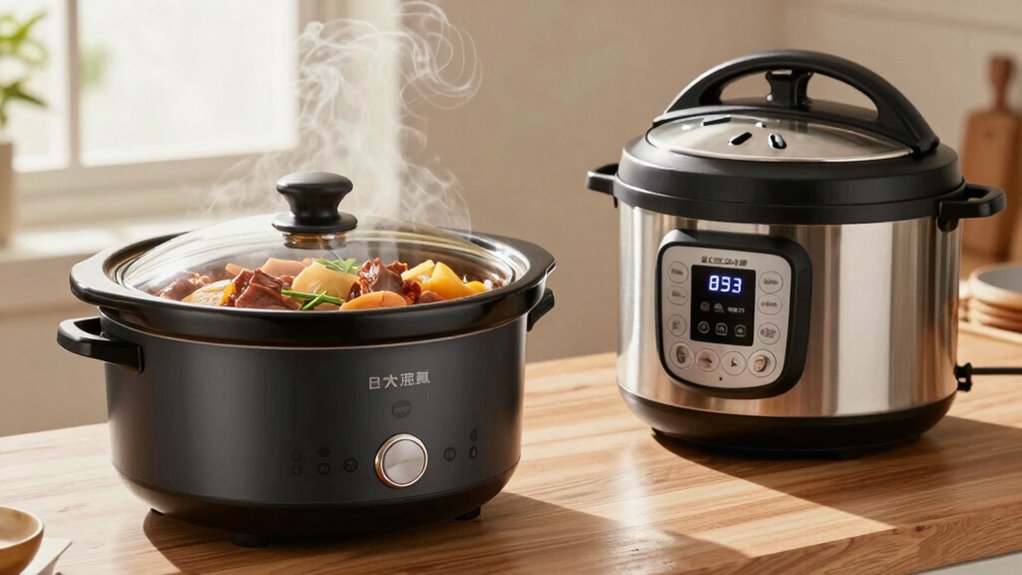
If you want rich, flavorful meals that simmer slowly, a slow cooker is your best bet for hands-off cooking and tender textures. But if you need dinner fast and want to cook quickly under high pressure, a pressure cooker saves time and energy. Your choice depends on whether you prefer slow, steady simmering or speedy results. To discover the best option for your kitchen needs, keep exploring how each appliance fits your lifestyle and meal plans.

Get health and wellness essentials delivered free with Prime
- Fast, free delivery on millions of items
- Prime Video, Amazon Music and more included
- Member-only deals all year
Key Takeaways
- Slow cookers cook over several hours at low heat, ideal for tender, flavorful stews and braises; pressure cookers cook quickly under high pressure for fast results.
- Slow cookers preserve delicate flavors and moisture through gentle simmering, while pressure cookers lock in flavors with a sealed, high-pressure environment.
- Slow cookers are energy-efficient for long cooking times; pressure cookers consume less energy overall due to shorter cooking durations.
- Slow cookers require hours to prepare meals, suitable for planning ahead; pressure cookers reduce cooking time drastically, fitting busy schedules.
- Slow cookers are simple to operate, while pressure cookers need careful handling to avoid over-pressurizing and ensure safety.
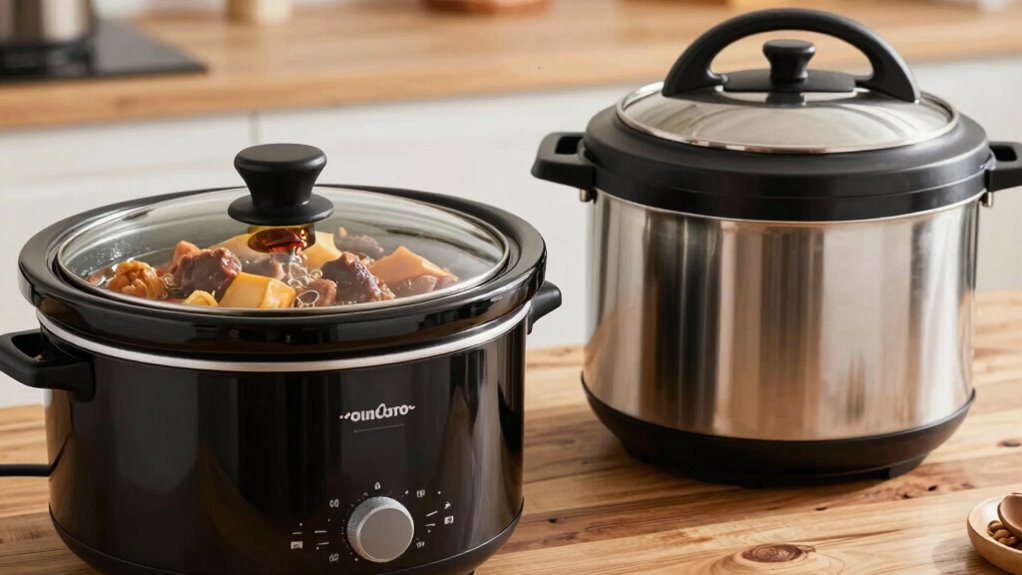
Have you ever wondered which kitchen appliance is better for your busy schedule: a slow cooker or a pressure cooker? Both are fantastic tools, but they serve different purposes and come with distinct advantages. If you’re looking for convenience and flavor retention, understanding these differences can help you make the right choice. Slow cookers are great for creating rich, flavorful dishes over several hours. The low and steady heat allows ingredients to simmer gently, which helps preserve delicate flavors and retain moisture. This slow cooking process is ideal for dishes like stews, braises, or pulled meats, where depth of flavor is essential. Because they operate at low temperatures, slow cookers also tend to be more energy-efficient over long cooking periods, consuming less electricity compared to other methods. This makes them a cost-effective option for busy households that want delicious meals without high energy bills.
In contrast, pressure cookers are designed for speed and efficiency. They cook food quickly under high pressure, drastically reducing cooking times—from hours to mere minutes. This rapid process is perfect for busy individuals who need a hearty meal in a short amount of time. While pressure cookers excel at saving time, they also do a good job of locking in flavors due to the sealed environment. The high pressure intensifies flavors and ensures ingredients retain their natural juices, resulting in a cooked dish that’s full-bodied and flavorful. Additionally, because they cook quickly, pressure cookers tend to use less energy overall, making them not only fast but also energy-efficient, especially when preparing tougher cuts of meat or legumes that normally require long simmering times. Understanding the cooking process and how it impacts flavor and texture can help you choose the right appliance for your needs.
However, the quick cooking process of pressure cookers can sometimes compromise flavor retention if not used correctly. Over-pressurizing or overcooking can lead to the loss of subtle flavors or a mushy texture. Proper pressure cooker techniques and timing are crucial to prevent these issues and to maximize flavor preservation. Proper use of pressure cookers is essential to avoid these pitfalls and ensure optimal results. When choosing between the two, consider your schedule, desired flavor profile, and the type of dishes you prefer. If you value deep, complex flavors and have plenty of time, a slow cooker might be your best bet. If you need quick, tender results and efficiency, a pressure cooker could be the better choice. Both appliances have their strengths, so understanding these key differences helps you make the most of your kitchen. Additionally, knowing the differences in cooking times can help you better plan your meal preparation and avoid common mistakes.
As an affiliate, we earn on qualifying purchases.
Frequently Asked Questions
Which Cooker Preserves More Nutrients in Meals?
You’ll find that pressure cookers preserve more nutrients in meals because they cook quickly, reducing nutrient loss from prolonged exposure to heat. The rapid cooking speed helps retain vitamins and minerals better than slow cookers, which cook slowly and may cause some nutrient degradation over time. So, if nutrient retention is your priority, a pressure cooker is the better choice for preserving the nutritional value of your meals.
Are Pressure Cookers Safer Than Slow Cookers?
Pressure cookers are generally safer than slow cookers, thanks to advanced safety features like locking lids and pressure release valves that prevent accidents. They also cook food much faster, which reduces the chance of overcooking or spoilage. Slow cookers lack some of these safety mechanisms, but they’re simple to operate. Overall, if you follow instructions carefully, pressure cookers can be just as safe as slow cookers.
Can Both Cookers Be Used for Baking?
Both cookers can be used for baking, but their effectiveness varies. Notably, about 25% of home bakers use slow cookers for cake baking or bread making. Slow cookers excel at moist, slow-baked treats, while pressure cookers can create quick bread or steamed cakes. You’ll want to adjust recipes and techniques for each, but both appliances offer versatile options for baking adventures at home.
Do They Require Different Cleaning Techniques?
They do require different cleaning techniques. For cleaning, you should regularly maintain your slow cooker or pressure cooker to guarantee proper function. Many slow cooker parts, like the stoneware, are dishwasher safe, making cleaning easier. In contrast, pressure cookers often have more delicate parts that need hand washing. Always check your appliance’s manual for dishwasher compatibility and follow recommended cleaning maintenance practices to keep your cooker in top shape.
Which Cooker Is More Energy-Efficient?
Imagine saving enough energy to power your entire neighborhood—that’s how much more efficient a pressure cooker is. It cooks meals in a fraction of the time, making it incredibly speedy. Plus, it retains flavors better because of its sealed environment. A slow cooker, by contrast, uses more energy over longer periods. So, if energy efficiency and quick cooking are your priorities, the pressure cooker is your best bet.
As an affiliate, we earn on qualifying purchases.
Conclusion
Ultimately, choosing between a slow cooker and a pressure cooker depends on your cooking style and needs. While some believe that one is inherently better, the truth is they each excel in different ways—slow cookers for tender, flavorful dishes over time, and pressure cookers for quick, hearty meals. Don’t limit yourself with a fixed idea; explore both. Embrace the versatility, and discover that often, the best tool is the one that adapts to your life.
best slow cooker for tender meats
As an affiliate, we earn on qualifying purchases.
As an affiliate, we earn on qualifying purchases.
high pressure cooker for quick meals
As an affiliate, we earn on qualifying purchases.
As an affiliate, we earn on qualifying purchases.
Halloween Picks
halloween
As an affiliate, we earn on qualifying purchases.