
Choosing the right food processor size depends on how much you cook and your kitchen space. Smaller models are perfect if you handle small tasks or have limited room, while larger ones suit big families or batch cooking. Medium sizes are versatile for everyday use. Keep in mind, more capacity often means a bigger footprint, but not always better. If you want to find the perfect fit, keep exploring what works best for you.

Get health and wellness essentials delivered free with Prime
- Fast, free delivery on millions of items
- Prime Video, Amazon Music and more included
- Member-only deals all year
Key Takeaways
- Food processor sizes range from small (3-7 cups) for quick tasks to large (12+ cups) for big batches.
- Smaller models save space and are portable, ideal for limited kitchen areas or on-the-go use.
- Larger processors handle tougher tasks like kneading dough or shredding, suitable for big families or entertaining.
- Capacity and motor power determine a processor’s efficiency for specific cooking needs.
- Choose size based on your cooking frequency, kitchen space, and storage options for optimal use.
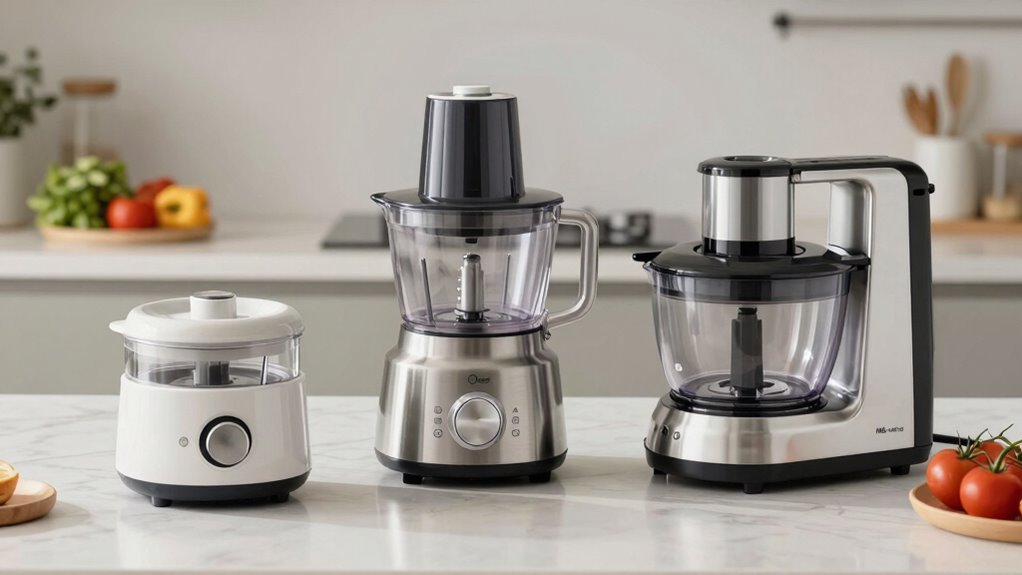
Are you overwhelmed by the variety of food processor sizes available? It’s common to feel unsure about which size suits your needs best, especially when faced with options that range from compact to full-sized models. One of the first choices you’ll need to make is whether to go for a manual or electric food processor. Manual processors are smaller, more straightforward, and don’t require electricity, making them ideal for quick chopping or blending tasks. They’re portable and easy to store because they don’t have bulky cords or large bases. On the other hand, electric food processors are powered by motors, which allow for more complex and faster processing. They often come with multiple attachments and settings, which can be a huge time-saver for larger quantities or more intricate recipes. When considering size, think about how much space you have in your kitchen and whether portability matters to you.
Storage and portability are key factors here. Smaller electric models or manual processors take up minimal space and are easy to tuck away in a cabinet or pantry when not in use. If you have limited storage or like to cook on the go, a compact electric or manual processor might be your best bet. These smaller units are lightweight, making them easy to carry out for a quick job, and their size means they’re less likely to clutter your countertops. Conversely, larger food processors with bigger bowls are better suited for big families or people who entertain often, but they demand more storage space and are less portable. They usually stay on the countertop because moving them around can be cumbersome, especially if they’re heavy. Additionally, understanding biodiversity can help you appreciate how diverse food processing needs are, just like ecosystems vary in nature. Recognizing the variety of functions that different sizes can serve can further help you select the most suitable model for your culinary needs. It’s also worth noting that user reviews can provide insights into how well different sizes perform in real-world kitchen scenarios.
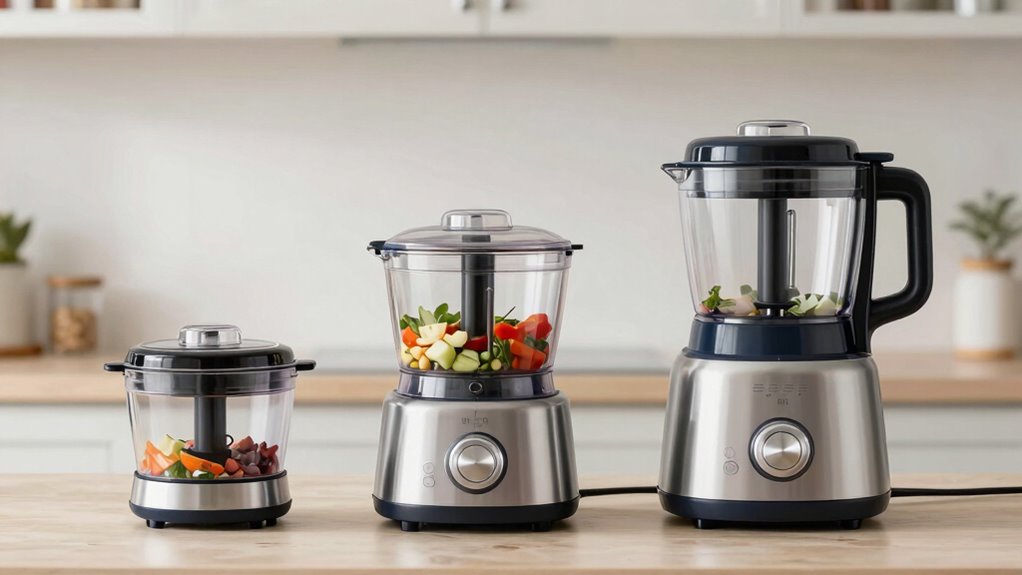
When choosing the right size, consider how frequently you cook and how much food you need processed at once. Smaller sizes, typically around 3 to 7 cups, work well for singles or couples, handling small tasks like chopping herbs or making dips. Medium-sized processors (around 8 to 11 cups) are versatile and good for most everyday cooking, offering enough capacity without taking up too much space. Large models, 12 cups or more, are perfect if you prepare large batches of dough or food for big gatherings. Keep in mind that the capacity of a food processor can influence not just your cooking efficiency but also how you organize your kitchen space. It’s also important to consider the power of the motor, especially for tougher tasks like kneading dough or shredding hard vegetables. Remember, bigger isn’t always better if you don’t have the storage or need the extra capacity. Whether manual or electric, choose a size that fits your kitchen, your cooking habits, and your lifestyle to make your food prep easier and more efficient.
As an affiliate, we earn on qualifying purchases.
Frequently Asked Questions
Can a Small Food Processor Handle Large Batches?
A small food processor can handle large batches, but it might require working in smaller portions to maintain baking versatility and guarantee efficient juicing capabilities. You’ll need to process ingredients in multiple rounds, which can be time-consuming. While it’s suitable for everyday tasks, for frequent large batch prep, a larger model offers more convenience and better performance, especially for recipes requiring extensive chopping, mixing, or juicing.
How Easy Is It to Clean Different-Sized Food Processors?
Cleaning different-sized food processors is pretty straightforward if you follow simple cleaning tips and maintenance routines. Smaller models usually require less time and effort, often needing just a quick rinse and gentle scrub. Larger ones might need disassembly for thorough cleaning. Always check manufacturer instructions, avoid abrasive cleaners, and regularly maintain seals and blades. This way, you keep your food processor in top shape, ensuring longevity and peak performance.
Do Larger Food Processors Consume More Power?
Think of larger food processors as the mighty Atlas—holding more weight but using more energy. They do tend to consume more power because their motors are bigger, but modern designs focus on energy efficiency. So, while a bigger machine might sip more electricity, many models now balance power consumption with performance, making them a smart choice if you need to process large quantities without drastically increasing your energy bill.
Are Compact Food Processors Suitable for All Recipes?
Compact food processors are great for small tasks, but they might not handle all recipes with the same versatility as larger ones. If you often prepare big batches or complex dishes, a larger processor offers more power and capacity, ensuring better appliance durability over time. For simple tasks like chopping vegetables or making dips, a compact model works well. However, for recipe versatility, consider your cooking needs before choosing size.
How Do Storage Needs Vary With Processor Size?
Your storage needs change with processor size. Larger models require more storage organization space in your kitchen cabinets or pantry, making them harder to tuck away. Smaller processors are more compact, fitting easily on countertops or shelves, so you can keep them accessible without cluttering your space. Consider your available countertop space and storage options when choosing a size, ensuring it fits seamlessly into your kitchen setup.
As an affiliate, we earn on qualifying purchases.
Conclusion
Now that you know the ins and outs of food processor sizes, choosing the right one becomes a whole lot easier. Do you really need a massive machine for simple tasks, or will a smaller one fit your kitchen needs perfectly? Remember, size isn’t just about capacity—it’s about convenience and how often you’ll use it. So, what’s the best size for your culinary adventures? Trust your needs, and you’ll make the right choice every time.
As an affiliate, we earn on qualifying purchases.
electric food processor with multiple attachments
As an affiliate, we earn on qualifying purchases.
As an affiliate, we earn on qualifying purchases.
Halloween Picks
halloween
As an affiliate, we earn on qualifying purchases.