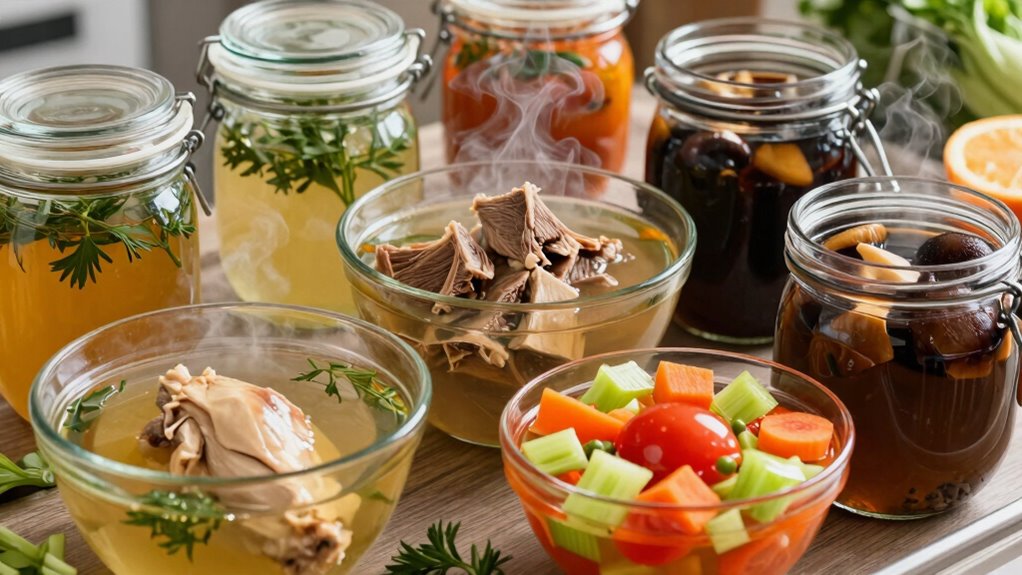

Before your next grocery run, understand that there are different types of broth to suit your needs. Vegetable broths are light, healthy, and great for vegetarian dishes. Artisan broths offer richer, more complex flavors from slow-simmered ingredients, perfect for hearty meals. Store-bought options vary in quality and ingredients, so check labels. Knowing these differences helps you choose the right broth to enhance your dishes. Keep exploring to discover more tips and tricks for selecting the best broths.
Key Takeaways
- Vegetable broths are light, healthy, and ideal for vegetarian or vegan dishes, made by simmering vegetables and herbs.
- Artisan broths offer rich, complex flavors from slow-simmered ingredients like bones, mushrooms, or seaweed.
- Broth choice affects dish flavor, texture, and richness; consider the recipe’s needs before selecting.
- Store-bought broths vary from processed to minimally handled, with options in cartons or glass jars.
- Understanding broth types helps make smarter grocery choices and inspires new culinary creations.
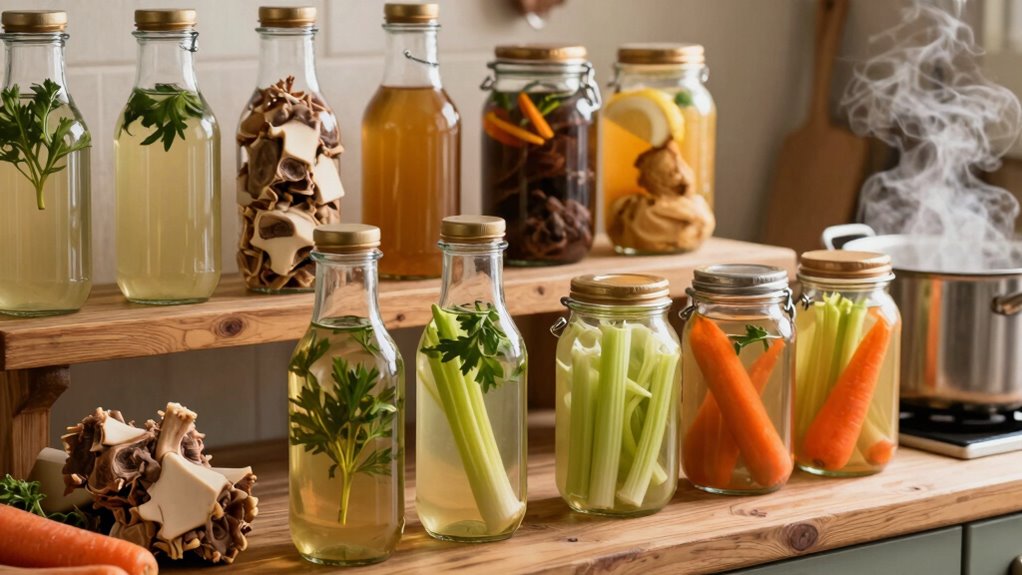
Broth is a foundational element in many cuisines, and understanding its different types can elevate your cooking. When you head to the grocery store, knowing the distinctions between various broths can help you choose the right base for your dishes. Broths come in numerous styles, each offering unique flavors and textures. For example, vegetable varieties are popular for their light, fresh taste and are perfect for vegetarian or vegan dishes. These broths are typically made by simmering a mix of vegetables, herbs, and spices, resulting in a clear, flavorful liquid. They’re versatile and can serve as a base for soups, stews, or even sipping on their own. Moreover, vegetable broths often contain less fat and sodium, making them a healthier choice for everyday cooking. Understanding broth types can help you select the best option for your specific culinary needs. Additionally, some broths are minimally processed, which can influence their flavor quality and nutritional value.
Vegetable broth offers a light, fresh flavor ideal for vegetarian dishes and everyday healthy cooking.
On the other hand, artisan broths have gained popularity among chefs and home cooks alike for their rich, complex flavors. These broths are often crafted with high-quality ingredients and traditional methods, resulting in a more concentrated and nuanced taste. You might find artisan broths made from slow-simmered bones, herbs, and vegetables, or with added specialty ingredients like wild mushrooms or seaweed to deepen the flavor profile. Because of their handcrafted nature, artisan broths tend to be more expensive but are well worth it when you want to add depth to a dish or create a gourmet experience. They can be used as a base for sophisticated soups, risottos, or sauces.
When shopping, consider the purpose of your dish. If you’re preparing a light vegetable soup or a vegan dish, a vegetable variety broth is your best bet. If you want to add complexity to a hearty stew or a delicate risotto, an artisan broth can provide that extra layer of flavor. Keep in mind that broths vary not only in ingredients but also in their salt content and clarity. Some store-bought options are highly processed, while others are minimally handled, especially artisan varieties that often come in glass jars or cartons.
Ultimately, understanding these differences empowers you to make smarter choices at the grocery store. Whether you’re seeking the simplicity of vegetable broths or the richness of artisan versions, selecting the right type sets the foundation for a delicious meal. Experimenting with different kinds can also inspire new culinary creations, helping you develop your own signature dishes.

Pacific Foods Organic Vegetable Broth, Plant Based, 32 oz Carton
- Organic vegetable broth: Rich, plant-based flavor
- Versatile cooking base: Ideal for soups and sides
- Savory vegetable blend: Leeks, onions, garlic, carrots, celery, tomatoes
As an affiliate, we earn on qualifying purchases.
As an affiliate, we earn on qualifying purchases.
Frequently Asked Questions
Are There Vegan Broth Options Available?
Yes, there are vegan broth options available. You can find plant-based broth options made from vegetables, herbs, and spices, which are perfect if you’re looking for a vegan alternative. These vegan broths offer numerous plant-based broth benefits, such as being low in calories and free from animal products. They work well in soups, stews, and risottos, giving you flavorful meals without compromising your vegan lifestyle.
How Long Can Homemade Broth Be Stored?
Think of homemade broth like a precious gem—best enjoyed fresh but still usable later. Generally, you can store it in the fridge for about 3 to 4 days, and in the freezer for up to 3 months. For food safety, always label your containers and reheat thoroughly. After this time, bacteria may develop, so it’s safer to discard any broth that’s been stored too long.
Which Broth Is Best for Soups?
For soups, chicken broth is often your best choice because of its versatile flavor profile, offering a comforting, savory taste that complements many ingredients. Vegetable broth provides a lighter, nuanced flavor ideal for delicate soups, while beef broth adds richness for hearty stews. Consider your culinary pairings—chicken pairs well with herbs like thyme, vegetable works with garlic and onion, and beef complements robust spices. Choose based on your desired flavor profile and dish.
Are There Low-Sodium Broth Alternatives?
Yes, there are low-sodium alternatives available, perfect if you’re watching your salt intake. You can find broth labeled “low sodium” or “reduced sodium” at most grocery stores. For flavor-enhanced options, look for those with added herbs and spices to boost taste without extra salt. These options let you enjoy rich, flavorful soups while keeping sodium levels in check, making your cooking healthier without sacrificing flavor.
Can Broth Be Used as a Cooking Base for Grains?
Yes, you can definitely use broth as a cooking base for grains. It adds rich flavor variations, making your dishes more vibrant and tasty. Simply replace water with broth in your cooking techniques, like boiling or simmering grains such as rice, quinoa, or bulgur. This method infuses the grains with depth and complexity, elevating your meal with minimal effort. Just choose the broth type that best complements your dish.

FOND 100% Grass-Fed Beef Bone Broth, Pure & Unflavored, 4-Pack
- Pure & Unflavored: Authentic, clean beef broth flavor
- Slow-Simmered for Rich Flavor: Over 18 hours of traditional cooking
- Made from Grass-Fed Beef Bones: Ensures high-quality, nutrient-dense broth
As an affiliate, we earn on qualifying purchases.
As an affiliate, we earn on qualifying purchases.
Conclusion
Now that you know the differences between broth types, imagine the endless possibilities awaiting in your next grocery run. Will you choose a rich, savory bone broth or a delicate vegetable one? Each option promises to transform your dishes, but which will you try first? The choice is yours, and the culinary adventures are just beginning. So, go ahead—grab a jar, and let your kitchen become your playground of flavors. The next masterpiece is waiting to be created.
![[Dear Recipe] Korean Broth Coins, Large Format, Effortless Cooking, Rich Flavor Enhancer for Soup, Stew, Noodle Made with Natural Ingredients, MSG Free, Convenient, 0.10 oz x 60 tablets (Veggie)](https://m.media-amazon.com/images/I/31x9uNzzy6L._SL500_.jpg)
[Dear Recipe] Korean Broth Coins, Large Format, Effortless Cooking, Rich Flavor Enhancer for Soup, Stew, Noodle Made with Natural Ingredients, MSG Free, Convenient, 0.10 oz x 60 tablets (Veggie)
- Rich Vegetable Blend: Contains 27 vegetables for flavor and nutrients
- Supports Digestive Health: Enhanced with agave inulin and wheat fiber
- Convenient Large Pack: Perfect for home or outdoor cooking
As an affiliate, we earn on qualifying purchases.
As an affiliate, we earn on qualifying purchases.

Miyeokguk Seaweed Soup 1pack (9.5g x 5ea) Korean Soup
- Made with Old Seaweed: Sincerely crafted from aged seaweed
- Freeze-Dried Seaweed Flavor: Preserves authentic seaweed taste
- Traditional Korean Soup: Ideal for birthdays and post-birth
As an affiliate, we earn on qualifying purchases.
As an affiliate, we earn on qualifying purchases.