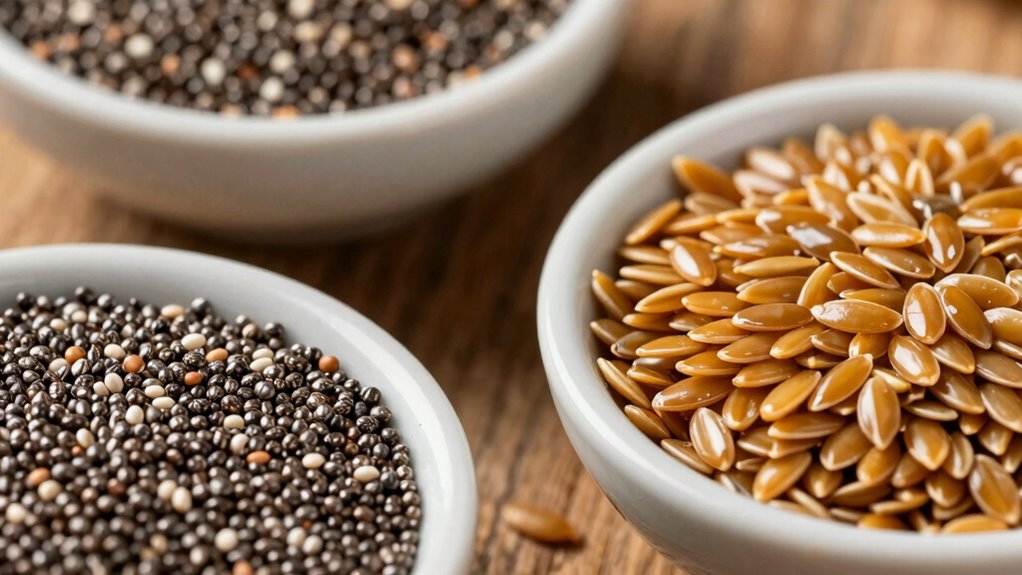

If you’re looking for convenience and versatility, chia seeds are a great choice since they require no grinding and easily add fiber, healthy fats, and antioxidants to your diet. Flax seeds are ideal if you’re interested in hormone balance and cancer prevention, but need to grind them to reveal benefits. Ultimately, your goals and taste preferences matter. Keep exploring to discover more about how these seeds can fit into your lifestyle effortlessly.
Key Takeaways
- Chia seeds are more convenient with minimal prep, suitable for quick daily use.
- Flax seeds offer unique benefits like lignans for hormone balance and cancer prevention.
- Ground flax is necessary for nutrient absorption, adding an extra step compared to chia.
- Chia provides higher fiber content, aiding digestion and blood sugar regulation.
- Both seeds support health, but choice depends on specific nutritional goals and taste preferences.

When choosing between chia seeds and flax seeds, you’re selecting two powerhouse superfoods packed with nutrients that can boost your health. Both are versatile, but understanding their nutritional differences can help you decide which fits best into your lifestyle. Chia seeds are rich in fiber, omega-3 fatty acids, and antioxidants, making them excellent for digestion and inflammation reduction. Flax seeds also contain omega-3s, specifically alpha-linolenic acid (ALA), fiber, and lignans—plant compounds linked to hormone balance and cancer prevention. Nutritionally, chia seeds tend to offer more fiber per serving, which aids in feeling full longer and supporting gut health. Flax seeds, however, provide a significant amount of lignans, which have unique antioxidant properties that can influence hormone levels. Both seeds are good sources of plant-based omega-3s, but chia seeds have a slight edge in overall fiber content, making them particularly beneficial if you’re aiming to improve digestion or control blood sugar levels. Additionally, flax seeds’ lignans have been studied for their potential hormonal benefits, reinforcing their role in health. Incorporating plant-based nutrients like these into your diet can contribute to overall well-being and support a sustainable lifestyle. Moreover, understanding how these seeds interact with your body’s nutritional needs can help you make more informed choices. From a digestive health perspective, the fiber content in chia seeds can be especially advantageous. Including superfoods such as these in your diet is a simple way to enhance your overall wellness. Culinary uses are another factor to consider. Chia seeds are incredibly easy to incorporate into your diet. You can sprinkle them over yogurt, oatmeal, or salads, or soak them in liquid to create a gel that works well as an egg substitute in baking. Their neutral flavor means they won’t interfere with your dish’s taste, and their ability to absorb liquids makes them ideal for puddings and smoothies. Flax seeds, on the other hand, require a bit more preparation. They’re best ground before use to unlock their nutritional benefits because whole flax seeds often pass through your digestive system undigested. Ground flax can be added to smoothies, baked goods, or sprinkled over cereal. Its nutty flavor adds a subtle taste to dishes, but if you prefer a milder profile, chia seeds might be more appealing. Both seeds can be used in similar ways, but chia’s convenience and texture make it a more straightforward addition for quick meals, while ground flax offers a richer flavor for baking.

BetterBody Foods Organic Chia Seeds 2 lbs, 32 Oz, with Omega-3, Non-GMO, Gluten Free, Keto Diet Friendly, Vegan, Good Source of Fiber
- Nutrient-Rich Superfood: High in omega-3 and fiber
- Organic and Non-GMO: Gluten-free, nut-free, low-carb
- Versatile Dietary Support: Vegan, keto, paleo friendly
As an affiliate, we earn on qualifying purchases.
As an affiliate, we earn on qualifying purchases.
Frequently Asked Questions
Which Seed Has More Environmental Sustainability Benefits?
Chia seeds generally have more environmental sustainability benefits than flax seeds. They require less water and grow well in diverse climates, reducing their environmental impact. Chia’s sustainable farming practices contribute to soil health and lower resource consumption. By choosing chia seeds, you support sustainability benefits like water conservation and eco-friendly cultivation, making them a more environmentally friendly option. Your choice can positively influence the planet’s health and resource use.
Are There Any Potential Allergies Associated With Chia or Flax Seeds?
Around 1-2% of people report seed sensitivities, and allergy symptoms can include itching, swelling, or difficulty breathing. While rare, some individuals might have allergies to chia or flax seeds. If you notice any allergy symptoms, stop consumption and consult a healthcare professional. It’s important to be cautious, especially if you have a history of food allergies. Always try new seeds in small amounts to test for potential sensitivities.
Can Both Seeds Be Used in Baking Equally Well?
Yes, you can use both seeds in baking, but their flavor compatibility and texture differences matter. Chia seeds add a subtle nutty flavor and create a gel-like texture that works well in bread or muffins. Flax seeds have a slightly stronger, nutty taste and can be ground for better incorporation, providing a flaky texture in baked goods. Experimenting allows you to choose based on your preferred flavor and texture.
How Do Storage Needs Differ Between Chia and Flax Seeds?
Like a wise librarian guarding rare texts, you need to protect your seeds. Chia seeds have a longer storage duration and are less moisture-sensitive, so they keep well in a cool, airtight container for months. Flax seeds are more delicate; they’re moisture-sensitive and prone to rancidity, so you should store them in an airtight container in the fridge or freezer, using them within a few months for freshness.
Are There Specific Medical Conditions That Favor One Seed Over the Other?
If you have certain medical conditions or dietary restrictions, flax seeds might be better due to their high omega-3 content and potential benefits for heart health. However, if you need a gentle source of fiber and antioxidants, chia seeds could be more suitable. Always consider your specific health needs and consult your healthcare provider to determine which seed aligns best with your dietary restrictions and medical conditions.

Badia Organic Ground Flax Seed, 16 oz – Fiber & Omega-3 Non-GMO Superfood
- Organic Certification: USDA Certified Organic and Non-GMO
- Nutrient-Rich: High in Fiber and Omega-3s
- Versatile Use: Ideal for baking, smoothies, and more
As an affiliate, we earn on qualifying purchases.
As an affiliate, we earn on qualifying purchases.
Conclusion
When choosing between chia and flax seeds, it really depends on your needs. Both are nutrient powerhouses, but chia seeds pack more fiber — about 10 grams per ounce — helping you stay full longer. Flax seeds offer a higher amount of omega-3 fatty acids, supporting heart health. So, consider your health goals and preferences. No matter what, adding either to your diet can give your wellness routine a tasty boost!

Chia Seed Packet, 5 Count (Chia pet not Included)
- Number of Seed Packets: Five packets for multiple plantings
- Growth Time: Full growth in 1-2 weeks
- Care Instructions: Includes 6-step growing guide
As an affiliate, we earn on qualifying purchases.
As an affiliate, we earn on qualifying purchases.

Bob's Red Mill Golden Flaxseed Meal, 16oz (Pack of 1) – Non GMO, Vegan, Paleo Friendly, Keto Friendly, Kosher
- High in Omega-3 Fatty Acids: Rich in alpha-linolenic acid
- Good Source of Dietary Fiber: Provides 3g protein per serving
- Versatile Baking Ingredient: Enhances bread, pancakes, muffins, cookies
As an affiliate, we earn on qualifying purchases.
As an affiliate, we earn on qualifying purchases.